Landscaping guide
Best Skid Steer Attachments for Landscaping
Quick answer
The best skid steer attachments for landscaping are a general-purpose bucket, a landscape rake or power rake, an auger, a trencher and pallet forks. Add a sod roller and a grapple as the work grows. Match each tool to your machine's hydraulic flow and rated capacity.
Shopping for this now? Get a fit-checked, delivered quote.
Key takeaways
- Buckets, rakes and forks cover most landscape installs.
- Most power rakes and augers run on standard-flow hydraulics, but check the spec.
- Smaller machines get into yards that bigger ones cannot.
- Confirm fit and flow before ordering any powered tool.
Landscape crews use skid steers because one machine replaces a lot of shovel and wheelbarrow work. The right attachments turn it into a grading tool, a digger and a material hauler. This guide lists the attachments that matter and what each does on a landscape job.
What attachments do landscapers use most?
A few attachments show up on almost every landscape crew's machine. They are the ones that solve the three constant tasks: moving material, shaping ground and digging.
| Task | Attachment | What it does |
|---|---|---|
| Move material | General-purpose bucket | Hauls soil, mulch, gravel and stone |
| Move material | Pallet forks | Lifts pallets of sod, block and pavers |
| Shape ground | Landscape rake | Levels, removes rocks and fine-grades |
| Shape ground | Power rake | Loosens and prepares a seedbed |
| Dig | Auger | Drills holes for trees, posts and footings |
| Dig | Trencher | Cuts narrow trenches for irrigation and wiring |
| Finish | Sod roller | Presses turf onto the soil |
Buckets: the base tool
A general-purpose bucket is the first tool on any landscaping machine. Buckets come in several shapes. A light-material bucket carries mulch and topsoil with a larger volume. A heavy-duty bucket handles rock and gravel. Read our bucket size guide and bucket types to pick one. Browse skid steer buckets.
Landscape rakes and power rakes
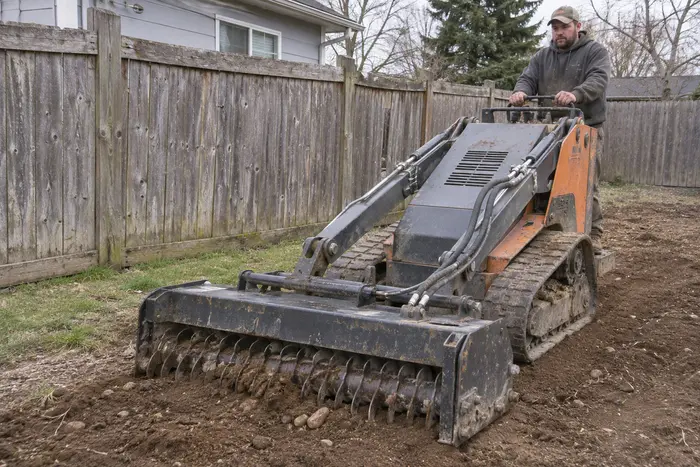
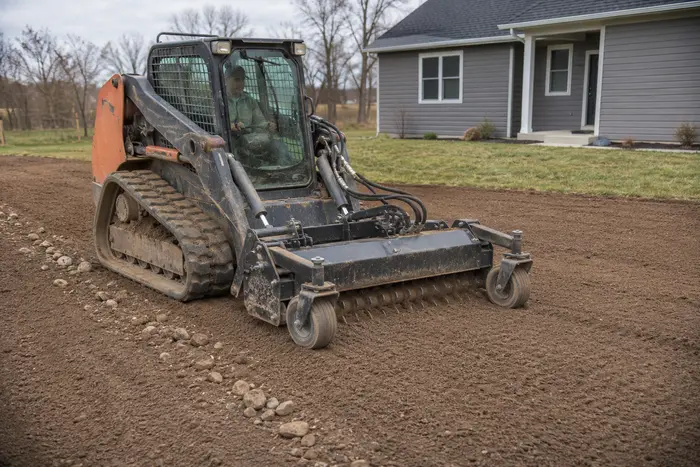
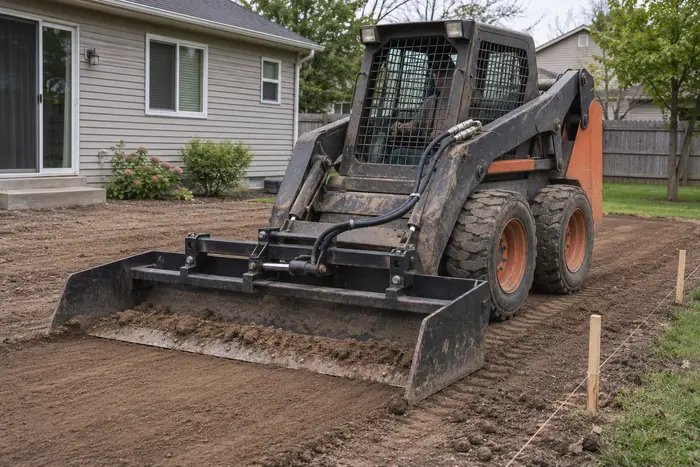
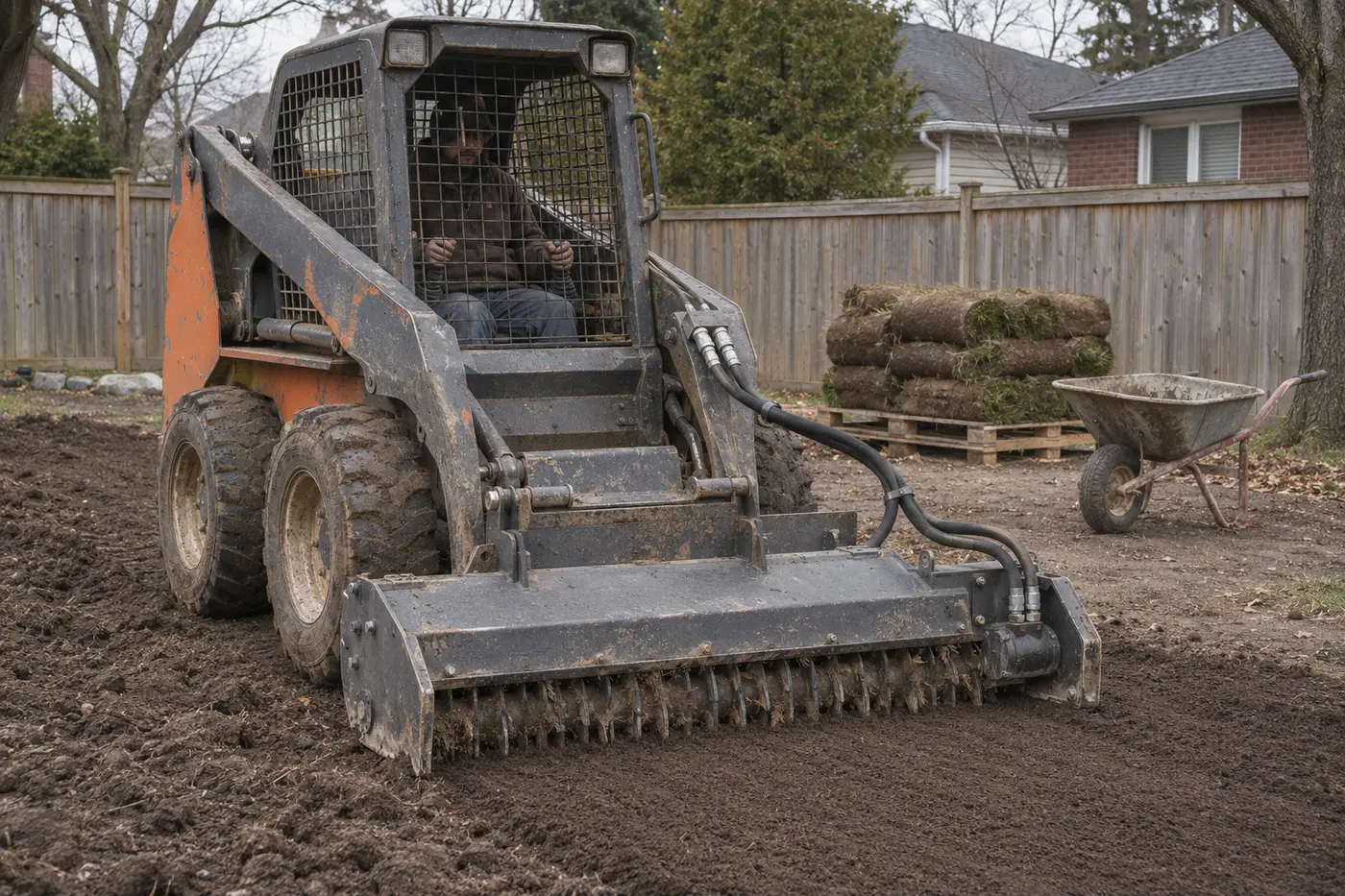
A landscape rake is a wide, toothed attachment that levels soil, rakes out rocks and leaves a smooth finish. It is the go-to tool for prepping lawns and fine grading. A power rake has a rotating drum with teeth and does the same work with more aggression, loosening the top layer and windrowing stones and debris to one side. Our guide to what is a power rake covers it in more detail. See landscape rakes and power rakes.
Augers and trenchers
An auger drills round holes for trees, posts, deck footings and signs. Bit size and torque matter. A trencher cuts a narrow, clean trench for drainage lines, irrigation and conduit. Our auger guide and trencher guide cover sizing. Browse augers and trenchers.
Sod rollers and tillers
After laying sod, a roller presses it into contact with the soil. That helps it root. A rotary tiller breaks up soil for beds and lawns. A tiller is the tool for turning compacted ground into a seedbed. See sod rollers and rotary tillers.
Grapples and tree tools
Landscape work often involves removing brush, debris and old stumps. A grapple picks up irregular loads. A stump grinder or tree spade deals with trees. A tree spade digs and moves a whole tree with its root ball, which is how landscapers relocate established trees. See grapples, stump grinders and tree spades.
Do mini skid steers work for landscaping?
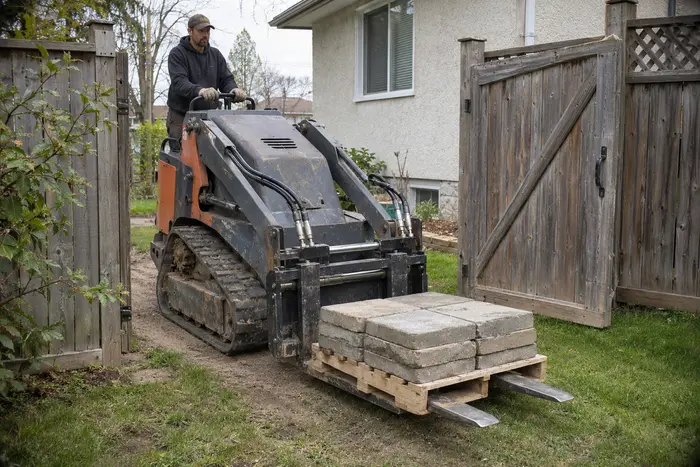
Yes. Compact machines fit through gates and into backyards where a full-size skid steer cannot go. They carry smaller loads and have less hydraulic power, so choose attachments rated for them. Look at mini skid steer landscape rakes, augers and trenchers. Our best mini skid steer attachments guide is a good starting point.
Choosing attachments by project
- New lawn: grade with a bucket and landscape rake, till or power rake the seedbed, spread topsoil, then roll the sod.
- Patio or walk: excavate with a bucket, haul base material, then use forks for pavers.
- Planting beds: loosen with a tiller, add soil with a bucket, auger holes for trees.
- Irrigation: trench with a trencher, then backfill with a bucket or rake.
- Fence: auger or drive posts and haul material with forks.
What to check before you order
- Hydraulic flow. Powered tools list the flow and pressure they need.
- Rated operating capacity. A full bucket of wet soil is heavy. Stay inside the rating in the manual.
- Quick-attach and couplers. Read are skid steer attachments universal for why this matters.
- Machine size. A wide attachment on a small loader limits visibility and balance.
Landscaping tools tend to be lighter than land-clearing tools. That is good news for standard-flow machines. Many landscape rakes need no auxiliary hydraulics at all; hydraulic-angle models do. Power rakes and augers run on standard-flow circuits in many cases, but check the spec.
Seasonal add-ons
Many landscapers also plow and clear snow in winter. A snow pusher or plow can keep the machine earning in months when the grass is dormant. See snow pushers and our snow removal guide.
Handling stone, block and pavers
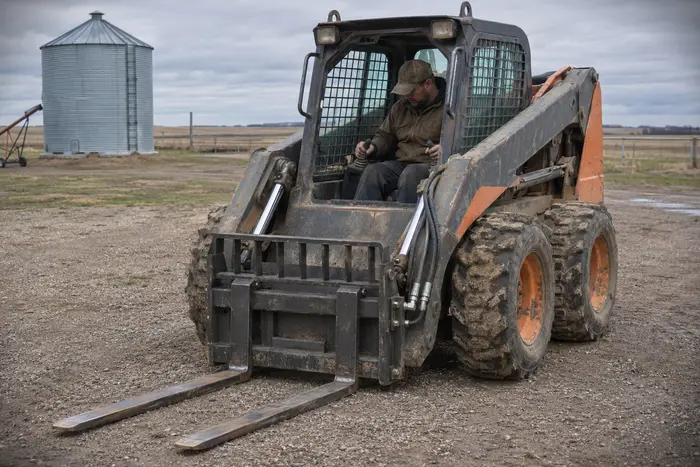
Hardscape work is where forks earn their keep. Pallets of block, pavers and wall stone are heavy and awkward by hand. A set of forks lets one operator place a pallet next to the work area. Keep the load low while you travel and set pallets on firm, level ground. Follow your machine's rated operating capacity and keep bystanders clear. Where the job needs a person to work at height, use a rated work platform, never forks or a bucket. See work platforms and the work platform rules.
Drainage and grading
Good landscapes move water away from buildings. A skid steer with a bucket and a landscape rake can shape a slight grade away from a foundation. A trencher or a small excavator cuts a drain line. A french drain depth guide helps you plan. Always call your local utility locate service before you dig. In the US and Canada, free one-call locate services exist for this.
Soil prep, step by step
- Strip or loosen existing turf.
- Remove large rocks and debris with a grapple or rake.
- Rough grade with a bucket so water drains away from structures.
- Loosen compacted soil with a tiller or power rake.
- Spread topsoil and fine grade with a landscape rake.
- Seed or lay sod and roll it so it contacts the soil.
Our topsoil calculator guide helps you estimate how much material to order before you start.
Working on finished lawns
Machines tear turf when they turn in place. On a finished lawn, plan paths in wide arcs, use mats or plywood at turning points and avoid wet ground. Tracks usually spread weight better than wheels on soft ground. If a lawn must stay perfect, consider a smaller machine. Over-the-tire tracks are another option for wheeled machines. See our guide to wheels vs tracks.
Storage and upkeep
Landscaping attachments live in dirt and wet. Hose them off, grease pivots and check hydraulic hoses for rubbing. Keep rake teeth and auger bits sharp. A tool in good shape cuts cleaner and takes less power. Our attachment maintenance guide lists a simple routine.
Get the right fit the first time
Fit problems are the expensive mistakes, and they are easy to avoid. Send us your machine make, model and year and what you plan to do with it. A person checks the fit against the maker specs, and you see the delivered price before you pay. When you are ready, get a fit-checked quote.
Questions buyers ask
What are the best skid steer attachments for landscaping?
A general-purpose bucket, a landscape rake or power rake, an auger, a trencher, and pallet forks cover most landscape work. Add a sod roller, tiller and grapple as the jobs call for them. Ask for a fit check if you are not certain about your setup.
What skid steer attachment is best for leveling a lawn?
A landscape rake gives the smoothest finish. A power rake loosens and prepares a seedbed. A box grader also works for larger areas. Choose by how much ground you need to cover and how fine you need the finish.
Are skid steer attachments universal?
Many use a standard quick-attach plate, but a matching plate alone does not confirm a fit. Hydraulic flow, couplers, weight and machine size also matter. A person should confirm fit against your machine's specs before you buy.
Can a mini skid steer do landscaping work?
Yes. A mini skid steer fits through narrow gates and works well in backyards. It has less lift and hydraulic power than a full-size machine, so choose attachments sized for its class. Your operator manual has the exact figures for your machine.
Do I need high flow for landscaping attachments?
Usually not. Most landscape tools such as rakes, augers and trenchers run on standard-flow hydraulics. Most mulchers and some heavy cutters need high flow. Check each attachment's spec against your machine's output. Specs vary by model, so confirm the details before you buy.