Skid steer guide
Skid Steer Work Platforms: Safety Rules and Buying Guide
Quick answer
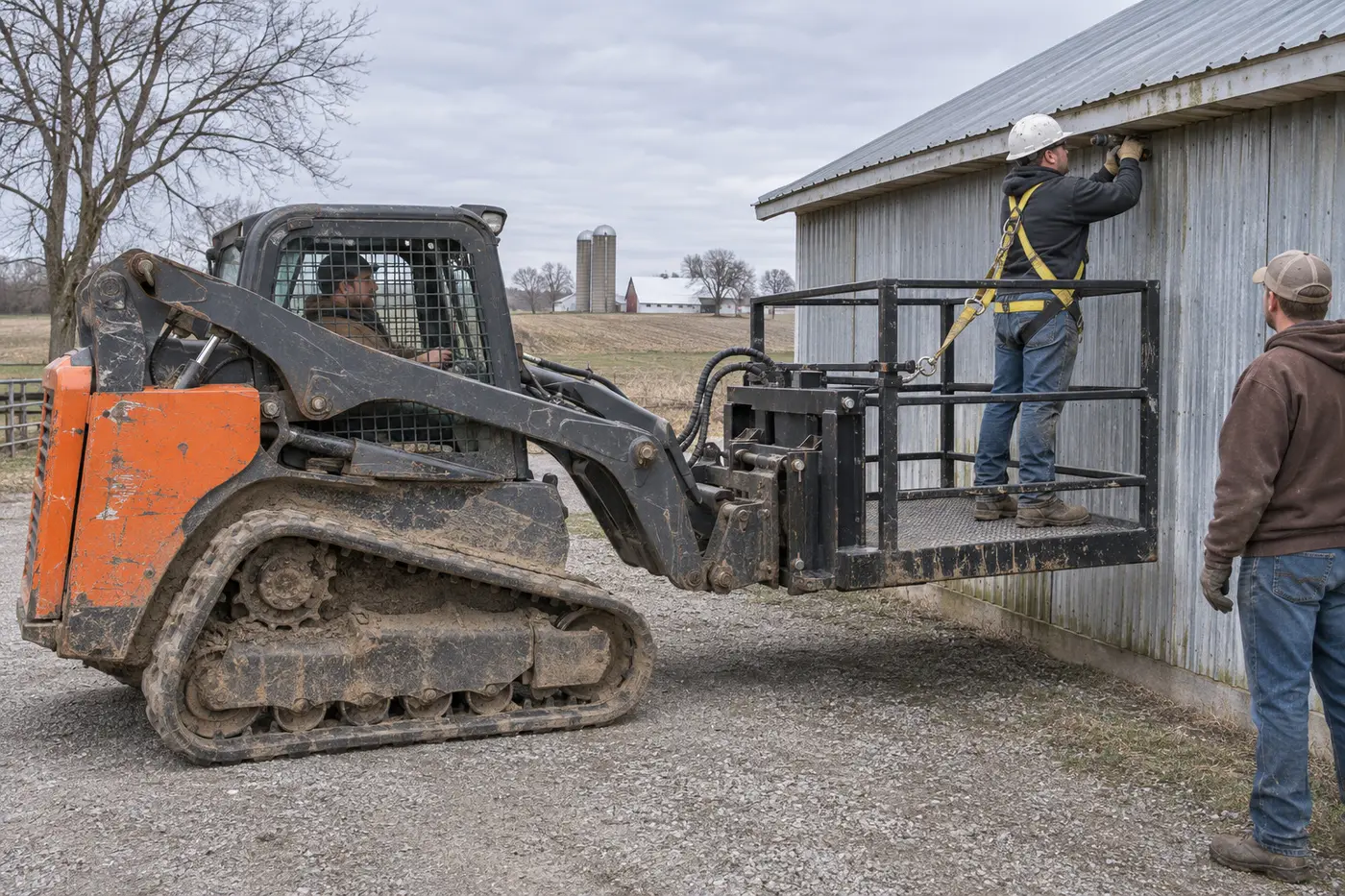
A skid steer work platform is a guarded platform that mounts on the loader's attachment plate so a person can work at height. Many operator manuals prohibit lifting people. Use one only if the machine maker approves that platform for that exact machine, and follow OSHA, provincial or other local rules on personnel lifting and fall protection.
Shopping for this now? Get a fit-checked, delivered quote.
Key takeaways
- Never lift a person on a bucket, forks or a homemade platform. Only an approved platform on an approved machine qualifies.
- The machine's operator manual must allow personnel lifting, and the platform must be made for it.
- OSHA rules for boom-attached personnel platforms set guardrails, fall protection, capacity limits and power line clearances.
- Treat the platform as a fall hazard: plan rescue, communication and ground support before you go up.
A work platform lets a person work at height without a ladder or scaffold. On a loader, the platform hangs on the attachment mount at the front. It looks like a simple steel cage on forks or a plate. That simplicity is misleading. Lifting a person with a loader is a high-risk job, and many machines are not rated for it. This guide covers the rules, what to check and how to decide whether a skid steer work platform is the right tool.
What is a skid steer work platform?
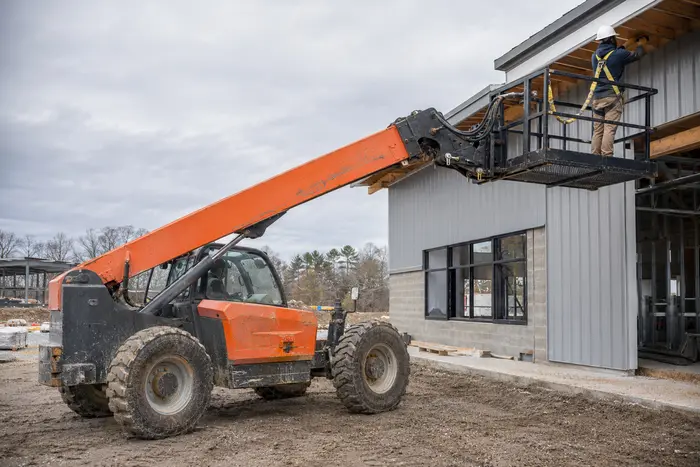
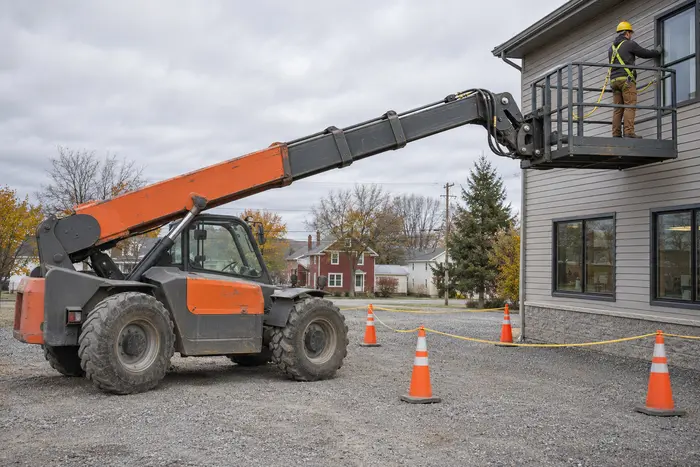
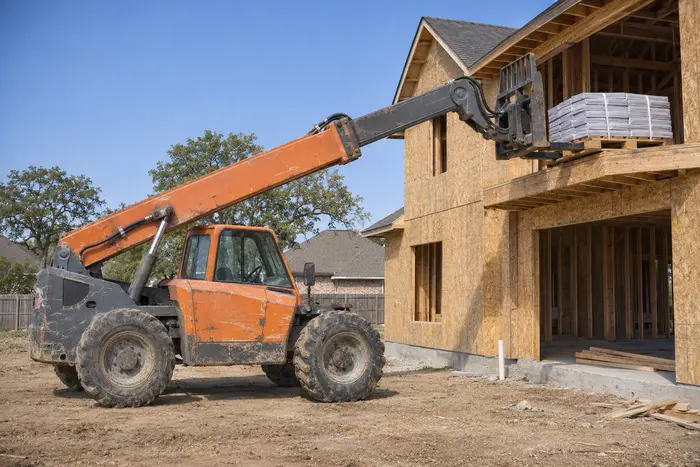
It is a guarded platform with a floor, toe boards, guardrails and a gate. It attaches to the skid steer's quick attach plate or the carriage, so the lift arms raise it. It is meant for tasks like inspecting a building, painting, hanging lights or repair work at moderate height. Its shape and rated capacity depend on the design. A telehandler platform is a close relative and is described in our telehandler work platform FAQ.
The first rule: is your machine approved for it?
This is the question that decides everything. Many skid steer manuals say the machine is not designed to lift people. Some makers do approve certain platforms on certain models, with conditions. A platform is not a general accessory.
- Read the operator manual for your exact machine. It must permit personnel lifting.
- Use only a platform the machine maker approves for that machine, including the mount type.
- Check the platform's own label for rated capacity, the machines it fits and the operating limits.
- If the manual does not allow lifting people, do not do it. A work platform will not change that.
If you are not sure, ask the manufacturer in writing before you buy or use a platform.
What OSHA says about lifting people with a boom
OSHA treats a platform on the end of a boom as a personnel carrier. An OSHA interpretation notes that adding a work platform attached directly to the end of a boom changes the use of the machine to a personnel carrier, so the personnel platform rules apply. The aerial lift standard, 1926.453, covers extensible boom platforms and requires that only authorized persons operate an aerial lift, and that fall protection is worn. The crane standard on hoisting personnel, 1926.1431, sets detailed rules for boom-attached personnel platforms, including:
- The loaded platform must not exceed 50 percent of the equipment's rated capacity for the radius and configuration in use.
- The platform needs a guardrail system and an enclosure from the toe board to mid-rail with openings no larger than half an inch.
- The platform must support its own weight and at least five times the maximum intended load.
- Each platform must be proof tested to 125 percent of its rated capacity before use at a site and after repairs.
- Occupants must wear a personal fall arrest system attached to a structural member of the platform.
- Hoisting personnel within 20 feet of a power line up to 350 kV is prohibited, with limited exceptions.
- The platform must be used only for employees, their tools and materials, and not above its rated capacity.
These rules are written for cranes, and the exact standard that applies to a loader or a telehandler can differ by machine, platform and jurisdiction. Do not assume a number from the crane rule applies to your platform. Treat it as a measure of how serious the risk is, and follow the platform maker's instructions, the machine maker's manual and your local regulator's rules. Your safety officer or the regulator can confirm which standard applies. In Canada, provincial occupational health and safety rules apply instead of OSHA.
Platform buying checklist
- Machine approval. Written confirmation from the machine maker that the platform is approved for your model.
- Rated capacity. Marked on the platform. Add the weight of people, tools and materials.
- Guardrails and gate. Full guardrails, toe boards and a self-closing gate or bar.
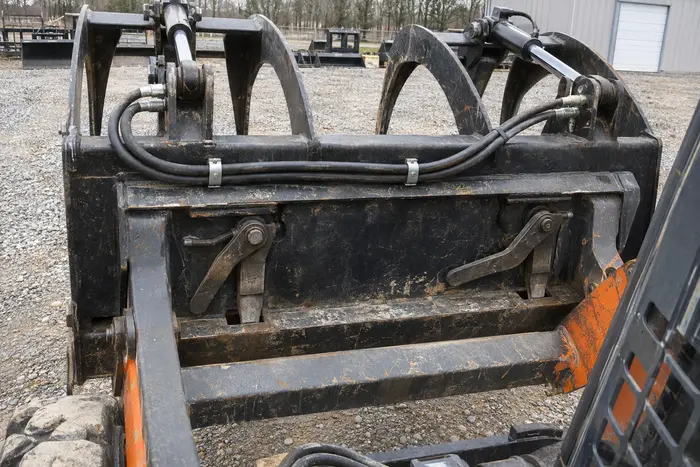
- Mount type. Matches your machine's attachment plate or carriage.
- Fall arrest anchor points. Marked and rated tie-off points on the platform.
- Controls. Some platforms need platform-level controls or a stop. Ask what the platform provides.
- Documentation. Operator instructions, inspection forms and a data tag.
Compare designs in our skid steer work platforms and telehandler work platforms categories. For forklift-based platforms, see forklift man basket rules.
Operating rules
- Inspect first. Check the platform, the mount, the pins and the machine before every lift.
- Use a ground person. Someone should stay near the controls and be ready for emergencies.
- Keep communication clear. Use agreed signals or radios between the platform and the operator.
- Level ground. Do not lift on slopes or soft ground.
- Travel with care. Do not drive with a person on the platform unless the maker allows it.
- Stay clear of power lines. Survey the area, and keep far outside minimum distances.
- Weather. Do not lift in high wind, lightning or ice.
- Have a rescue plan. Know how to lower a person if the machine fails.
What not to do
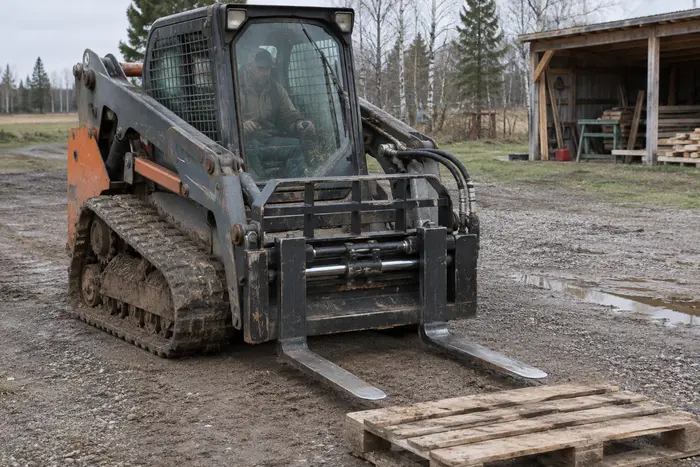
- Do not stand in a bucket, on forks or on a pallet to work at height.
- Do not use a homemade or modified platform.
- Do not exceed the rated capacity of the platform or the machine.
- Do not climb out of the platform while it is raised.
- Do not use the platform as a crane hook or a material carrier above people.
Is a platform the right tool?
Ask what else could do the job with less risk. A scaffold, a scissor lift or a purpose-built aerial lift is designed for people and comes with its own training and standards. A platform on a loader can make sense in a few cases, such as where ground is rough and a normal lift cannot go, or where a farm or yard already has the machine. Use the platform only when the machine, platform and rules all align.
Training and records
Anyone who runs the machine or rides the platform should be trained on the specific platform and machine, not just on loaders in general. Training should cover the operator manual, the platform's instructions, fall protection, signals and emergency lowering. Keep a written record of inspections, repairs and training. If a platform is damaged or modified, take it out of service until the maker or a qualified engineer clears it. Records protect your people first and show a regulator you took the job seriously.
Get the right fit the first time
If you believe a platform is approved for your machine, send us the make, model and year and a copy of the manual page that allows it. A person checks the fit against the maker's specs, you approve a delivered price before you pay, and the supplier ships direct. Get a fit-checked quote.
Questions buyers ask
Can you lift a person with a skid steer?
Only if the machine maker permits it. Many operator manuals say the machine is not designed to lift people. If yours does allow it, use only the approved platform, follow the manual, and meet OSHA and local rules for personnel lifting and fall protection.
What does OSHA say about boom-attached work platforms?
OSHA treats a platform attached to a boom as a personnel carrier. Its crane rule sets a 50 percent capacity limit, guardrails, a fall arrest system, proof testing and power line distances. Which standard applies to your machine depends on its type and jurisdiction.
Do I need fall protection on a work platform?
Yes in most cases. OSHA rules for boom-attached personnel platforms require occupants to wear a personal fall arrest system attached to a structural member of the platform. Check your platform's label and local rules for the exact requirement.
What should I check before buying a skid steer work platform?
Check written approval from the machine maker, the rated capacity, the guardrails and gate, the mount type, marked tie-off points and the documentation. If any of these is missing, do not buy or use the platform for lifting people.
Is a telehandler work platform different from a skid steer platform?
Yes, in design and rules. Telehandlers have longer reach and their own load charts, and platforms are made for them with specific approvals. The same principles apply: use only an approved platform on an approved machine and follow the manuals and local rules.