Equipment basics guide
What Is a Trencher? Uses and Types Explained
Quick answer
A trencher is a digging machine that cuts narrow, uniform trenches for utilities such as cable, pipe, irrigation and drainage. It uses a rotating chain or wheel with cutting teeth to remove soil in one pass. Types include walk-behind, ride-on and skid steer attachments.
Shopping for this now? Get a fit-checked, delivered quote.
Key takeaways
- Trenchers cut a narrow, even trench faster than a bucket.
- Chain trenchers suit most soil; wheel trenchers suit hard or rocky ground.
- Skid steer and mini skid steer attachments give trenching to a loader you own.
- Match trench width and depth to the line you are laying.
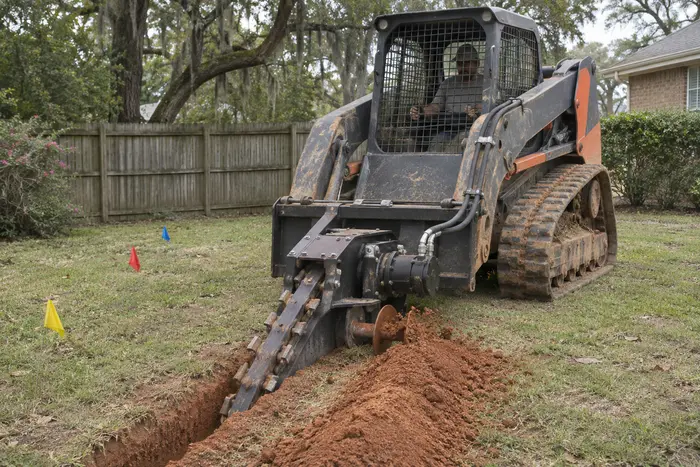
If you searched what is a trencher machine, here is the short version. It is a tool built to cut long, narrow trenches. Instead of scooping soil like a bucket, it moves a cutting chain or wheel through the ground and throws spoil to the side. The trench comes out the same width and depth along its length, which is what utility work needs.
What is a trencher used for?
Most trenching jobs are about laying something underground:
- Electrical conduit and low-voltage cable for lighting and outbuildings.
- Water lines and irrigation pipe for lawns, farms and sports fields.
- Drainage lines such as French drains and downspout runs.
- Communication cable including fiber and broadband.
- Gas service lines, installed only by or under the rules of the gas utility.
- Fence and footing lines where a narrow cut helps.
A neat trench means less backfill, less lawn damage and less cleanup. That is the main reason crews choose a trencher over an excavator for small utility lines.
What are the main types of trencher?
Chain trenchers
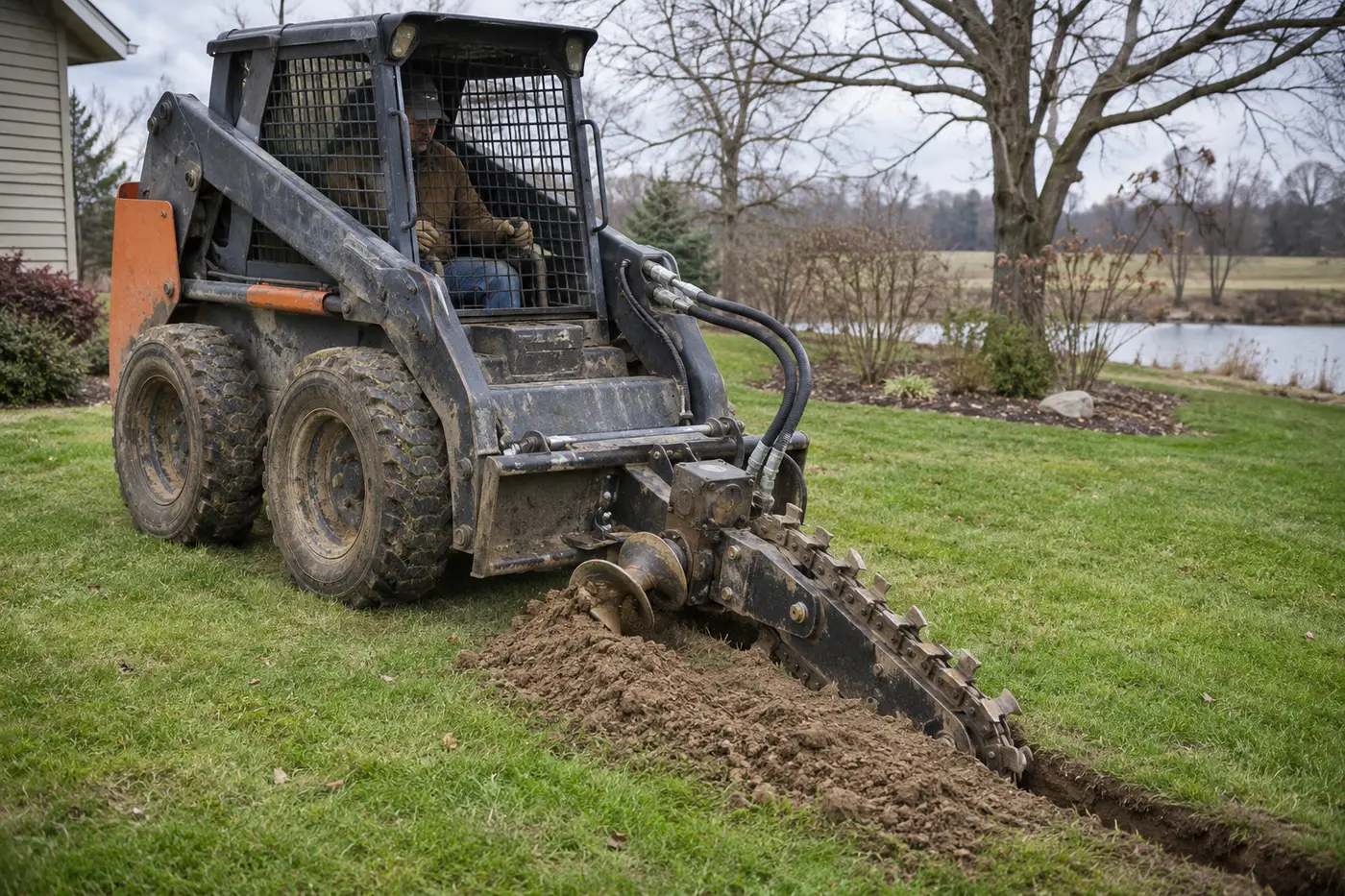
A chain with cutting teeth moves around a boom, called the digging bar. It cuts a clean, narrow trench and works well in most soil. This is the most common type for cable and pipe.
Wheel trenchers
A large wheel with cutting teeth cuts the trench. Wheel trenchers are often chosen for harder, frozen or rocky ground. They are common for larger utility and rock work.
Micro trenchers
These cut very narrow slots, often into pavement or turf, for fiber and small cable. They keep surface damage low.
Walk-behind and ride-on trenchers
Walk-behind units are compact and suit short residential runs. Ride-on models are bigger and move faster across longer lines.
Attachment trenchers
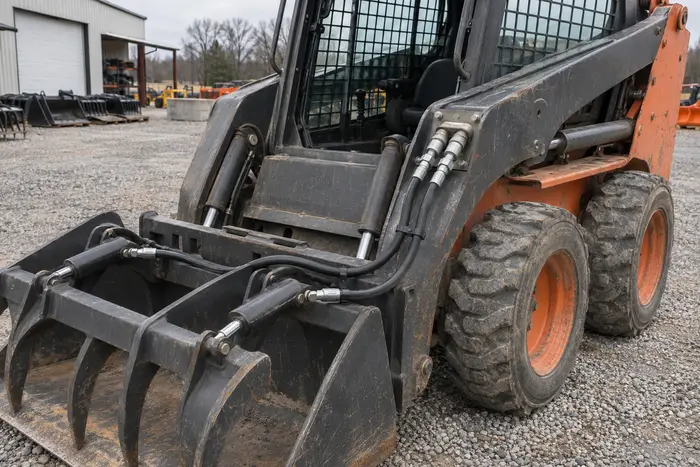
A trencher attachment mounts on a skid steer or a mini skid steer and uses the loader's hydraulics to drive the chain. If you already own a loader, this adds trenching without another engine. Look at the skid steer trenchers and mini skid steer trenchers to see what's available.
Trencher vs excavator: which should you use?
| Job | Trencher | Excavator |
|---|---|---|
| Long, narrow utility line | Faster, neater | Slower, wider cut |
| Deep or wide hole | Not suited | Better |
| Rocky or hard ground | Wheel type works | Breaker or heavy bucket |
| Tight yard access | Walk-behind or mini attachment | Compact model |
| Backfill amount | Low | Higher |
Compact excavators are described as machines used for trenching, grading and many other tasks with attachments. For deep or varied digging, one is more flexible. For long, repeat lines, a trencher saves time.
How to choose a trencher
- Trench width and depth. Match them to the pipe, conduit or cable and your local code.
- Soil conditions. Soft loam, clay, gravel, frozen ground and rock call for different teeth and chain or wheel types.
- Power source. A skid steer attachment relies on your loader's hydraulic flow. Check that before you buy.
- Job length. Short runs suit walk-behind units. Long runs favor ride-on or loader-mounted units.
- Spoil handling. Decide whether you want soil thrown to one side or placed neatly.
- Attachment fit. Confirm the mounting plate, frame size and hose routing.
If you plan to use one on a loader, how to use a skid steer trencher covers setup, and our hydraulic flow guide explains why flow decides performance.
Safety basics
- Locate buried utilities before you dig. Call your local locating service.
- Keep hands, feet and clothing away from the chain or wheel.
- Do not stand in a trench or under a loaded boom.
- Shut down and relieve hydraulic pressure before changing teeth.
- Follow the operator manuals for both the trencher and the loader.
Other meanings of the word
The word trencher also names a wooden plate for serving food and, in the phrase trencher cap, a graduation cap. This page covers the digging machine. If you saw the term in a job listing, it almost always means this equipment or the person who runs it.
Maintenance
Check the cutting teeth often. Worn or missing teeth slow the cut and strain the drive. Keep the chain tensioned to the maker's instructions, grease the bearings and inspect hoses. Replace teeth in sets so the load stays even across the chain.
Planning trench depth and width
Start from what goes in the ground. Pipe, conduit and cable each have a minimum burial depth set by local code or the utility, so check with your inspector or utility before you cut. Pick a trencher that cuts at least that deep, with some room to spare for bedding material. Trench width should be only as wide as needed: wider trenches mean more backfill and more surface repair.
Backfill and cleanup
A trencher leaves a loose pile of spoil along the cut. Plan how you will put it back. Many installers place sand or fine material around the line, then backfill in layers and compact it so the surface does not sink later. Keep topsoil and subsoil separate if the surface matters, such as lawns. Clean spoil off driveways and walks before it dries.
Using a trencher on a mini skid steer
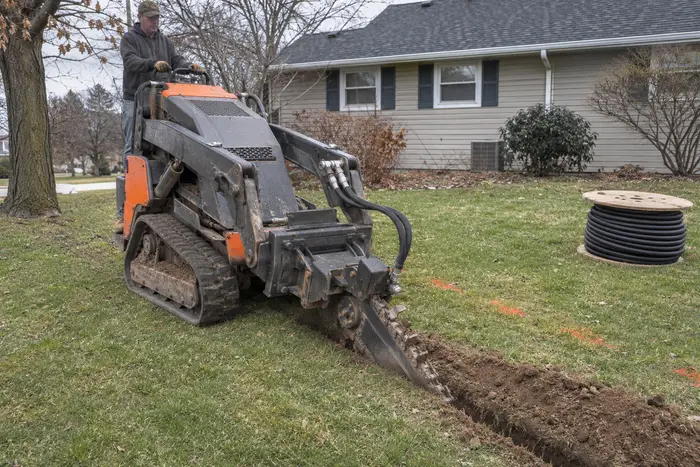
Mini loaders are narrow and light, which makes them handy for backyard and landscape lines. The tradeoff is power and weight. A mini trencher cuts shallower and slower than a full-size one, and hard or rocky ground can stall it. Check the hydraulic flow of your mini loader against the attachment before you buy. Our mini skid steer trencher guide covers the details.
Rent or buy a trencher?
If you trench a few times a year, renting by the day can cost less than owning. If you cut lines every week, as installers and irrigation crews do, owning often makes more sense and gives you a tool that is ready when the job is. For loader-mounted units, remember that you already own the power source, so you are only buying the cutting end.
One last check before you rent or buy: the job's access. Walk the route and look for fences, trees, septic tanks, sprinkler heads and slopes. A trencher cuts a straight line, so planning the route around obstacles saves more time than any machine feature.
Also ask what happens at the end of the trench. You need room to turn around, a place to put spoil and a plan for the line's ends, such as a building wall or a pull box. Thinking about both ends before you start avoids awkward hand digging later.
Get the right fit the first time
Tell us the make, model and year of your machine and the job you want it to earn on. A person checks fit against the maker's specs, and you see a delivered price before you pay. Start with a fit-checked quote request.
Questions buyers ask
what is a trencher used for
A trencher cuts narrow, even trenches for cable, conduit, water lines, irrigation and drainage. Its neat cut means less backfill and less surface damage than a bucket. It is chosen for long, repeat utility lines rather than deep or wide excavation.
what is a trencher machine
It is a digging machine that moves a chain or wheel with cutting teeth through the ground to remove soil in a narrow strip. Trenchers come as walk-behind units, ride-on machines and attachments for skid steers and mini skid steers.
what is a trencher tool
A trencher tool is a trenching attachment or hand-guided unit with cutting teeth on a chain or wheel. On a loader it connects to the auxiliary hydraulics. It cuts a clean trench of a set width and depth for pipe or cable.
what is a trencher blade
The cutting parts are teeth, sometimes called blades, fitted along a chain or around a wheel. They break up soil and rock as the chain or wheel turns. Worn teeth slow the cut, so inspect and replace them in sets.