Mini skid steer guide
Best Mini Skid Steer Attachments for Most Jobs
Quick answer
The best mini skid steer attachments are a bucket, pallet forks, an auger, a power rake or landscape rake, a trencher and a snow blade or blower. They cover most digging, grading, planting and clearing work in tight spaces. Choose by your machine's lift capacity, hydraulic flow and the jobs you do most.
Shopping for this now? Get a fit-checked, delivered quote.
Key takeaways
- Start with a bucket, forks and an auger; add tools as jobs demand.
- Mini machines have limited lift capacity and flow, so size every tool to them.
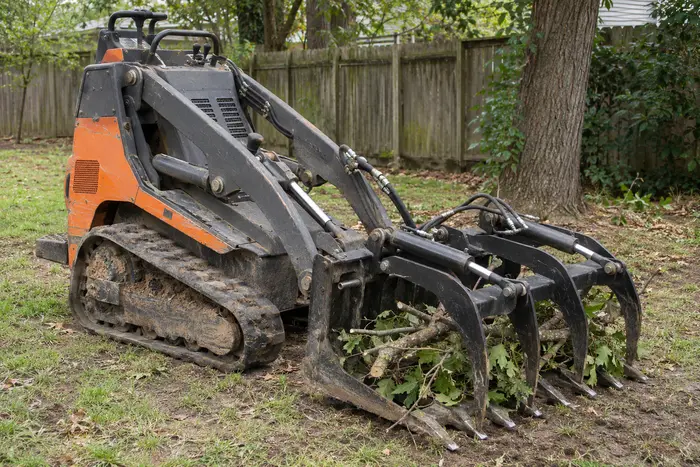
- Many tools suit mini loaders: rakes, trenchers, brooms, stump grinders and snow blades.
- Check your machine's mounting plate and hydraulic couplers before buying.
- Buy for the work you do monthly, not the work you might do once.
A mini skid steer is a compact tracked or wheeled loader, often walk-behind or stand-on, that fits through gates and works where a full-size machine cannot. Its small size is the point, and it is also the limit. The best attachments are the ones that match its capacity and hydraulic output. Here are the ones that earn their place.
What is a mini skid steer used for?
People use them for landscaping, small excavation, hardscape prep, fence and deck work, snow clearing on walks, and material handling where space is tight. A general reference notes skid steers can dig, move raw material in the bucket or on pallet forks, and clear snow, and they take a long list of tools run from the loader's hydraulics. A mini version does the same kinds of work at smaller scale.
The core attachments to buy first
Buckets
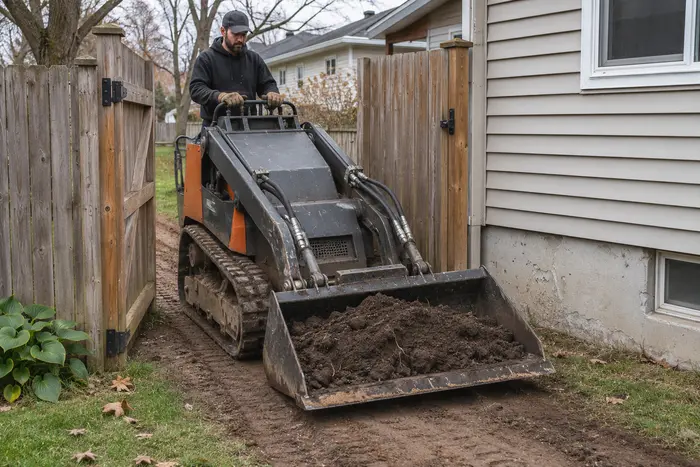
A standard bucket is the first tool you will use every day. Many owners also like a combination or four-in-one style bucket for its ability to dump, grab and dozer in one tool, so one attachment covers grading, loading and clamping. See mini skid steer buckets for the types.
Pallet forks
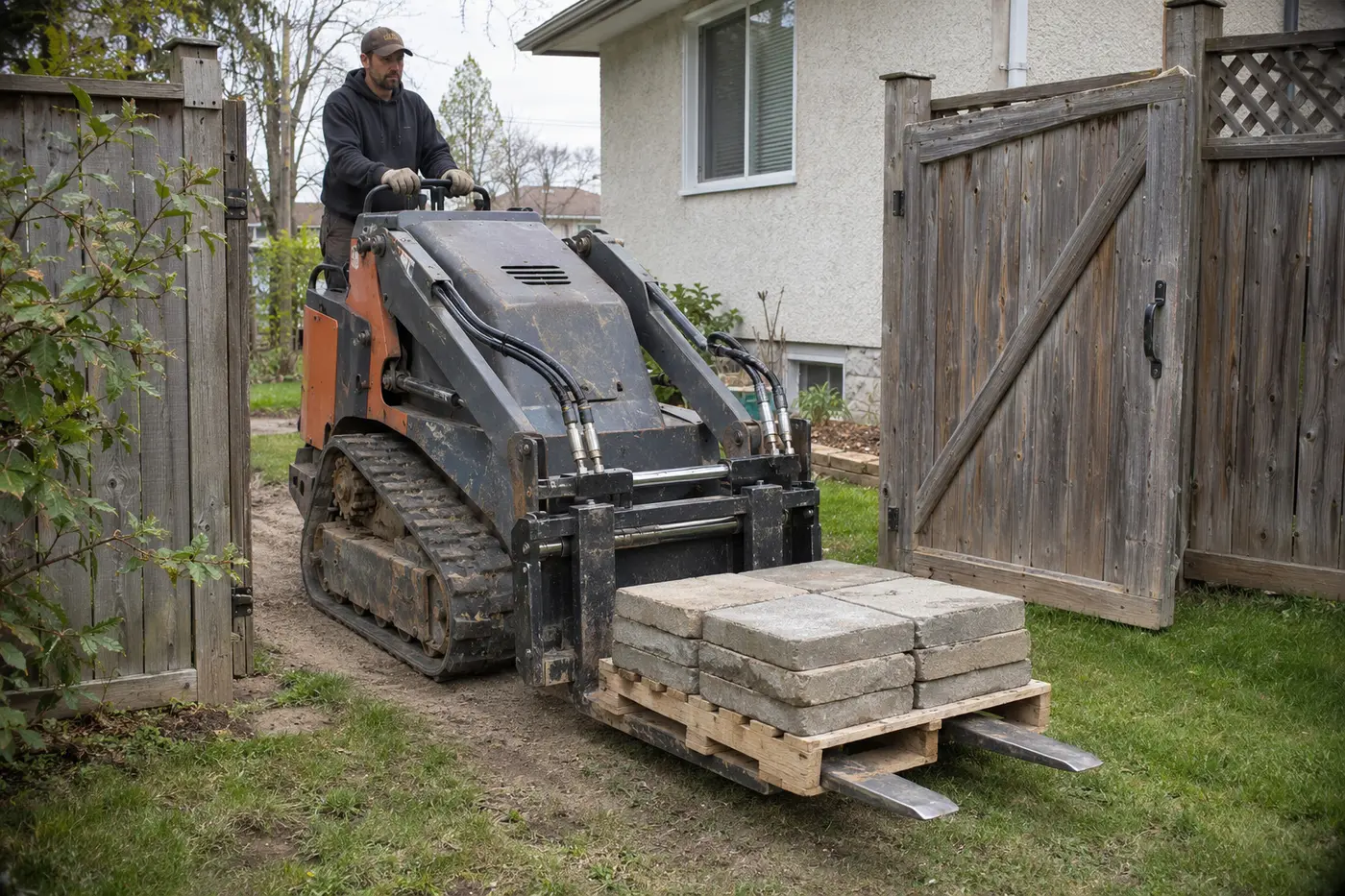
Forks move pavers, sod, bagged material and crates. Stay under the machine's rated operating capacity, and remember that capacity drops as the load moves out from the heel of the forks. See mini skid steer pallet forks.
Auger
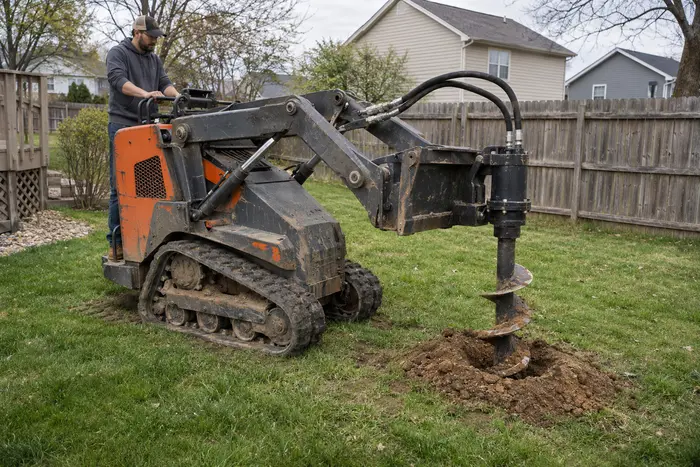
For fence posts, deck footings, trees and signs, an auger can earn its keep quickly. Choose bit diameter for the holes you drill most. See the mini skid steer auger guide and mini skid steer augers.
Landscape rake or power rake
These prepare seedbeds, remove stones and level topsoil. A power rake chews up the surface and leaves a fine finish. Browse landscape rakes and power rakes.
Specialty attachments worth adding
| Attachment | Best for | Typical need |
|---|---|---|
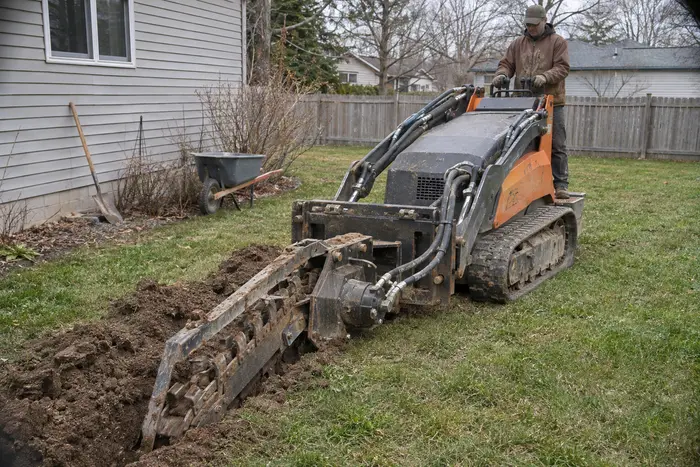
| Trencher | Irrigation, cable and drain lines | Matching hydraulic flow |
| Broom or sweeper | Driveways, job-site cleanup | Standard flow |
| Snow blade or pusher | Walks and small lots | None for a straight pusher; a hydraulic angle blade uses the auxiliary circuit |
| Snow blower | Deeper snow on paths | Matching hydraulic flow |
| Stump grinder | Removing stumps in yards | Matching hydraulic flow |
| Brush cutter | Overgrowth and light brush | Matching hydraulic flow |
| Log splitter | Firewood | Standard flow |
| Concrete mixer | Small pours | Standard flow |
Pick from our trenchers, snow blowers and stump grinders when your work calls for them.
How do you size attachments to a mini machine?
Three checks keep you out of trouble:
- Weight and tip load. The attachment's weight reduces the load you can safely carry. Check the machine's rated operating capacity and follow the manual.
- Hydraulic flow and pressure. A small machine has a small hydraulic supply. A tool that wants more flow than you have will run slowly.
- Mounting and couplers. Many mini loaders use their own plate and hose connections. Check these match before you order. See our mini skid steer guide for the basics.
Mini skid steer vs a small excavator for the same jobs
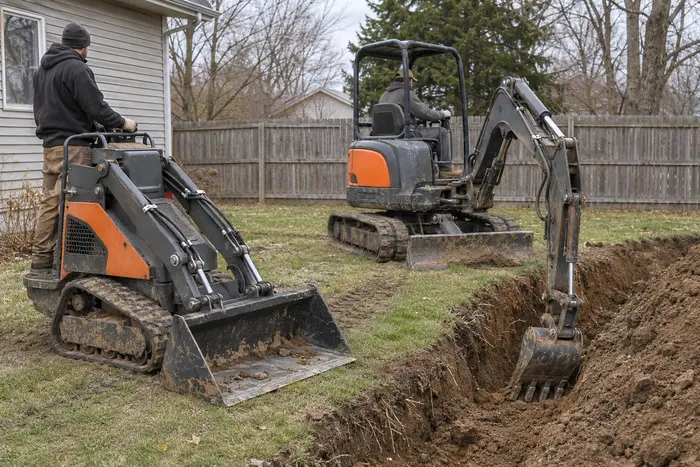
If most of your work is digging below grade, a compact excavator may suit you better. If you move, rake, push and carry more than you dig, the mini loader wins. Our comparison of a mini skid steer and a mini excavator breaks down the trade-offs.
Which attachments to skip at first
- Anything that needs high hydraulic flow your machine does not have.
- Tools built for a bigger frame that exceed your lift capacity.
- Single-use tools you will reach for twice a year. Rent those.
A simple buying order
- Bucket and pallet forks.
- Auger.
- Rake for finishing work.
- Trencher or snow tool, depending on your season.
- Specialty tools as paying jobs arrive.
Safety on small machines
Small machines tip as well as big ones. Keep the load low, travel slowly on slopes, and stay within the rated capacity on the machine's decal. Operators on stand-on units should know their footing and the controls before attempting any attachment work. Always follow the operator manual.
How to get more from a small machine
Mini loaders reward careful tool choice. Because lift capacity and hydraulic flow are limited, a well-matched attachment runs smoothly and a mismatched one frustrates you every day. A few habits help.
Keep the load low and close
Carry buckets and forks low to the ground, with the load as close to the machine as possible. Raise it only when you are placing it. Tipping is one of the main dangers on any skid steer, and compact machines have a tighter margin.
Use tracks where the ground is soft
Tracked minis spread weight and grip better on turf, mud and slopes than small wheels. If you work on lawns or finished landscapes, tracks cut down on ground damage. They also handle snow well for sidewalk clearing.
Plan transport
One reason people buy a mini is that it fits on a small trailer. Check the combined weight of the machine and the attachment you plan to carry, and the trailer's rating, before you hit the road. Transport on an approved trailer with proper tie-downs, following the manual.
Which attachments pay back fastest?
For a landscaper or small contractor, the fastest returns usually come from tools that cut hours of hand labor: an auger for posts and plantings, a trencher for lines, a rake for finish grading and forks for moving material. For a homeowner or acreage owner, a bucket, forks and a snow tool cover most of a year. Add specialty tools only when a recurring job justifies them. If a job comes up twice a year, renting is often smarter than buying.
Where else to look
If your work is closer to forestry or brush, see our mini skid steer brush cutter guide. For trench work, read the mini skid steer trencher guide. For the machine itself, see the types of skid steers.
Questions to ask before you order
- What is the attachment's weight, and how does it change my rated operating capacity?
- What flow and pressure does it need, and does my machine supply it?
- Does it use the same mounting plate as my machine, or do I need an adapter?
- Does it need a case-drain line or a two-way auxiliary circuit?
- What wear parts will I replace, and how often?
- What does the manufacturer's warranty cover, and who handles a claim?
The last question matters. Get warranty terms in writing before you pay. When any apply, we write them on your quote, so you know what is covered and who to contact before anything goes wrong.
Example setups by user
- Landscaper: bucket, forks, auger, power rake, and a trencher for irrigation.
- Fencing contractor: auger in a few bit sizes, forks and a post driver where the soil allows.
- Snow contractor on walks: snow blade or blower, a broom, and forks for salt bags.
- Homeowner with an acre: bucket, forks, auger and a brush cutter for edges.
Get the right fit the first time
Send us your machine's make, model and year, and a person will check fit against the maker's specs. Your quote shows one delivered price, freight to your address included, and the order ships direct from the supplier. Request a fit-checked quote.
Questions buyers ask
What are the best attachments for a mini skid steer?
Most owners start with a bucket, pallet forks and an auger, then add a landscape or power rake, a trencher and a snow tool. Choose based on the jobs you do monthly, and size every tool to your machine's lift capacity and hydraulic flow.
What can a mini skid steer do?
It can dig, load, grade, rake, drill post holes, trench, sweep, clear snow and move pallets in tight spaces. Its small size lets it pass through gates and work in yards. Its lift capacity and hydraulic flow limit the size of tools you can use.
What is a four-in-one bucket used for on a mini skid steer?
A four-in-one bucket, also called a combination bucket, can dump like a bucket, grab material like a clamp and spread or push like a dozer blade. It is useful when one tool needs to cover loading, grading and clamping on small jobs.
Are mini skid steer attachments interchangeable with full-size ones?
Usually not. Mini loaders often use their own mounting plate and hydraulic connections, and their capacity is lower. A full-size attachment may be too heavy or need more flow. Confirm fit with the maker before you buy.
How do I know if an attachment fits my mini skid steer?
Check the mounting plate type, rated operating capacity, hydraulic flow and pressure, and coupler style against the attachment's specs. If you are unsure, send your make, model and year to a dealer who can confirm fit before you pay.