Landscaping guide
How Deep Should a French Drain Be? Depth, Width and Slope
Quick answer
A French drain is typically 18 to 24 inches deep and 12 to 18 inches wide, with a perforated pipe on the bottom and gravel around it. The trench needs a steady slope toward the outlet. Depth changes with the water source, soil, frost and local rules, so check them before you dig.
Shopping for this now? Get a fit-checked, delivered quote.
Key takeaways
- A typical residential trench is 18 to 24 inches deep and 12 to 18 inches wide
- The pipe sits at the bottom, covered with washed gravel and wrapped with fabric
- A steady slope toward the outlet matters more than extra depth
- Foundation drains and drains in cold climates may need more depth; check local rules
- Under OSHA, trenches 5 feet or deeper need a protective system unless in stable rock, and 4 feet or more needs a way out
French drain depth is a question with a simple average and several exceptions. For a yard drain that carries away surface and shallow groundwater, a trench in the range of 18 to 24 inches deep is typical. A foundation drain, a drain in a frost zone or one meant to lower a high water table can be deeper. This guide explains the numbers, what changes them, and how to dig the trench safely.
What is a French drain?
A French drain is a trench filled with gravel or rock, or both, with or without a perforated pipe. It redirects surface water and groundwater away from an area. The perforated pipe is sometimes called weeping tile. Common uses include protecting building foundations, serving as an alternative to open ditches or storm sewers, distributing effluent in septic drain fields, and relieving pressure behind retaining walls.
How deep should a French drain be?
A landscape extension guide gives a trench depth of 18 to 24 inches and a width of 12 to 18 inches for a typical installation. It calls for a perforated pipe, typically 4 inches in diameter, laid at the base of the trench and covered with washed gravel, typically 1 inch in size. A geotextile fabric lines the base and walls of the trench before the pipe and gravel go in.
| Item | Typical value |
|---|---|
| Trench depth | 18 to 24 inches |
| Trench width | 12 to 18 inches |
| Pipe | Perforated, typically 4 inches in diameter |
| Gravel | Washed gravel, typically 1 inch |
| Fabric | Geotextile lining base and walls |
| Slope | Steady fall toward the outlet; about 1 in 100 to 1 in 200 is typical |
What changes the depth?
- The water source. A shallow surface-water problem needs a shallower drain. A high water table or foundation seepage needs the pipe set lower.
- Foundation drains. A drain around a foundation is set at the footing level in the excavation, with the pipe laid at the bottom, covered with stone and topped with fabric before backfill. That is a building-code matter, so follow local rules.
- Frost. In cold regions, you may want to protect the outlet and the line against freezing. Ask a local contractor or building department about frost depth.
- Soil. Clay drains slowly and may need a wider trench and more gravel. Sandy soil drains more easily and may need a smaller drain, or none.
- Outlet height. The drain must have somewhere lower to go. The outlet's elevation limits how deep the start of the run can be.
How much slope does a French drain need?
Water moves by gravity, so the trench needs a continuous fall toward the outlet. A reference states that an inclination of 1 in 100 to 1 in 200 is typical. In practical terms, that is a gentle slope. The LSU AgCenter guide does not give a number, only that the slope should be sufficient to move water in the right direction. Check it with a level or a string line. A dip in the line collects water and silt and eventually blocks the pipe.
Why does fabric matter?
Landscaping fabric or geotextile keeps soil and roots out of the gravel and pipe. If fine soil washes into the gravel voids, the drain clogs. The fabric is a filter. It should be non-woven and wrapped around the stone, and you should overlap it at the top. Many drains fail years later from clogging, and fabric is the cheapest way to delay that.
How to dig it: equipment options
A French drain is a trench job. Hand digging works for short runs. For longer runs, machines are faster and make a more uniform trench.
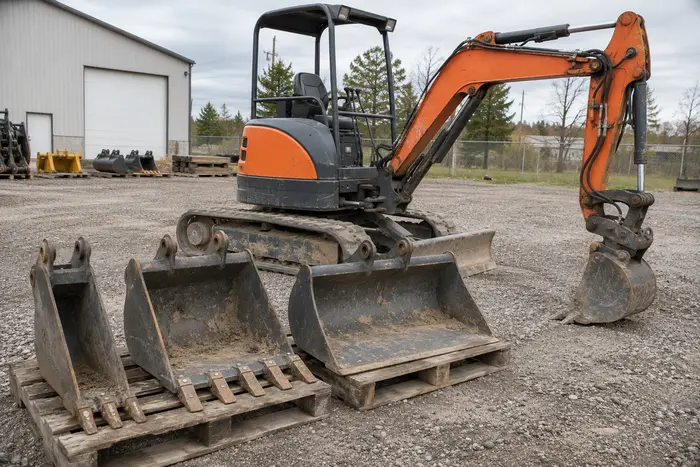
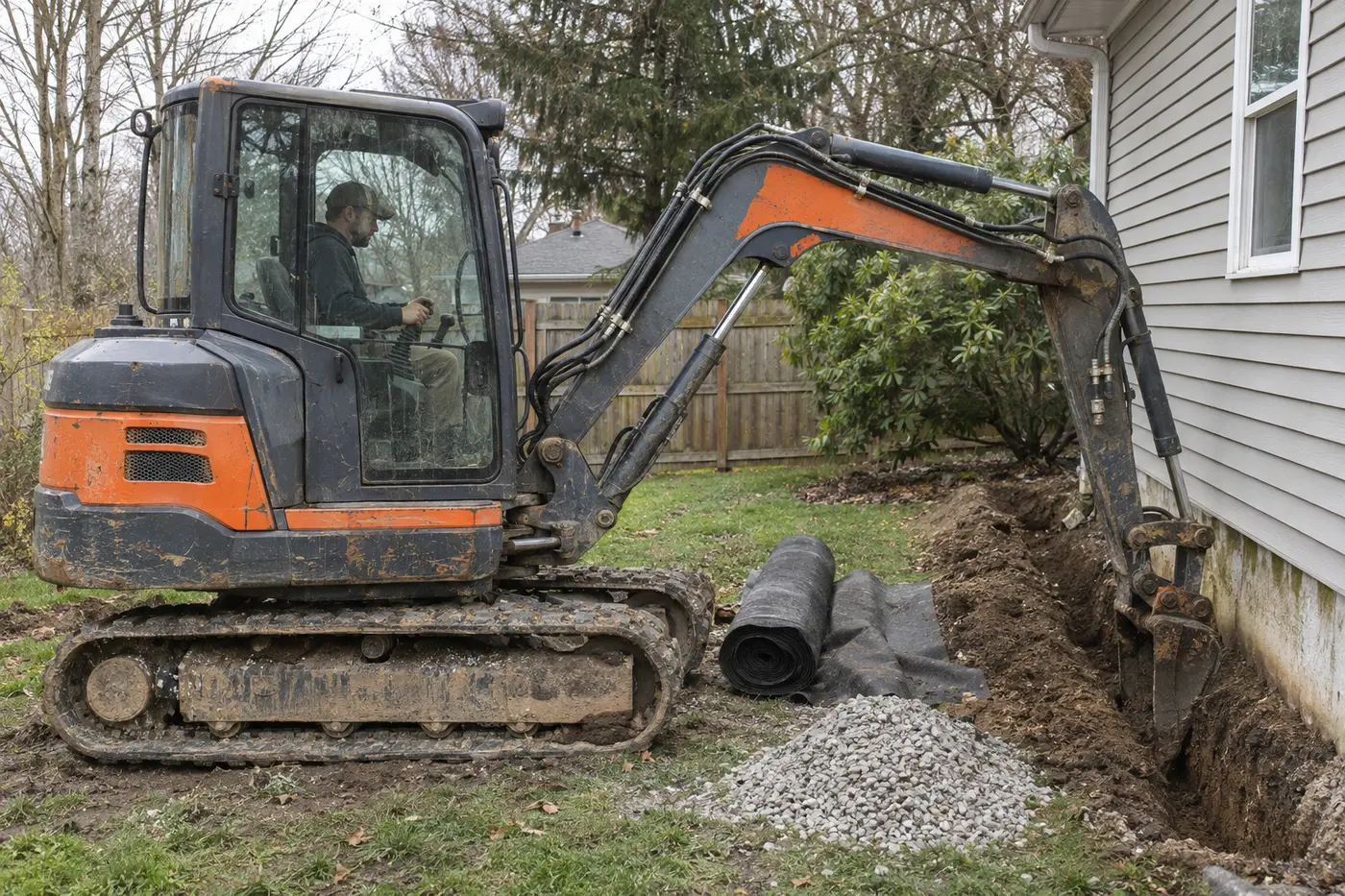
- Mini excavator. Digs to depth with a narrow bucket and lets you control the grade. See the mini excavator buckets and bucket types guide.
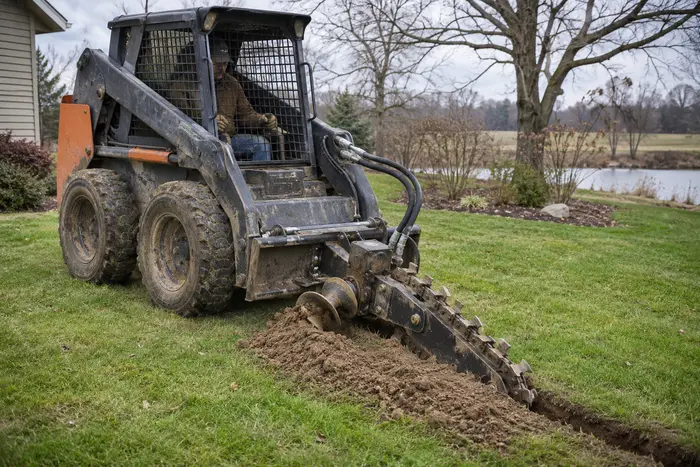
- Trencher. A chain trencher cuts a narrow, consistent trench quickly. See skid steer trenchers and our guide on what a trencher is.
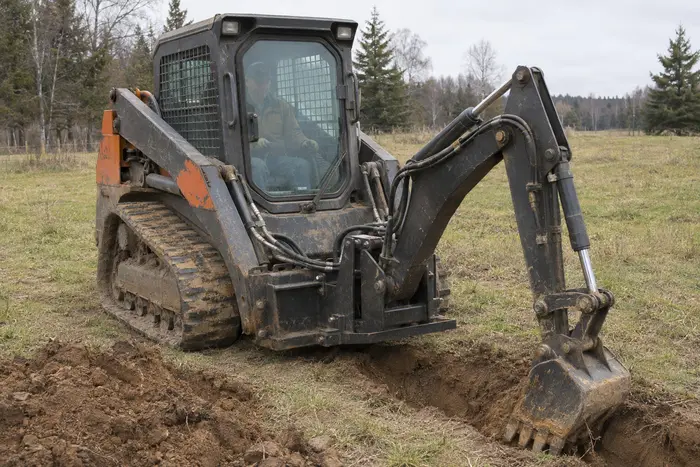
- Skid steer with a backhoe attachment. Useful for short runs on smaller sites.
Trench safety: when does depth become a hazard?
People forget that a trench is an excavation and carries the same hazards. OSHA's trenching guidance says to provide stairways, ladders, ramps or other safe means of egress in trenches 4 feet deep or more, positioned within 25 lateral feet of workers. Workers in trenches 5 feet or deeper need protective systems against cave-in, unless the trench is made entirely in stable rock. Spoils and other materials should be kept at least two feet back from the trench edge. A competent person should inspect the trench before work begins, daily before each shift, as needed through the shift, and after rainstorms or other events that raise the hazard.
Most residential French drains stay shallower than 4 feet, but a foundation drain or one dug through a hill can reach that depth. Know the rules before you start.
Choosing the pipe and gravel
The pipe is perforated, typically 4 inches in diameter, and it sits at the base of the trench. Washed gravel, typically 1 inch in size, covers it. Washed matters, because dirty gravel carries fines that settle and clog the voids. In some designs the gravel is graded, with coarse stone near the pipe and finer material outside, chosen to suit the surrounding soil. Solid pipe at the outlet end carries water clear of the drained area. Place the outlet where water can exit freely, such as a daylight slope, a dry well sized for the flow or a storm drain, if the rules allow it.
Step-by-step overview
- Call your utility locate service and mark buried lines.
- Find the low point or outlet and plan the route with a continuous fall.
- Dig the trench to the planned depth and width, checking slope as you go.
- Line the trench with geotextile fabric, leaving extra to fold over the top.
- Add a layer of washed gravel, lay the perforated pipe with the holes facing as the maker instructs, and cover with more gravel.
- Fold the fabric over the gravel and backfill with topsoil or stone as the design calls for.
- Test with water and watch the outlet.
Permits and local rules
Local rules vary. In the United States, municipalities may require permits, and stormwater rules can limit what water and sediment may enter a storm drain. Canadian and other regions have their own rules. Check with your building or public works department before you dig, especially near property lines, septic systems or a municipal storm sewer. Do not discharge onto a neighbor's land.
Common mistakes
The most common is too little slope, which leaves water in the line. Next is skipping the fabric, which lets silt in. Third is the wrong gravel: fine sand and crushed fines will clog. Fourth is a poor outlet that backs up. And last, many drains are placed where water does not collect. Walk the site in the rain before you dig, and watch where water goes.
Get the right fit the first time
Send us your machine make, model and year and what you plan to do with it. A person checks fit against the maker's specs, and you approve a delivered price before you pay. The manufacturer ships direct. Get a fit-checked quote.
Questions buyers ask
How deep should a French drain be?
A typical residential French drain is 18 to 24 inches deep and 12 to 18 inches wide, with a perforated pipe at the bottom covered by washed gravel. Foundation drains and drains in cold regions can be deeper, so check local rules.
How wide should a French drain trench be?
About 12 to 18 inches wide is typical for a residential drain. A wider trench is easier to clean and gives more gravel around the pipe. Heavy clay soil may justify a little extra width.
What slope does a French drain need?
It needs a continuous fall toward the outlet. A slope of about 1 in 100 to 1 in 200 is described as typical. Check the grade with a level or string line, and avoid dips that collect water.
How deep should a French drain be around a house foundation?
Foundation drains are normally laid at the bottom of the foundation excavation, beside the footing, with stone over the pipe and fabric above before backfill. The depth follows the footing level, so follow local building codes.
Do I need a permit to dig a French drain?
It depends on where you live. Some municipalities require permits, and stormwater rules may apply to where the water ends up. Check with your local building or public works department before you dig, especially near property lines or septic systems.