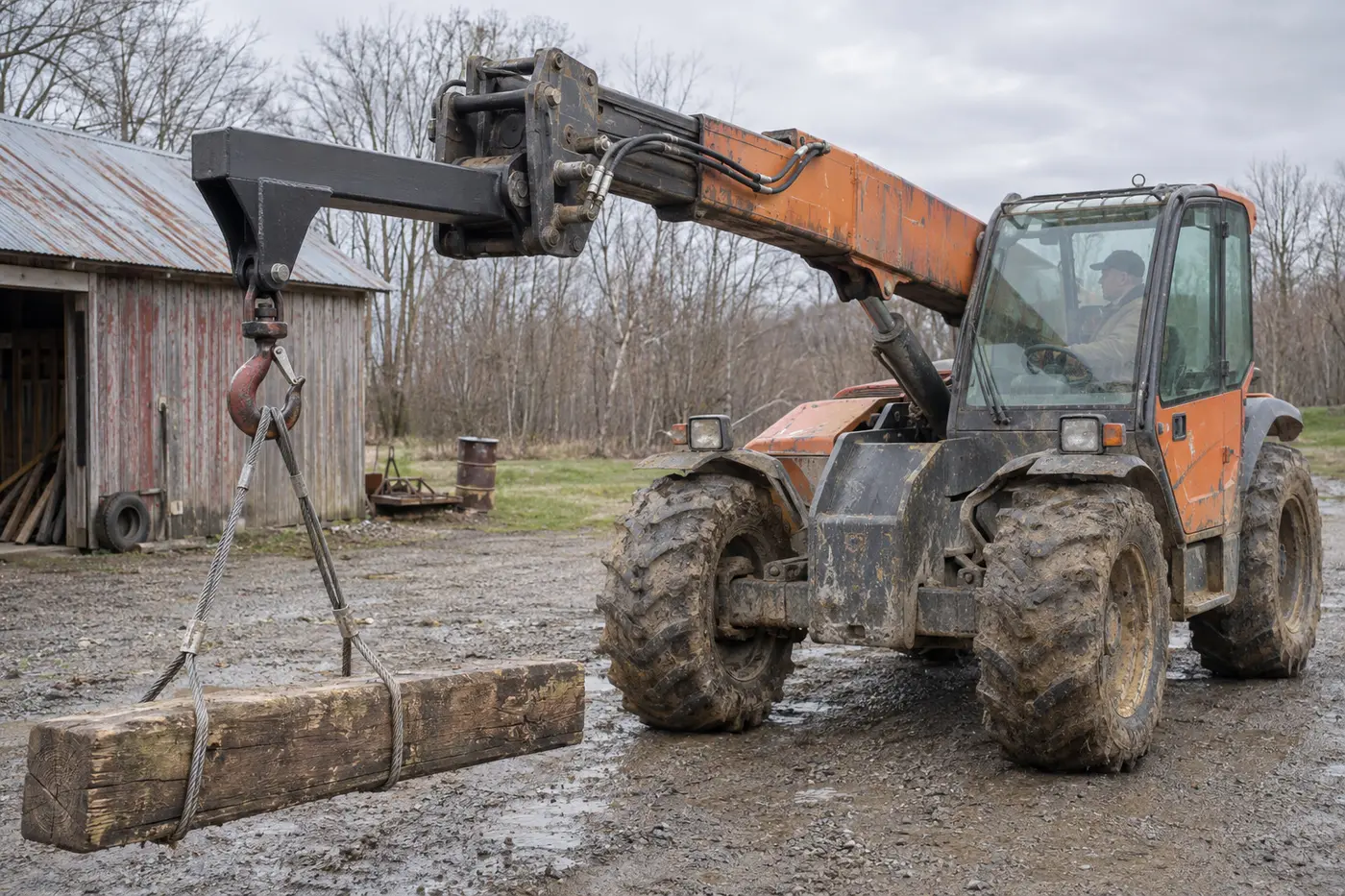
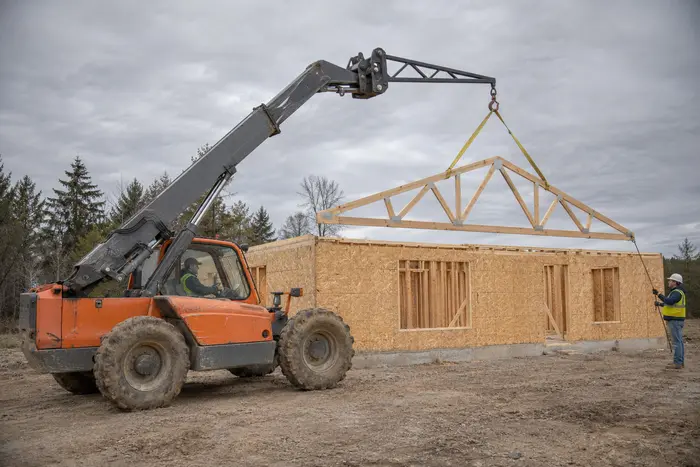
A telehandler lifting hook is an attachment with a hook or shackle point that lets a telehandler or forklift hang a rigged load from slings or chains. It mounts on the forks or carriage. It is used to lift loads such as pipe, beams and equipment that cannot sit on forks or a platform.
Every option is quoted for your exact machine. Sizes, flow and couplers are confirmed on the quote.
Illustration
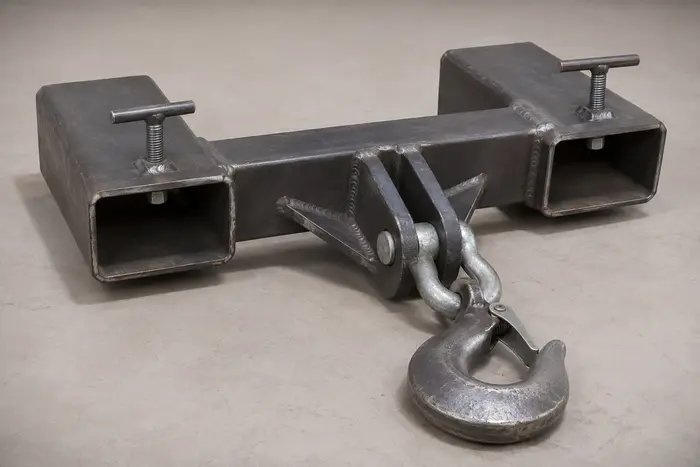
Fork-Mounted Lifting Hook
Telehandlers and forklifts with standard forks
A hook that slides onto the forks for occasional lifts of rigged loads. A simple, practical option for contractors that need a hook now and then.
Slides onto the forks
Safety latch
Retaining pin
Steel construction
Get my delivered priceTypical listed price at other online dealers$1,300 – $2,000USD · shipping terms vary by seller · a guide, not our price
Attachment type. Maker, model, photos and availability for your machine are confirmed on your quote.
Carriage-Mounted Swivel HookPhotos confirmed on your quote
Carriage-Mounted Swivel Hook
Telehandlers with a quick attach carriage
A hook with a swivel, mounted on the carriage for steadier lifts. It suits crews that lift regularly and want the load to turn freely without twisting the sling.
Swivel head
Carriage mount
Safety latch
Marked rated load
Get my delivered priceTypical listed price at other online dealers$1,500 – $2,000USD · shipping terms vary by seller · a guide, not our price
Attachment type. Maker, model, photos and availability for your machine are confirmed on your quote.
Heavy-Duty Hook With Boom MountPhotos confirmed on your quote
Heavy-Duty Hook With Boom Mount
Telehandlers used for steel, pipe and equipment lifts
A reinforced hook for heavier loads and more frequent use. It suits crews that set steel and precast pieces with a telehandler, where the load chart allows.
Reinforced mount
Large hook opening
Positive latch
Marked rated load
Get my delivered priceTypical listed price at other online dealers$2,000 – $3,100USD · shipping terms vary by seller · a guide, not our price
Attachment type. Maker, model, photos and availability for your machine are confirmed on your quote.
Price ranges show what two other North American online dealers listed comparable attachments for, checked November 2026. Shipping terms vary by seller. They are a guide, not our price: your delivered price, with freight to your address, is confirmed on your quote.
Fit check
What a person checks before you get a price
Fit is the first thing that goes wrong when you buy attachments online. Before we send a delivered price, a person checks your setup against the maker's specs. If we can't confirm fit, we tell you before you pay.
Make, model and year of your machine
Carriage or quick-coupler type
Rated capacity at the load center, from your load chart
Auxiliary hydraulics, if the attachment needs them
Fork or attachment length and width
Anything the maker's manual restricts
How buying here works
Tell us your machine and the job.
A person checks fit and sends one delivered price, freight included.
Approve it and the supplier ships to your door.
We're a new dealer adding manufacturers now. If we can't source a fit-checked option for your machine and job, we'll tell you on the first call, with no obligation.
How to choose a telehandler lifting hook
Capacity is the first check, and it is not simple. A hook has its own rated load, but the machine has a load chart that changes with boom angle, reach and the attachment. When you hang a load from a hook the machine maker must approve suspended loads with that hook, and the lift must stay inside the load chart for it. Check the operator manual and the machine data plate.
Safety latch: keeps the sling from slipping off the hook.
Swivel: lets the load rotate without twisting the sling.
Mount: fork-mounted or carriage-mounted.
Markings: a legible rated load tag stays on the hook.
Do you need a lifting plan for a telehandler?
Often, yes. Many sites and regions treat a suspended load as a lift that needs a plan, a trained rigger and a trained operator. Rules vary, so check your local regulations and employer policy. Use rigging that matches the load, keep the load close and low, and never exceed the load chart. Our safety guide covers general rules.
Common jobs for a lifting hook
Setting pipe, culverts and precast pieces within the load chart
Lifting beams and steel on job sites
Moving equipment and machinery with slings
Handling loads that have lifting eyes or rigging points
Send us your machine make, model and year. A person checks fit against the maker's specs, and you approve a delivered price, freight included, before you pay. Warranty terms, if any, are written on your quote. Ready to start? Request fit-checked quote for a lifting hook.
It is a hook or shackle attachment that mounts on the forks or carriage of a telehandler. It lets the machine lift a load hung from slings or chains, such as pipe, beams and equipment.
Can a telehandler lift loads with a hook?
Yes, if the machine maker approves suspended loads with that hook and the lift stays within the load chart for that attachment. Always check the operator manual and local rules before you hang any load from a hook.
Do you need a lifting plan for a telehandler?
In many jurisdictions and on many sites, a suspended lift needs a plan, a qualified rigger and a trained operator. Rules vary, so check local regulations, site rules and your employer policy before you lift anything on a hook.
How do you use lifting hooks on a forklift?
Mount the hook, confirm rated capacity, attach properly rated slings, lift slowly and keep the load close to the ground. Keep people clear of the load and travel path. Follow the manual for your machine and attachment.