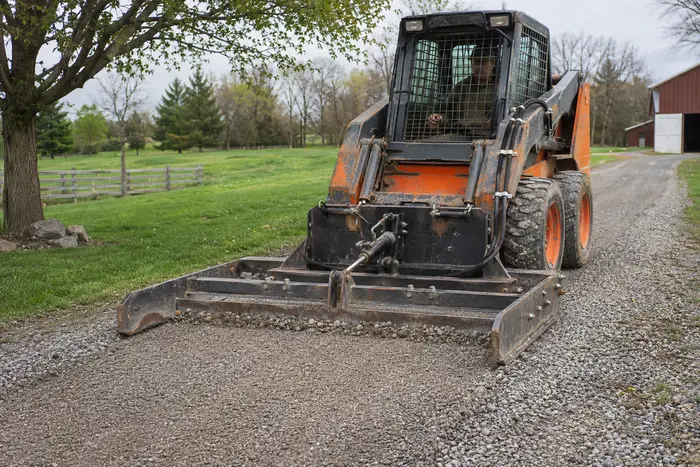
Landscaping guide
How to Level Ground With a Skid Steer: Yards and Lots
Quick answer
How to level ground with a skid steer: find the high and low spots, set a reference line, cut the highs and fill the lows with the bucket, compact the fill, then finish with a landscape rake, box blade or land plane. Re-check against your reference after every pass and keep passes light.
Shopping for this now? Get a fit-checked, delivered quote.
Key takeaways
- Survey first. Find high and low spots before you touch the dirt.
- Cut high areas and use that soil to fill low areas, so you haul little.
- Compact fill in layers or it will settle and leave dips.
- A rake, box blade or land plane finishes faster than a bucket on big areas.
- Level does not always mean flat. Leave a gentle slope away from buildings.
A skid steer can level a backyard, a pad, a pasture corner or a work yard, often in a day or two depending on size and soil, if you work in order. Many bad results come from skipping the survey and rushing the finish. This guide walks through how to level ground with a skid steer, which tools to use at each stage, and the mistakes that leave you with a lumpy, ponding mess.
What does leveling ground mean?
Leveling, also called regrading, is making the land flatter by raising low areas and lowering high ones. It is a type of grading. One caution: leveling one area can make nearby slopes steeper, which makes them more prone to erosion and instability. And completely flat is rarely the goal. Water needs a path to leave. Plan for a slight fall away from buildings and toward a drain, swale or low point. Our guide to what grading means covers the basics.
What tools do you need?
| Tool | Best use in leveling |
|---|---|
| Bucket | Cutting high spots, moving fill, rough spreading |
| Landscape rake | Smoothing, pulling rocks and roots, fine finishing |
| Box grader | Cutting and spreading over larger areas in one pass |
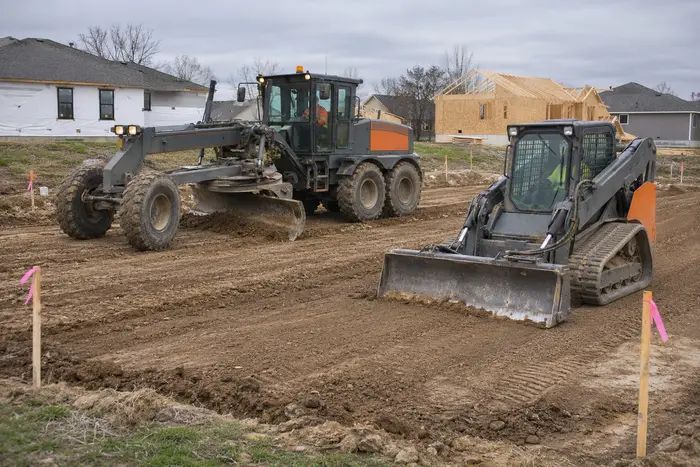
| Land plane | Long, flat finishing on big pads and fields |
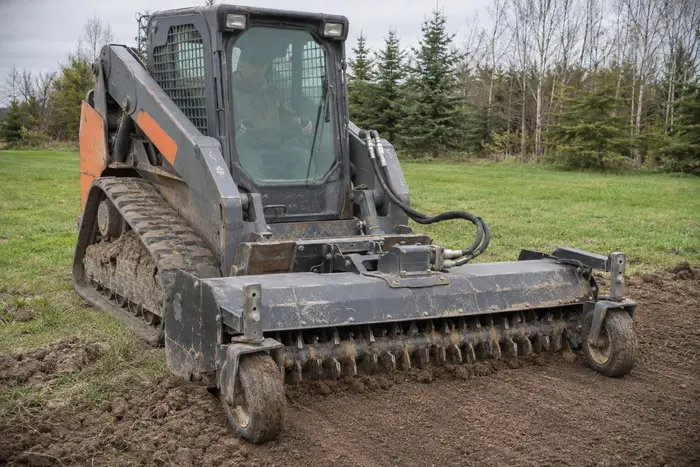
| Power rake | Preparing a seedbed and clearing stones |
| Laser or string line | Reference for level and slope |
| Compactor or roller | Firming fill so it does not settle |
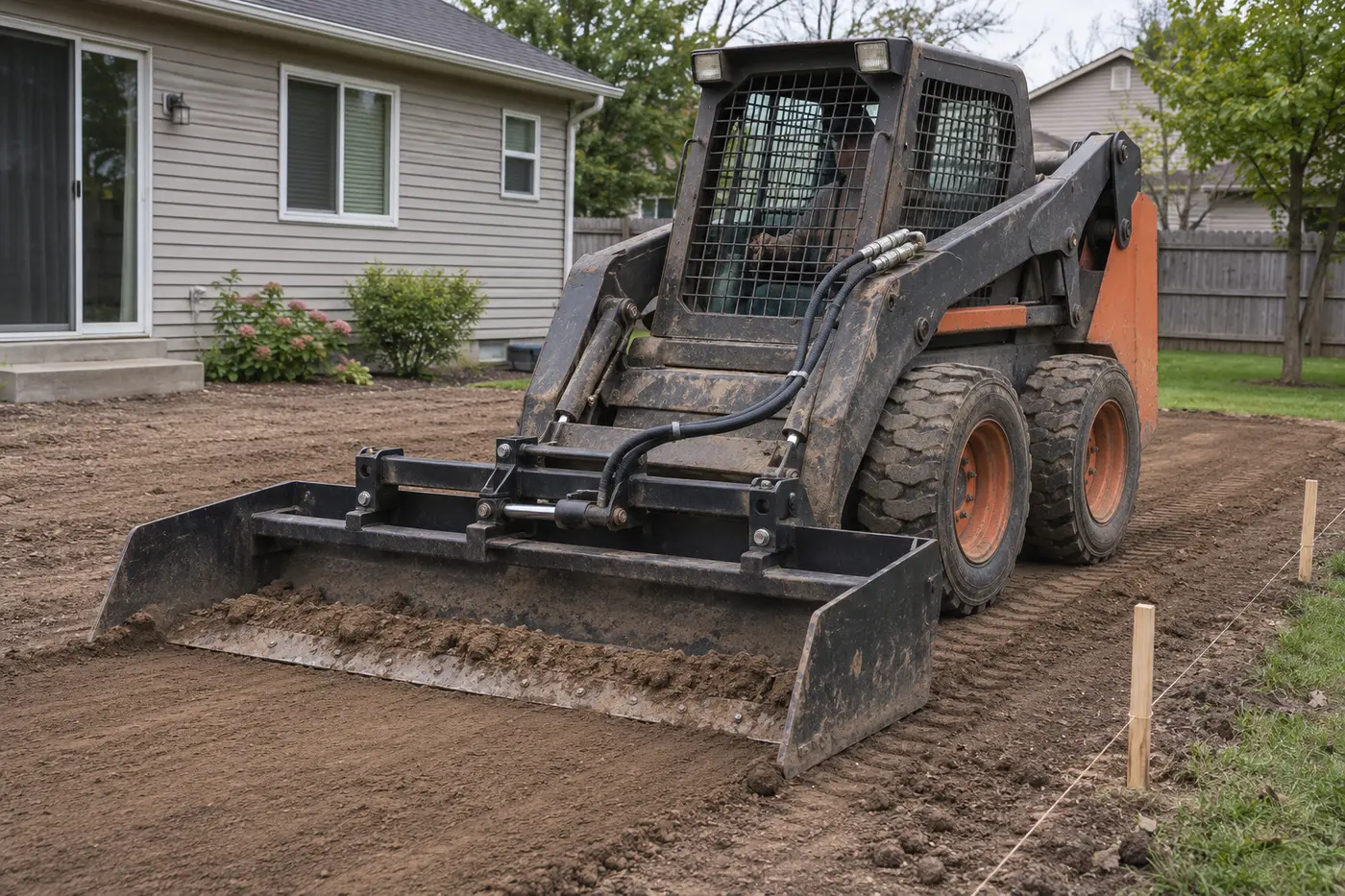
You can level a small yard with a bucket and a rake. For a large area, a box grader or land plane saves hours. See landscape rakes and land planes to compare.
How to level ground with a skid steer, step by step
- Walk the site. Look for high spots, dips, soft ground, stumps, buried debris and drainage. Mark utilities and call your locating service before you dig.
- Set a reference. Use stakes and a string line, a laser, or a long straight board with a level. Decide on the finished height and slope. Mark it on the stakes.
- Clear the surface. Remove rocks, sod, roots and trash. If you will add topsoil, strip and stockpile the existing topsoil first.
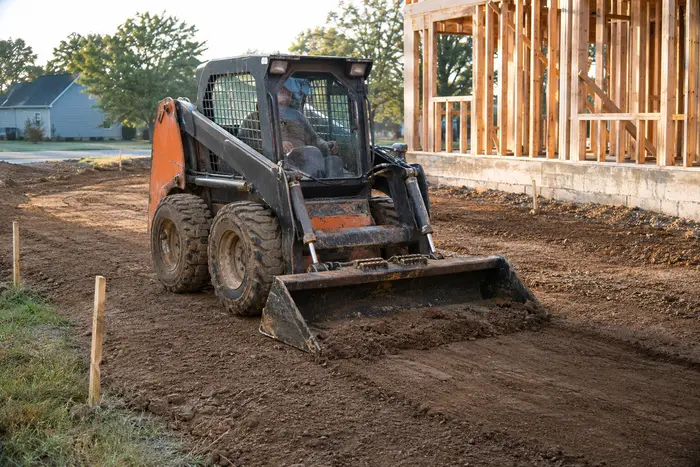
- Cut the high spots. Use the bucket to shave them down. Carry that soil to the low spots instead of hauling it away.
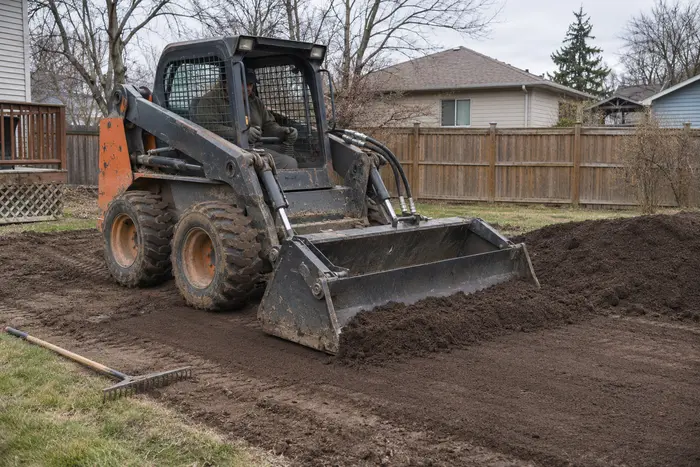
- Fill the low spots. Place soil in layers, not one big dump. Thin layers compact better.
- Compact. Use a roller or plate compactor on each layer, or track over light-duty areas with the machine. Loose fill settles and leaves dips.
- Rough level. Spread with the bucket flat. Back-drag in light passes to smooth. Our guide on how to grade with a skid steer bucket shows the technique.
- Fine level. Switch to a landscape rake, box grader or land plane for the final surface. Make light passes in two directions.
- Check. Sight the surface, measure against your reference and fix what is off.
- Finish. Add topsoil if needed, rake it smooth, water it and seed or lay sod. Topsoil settles after it is spread, so wait for it to stop moving before you sow.
If you need to estimate topsoil for the finish, our topsoil calculator guide shows the math.
How do you level a yard that has low spots?
Small dips are the most common problem. Measure the depth at the deepest point and use the average depth across the patch. Fill with soil, tamp it, and top with a thin layer of topsoil. Avoid piling on thick layers of soil over grass. A thick pile can smother the lawn. For large dips, strip the sod, fill and compact, then replace the sod.
How is leveling a pad or driveway different from a lawn?
The method is the same, but the finish and the base are different. A lawn needs a loose, rake-finished surface with topsoil on top. A pad for a shed, a patio or a driveway needs a firm, compacted base, usually crushed stone, with a smooth, tight surface and a planned slope for drainage. For these jobs, spend more time on compaction and on checking the slope. Spread base stone in layers, compact each layer and finish with a box grader or land plane, which gives you a flatter surface than a bucket.
For a field or pasture, you may only need to knock down humps and fill ruts. A land plane or a drag works well there, and you can skip the topsoil unless you are reseeding.
How do you know when you are done?
Check the surface three ways. First, sight along it at low angle, early or late in the day, when shadows show every dip. Second, measure the finished height against your string line or laser at several points. Third, wait for the first heavy rain and see where the water goes. If it runs away as you planned, you are done. If it pools, mark the spot and touch it up while the soil is still workable. That small return visit saves you from a bigger fix later.
Can a mini skid steer level ground?
Yes. A mini skid steer is slower, but it fits through gates and works on delicate lawns. Use a narrower bucket and take lighter passes. A small landscape rake attachment helps with fine finishing. Plan for more passes than you would on a full-size machine, and check the machine's rated capacity before you fill a bucket with wet soil.
What mistakes should you avoid?
- Working without a reference. Eyeballing leaves slopes toward the house and standing water.
- Working wet ground. Wet soil ruts and compacts badly. Wait for firm conditions.
- Skipping compaction. Fill that is not compacted settles, and dips return in a season.
- Burying topsoil. Strip it and put it back on top. Buried topsoil hurts the lawn and the new fill.
- Ignoring drainage. A level surface that holds water is a failure. Plan where the water goes.
- Changing drainage without checking neighbors. Do not send water onto someone else's property.
- Over-working the surface. Too many passes on soft ground create ruts and compaction in the wrong places.
How do you stay safe?
- Follow the operator manual and the rated operating capacity of your machine.
- Wear the seat belt and keep the restraint bar down.
- Avoid steep slopes and soft edges. Drive straight up or down a slope, not across.
- Keep bystanders out of the work area.
- Watch for buried utilities, septic systems and drain lines.
Get the right fit the first time
The right leveling tool depends on your machine's size, hydraulics and quick attach. Send us your make, model and year, and tell us how big the area is. We will confirm fit against the manufacturer's specs and give you a delivered price to approve before you pay. Start with a fit-checked quote.
Questions buyers ask
How do you level dirt with a skid steer?
Set a reference line, cut the high spots with the bucket and move that soil to the low spots. Compact the fill in layers, then back-drag in light passes to smooth. Finish with a rake, box blade or land plane, and check your level against the reference after every pass.
What is the best way to level ground with a skid steer?
Use the bucket for rough work, then switch to a landscape rake, box grader or land plane for finishing. Work from a stake or string-line reference, compact fill in thin layers and keep passes light. The right tool depends on the size of the area.
Can you level a yard with a skid steer?
Yes. A skid steer can cut high spots, fill low spots and finish the surface, often in a day or two on a typical yard. Use a bucket and a rake, wait for firm ground, plan drainage away from the house and add topsoil only after the base is level and compacted.
How do you level uneven ground with a mini skid steer?
Use the same method as with a full-size machine, but expect slower progress. Work with a narrower bucket and take lighter passes. A small landscape rake attachment helps with the finish. Keep loads small so you stay within the machine's rated capacity.
Do I need to compact fill after leveling?
Yes, in most cases. Loose fill settles over time and leaves dips, even if it looks level when you finish. Spread fill in thin layers and compact each one with the machine, a roller or a plate compactor, especially where the ground will carry a load.