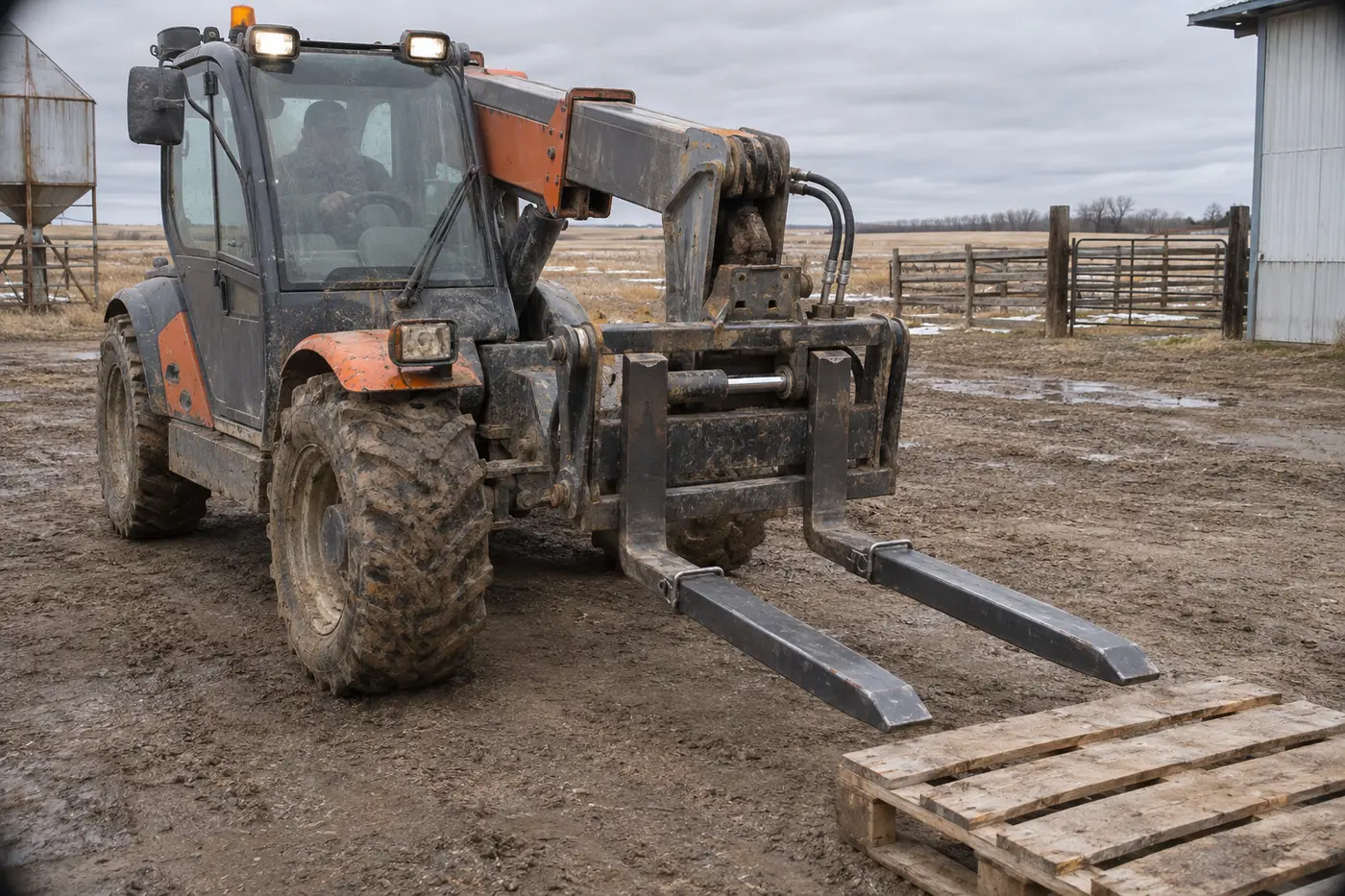
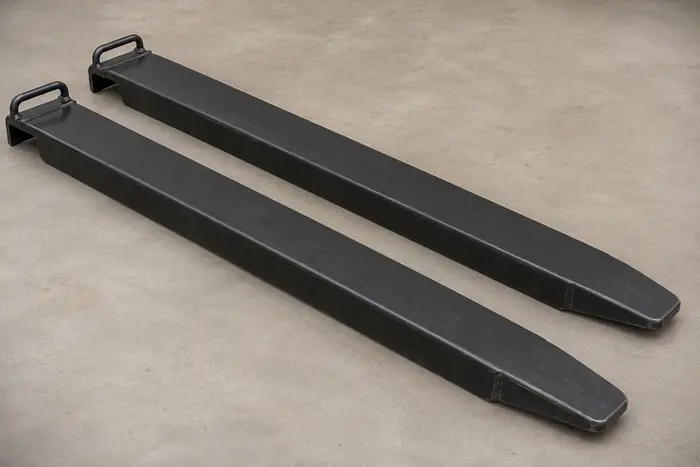
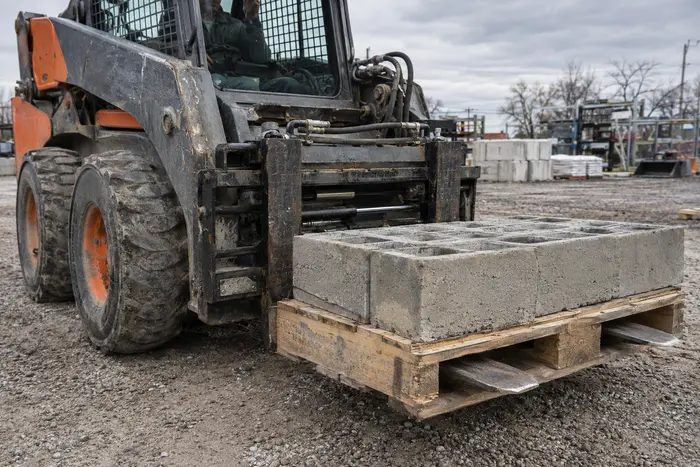
Telehandler fork extensions are slip-on sleeves that fit over the existing forks and lengthen them so you can carry long, wide or bulky loads. They let a telehandler handle pallets, timber, pipe, roofing and bundles that are longer than a standard fork, and they usually slide on and off by hand, held by a retaining pin.
Every option is quoted for your exact machine. Sizes, flow and couplers are confirmed on the quote.
Illustration
Standard Slip-On Fork Extensions
Telehandlers and forklifts with standard forks
A pair of sleeves that slide over your forks to lengthen them. A simple, practical way to carry long loads without buying a second set of forks.
Slip-on sleeves
Retention pins
Fits over your existing forks
Easy fit and removal
Get my delivered priceTypical listed price at other online dealers$670 – $920USD · shipping terms vary by seller · a guide, not our price
Attachment type. Maker, model, photos and availability for your machine are confirmed on your quote.
Heavy-Duty Fork ExtensionsPhotos confirmed on your quote
Heavy-Duty Fork Extensions
Telehandlers and forklifts with heavy-duty forks
Thicker sleeves for heavier loads and daily commercial use. Built for contractors and yards that carry long timber, pipe and steel on a regular basis.
Thicker steel
Reinforced edges
Retention pins
Marked rated capacity
Get my delivered priceTypical listed price at other online dealers$670 – $920USD · shipping terms vary by seller · a guide, not our price
Attachment type. Maker, model, photos and availability for your machine are confirmed on your quote.
Fork Extensions With Safety StopPhotos confirmed on your quote
Fork Extensions With Safety Stop
Telehandlers and forklifts with standard forks
Sleeves with a stop or lock that keeps them from sliding off the forks. Adds security on long loads. Keep loads low and travel slowly on uneven ground. Fit is confirmed against your machine before you order.
Attachment type. Maker, model, photos and availability for your machine are confirmed on your quote.
Price ranges show what two other North American online dealers listed comparable attachments for, checked November 2026. Shipping terms vary by seller. They are a guide, not our price: your delivered price, with freight to your address, is confirmed on your quote.
Fit check
What a person checks before you get a price
Fit is the first thing that goes wrong when you buy attachments online. Before we send a delivered price, a person checks your setup against the maker's specs. If we can't confirm fit, we tell you before you pay.
Make, model and year of your machine
Carriage or quick-coupler type
Rated capacity at the load center, from your load chart
Auxiliary hydraulics, if the attachment needs them
Fork or attachment length and width
Anything the maker's manual restricts
How buying here works
Tell us your machine and the job.
A person checks fit and sends one delivered price, freight included.
Approve it and the supplier ships to your door.
We're a new dealer adding manufacturers now. If we can't source a fit-checked option for your machine and job, we'll tell you on the first call, with no obligation.
How to choose telehandler fork extensions
Match the extension to your forks. Sleeves must fit the fork width and thickness with little slop. A loose sleeve can shift under load. Confirm the fork size on your machine before you order.
Then check capacity. A longer fork moves the load center out and reduces the telehandler's capacity. The extension's rating is only part of the picture. Your forks must also be long enough to support the extension: the extension maker states the minimum fork length for each size. Follow the load chart and the operator manual.
Fork width and thickness on your machine
Extension length for your loads
Rated capacity and load center change
Retention pin or lock
Wear and finish of the sleeve
Common jobs for fork extensions
Extensions solve the long-load problem.
Carrying long timber and pipe bundles
Moving roofing and sheet goods
Handling wide pallets and crates
Loading long items onto trucks and trailers
Fork sizes and load charts vary by machine, so fork section, boom capacity at full reach and load chart limits all need checking. We confirm each against your machine before we quote. Always work within the rated operating capacity in your operator manual.
Duty rating matters as much as size. Light-duty builds suit occasional use. Heavy-duty builds use thicker steel for heavier loads and daily commercial work. Buy for the hours you will run, not the best case.
Compare more than the headline spec. Look at weld quality, how snugly the sleeve fits, the retaining pin and the rated capacity marking. Those details decide how long the attachment lasts on your machine.
Send us the make, model and year of your telehandler. A person checks the extension against the maker's specs, and you see a delivered price before you pay. It ships direct from the supplier. Ready? Request a fit-checked fork extension quote.
They slide over standard forks to lengthen them so you can carry long, wide or bulky loads such as timber, pipe and roofing. They usually fit by hand with a retaining pin and come off when you do not need them.
Do fork extensions reduce lifting capacity?
Yes. Longer forks move the load center farther out and reduce the machine's capacity. Always check the load chart and the extension's rating, and stay within the limits in the operator manual. Send us your make and model and we confirm fit before you order.
How do I choose the right size fork extension?
Measure the width and thickness of your forks, and decide how long your longest load is. The sleeve must fit snugly. Check the minimum fork length the extension maker lists. Send us your make and model and we confirm fork size and capacity before we quote.
Are fork extensions safe on a telehandler?
They can be used safely within the rated capacity, on forks long enough to support them, with the pin or lock engaged and the load kept low and balanced. Never exceed the load chart and follow the operator manual. Send us your make and model and we confirm fit before you order.