Skid steer guide
Are Skid Steer Attachments Universal? What Fits What
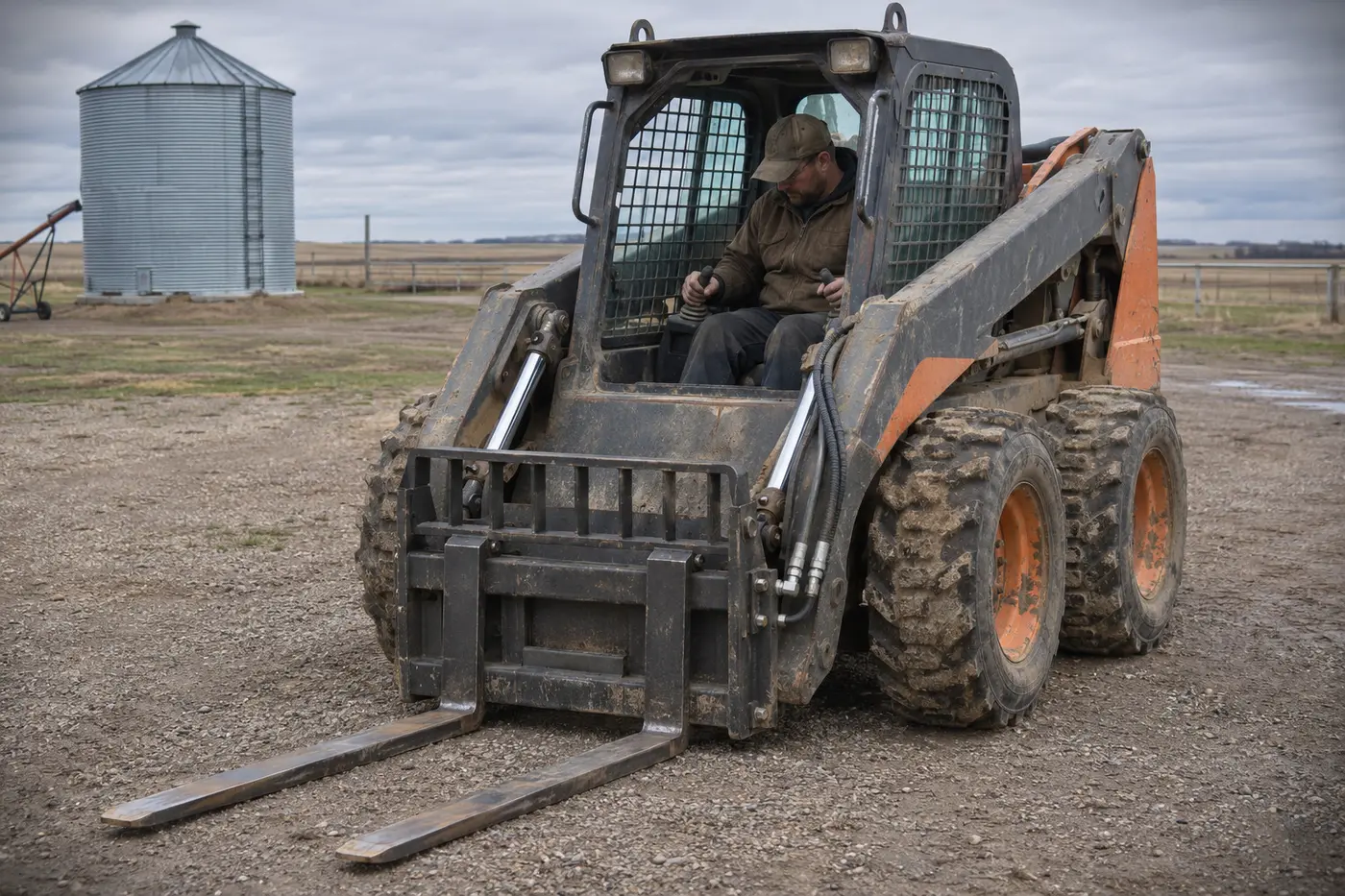
Quick answer
Are skid steer attachments universal? Many mount to a universal skid steer quick attach plate, so they bolt on across makes, but that does not guarantee they work. Hydraulic couplers, flow, pressure, weight and mini or large-frame size also decide fit. Check the plate, hydraulics and capacity before you buy.
Shopping for this now? Get a fit-checked, delivered quote.
Key takeaways
- Many attachments use a universal quick attach plate, but not every one.
- Mounting is only half of fit. Hydraulics and weight matter too.
- Mini skid steers, and some machines with maker-specific mounts, use different plates.
- Hydraulic couplers can differ and may need an adapter.
- Always confirm fit with the maker or a dealer.
The short answer to this one is "mostly, for the plate; not always, for everything else." If you have ever tried to hang a tool on a different machine, you know the plate lining up is only the start. Here is how to think about interchangeability so you do not buy something that will not run.
What is a universal skid steer quick attach plate?
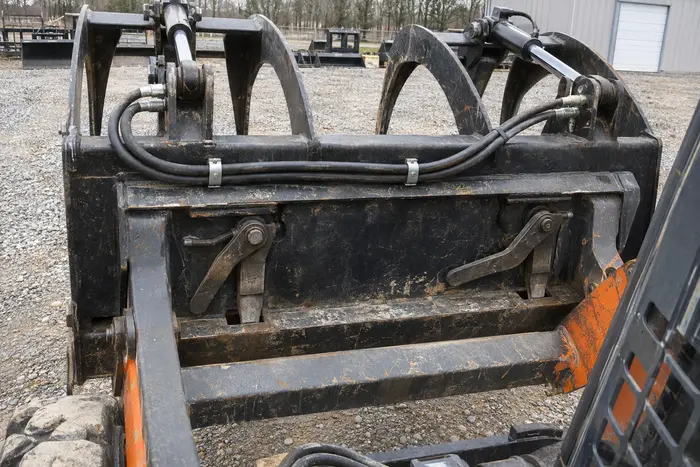
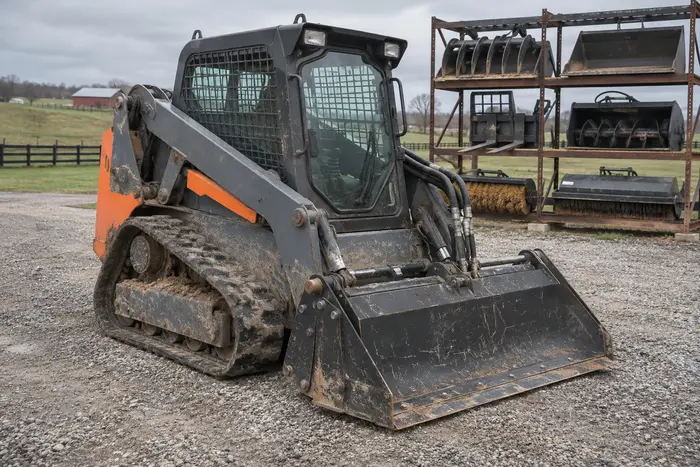
The quick attach plate is the mounting interface at the front of the lift arms. It lets you latch an attachment on and lock it without bolts. Many tools are built to a common plate pattern that is widely used across the industry, and people call it the universal skid steer quick attach. Reference material on loaders explains that quick-attach systems let the bucket be swapped for other tools, and that makers of snow pushers offer skid steer versions with a quick-attach system. If an attachment is built for that pattern and your machine uses it, it will physically mount.
Some manufacturers use their own patterns, and some machines, especially smaller ones, use a different interface. So the first question is always: which plate do I have?
Are skid loader attachments interchangeable between brands?
Mechanically, often yes, when both machines use the universal pattern. That is why attachment makers can sell one tool for many loaders. But mounting alone does not make a tool usable. These are the other checks:
| Check | Why it matters |
|---|---|
| Mounting plate pattern | The tool must latch and lock safely |
| Hydraulic couplers | Different coupler types will not connect without an adapter |
| Hydraulic flow and pressure | Too little flow runs the tool slowly; too much can damage it |
| Case drain | Some hydraulic motors need a case drain return line your loader may lack |
| Weight and tip load | A heavy tool reduces rated operating capacity |
| Width and geometry | The tool must clear tires, tracks and lift arms |
| Electrical controls | Some tools need a switch or harness for powered functions |
Do hydraulic connections match?
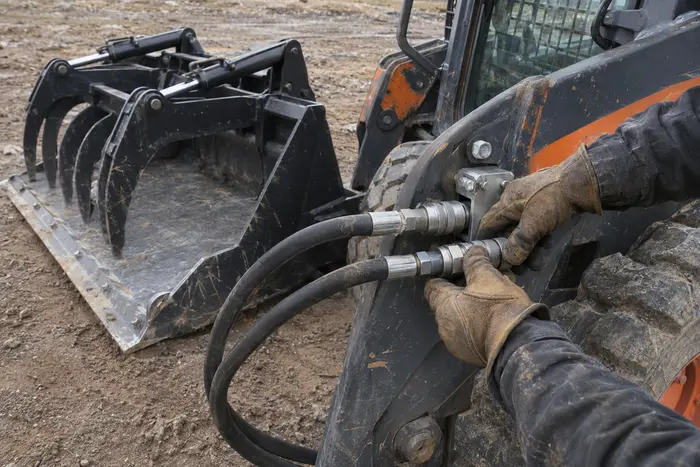
Often not by default. Attachments that use hydraulics connect through couplers on the loader's auxiliary lines. Machines vary in the coupler style they use, and some owners fit flat-face couplers for cleaner, lower-leak connections. If the couplers do not match, you need an adapter or a new set of couplers. Read our guide to flat-face couplers and hoses for more, and hydraulic flow explained for the flow side.
Are mini skid steer attachments universal?
Less so. Mini loaders are smaller, with lower lift capacity and hydraulic output, and they often use their own mounting plates and hose connections. A full-size attachment may be too heavy or too large, and a mini tool may be too light for a bigger machine. If you own a mini, shop mini-specific tools. Browse mini skid steer mounting plates and hitches if you need an adapter route, and see our mini skid steer guide.
What if my plate does not match?
You still have options. A mounting plate adapter converts one pattern to another so a tool can fit. See skid steer mounting plates. Adapters add weight and move the load slightly forward, which reduces capacity. Use them with the tool's weight in mind and stay within the machine's rated operating capacity.
What about tractors and telehandlers?
Other machines have their own standards. Tractor loaders, three-point hitches, telehandlers and excavators do not use the skid steer plate by default, though adapters exist. For example, skid steer adapters for telehandlers and for excavators let some tools cross over. Check capacity carefully, since these machines handle load differently.
How to check fit before you buy
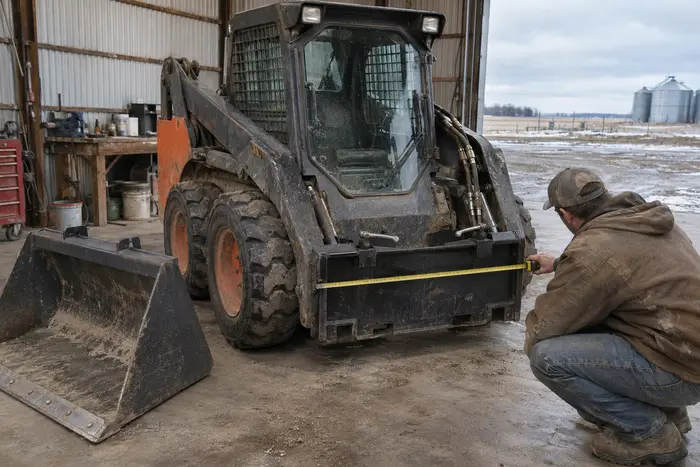
- Confirm your plate type in the manual, or measure it against the attachment's drawing.
- Get your loader's auxiliary flow, pressure and coupler type.
- Compare to the attachment's stated requirements.
- Add the attachment's weight to your load calculation.
- Confirm clearances, including tires or tracks and any cab guarding.
- Ask for confirmation from the maker or a dealer, in writing, before paying.
Our guide on quick attach plate types and the walk-through on how to measure attachment fit help with the physical checks.
Why fit mistakes happen
Three fit mistakes come up again and again: assuming the plate means everything fits, ordering a flow-hungry tool for a low-flow machine, and ignoring weight. Avoid those and you avoid the usual headaches. If a tool needs high flow, our guide to high-flow attachments is worth a read before you order.
Safety
Always make sure the locking pins or wedges are fully engaged before lifting. A tool that is only half-latched can fall off. Follow the operator manual and the loader's rated operating capacity.
Brand rules of thumb that do not hold
A few myths cause costly errors. "It is the same size, so it will fit" ignores hydraulics. "It fits a tractor, so it fits a skid steer" ignores plate and capacity. "It ran on my friend's loader" ignores flow differences between models, and even between factory options on the same model. A loader with the high-flow option behaves very differently from the same model without it. The only reliable method is to compare the attachment's requirements to your own machine's published numbers.
What a good fit confirmation looks like
A fit check should name your machine's make, model and year, state the mounting type, list the hydraulic requirements, and confirm each against the maker's specs. If any of those pieces is missing, ask. Be wary of any seller who says "it fits everything." A reputable seller will confirm for your specific machine, and will tell you plainly when an adapter or a different tool is the better answer.
Used and older machines
Older loaders may have different couplers, lower flow and a different plate. Wear can also change clearances. If you run an older machine, measure the plate and test your hydraulic output before ordering a flow-hungry tool. A used machine is a fine tool carrier. It just needs the same checks.
Warranty and fit
Warranty terms vary by manufacturer. If any apply, they are written on your quote before you pay. Running a tool outside its rated flow, pressure or capacity can put warranty coverage at risk, so read the terms and confirm fit first. Keep your machine details and the confirmation with your purchase records, and keep the attachment's manual with the machine.
Short answer for each case
- Same universal plate, no hydraulics (bucket, forks, pusher): usually fits, subject to width and weight.
- Same plate, hydraulic tool: fits only if couplers, flow and pressure line up.
- Mini loader and full-size tool: usually does not fit well.
- Different plate: use an adapter if capacity allows.
Get the right fit the first time
Send us your machine's make, model and year, and a person will check fit against the maker's specs. Your quote shows one delivered price, freight to your address included, and the order ships direct from the supplier. Ask for a fit-checked quote.
Questions buyers ask
Are skid steer attachments universal?
Many fit a universal skid steer quick attach plate, so they mount across makes. But hydraulic couplers, flow, pressure, weight and machine size also decide whether a tool works. Mounting is only part of fit, so check all of it.
Are skid steer attachments interchangeable between brands?
Often they mount interchangeably if both machines use the universal plate pattern. They may still differ in hydraulic couplers, flow and weight limits. Confirm the plate, hydraulics and rated capacity before you buy a tool made for another machine.
Are mini skid steer attachments universal?
Less so than full-size attachments. Mini loaders have smaller capacity and hydraulics and often use different plates or connections. Shop for tools made for mini machines, and confirm fit with the maker before you order.
Can I use an adapter if my plate is different?
Often yes. A mounting plate adapter converts one pattern to another so a tool can fit. It adds weight and moves the load forward, which lowers rated capacity, so stay within your machine's limits and follow the manual.
What do I need to check before buying a skid steer attachment?
Check the plate type, hydraulic coupler style, auxiliary flow and pressure, case drain needs, attachment weight and clearances. Then ask the maker or a dealer to confirm fit before you pay. That prevents the most common fit problems.