Skid steer guide
Skid Steer Auger Attachment: Digging and Drilling Guide
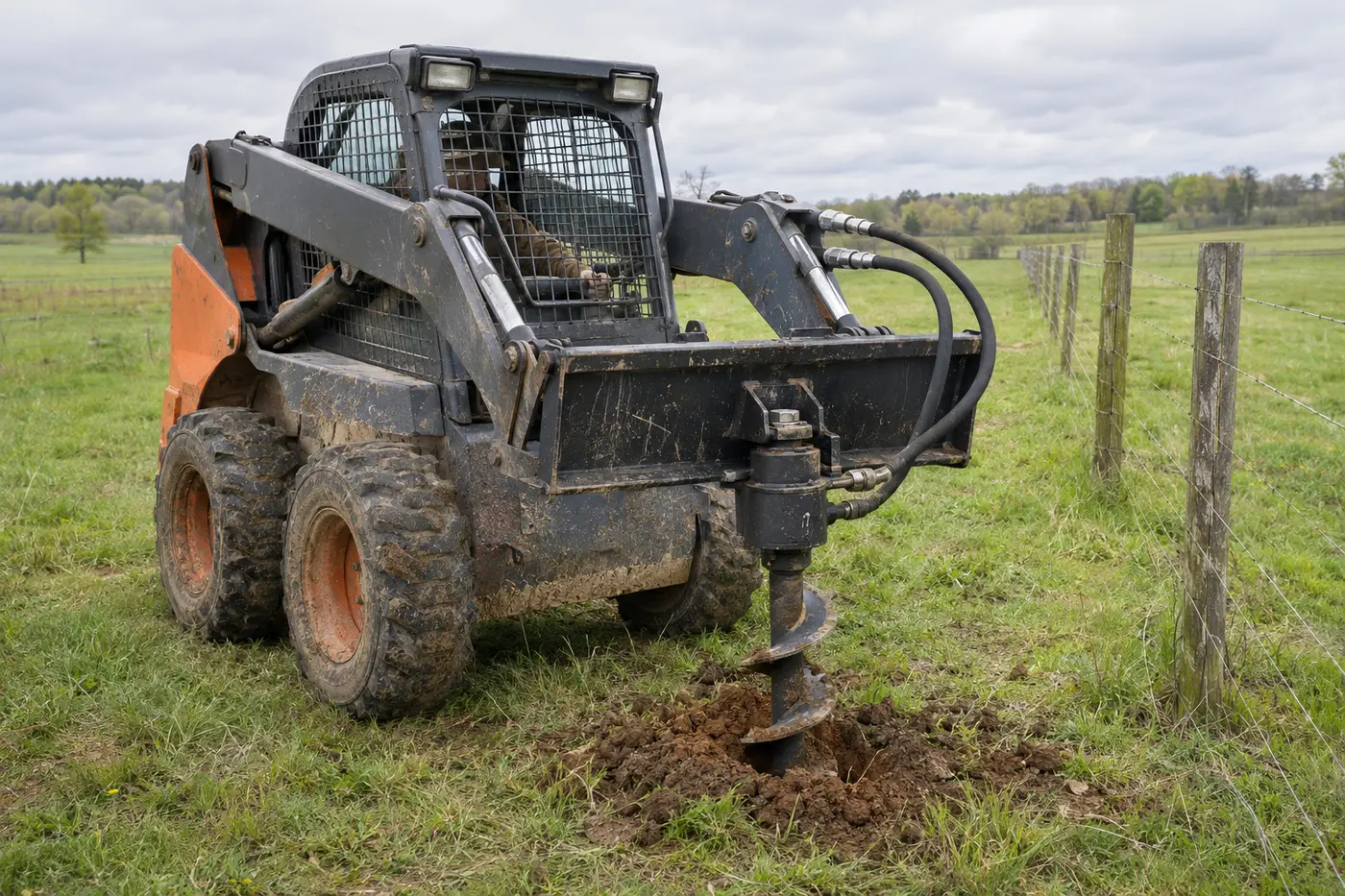
Quick answer
A skid steer auger attachment drills round holes for posts, footings, tree planting and utility poles. It has a hydraulic drive unit and a bit sized to the hole. Match drive torque to bit diameter and soil, confirm auxiliary flow and couplers, and keep the machine level.
Shopping for this now? Get a fit-checked, delivered quote.
Key takeaways
- An auger is a drive unit plus a bit, and you buy them as a matched set.
- Torque sets what hole size and soil the auger can handle.
- Rocky or frozen ground needs a rock bit or a smaller diameter.
- Extensions add depth but also add side load on the machine.
- Check auxiliary flow, couplers and the quick-attach plate before ordering.
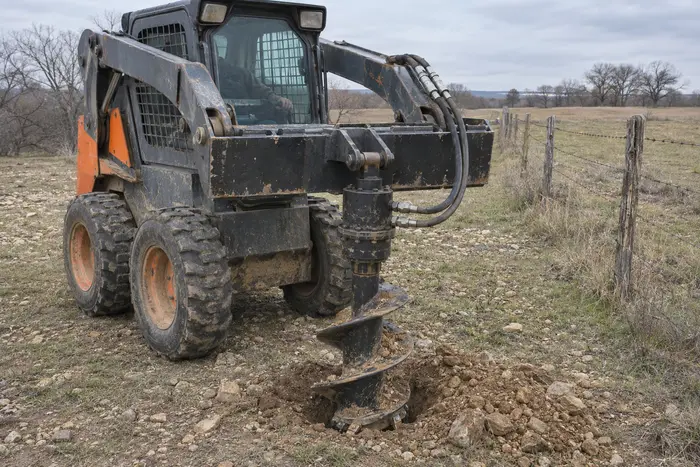
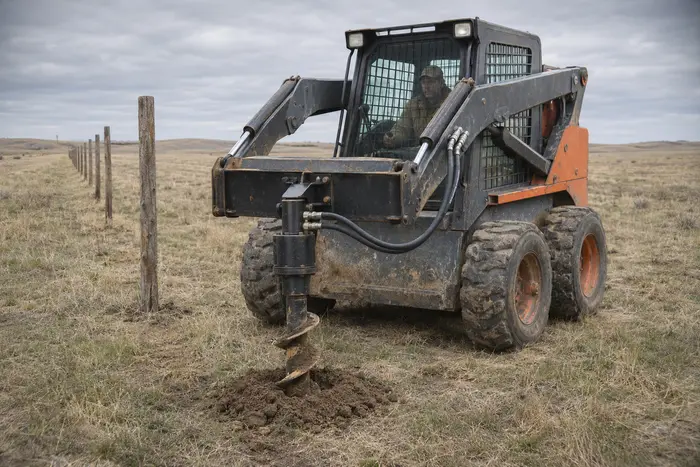
A skid steer auger is a common drilling attachment. It digs holes for fence posts, deck footings, sign posts and trees much faster than a hand-held auger. The attachment is simple, but the choices around torque, bit size and soil matter. This guide covers the basics.
What is a skid steer auger attachment?
An auger attachment has two parts: a drive unit and a bit. The drive unit is a hydraulic motor and gearbox in a frame that mounts to the machine's quick-attach plate. The bit is a spiral steel shaft, called the auger, that bores into the ground and lifts soil to the surface. Bits come in different diameters and lengths. You can swap bits on the same drive unit, within the limits of its torque rating.
The attachment draws power from the machine's auxiliary hydraulics. Torque, not speed, does the work in the ground. Learn more about the available skid steer augers and about the smaller mini skid steer augers.
How do you choose the right bit size?
Choose bit diameter for the job. A fence post needs a hole wider than the post to allow backfill. A deck footing or a larger pole needs a wider hole. Tree planting holes are wider and shallower than post holes. Bigger bits need more torque, and the drive unit's torque rating sets an upper limit. Using a bit that is too big for the drive unit stalls the motor and can damage the gearbox.
Ask the manufacturer which bit diameters the drive unit supports, and what the maximum is in the soil you have. Heavy clay and wet soil need more torque than loose sandy soil, for the same hole.
What about depth and extensions?
Bit length sets depth. Many jobs need holes a few feet deep, and a standard bit handles that. For deeper holes, you can add an extension shaft. Extensions let you reach farther, but they add leverage on the drive unit and make it harder to keep the hole straight. See the guide on rock auger bits if you work in stony ground.
Frost depth, utility locates and local code can all affect how deep your holes should be. Check these before you drill. For fence posts specifically, the how deep should a fence post be guide covers the usual factors.
Which bit style suits your soil?
| Soil or job | Bit style | Notes |
|---|---|---|
| Loam, topsoil, sand | Standard earth bit | Fastest, lowest torque need |
| Heavy clay | Standard bit with a sharp, well-set cutting edge | Clay clings, so clean the flighting often |
| Gravel and cobble | Rock bit with carbide teeth | Needs more torque and a firm hold |
| Frozen ground | Rock or frost bit | Tooth wear is higher |
| Rock or hardpan | Rock bit, smaller diameter | May need pilot hole and patience |
What hydraulic setup does an auger need?
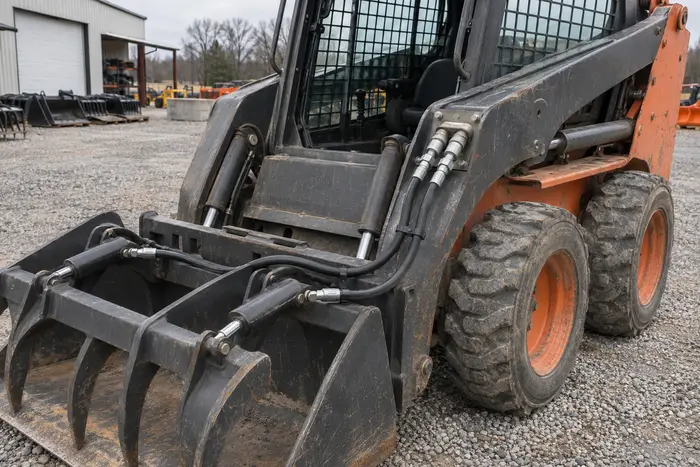
Augers use auxiliary hydraulics. Standard flow handles most small and mid-size augers. Larger diameters and rock bits benefit from more flow and torque. Confirm the maker's flow and pressure range and compare with your machine. Check the coupler type too, and whether the drive unit needs a case drain. For the flow basics, read skid steer hydraulic flow explained.
Many drive units have a flow control or a reversing valve so you can back the bit out of the hole. Make sure your machine's auxiliary control gives you forward and reverse.
How do you drill with a skid steer auger?
- Locate underground utilities and mark the hole position.
- Level the machine as best you can. Drilling on a slope side-loads the unit.
- Tilt the auger plumb with the quick-attach tilt, then lower the point to the mark.
- Start rotating at a low pace. Let the bit pull itself into the ground without forcing it.
- Lift the bit to clear soil as it fills, then lower again.
- Reverse the auger to free a stuck bit rather than pulling with the lift arms.
- Keep people outside the swing area, and don't hold the bit by hand.
Don't force an auger that stalls. Back out, clean the flighting and try again. Hitting a rock or root can kick the unit, so keep your hands on the controls and a firm seat belt on.
How do you maintain an auger?
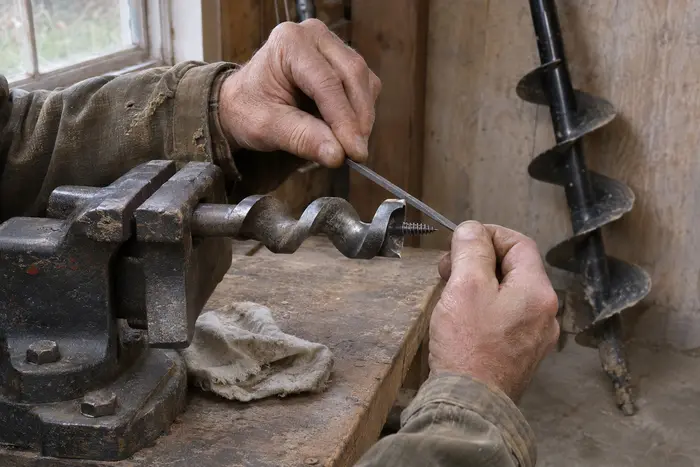
Check the cutting edge and teeth for wear. Dull edges need more torque and drill slowly. Check the pilot point on the bit. Grease the pivot and bearing points the maker lists. Look at hoses and fittings for leaks. After wet clay work, clean the flighting so soil does not harden on it. Store bits off the ground. If you want to sharpen your own, the guide on how to sharpen an auger bit shows the steps.
What does the machine need to handle an auger?
A skid steer auger puts side loads and weight on the front of the machine, so check the attachment's weight against the machine's rated operating capacity. Wheeled machines and compact track loaders both run augers. Tracks add stability on soft ground. Smaller machines run smaller bits and lighter drive units, so match the drive unit to the machine's frame class and hydraulic output.
If you need an auger that fits a particular machine, send the make, model and year so a person can check the plate, the hydraulics and the torque range against the machine's specs.
What safety points apply to augers?
Call before you dig and mark underground utilities. Keep everyone clear of the rotating bit and the soil it lifts. Wear eye protection, hearing protection and gloves that won't catch. Never lean over a spinning auger or grab the bit. Rock or roots can bind the bit and cause a sudden kick, so keep the seat belt buckled and your hands on the controls. Shut off the auxiliary circuit before you clean the flighting by hand, and follow the machine's lockout steps in the operator manual.
Smaller machines can run auger drives too. See mini skid steer augers for lighter drive units, and match the torque to the hole size you actually dig. If most of your holes are shallow and narrow, a lighter unit puts less stress on the machine. For occasional deep or wide holes, renting a larger unit can be cheaper than owning one.
Think about holes near buildings and fences. A skid steer needs room to position the plumb bit, so tight spots sometimes need a smaller unit or a hand-held tool. Keep the attachment square to the ground so the hole stays vertical, because a leaning hole makes a leaning post.
Get the right fit the first time
An auger drive and bit have to match your machine's quick attach, hydraulics and rated capacity. Send us the make, model and year and a person will check fit against the maker's specs. You approve a delivered price before you pay. Get a fit-checked quote or call 1-888-245-1555.
Questions buyers ask
What is a skid steer auger used for?
It drills holes for fence posts, deck footings, signs, utility poles and tree planting. A hydraulic drive unit turns a bit that bores into the ground and lifts soil to the surface. It is much faster than digging by hand.
What size auger bit do I need?
Pick a diameter wider than the post or footing so you can backfill and tamp. Make sure the drive unit's torque rating supports that diameter in your soil. Heavy clay needs more torque than sand for the same size hole.
Can a skid steer auger drill through rock?
With the right bit, in some rock. Use a rock bit with carbide teeth and a smaller diameter, and drive it with enough torque. Very hard rock may need other equipment. Don't force a stalled auger against solid rock.
Does a skid steer auger need high-flow hydraulics?
Not usually. Standard auxiliary flow runs most small and mid-size augers. Larger bits and rock work benefit from more flow and torque. Check the maker's flow and pressure range, and the coupler type, against your machine.
How deep can a skid steer auger drill?
Depth depends on bit length, extensions and soil. A standard bit handles typical post holes. Extensions add depth but increase side load and make straight holes harder. Check the maker's limits and follow local frost depth and utility rules.