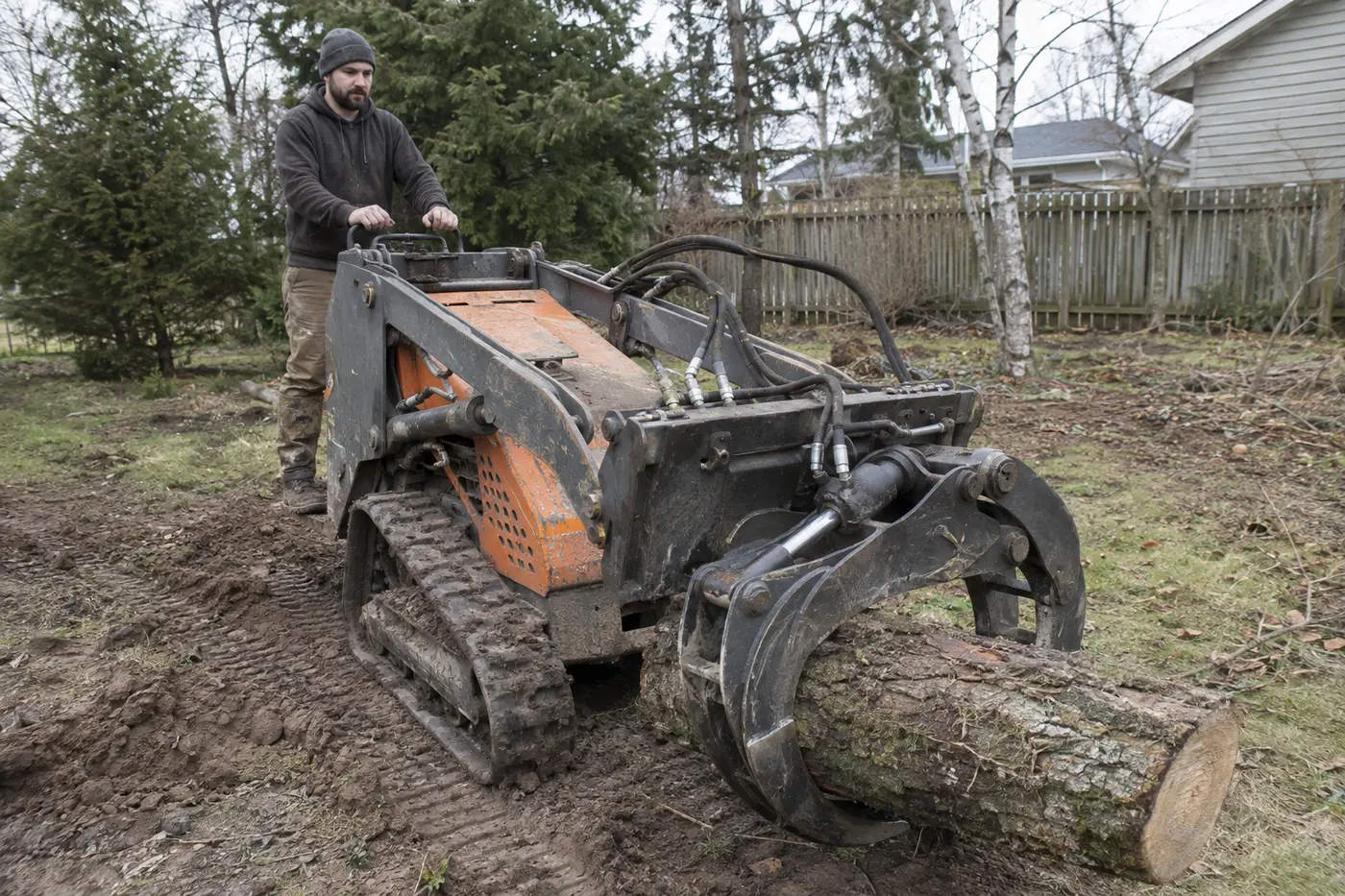
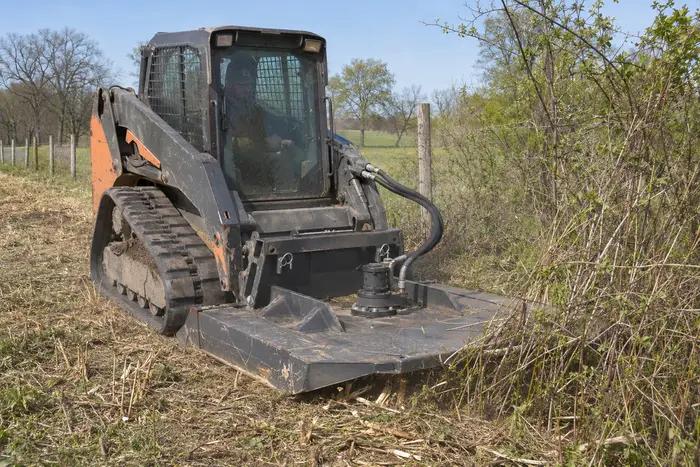
A mini skid steer grapple claw, also called a forestry claw, is a hydraulic claw that grips brush, logs, roots and rocks. It mounts on a mini skid steer or compact utility loader and opens and closes with a hydraulic cylinder. It lets a small machine pull, stack and carry material it could not push with a plain bucket.
Forestry Claws for mini skid steer and compact utility loaders
Every option is quoted for your exact machine. Sizes, flow and couplers are confirmed on the quote.
Illustration
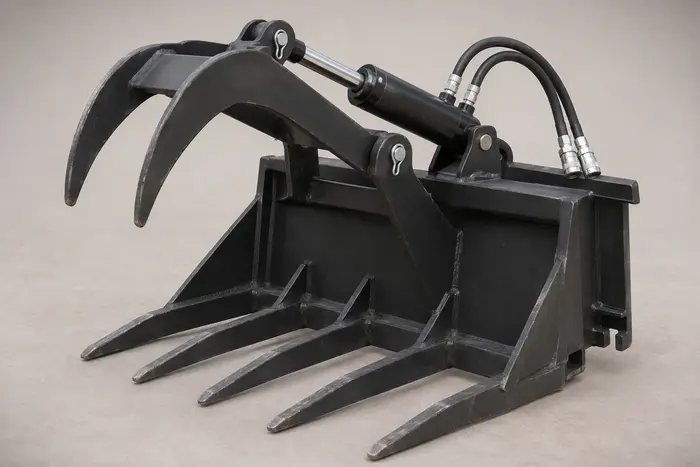
Light-Duty Brush Claw
Mini skid steers and compact utility loaders
A light claw for brush, limbs and small debris on residential and farm clearing jobs. It suits owners who need simple pickup and stacking with a small machine.
Attachment type. Maker, model, photos and availability for your machine are confirmed on your quote.
Heavy-Duty Forestry ClawPhotos confirmed on your quote
Heavy-Duty Forestry Claw
Larger mini skid steers with strong hydraulics
A stronger claw for logs, roots and larger limbs. Built for land-clearing crews who stack and haul more material with a compact carrier on rough ground.
Attachment type. Maker, model, photos and availability for your machine are confirmed on your quote.
Root and Rock ClawPhotos confirmed on your quote
Root and Rock Claw
Mini skid steers used for site clearing
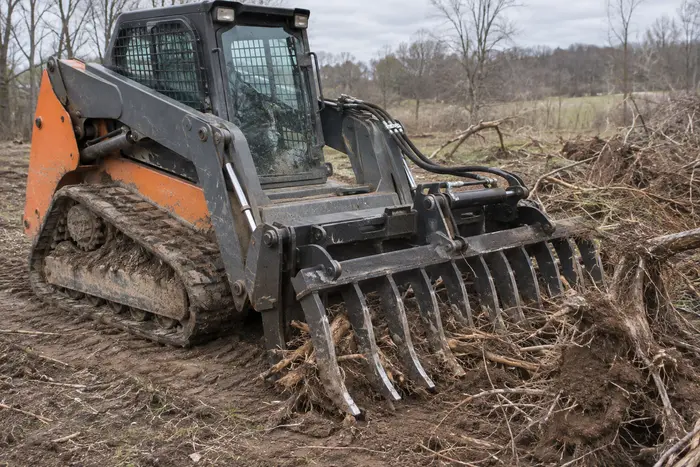
A claw that lets soil fall through while holding roots and rocks. A good match for crews that clear lots and prepare ground for building or planting.
Soil-sifting tines
Hydraulic grip
Pointed tine tips
Quick attach mount
Get my delivered priceTypical listed price at other online dealers$1,950 – $2,500USD · shipping terms vary by seller · a guide, not our price
Attachment type. Maker, model, photos and availability for your machine are confirmed on your quote.
Price ranges show what two other North American online dealers listed comparable attachments for, checked November 2026. Shipping terms vary by seller. They are a guide, not our price: your delivered price, with freight to your address, is confirmed on your quote.
Fit check
What a person checks before you get a price
Fit is the first thing that goes wrong when you buy attachments online. Before we send a delivered price, a person checks your setup against the maker's specs. If we can't confirm fit, we tell you before you pay.
Make, model and year of your machine
Mounting plate: the common mini plate or another style
Auxiliary hydraulic flow and pressure
Hose coupler type (flat-face or poppet) and any electrical connector
Rated operating capacity against the attachment's weight
Width against your machine and the job
How hard you'll run it: acreage use or daily contractor work
How buying here works
Tell us your machine and the job.
A person checks fit and sends one delivered price, freight included.
Approve it and the supplier ships to your door.
We're a new dealer adding manufacturers now. If we can't source a fit-checked option for your machine and job, we'll tell you on the first call, with no obligation.
How to choose a mini skid steer forestry claw
Start with the machine. A mini skid steer has a low rated operating capacity, so a claw must be light and compact. Check the lift capacity in your operator manual and compare it with the weight the maker lists. Our mini skid steer grapples guide covers the types.
Then consider the claw style. A closed-tine design holds small debris. An open-tine design lets soil fall through and grabs larger limbs and roots. A single cylinder is simple, and dual cylinders clamp more evenly on uneven loads.
Tine spacing: narrower holds brush, wider lets dirt fall through.
Opening width: must clear the logs and roots you handle.
Mount: confirm the plate type for your mini skid steer.
Hydraulics: needs auxiliary flow with matching couplers.
What is the difference between a root grapple and a root rake?
A root grapple grips and carries material. A root rake combs roots and rocks out of soil and leaves the dirt behind. Many crews carry both for land clearing. Our root grapple versus root rake guide compares them. If you mostly move logs and brush, the claw is the more useful tool.
Practice on small piles first. Learn how the claw behaves when you lift, tilt and drop, because a long log can swing and shift the balance of a light machine.
Keep loads low while you travel and avoid side slopes with a raised claw.
Send us your machine make, model and year. A person checks fit against the maker's specs, and you approve a delivered price, freight included, before you pay. Warranty terms, if any, are written on your quote. Ready to start? Request fit-checked quote for a forestry claw.
Mini Skid Steer Grapple Claws and Forestry Claws: common questions
How do you use a grapple on a skid steer?
Position the open claw over the load, close it with the hydraulic control, then lift and carry. Keep the load low and the machine stable. Stay within your rated operating capacity and follow the operator manual.
What is a forestry claw on a mini skid steer?
It is a hydraulic claw that grips brush, logs, roots and rocks. It mounts on a mini skid steer or compact utility loader and helps clear and stack material that a plain bucket cannot hold.
Can a mini skid steer use a grapple claw?
Yes. Smaller grapple claws are made for mini skid steers. They must match the machine lift capacity and hydraulics, so confirm those with the maker, or ask us to check fit against your make, model and year.
Is a claw better than a bucket for clearing brush?
For brush, logs and roots, usually yes. A claw grips and carries tangled material that slides out of a bucket. A bucket is still better for loose material such as dirt, gravel, sand and mulch, so many crews own both.