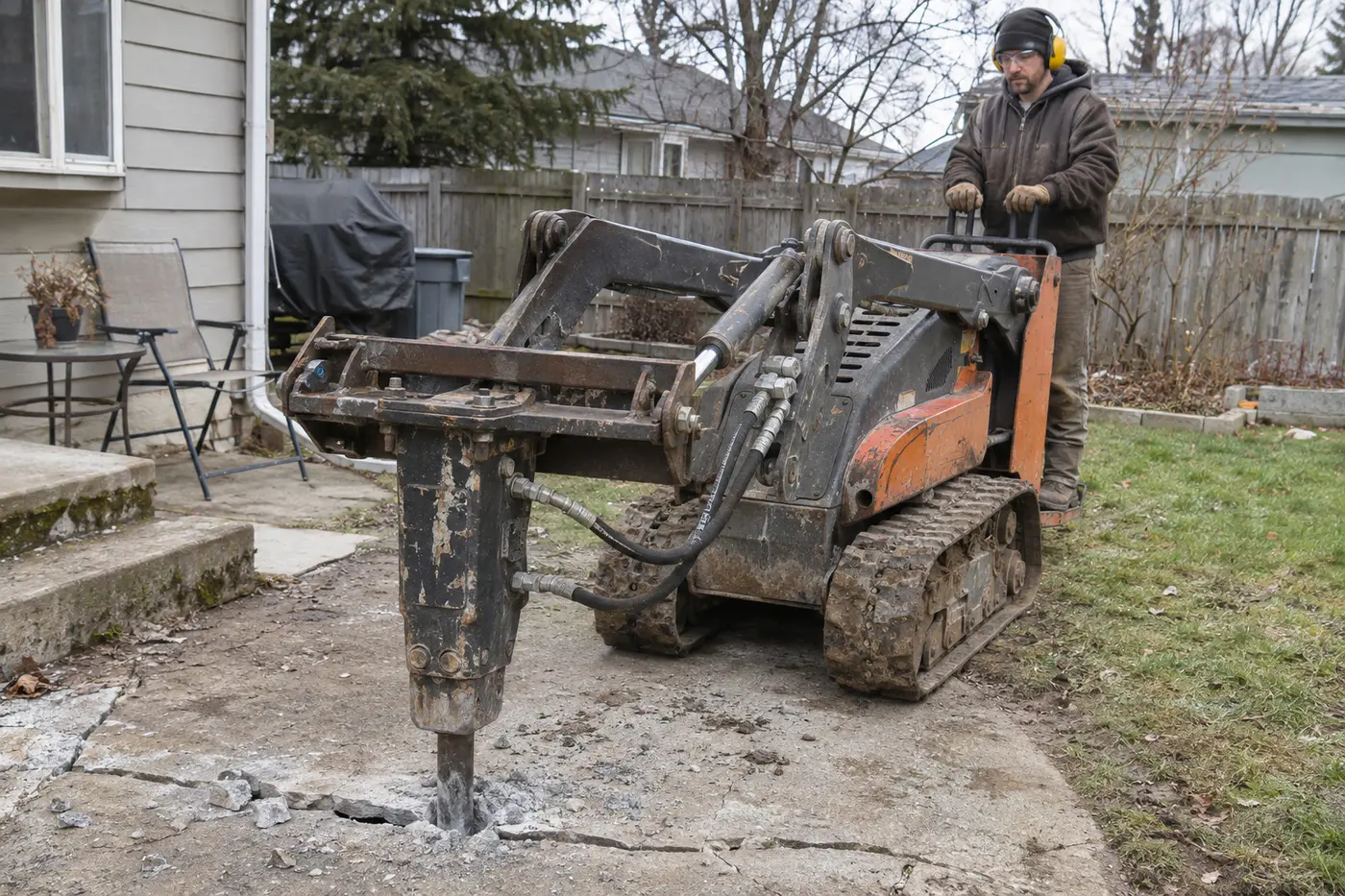
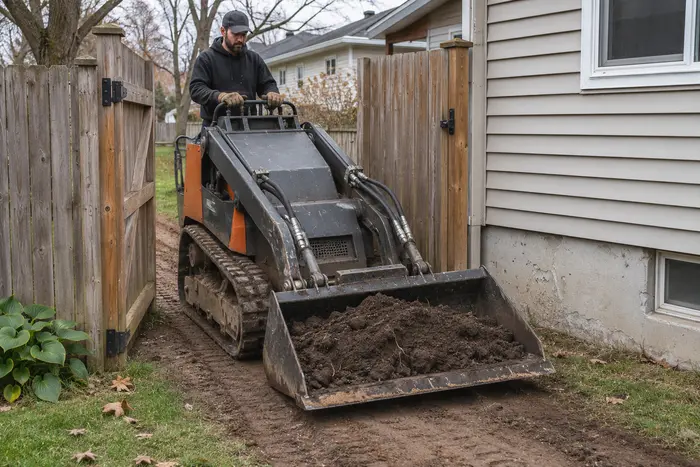
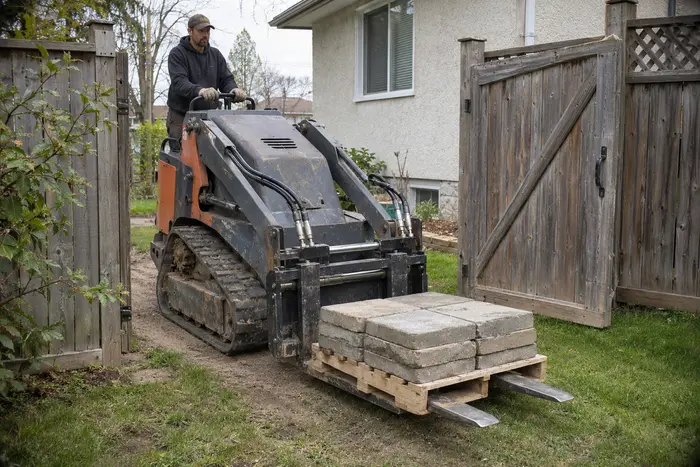
A mini skid steer concrete breaker is a hydraulic hammer attachment that breaks concrete, asphalt and rock. It mounts on a mini skid steer and runs off its auxiliary hydraulics. It lets a small machine break slabs, footings and pavement in places a larger loader cannot enter, such as courtyards and basements.
Concrete Breakers for mini skid steer and compact utility loaders
Every option is quoted for your exact machine. Sizes, flow and couplers are confirmed on the quote.
Illustration
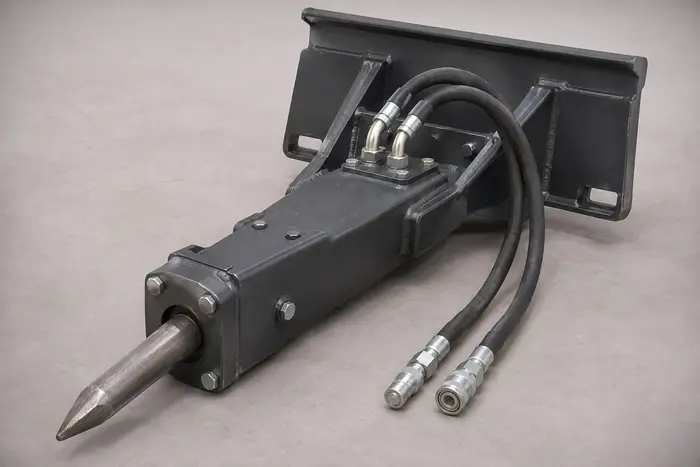
Light-Duty Hydraulic Breaker
Mini skid steers and compact utility loaders with auxiliary hydraulics
A small hydraulic hammer for patios, sidewalks and thin slabs. It suits remodelers and landscapers who break concrete occasionally in tight spaces and want a compact setup.
Hydraulic impact hammer
Moil point tool
Quick attach mount
Compact frame
Get my delivered priceTypical listed price at other online dealers$6,100 – $6,450USD · shipping terms vary by seller · a guide, not our price
Attachment type. Maker, model, photos and availability for your machine are confirmed on your quote.
Heavy-Duty Concrete BreakerPhotos confirmed on your quote
Heavy-Duty Concrete Breaker
Larger mini skid steers with strong hydraulic output
A stronger breaker for thicker slabs and footings. Built for contractors who demolish concrete regularly and want to do it with a compact, easy-to-move carrier on site.
Higher impact class
Reinforced housing
Replaceable tool point
Protected hose ports
Get my delivered priceTypical listed price at other online dealers$6,100 – $6,450USD · shipping terms vary by seller · a guide, not our price
Attachment type. Maker, model, photos and availability for your machine are confirmed on your quote.
Breaker With Interchangeable PointsPhotos confirmed on your quote
Breaker With Interchangeable Points
Mini skid steers handling varied demolition work
Accepts different tool points for chiseling, breaking and rock work. A flexible pick for crews who switch between cutting slabs and breaking rock on the same job.
Attachment type. Maker, model, photos and availability for your machine are confirmed on your quote.
Price ranges show what two other North American online dealers listed comparable attachments for, checked November 2026. Shipping terms vary by seller. They are a guide, not our price: your delivered price, with freight to your address, is confirmed on your quote.
Fit check
What a person checks before you get a price
Fit is the first thing that goes wrong when you buy attachments online. Before we send a delivered price, a person checks your setup against the maker's specs. If we can't confirm fit, we tell you before you pay.
Make, model and year of your machine
Mounting plate: the common mini plate or another style
Auxiliary hydraulic flow and pressure
Hose coupler type (flat-face or poppet) and any electrical connector
Rated operating capacity against the attachment's weight
Width against your machine and the job
How hard you'll run it: acreage use or daily contractor work
How buying here works
Tell us your machine and the job.
A person checks fit and sends one delivered price, freight included.
Approve it and the supplier ships to your door.
We're a new dealer adding manufacturers now. If we can't source a fit-checked option for your machine and job, we'll tell you on the first call, with no obligation.
How to choose a mini skid steer concrete breaker
Match the breaker to the machine. A mini skid steer has limited weight and hydraulic output, so a breaker that is too large will not strike properly and can stress the carrier. Check the maker recommended operating flow and the lift capacity of your machine. Our guide on skid steer hydraulic breakers covers the basics.
Then look at the tool and mounting. Different tool points suit different jobs. A moil point breaks hard material, while a chisel point cuts slabs into sections. Confirm the mounting plate works with your machine quick attach.
Impact class: larger classes break thicker concrete but need more hydraulic power.
Tool point: moil for general breaking, chisel for cutting, blunt for rock.
Hoses and couplers: match your machine auxiliary circuit.
Maintenance: grease the tool bushing on schedule.
How do you use a hammer on a mini skid steer safely?
Keep the tool point square to the surface and apply steady down pressure. Do not run the breaker with nothing under the tool, and do not use the tool to pry. If the material does not break after a short burst, move the point and try again rather than holding it in one spot. Wear hearing and eye protection and keep bystanders back. Concrete dust can contain respirable silica, so use water or dust control and follow your local rules. Read your operator manual for your machine and attachment.
Common jobs for a concrete breaker attachment
Breaking up slabs, patios and sidewalks
Removing footings and small foundations
Demolishing small sections of asphalt or pavement
Working inside buildings and behind fences where larger machines cannot go
Send us your machine make, model and year. A person checks fit against the maker's specs, and you approve a delivered price, freight included, before you pay. Warranty terms, if any, are written on your quote. Ready to start? Request fit-checked quote for a concrete breaker.
Mini Skid Steer Concrete Breakers: common questions
Can a mini skid steer break concrete?
Yes, with a hydraulic breaker attachment sized for the machine. Thin slabs, patios and sidewalks are typical jobs. Thicker or reinforced concrete needs a heavier breaker, which a mini skid steer may not be able to support or power.
What size concrete breaker fits a mini skid steer?
Choose a breaker whose hydraulic flow needs and weight match your machine. An oversized breaker will not strike well and can stress the carrier. We confirm fit against your make, model and year before you order.
Can you use a jackhammer on a skid steer?
A hydraulic breaker attachment does the same job as a jackhammer, mounted on the machine. It uses the auxiliary hydraulics and a tool point, and it needs the right couplers and flow for your model.
Is a mini skid steer concrete breaker good for demolition?
It is good for light demolition in tight spaces, such as patios, small slabs and interior work. For heavy demolition, a larger machine with a bigger breaker is a better match, so be realistic about the size of the job.