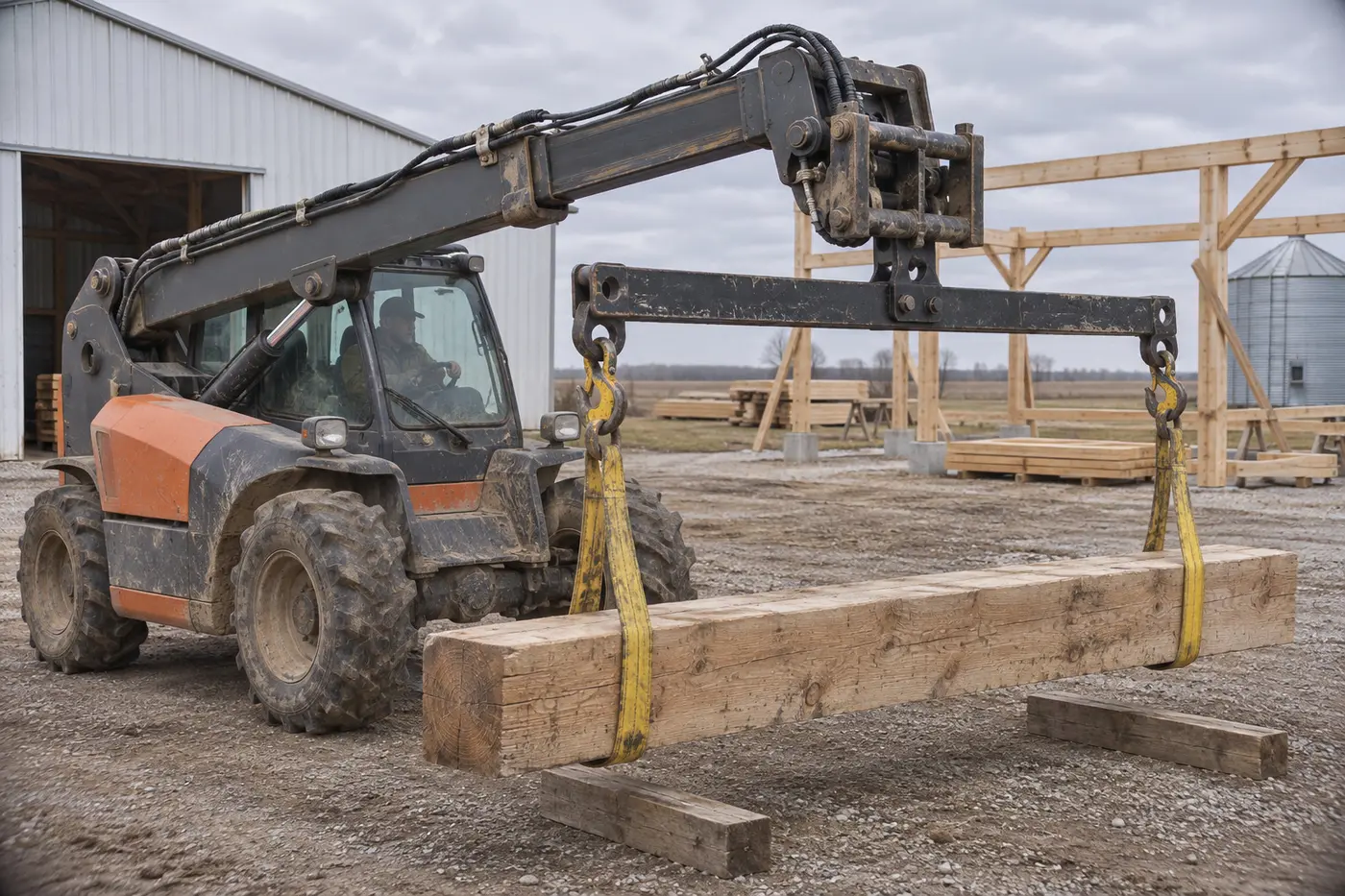
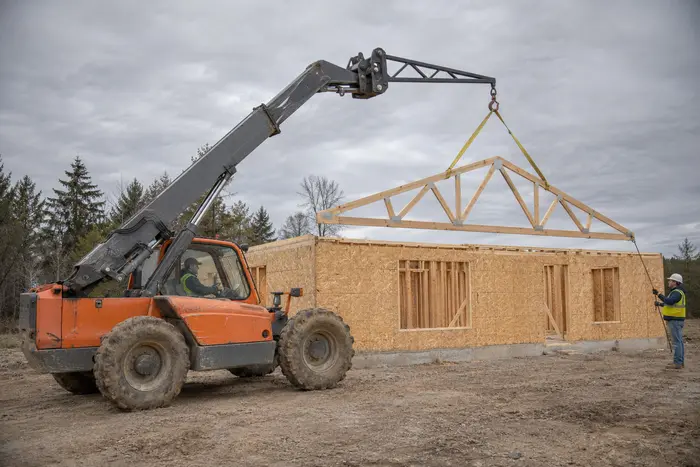
A telehandler spreader bar is a rigid beam that hangs from the machine and spreads a load across two or more lift points. It keeps slings from squeezing the load and keeps long, wide items level while the telehandler lifts. It is used for trusses, pipe, panels and steel on job sites.
Every option is quoted for your exact machine. Sizes, flow and couplers are confirmed on the quote.
Illustration
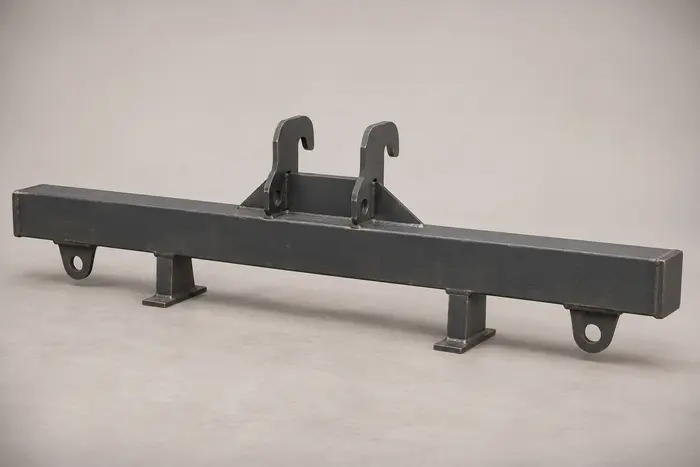
Fixed Length Spreader Bar
Telehandlers and forklifts with a lifting hook or fork mount
A simple bar with fixed pick points for repeat lifts of one load type. It suits crews that handle a standard truss or pipe size on every job.
Fixed pick points
Safety latches
Steel construction
Fork or hook mount
Get my delivered priceTypical listed price at other online dealers$2,850 – $3,000USD · shipping terms vary by seller · a guide, not our price
Attachment type. Maker, model, photos and availability for your machine are confirmed on your quote.
Adjustable Spreader BarPhotos confirmed on your quote
Adjustable Spreader Bar
Telehandlers handling varied load lengths
A bar with adjustable pick-point spacing for different truss, pipe and panel lengths. A good fit for contractors that lift many load sizes on one site.
Adjustable spacing
Locking pins
Marked rated load
Safety latches
Get my delivered priceTypical listed price at other online dealers$3,750 – $5,100USD · shipping terms vary by seller · a guide, not our price
Attachment type. Maker, model, photos and availability for your machine are confirmed on your quote.
Heavy-Duty Spreader BeamPhotos confirmed on your quote
Heavy-Duty Spreader Beam
Larger telehandlers used for steel and precast
A reinforced beam for heavier loads. It suits structural crews and precast installers who set heavier members with a telehandler, where the load chart allows.
Reinforced beam
Heavy hook points
Strong center lift point
Marked rated load
Get my delivered priceTypical listed price at other online dealers$2,850 – $3,750USD · shipping terms vary by seller · a guide, not our price
Attachment type. Maker, model, photos and availability for your machine are confirmed on your quote.
Price ranges show what two other North American online dealers listed comparable attachments for, checked November 2026. Shipping terms vary by seller. They are a guide, not our price: your delivered price, with freight to your address, is confirmed on your quote.
Fit check
What a person checks before you get a price
Fit is the first thing that goes wrong when you buy attachments online. Before we send a delivered price, a person checks your setup against the maker's specs. If we can't confirm fit, we tell you before you pay.
Make, model and year of your machine
Carriage or quick-coupler type
Rated capacity at the load center, from your load chart
Auxiliary hydraulics, if the attachment needs them
Fork or attachment length and width
Anything the maker's manual restricts
How buying here works
Tell us your machine and the job.
A person checks fit and sends one delivered price, freight included.
Approve it and the supplier ships to your door.
We're a new dealer adding manufacturers now. If we can't source a fit-checked option for your machine and job, we'll tell you on the first call, with no obligation.
How to choose a telehandler spreader bar
Capacity and length come first. The bar's rated load must cover your heaviest load plus rigging, and the machine load chart still limits the lift. The machine maker must also approve suspended loads with that attachment. A longer bar spreads the load wider but puts it farther from the machine, which reduces capacity. Our spreader bar guide explains how these work.
Then match the bar to the load. Adjustable bars slide or pin to different pick-point spacing. Fixed bars are simpler and usually lighter. Mounting matters too. Check whether the bar is made for a hook, fork or carriage mount.
Adjustable spacing: pick points move to suit different loads.
Hook points: clear markings and safety latches on each hook.
Mount: hook, fork or carriage, to match your machine.
Material: steel for strength, aluminum for lighter handling.
How do spreader bars work with a telehandler?
The bar hangs from the machine on a center point. Slings run from each end of the bar to the load, so the pull stays close to vertical rather than squeezing the load. Strictly, a beam hung from one center point is a lifting beam, but the trade often calls both a spreader bar. That keeps long items level and reduces stress on the load. Use rated rigging, keep the load close and low, and follow the operator manual and load chart. See the truss booms and jibs guide for reach options.
Common jobs for a spreader bar
Lifting roof trusses and long beams
Setting pipe, culverts and precast sections
Handling panels and long equipment
Moving long loads that would bend or crush with a single sling
Send us your machine make, model and year. A person checks fit against the maker's specs, and you approve a delivered price, freight included, before you pay. Warranty terms, if any, are written on your quote. Ready to start? Request fit-checked quote for a spreader bar.
It is a rigid beam that hangs from the machine and spreads a load across two or more lift points. It helps keep long loads level and stops slings from squeezing the load, which protects both the load and the rigging.
What is a forklift spreader bar?
A forklift spreader bar is the same kind of beam, mounted on a forklift or telehandler. It spreads the pick points of a hung load, and the machine maker must approve suspended loads with that attachment.
How do spreader bars work?
Slings run from the ends of the bar to the load, so the lift is vertical instead of squeezing the load inward. That keeps long or wide items level and protects them from damage. The machine maker must approve suspended loads with that attachment.
What types of spreader bars are there?
Common types are fixed bars, adjustable bars and heavy-duty beams. Choose by load length, weight, how many different load sizes you handle and how the bar mounts to your machine, and confirm the rated load before you lift.