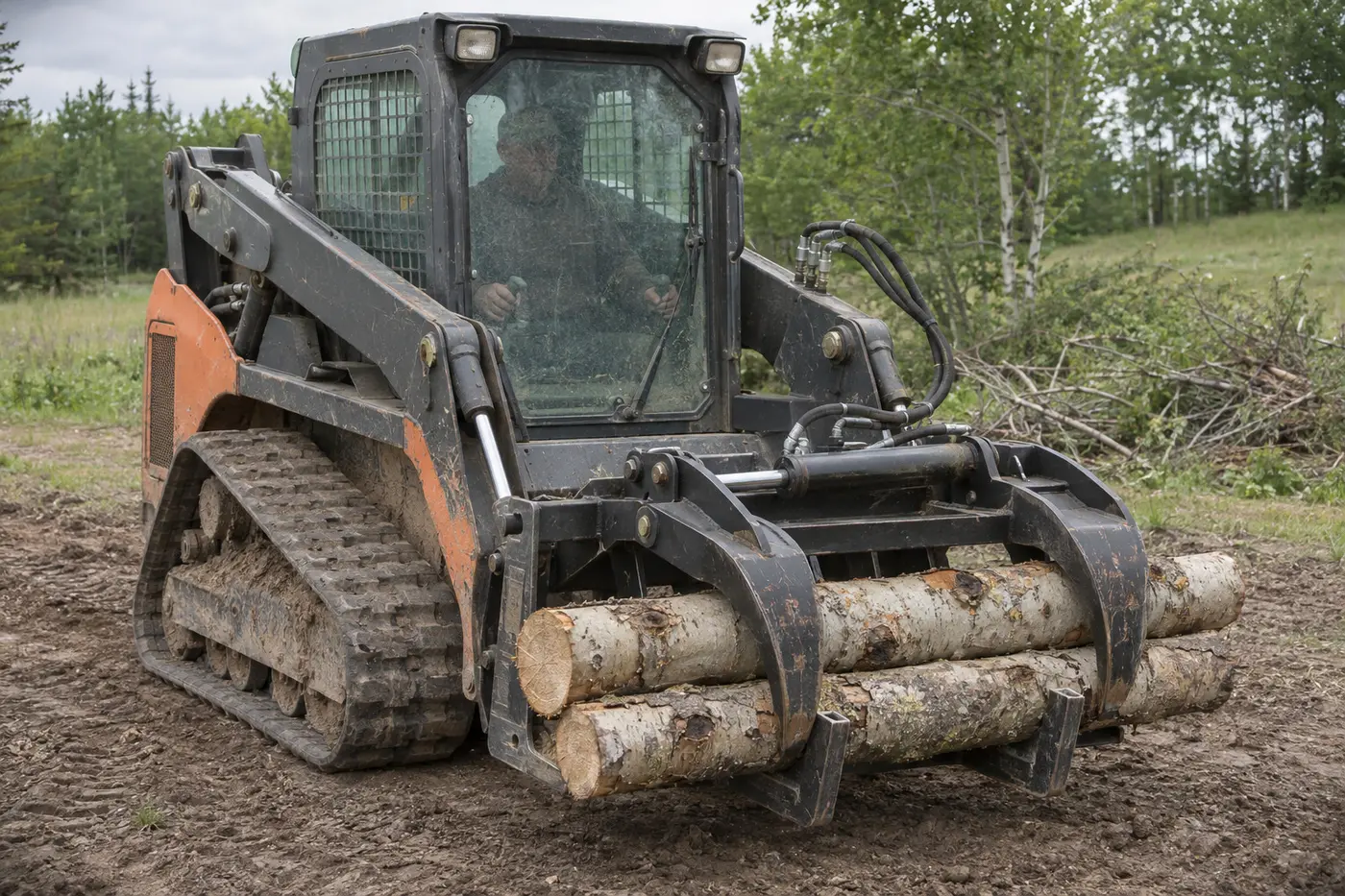
A skid steer grapple is an attachment with hinged tines or jaws that clamp onto loose material. It mounts on the loader's quick attach and uses auxiliary hydraulics to grab brush, logs, rocks, pipe and debris so you can carry and place them without losing the load. The right style keeps loads secure, speeds up cleanup and saves you from picking material up by hand or with a second machine.
Every option is quoted for your exact machine. Sizes, flow and couplers are confirmed on the quote.
Illustration
Light-Duty Brush Grapple Bucket
Skid steers and compact track loaders with universal quick attach
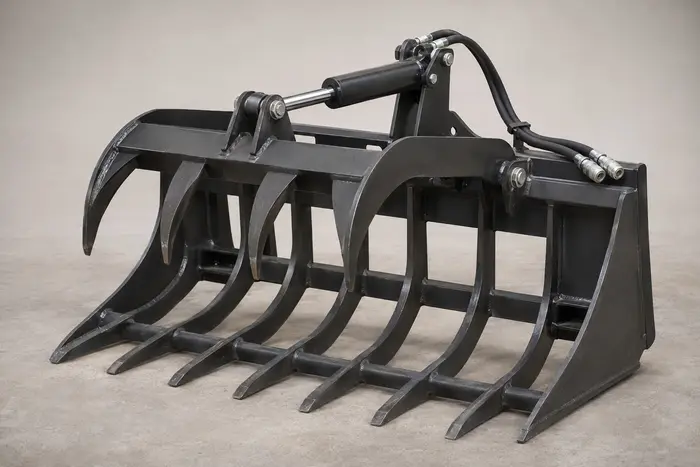
An open-tined grapple for brush and light debris. Soil falls through the tines, which keeps loads lighter and cleanup faster. A good fit for landscape, acreage and smaller loaders that do not need a heavy duty clamp.
Open tine design
Lets soil fall through
Single cylinder clamp
Suits smaller loaders
Get my delivered priceTypical listed price at other online dealers$3,000 – $4,300USD · shipping terms vary by seller · a guide, not our price
Attachment type. Maker, model, photos and availability for your machine are confirmed on your quote.
Heavy-Duty Root Grapple BucketPhotos confirmed on your quote
Heavy-Duty Root Grapple Bucket
Larger-frame skid steers and compact track loaders
A strong root grapple for stumps, logs and rock. Dual cylinders give an even clamp, and thicker steel stands up to land clearing. Suited to contractors who work larger frames and need a grapple that lasts.
Dual cylinder clamp
Thick steel tines
Handles stumps and rock
Built for heavy use
Get my delivered priceTypical listed price at other online dealers$3,150 – $4,700USD · shipping terms vary by seller · a guide, not our price
Attachment type. Maker, model, photos and availability for your machine are confirmed on your quote.
Industrial Grapple BucketPhotos confirmed on your quote
Industrial Grapple Bucket
Skid steers used in demolition and cleanup
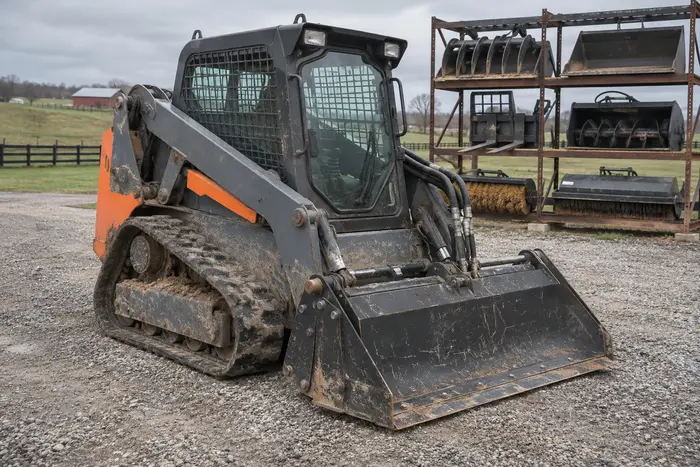
A closed-back grapple bucket that carries smaller debris without spilling. Best for demolition sites and mixed-material cleanup where loads shift, and the operator needs to load dumpsters and trucks cleanly.
Closed-back design
Holds loose debris
Heavy clamping jaw
Good for dumpsters
Get my delivered priceTypical listed price at other online dealers$2,900 – $6,800USD · shipping terms vary by seller · a guide, not our price
Attachment type. Maker, model, photos and availability for your machine are confirmed on your quote.
Price ranges show what two other North American online dealers listed comparable attachments for, checked November 2026. Shipping terms vary by seller. They are a guide, not our price: your delivered price, with freight to your address, is confirmed on your quote.
Fit check
What a person checks before you get a price
Fit is the first thing that goes wrong when you buy attachments online. Before we send a delivered price, a person checks your setup against the maker's specs. If we can't confirm fit, we tell you before you pay.
Make, model and year of your machine
Coupler: universal quick attach or another plate
Auxiliary hydraulic flow and pressure, standard or high flow
Hose coupler type (flat-face or poppet) and any electrical connector
Rated operating capacity against the attachment's weight
Width against your machine and the job
How hard you'll run it: acreage use or daily contractor work
How buying here works
Tell us your machine and the job.
A person checks fit and sends one delivered price, freight included.
Approve it and the supplier ships to your door.
We're a new dealer adding manufacturers now. If we can't source a fit-checked option for your machine and job, we'll tell you on the first call, with no obligation.
How to choose skid steer grapple
Choose the grapple by the material first. Brush and root work call for an open, tined design. Demolition debris and rock call for a heavier bucket-style grapple that holds smaller pieces.
Style: root grapples let dirt fall through, bucket grapples hold loose material, and rake grapples sort and clear.
Width: match the grapple width to the loader's width. Too narrow wastes cycles, too wide hurts visibility and balance.
Hydraulics: most grapples need auxiliary hydraulics. Check your loader's coupler type and flow.
Single or dual cylinder: dual cylinders give stronger, more even clamping on heavy loads.
Duty rating: check steel thickness and tine design for rock and demolition work.
Visibility and balance deserve attention too. A wide grapple loaded with a long log can block your view and shift weight forward, so choose a width you can see around and keep the load close to the loader. Ask about replaceable wear parts such as tine tips, because those take the abuse in rock and stump work.
Common jobs for skid steer grapple
A grapple is one of the most versatile tools on a loader.
Land clearing: pile brush, stumps and downed trees.
Demolition cleanup: load debris into dumpsters and trucks.
Log handling: stack and move firewood or logs.
Rock work: move landscape boulders and fieldstone.
Before we quote a skid steer grapple, a person checks it against your skid steer: mount style, hydraulic output, hose and coupler type, and the rated operating capacity in your operator manual. Anything that does not fit is flagged before you pay.
Get the right fit the first time
Send us your machine make, model and year. A person checks the attachment against the maker's specs, you approve a delivered price before you pay, and it ships direct from the supplier, with the ship-from location on your quote. Request a fit-checked, delivered quote.
The best one matches your material. Root grapples suit brush and stumps. Industrial grapple buckets suit demolition debris. Dual-cylinder designs hold heavy loads better. Tell us your jobs, your loader and its hydraulics, and we recommend a fit-checked option.
How do you use a skid steer grapple?
Lower the grapple over the load, close the tines to clamp, then lift and carry with the arms low and the load tilted back. Open the grapple to release. Stay within the loader's rated capacity and follow the operator manual.
Do skid steer grapples need auxiliary hydraulics?
Yes. The clamp is hydraulic, so the loader needs an auxiliary circuit with the right coupler type. Standard flow is enough for most grapples. We check your loader's auxiliary setup against the grapple before quoting.
What is the difference between a root grapple and a grapple rake?
A root grapple has heavy tines and a clamp for stumps and logs. A grapple rake has lighter tines for sorting and clearing loose brush and rock. Choose by the work: clamping heavy objects, or raking and sorting lighter material.