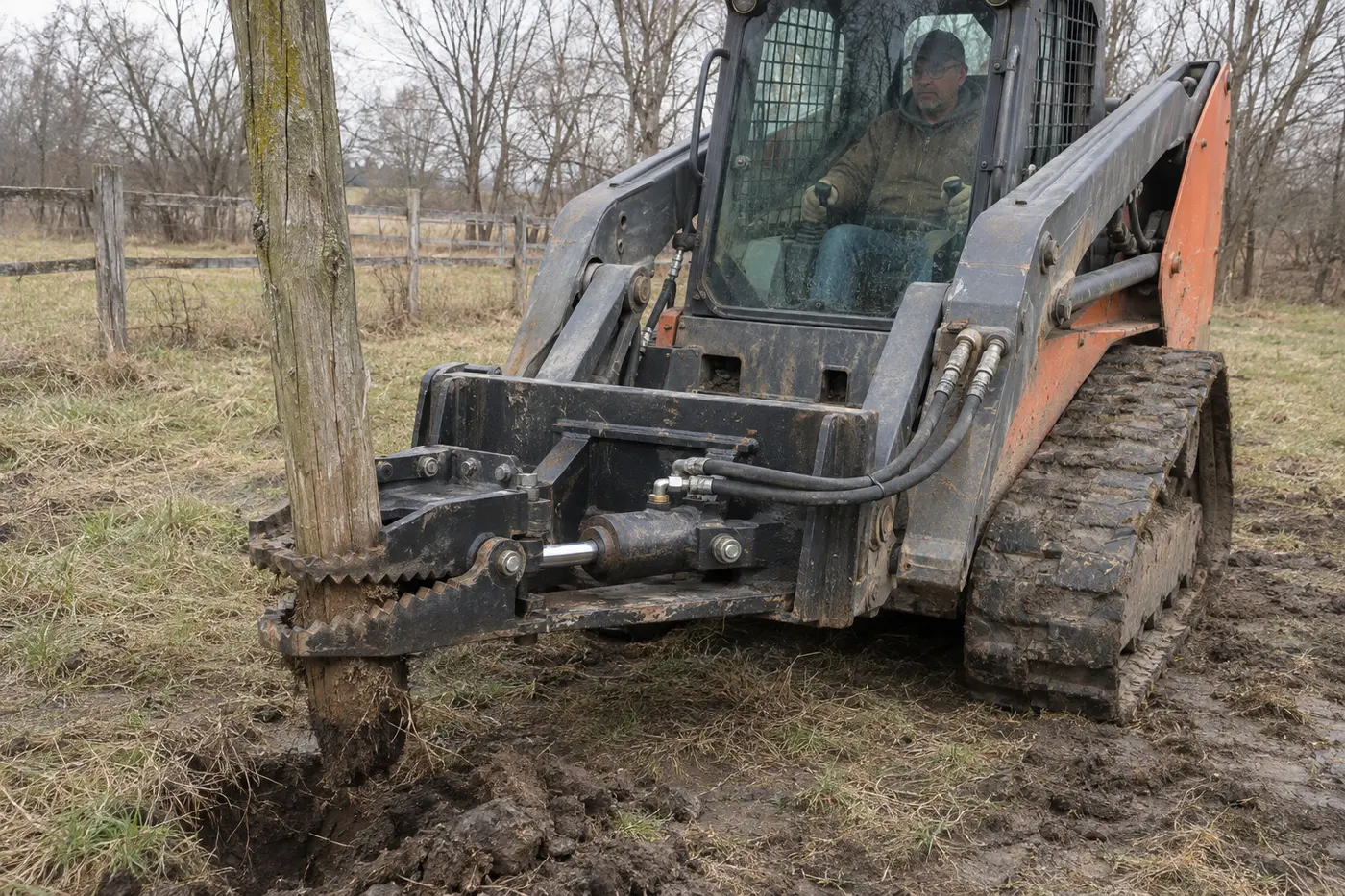
A skid steer tree puller is a hydraulic clamp or jaw that grips a tree, post or shrub and pulls it out by the roots. It mounts on the quick attach plate of a skid steer or compact track loader. It clears fence lines, overgrown lots and small trees faster than digging by hand.
Post & Tree Pullers for skid steer and compact track loaders
Every option is quoted for your exact machine. Sizes, flow and couplers are confirmed on the quote.
Illustration
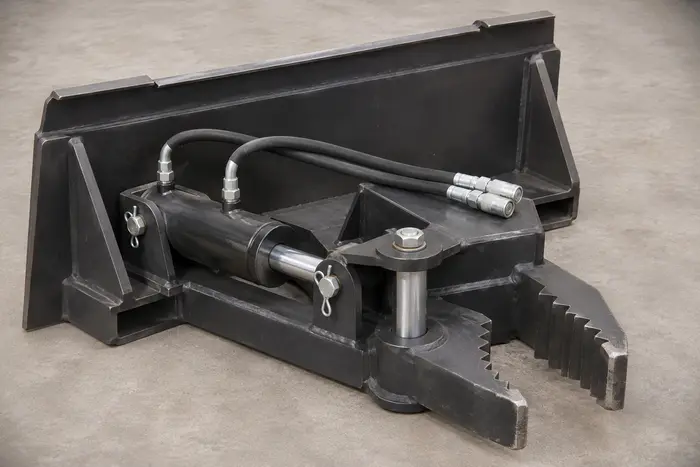
Post and Small Tree Puller Clamp
Skid steers and compact track loaders with universal quick attach
A compact clamp for posts, stakes and small trees. It suits landowners and fence crews who pull light material and want a simple, quick tool.
Hydraulic clamp jaws
Serrated gripping surface
Compact frame
Universal quick attach
Get my delivered priceTypical listed price at other online dealers$2,250 – $3,000USD · shipping terms vary by seller · a guide, not our price
Attachment type. Maker, model, photos and availability for your machine are confirmed on your quote.
Heavy-Duty Tree PullerPhotos confirmed on your quote
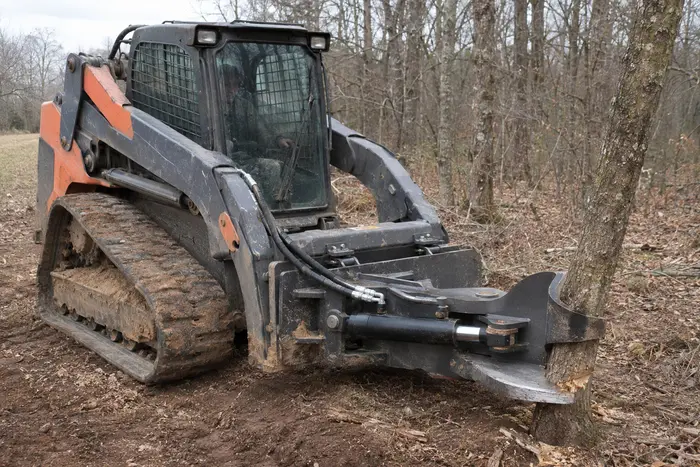
Heavy-Duty Tree Puller
Larger skid steers and compact track loaders with solid hydraulic output
A reinforced puller for larger trunks and stubborn roots. Built for land clearing and site prep where trees are bigger, soil is dense and pulling force matters most.
Large jaw opening
Heavy steel frame
Strong grip cylinders
Wear-resistant jaw teeth
Get my delivered priceTypical listed price at other online dealers$2,700 – $3,750USD · shipping terms vary by seller · a guide, not our price
Attachment type. Maker, model, photos and availability for your machine are confirmed on your quote.
Tree and Stump Claw PullerPhotos confirmed on your quote
Tree and Stump Claw Puller
Skid steers and compact track loaders used in land clearing
A claw style attachment that grabs, lifts and pries roots free. It fits clearing crews who remove stumps and roots along with trees and brush on rough ground.
Attachment type. Maker, model, photos and availability for your machine are confirmed on your quote.
Price ranges show what two other North American online dealers listed comparable attachments for, checked November 2026. Shipping terms vary by seller. They are a guide, not our price: your delivered price, with freight to your address, is confirmed on your quote.
Fit check
What a person checks before you get a price
Fit is the first thing that goes wrong when you buy attachments online. Before we send a delivered price, a person checks your setup against the maker's specs. If we can't confirm fit, we tell you before you pay.
Make, model and year of your machine
Coupler: universal quick attach or another plate
Auxiliary hydraulic flow and pressure, standard or high flow
Hose coupler type (flat-face or poppet) and any electrical connector
Rated operating capacity against the attachment's weight
Width against your machine and the job
How hard you'll run it: acreage use or daily contractor work
How buying here works
Tell us your machine and the job.
A person checks fit and sends one delivered price, freight included.
Approve it and the supplier ships to your door.
We're a new dealer adding manufacturers now. If we can't source a fit-checked option for your machine and job, we'll tell you on the first call, with no obligation.
How to choose a skid steer tree puller
Think about the largest trunk you will pull. The jaw opening and the pulling force set the limit. A puller that is too small bends or slips, and one that is too big for your carrier can overload it. Stay inside the machine rated operating capacity and follow the operator manual. Have buried utilities marked before you pull, because roots can wrap around cables and pipes, and keep people well back while you work.
Check the style. A clamp-and-lift puller grips and lifts the plant out. A claw or fork style puller pries and pushes. Read our tree and post puller buying guide for the details.
Jaw opening: must clear the trunk or post you plan to pull.
Grip surface: serrated jaws hold bark and wet wood better.
Hydraulics: needs auxiliary flow with matching couplers.
Mount: universal quick attach is the common standard.
How does a tree puller compare with a grapple or stump grinder?
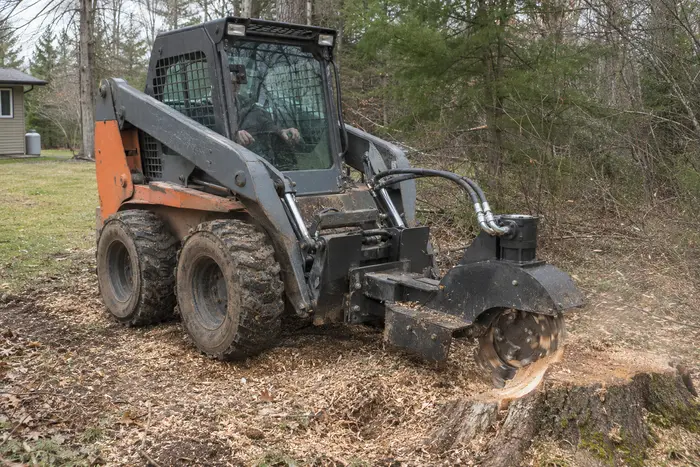
A puller removes the whole plant, root ball included, and leaves a hole to fill. A grinder removes the stump below grade but leaves the roots in the soil. A grapple moves cut material rather than pulling living trees. Pick by the result you want. If you want the roots out, a puller is the direct tool. See our tree cutting attachments guide for other options.
Common jobs for a tree and post puller
Pulling brush, shrubs and small trees from overgrown lots
Removing old fence posts and stakes
Clearing fence lines and pasture edges
Pulling stumps of smaller trees after cutting
For cutting rather than pulling, look at tree shears.
Get the right fit the first time
Send us your machine make, model and year. A person checks fit against the maker's specs and sends one delivered price, freight included, for your exact setup. It ships direct from the supplier, and the ship-from location is on your quote. Warranty terms, if any, are written on your quote. Ready to start? Request fit-checked quote for a tree puller.
Skid Steer Tree and Post Pullers: common questions
How does a skid steer tree puller work?
It uses auxiliary hydraulics to close jaws around a trunk or post, then the loader arms lift or pull it out by the roots. The puller mounts on the quick attach plate, so one machine can grip and remove the plant.
What size trees can a skid steer tree puller remove?
It depends on the jaw opening, the pulling force and your machine rating. Small trees, brush and posts are the typical targets. Check the maker limits against your machine, and never overload it beyond rated operating capacity.
Can a mini skid steer use a tree puller?
Some lighter pullers are made for mini skid steers and handle posts and small shrubs. A mini skid steer has lower lift and weight, so match the puller size to your model. We confirm fit before you order.
Is a tree puller better than digging out a stump?
For small trees and shrubs, a puller is usually faster and takes out the roots. Large stumps may need a stump grinder or an excavator instead. The right tool depends on trunk size, soil and what you plan to do with the space afterward.