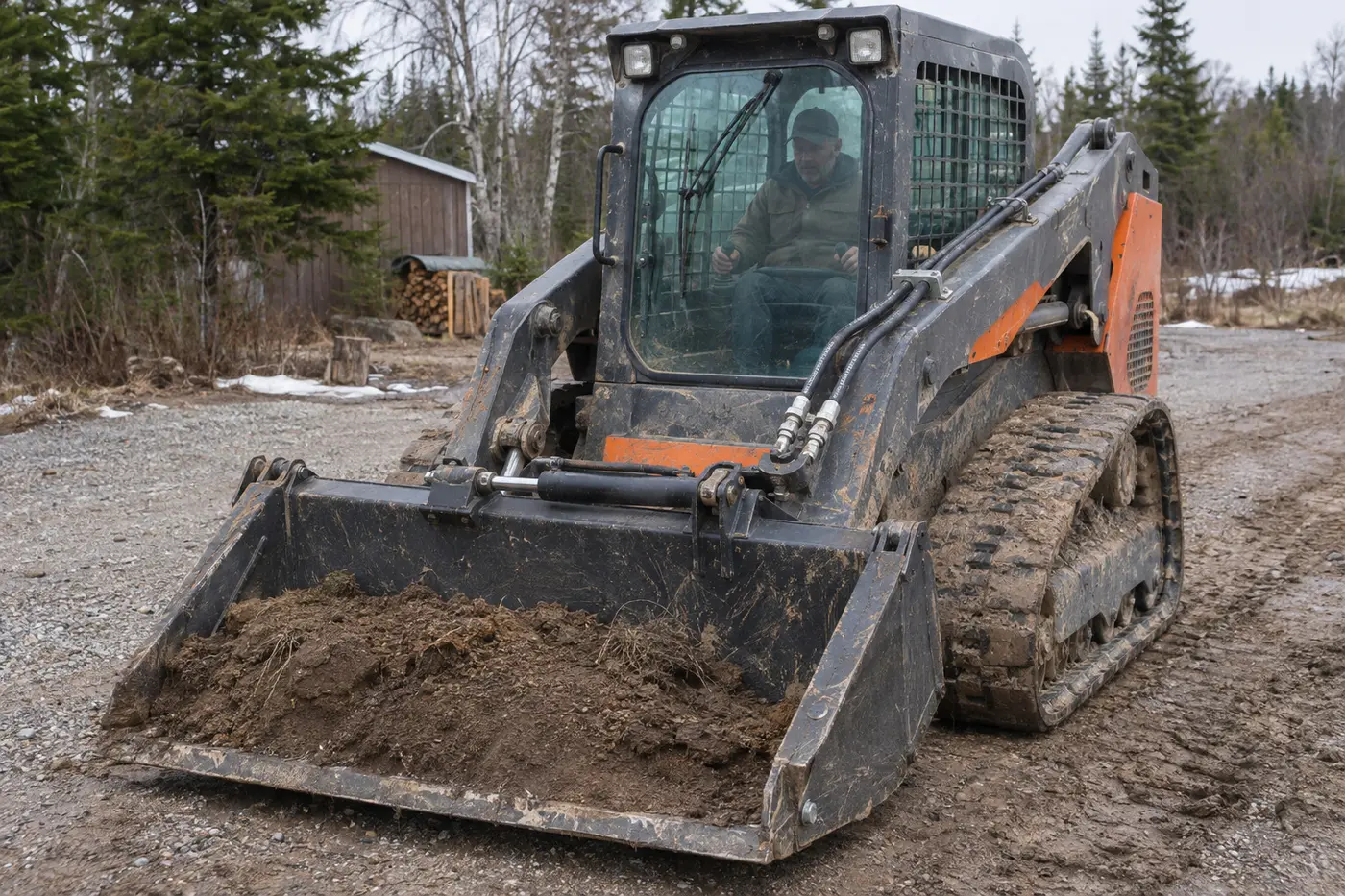
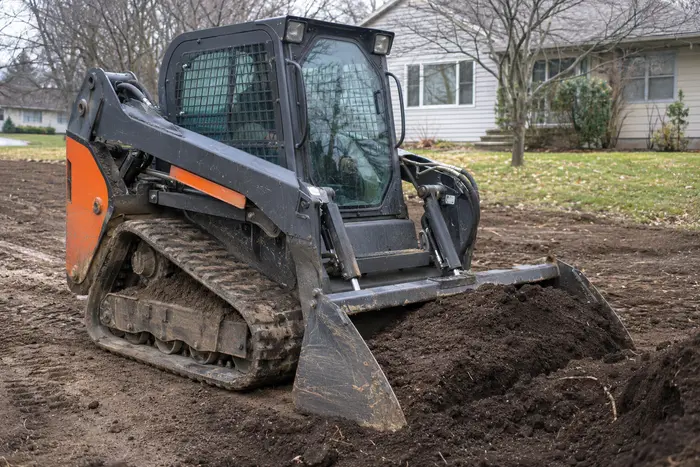
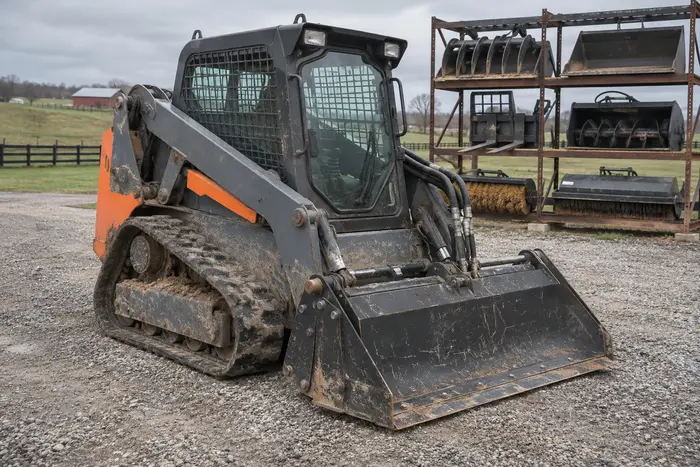
A skid steer bucket is the front-mounted scoop that digs, carries, grades and dumps material. It is the standard, everyday attachment on most skid steers and compact track loaders. Buckets come in different shapes for dirt, rock, snow and light material, and they attach with a universal quick attach plate on most machines.
Every option is quoted for your exact machine. Sizes, flow and couplers are confirmed on the quote.
Illustration
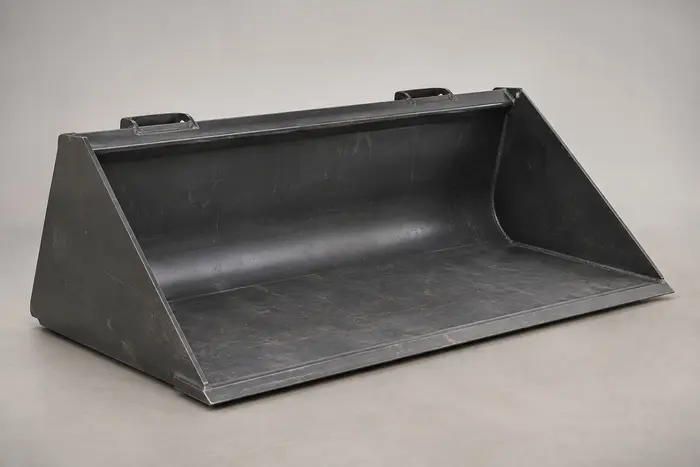
Light-Duty Utility Bucket
Skid steers and compact track loaders with universal quick attach
A general-purpose bucket for dirt, sand and gravel on lighter jobs. It suits homeowners and small crews who want one versatile, everyday scoop for most chores.
Smooth floor for easy dumping
Bolt-on cutting edge
Universal quick attach frame
Low-profile design for visibility
Get my delivered priceTypical listed price at other online dealers$1,850 – $2,100USD · shipping terms vary by seller · a guide, not our price
Attachment type. Maker, model, photos and availability for your machine are confirmed on your quote.
Heavy-Duty Rock BucketPhotos confirmed on your quote
Heavy-Duty Rock Bucket
Skid steers and compact track loaders used in rocky ground
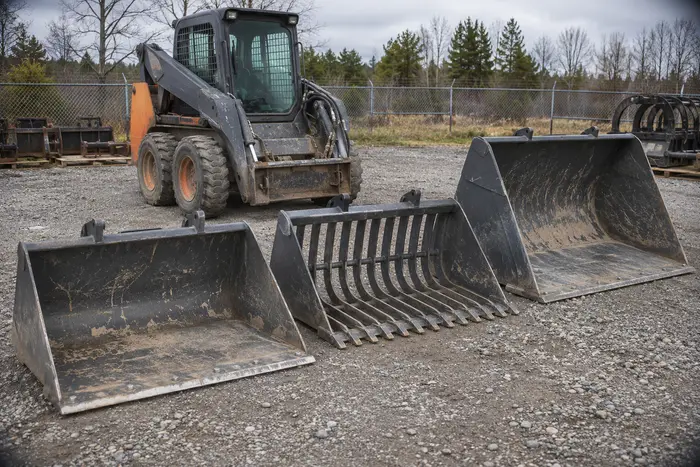
A reinforced bucket with teeth and bar spacing that lets soil fall through while holding rock. Built for clearing, demolition and site prep in rough, rocky ground.
Reinforced wear plates
Replaceable teeth
Material-sifting design
Strong frame for hard use
Get my delivered priceTypical listed price at other online dealers$1,950 – $2,500USD · shipping terms vary by seller · a guide, not our price
Attachment type. Maker, model, photos and availability for your machine are confirmed on your quote.
High-Capacity Light Material BucketPhotos confirmed on your quote
High-Capacity Light Material Bucket
Skid steers and compact track loaders moving snow, mulch or compost
A tall, wide bucket for light, bulky material. It is aimed at snow, mulch and feed work where volume matters more than digging power or breakout force.
Extra-tall back
Wide mouth
Smooth interior
Bolt-on edge
Get my delivered priceTypical listed price at other online dealers$2,050 – $2,200USD · shipping terms vary by seller · a guide, not our price
Attachment type. Maker, model, photos and availability for your machine are confirmed on your quote.
Price ranges show what two other North American online dealers listed comparable attachments for, checked November 2026. Shipping terms vary by seller. They are a guide, not our price: your delivered price, with freight to your address, is confirmed on your quote.
Fit check
What a person checks before you get a price
Fit is the first thing that goes wrong when you buy attachments online. Before we send a delivered price, a person checks your setup against the maker's specs. If we can't confirm fit, we tell you before you pay.
Make, model and year of your machine
Coupler: universal quick attach or another plate
Auxiliary hydraulic flow and pressure, standard or high flow
Hose coupler type (flat-face or poppet) and any electrical connector
Rated operating capacity against the attachment's weight
Width against your machine and the job
How hard you'll run it: acreage use or daily contractor work
How buying here works
Tell us your machine and the job.
A person checks fit and sends one delivered price, freight included.
Approve it and the supplier ships to your door.
We're a new dealer adding manufacturers now. If we can't source a fit-checked option for your machine and job, we'll tell you on the first call, with no obligation.
How to choose a skid steer bucket
Pick the type by what you move. A general-purpose or low-profile bucket handles dirt and gravel. A rock or skeleton bucket lets fine material fall through. A high-capacity bucket suits light material like mulch or snow. Our loader bucket types guide compares them.
Size is the trap. A bigger bucket moves more per trip, but the material also weighs more. Stay inside the rated operating capacity of the machine, and remember that heavy, wet or dense material fills a bucket far faster than the volume suggests. See our bucket size guide.
Width: at least the width of the machine tires or tracks.
Cutting edge: bolt-on edges are replaceable; teeth help in hard ground.
Mount: universal quick attach is the common standard.
Duty rating: heavier steel resists wear in rock and demolition.
Which skid steer bucket is right for rocks?
A rock or skeleton bucket is the usual pick. Its bars let loose soil fall through while the rock stays in the bucket, so you move less dirt and more stone. Teeth help break rock loose from the ground. For general digging in clean soil, a standard bucket is cheaper to run and easier to dump cleanly. Match the bar spacing to the size of the rock you handle.
For fine material and snow, go the other way. Choose a smooth, high-capacity bucket that holds a full load.
Common jobs for skid steer buckets
Digging and loading dirt, sand and gravel
Grading and backfilling around buildings
Moving mulch, compost and snow with high-capacity buckets
Clearing rocks and debris with skeleton or grapple buckets
Some work calls for a purpose-built tool instead, such as grapples for brush and logs.
Get the right fit the first time
Send us your machine make, model and year. A person checks fit against the maker's specs, and you approve a delivered price, freight included, before you pay. Warranty terms, if any, are written on your quote. Ready to start? Request fit-checked quote for a skid steer bucket.
It is the open-top scoop mounted on the front of a skid steer. It digs, carries, levels and dumps material. Different shapes handle dirt, rock, snow and light bulk material, and most attach through a universal quick attach plate.
What size skid steer bucket do I need?
Match the bucket to your machine rated operating capacity and the density of what you move. A wide, low bucket suits grading, while a tall one suits light material. Our guide covers sizing, and we confirm fit against your machine specs before you order.
What is a skid steer bucket with teeth used for?
Teeth bite into hard ground, gravel and compacted material, helping the bucket dig and break it loose. They are a good choice for site prep and rough work. A smooth edge is better for clean grading and finishing.
How do you take a skid steer bucket off?
Lower the bucket to the ground, release the quick attach lever or wedge locks according to your operator manual, tilt the plate forward and back away. Never stand under raised equipment. Follow the manual for your exact machine.