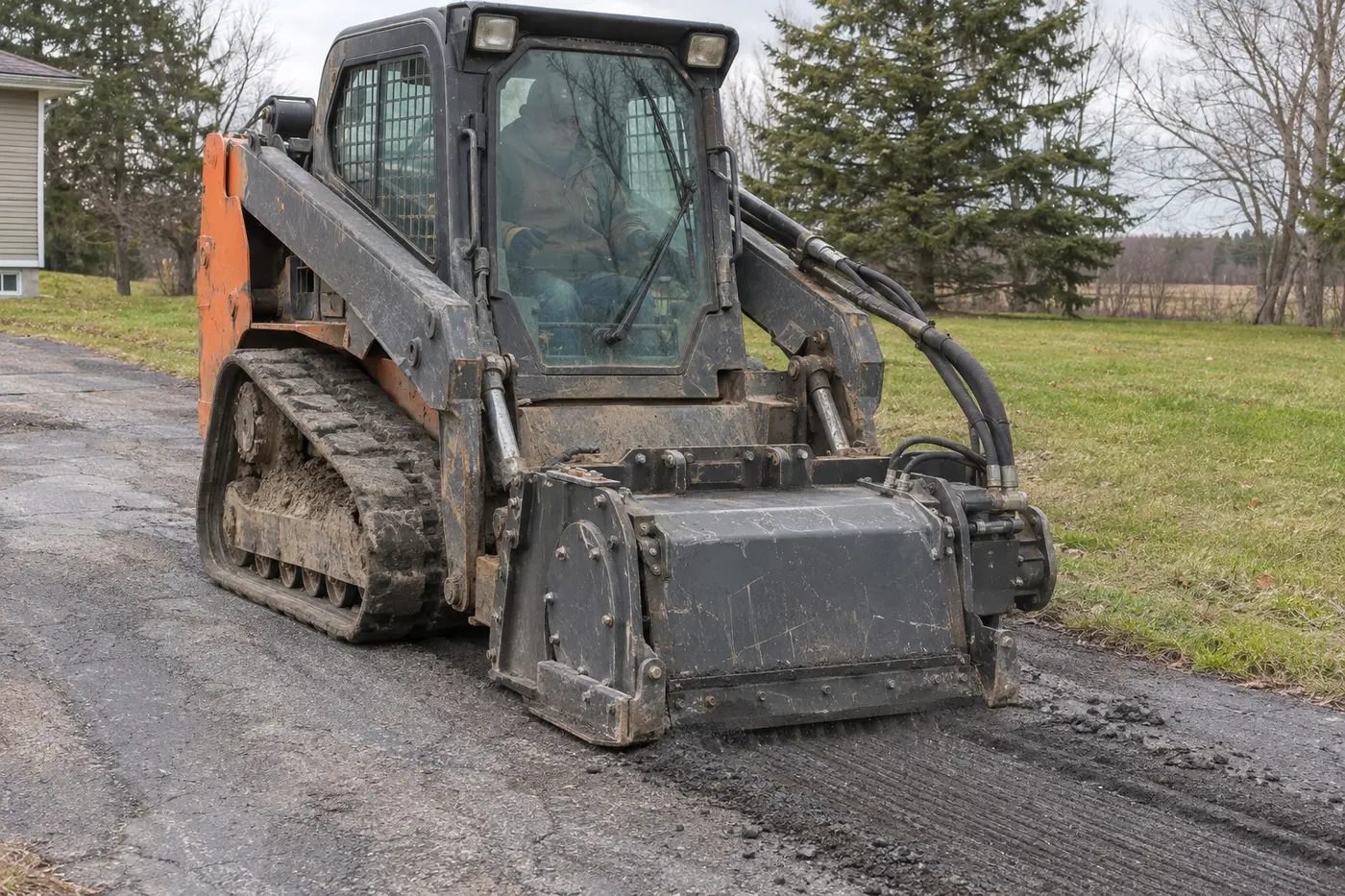
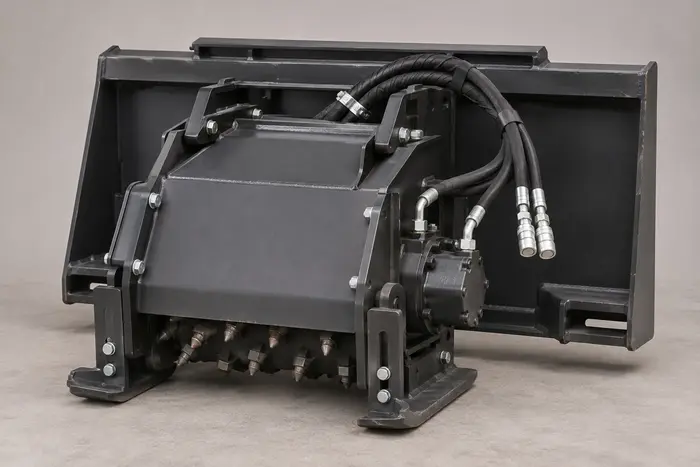
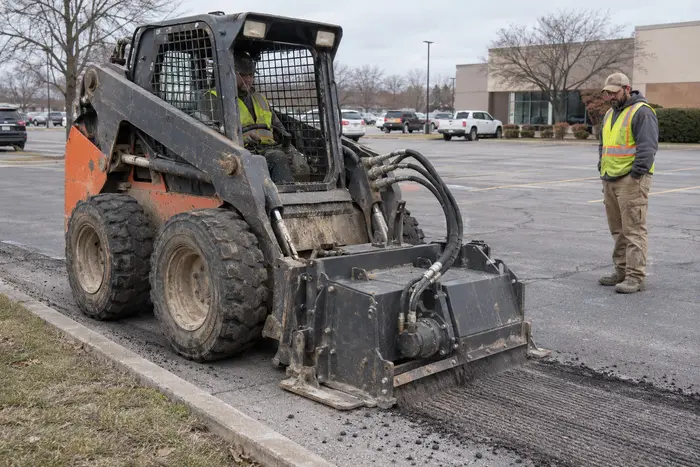
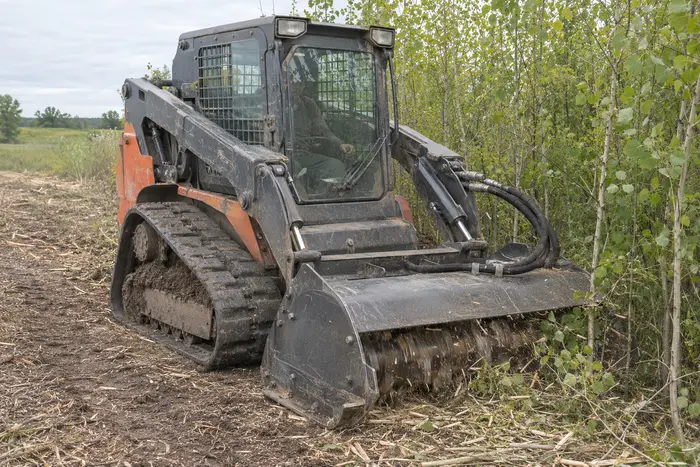
A skid steer cold planer is a hydraulic milling attachment that grinds away asphalt or concrete surfaces. It mounts on the quick attach of a skid steer or compact track loader and cuts with a rotating drum fitted with carbide teeth. It is a practical way to patch, trim or prepare pavement when a full-size milling machine would be overkill or hard to get onto the site.
Cold Planers for skid steer and compact track loaders
Every option is quoted for your exact machine. Sizes, flow and couplers are confirmed on the quote.
Illustration
Standard-Flow Cold Planer
Skid steers with standard auxiliary flow
A cold planer sized for standard-flow loaders. Suits patching and small repair jobs where cutting speed is not the priority and the loader has modest auxiliary hydraulic output.
Matches standard flow
Compact drum
Adjustable depth
Good for patch work
Get my delivered priceTypical listed price at other online dealers$17,050 – $26,500USD · shipping terms vary by seller · a guide, not our price
Attachment type. Maker, model, photos and availability for your machine are confirmed on your quote.
High-Flow Cold PlanerPhotos confirmed on your quote
High-Flow Cold Planer
Skid steers and track loaders with high-flow hydraulics
A faster-cutting planer that uses high-flow output for aggressive milling. A fit for crews who mill most days and want a wider drum and a stronger frame that holds up under regular use.
Attachment type. Maker, model, photos and availability for your machine are confirmed on your quote.
Wide Cold Planer With Skid ShoesPhotos confirmed on your quote
Wide Cold Planer With Skid Shoes
Larger track loaders
A wider drum with adjustable skid shoes for consistent depth across longer passes. Built for lot and roadway work on larger track loaders that have the weight and hydraulics to pull a heavy cut.
Attachment type. Maker, model, photos and availability for your machine are confirmed on your quote.
Price ranges show what two other North American online dealers listed comparable attachments for, checked November 2026. Shipping terms vary by seller. They are a guide, not our price: your delivered price, with freight to your address, is confirmed on your quote.
Fit check
What a person checks before you get a price
Fit is the first thing that goes wrong when you buy attachments online. Before we send a delivered price, a person checks your setup against the maker's specs. If we can't confirm fit, we tell you before you pay.
Make, model and year of your machine
Coupler: universal quick attach or another plate
Auxiliary hydraulic flow and pressure, standard or high flow
Hose coupler type (flat-face or poppet) and any electrical connector
Rated operating capacity against the attachment's weight
Width against your machine and the job
How hard you'll run it: acreage use or daily contractor work
How buying here works
Tell us your machine and the job.
A person checks fit and sends one delivered price, freight included.
Approve it and the supplier ships to your door.
We're a new dealer adding manufacturers now. If we can't source a fit-checked option for your machine and job, we'll tell you on the first call, with no obligation.
How to choose skid steer cold planer
Cold planers are driven by the loader's hydraulics, so flow matters first. Many cold planers need high flow. High-flow loaders cut faster and run wider drums; standard-flow models exist but cut narrower and slower.
Hydraulic flow: high flow gives better drum speed. Check your loader's auxiliary output against the planer's requirement.
Cutting width: a wider drum covers more per pass but needs a larger loader.
Depth control: look for adjustable depth and skid shoes for consistent cuts.
Teeth: carbide teeth wear. Ask how replacements are sourced.
Mount: universal quick attach or a plate for your loader.
Flow, depth and tooth wear
Drum speed comes from hydraulic flow, so a loader with more output cuts cleaner and faster. Run shallow passes at a steady ground speed rather than forcing a deep cut, which stalls the drum and wears teeth quickly. Check the teeth before each job and replace worn or broken ones promptly so the drum keeps cutting evenly. Keep bystanders well back, since milled chunks and dust throw outward, and follow the operator manual for guarding, dust control and the loader's rated capacity.
Dust control and a clear work zone matter as much as the cut itself. Keep the cutting area free of utilities you have not located, and confirm the pavement section is not hiding rebar or heavy aggregate that could chip teeth.
Common jobs for skid steer cold planer
Cold planers cut asphalt without a large milling machine.
Patch repair: mill out failed sections before repaving.
Driveway and lot work: trim edges and mill down high spots and tie-in points.
Utility cuts: remove asphalt over trench lines.
Surface prep: remove paint markings or rough surfaces.
Tell us the make, model and year of your skid steer, plus the work you plan to do. We match the skid steer cold planer to your machine's mount and hydraulics, and you see one delivered price before anything is charged.
Get the right fit the first time
Send us your machine make, model and year. A person checks the attachment against the maker's specs, you approve a delivered price before you pay, and it ships direct from the supplier, with the ship-from location on your quote. Ask for a fit-checked delivered quote.
It mills asphalt or concrete by grinding the surface with a rotating drum fitted with carbide teeth. Contractors use it to remove failed pavement, make utility cuts and prepare patches before repaving, all from a compact loader instead of a dedicated milling machine.
Does a cold planer need a high-flow skid steer?
High flow gives the best cutting speed, but some planers are built for standard flow. The match depends on the planer's required flow and pressure and on your loader's auxiliary output. We confirm both against the maker's specs before we send a delivered quote.
What are cold planer teeth made of?
Planer teeth use carbide tips, which stand up to asphalt and aggregate far better than plain steel. They still wear with use and are replaceable. Inspect them often and replace worn or broken ones so the drum keeps cutting evenly and the loader is not overworked.