Skid steer guide
How to Choose the Right Skid Steer Bucket Size
Quick answer
Skid steer bucket size is set by width and capacity in cubic yards or cubic meters. Pick a bucket wide enough to clear your tires and small enough that a full, heavy load stays under the machine's rated operating capacity. Material weight, not volume, decides what you can safely carry.
Shopping for this now? Get a fit-checked, delivered quote.
Key takeaways
- Capacity is quoted in cubic yards or cubic meters, but weight decides the limit.
- Dense material such as wet dirt or gravel needs a smaller bucket than light mulch or snow.
- Bucket width should clear the tires so you can dig a clean pass.
- Stay inside the machine's rated operating capacity with the bucket and load combined.
- Heavier-duty buckets and low-profile buckets suit different work.
Most people shop skid steer bucket size by volume. That is only half the job. A bucket that holds plenty of light mulch can overload the same machine with wet clay. The right size matches the machine's rated capacity, the material you move and the work you do.
How is skid steer bucket size measured?
Two numbers describe a bucket. Width is the cutting edge length, usually measured in inches or millimeters. Capacity is the volume it holds, shown in cubic yards or cubic meters. Capacity ratings may be struck (level with the edges) or heaped (with a pile on top), so ask which the maker uses. Weight is a third number worth knowing, because the bucket itself adds to the load on the machine.
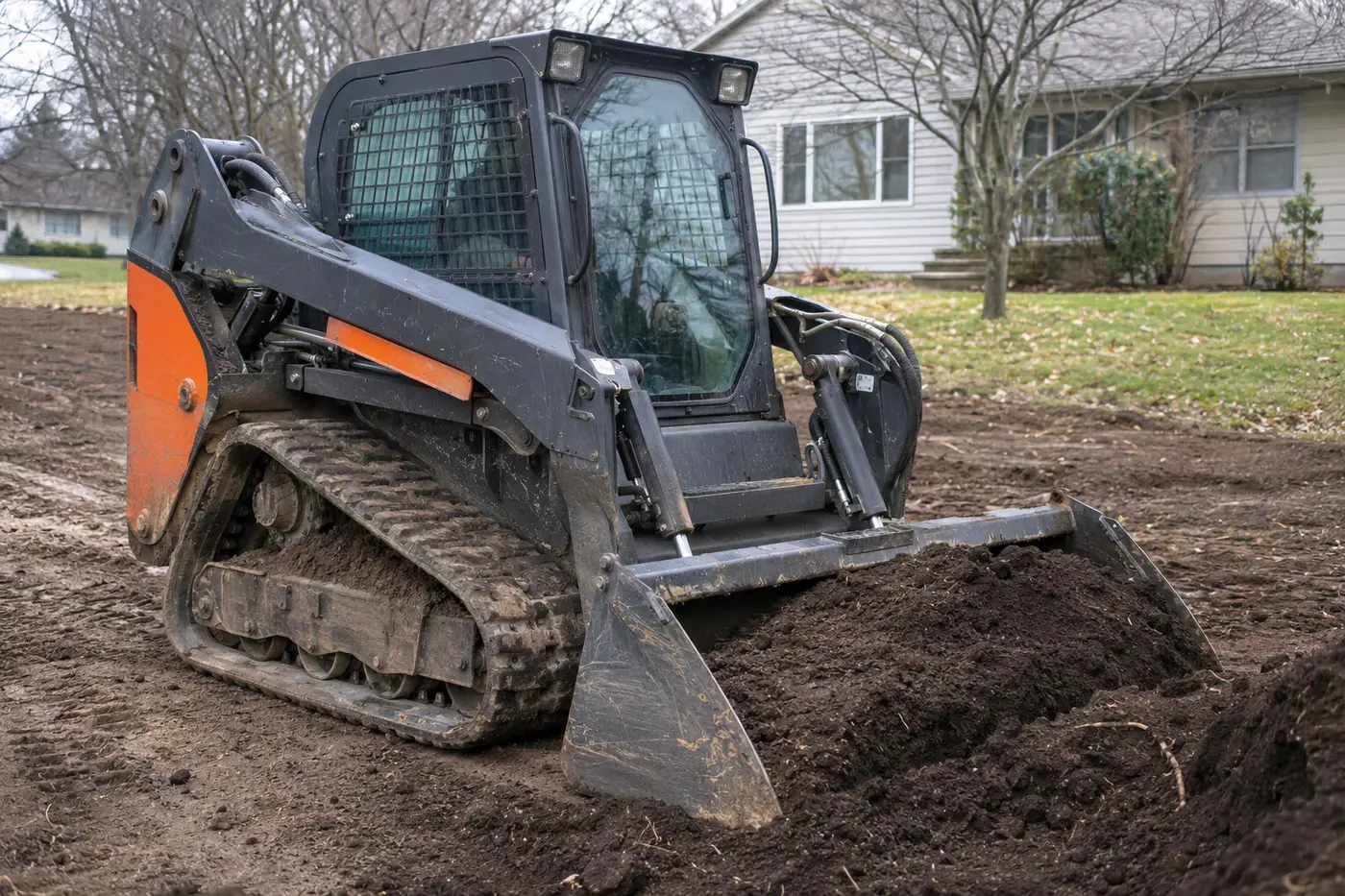
These numbers apply to buckets on both wheeled skid steers and compact track loaders. You can browse the full range of skid steer buckets to see how widths and styles differ.
Why does material weight matter more than volume?
Every machine has a rated operating capacity, which is the weight it can lift under the maker's test conditions. The load in the bucket plus the bucket's own weight has to stay inside that number. A full bucket of dry, light material may weigh far less than a full bucket of wet soil or gravel. If you fill a large bucket with heavy material, you can exceed the limit, make the machine tip forward or damage the lift arms.
Use this rule: pick the bucket for the heaviest material you will carry, then fill it fully only when the weight is safe. If you move mulch and snow on some days and wet dirt on others, a larger bucket works for the light days and you fill it partly for the heavy ones. Read the manual and the machine's load chart for the numbers that apply to your model.
How wide should the bucket be?
Match the width to the machine's tires or tracks. A bucket a few inches wider than the machine on each side lets you dig a clean pass and avoids driving over what you just loosened. That is why buckets are usually sized slightly wider than the machine. A bucket narrower than the tires makes the machine work harder in loose material and can leave tire marks in finished surfaces.
Wider is not always better. A very wide bucket is heavy and can overload the machine's front axle. It can also be harder to turn in tight spaces. If you work in confined yards or around buildings, a narrower bucket can be the practical choice.
Which bucket type suits the job?
| Bucket type | Typical use | Size notes |
|---|---|---|
| General-purpose | Digging, loading, backfilling, grading | Standard capacity for the machine's frame class |
| Low-profile | Landscaping, grading, light material | Wider and shallower, holds less per pass |
| High-capacity or light-material | Mulch, snow, wood chips, grain | Larger volume, only for light material |
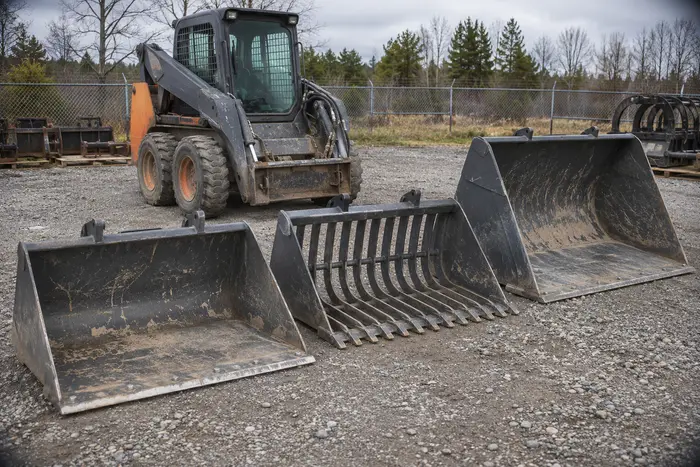
| Heavy-duty or rock | Rocky soil, quarry, demolition | Extra steel for abrasion, higher empty weight |
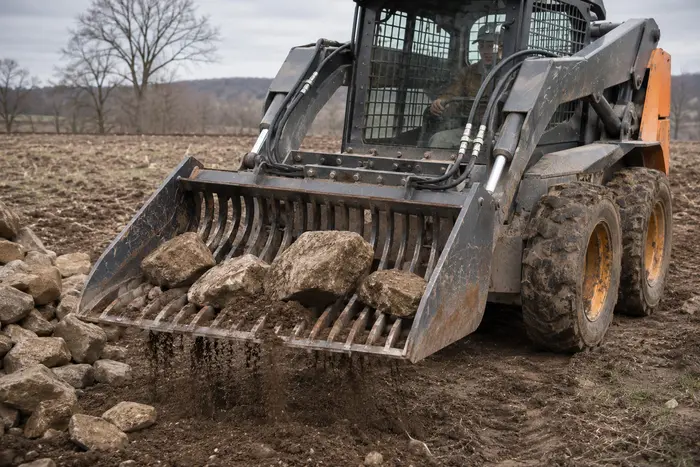
| Skeleton or sifting | Sorting stone from soil | Capacity varies, open design lets fines fall through |
For a deeper look at styles, read loader bucket types and the comparison of rock bucket vs skeleton bucket.
How does machine size change the answer?
Larger frame classes have higher rated capacities and wider bucket options. Smaller machines, including mini skid steers, need narrower, lighter buckets. If you aren't sure where your machine sits, the skid steer sizes and frame classes guide covers the categories. Compact track loaders can often handle a heavier or wider bucket than a wheeled machine of the same class because tracks spread the load and improve stability, but the rated operating capacity still sets the limit.
A short checklist for choosing a bucket
- Find the machine's rated operating capacity in the operator manual.
- List the materials you move most and their relative weight: light, medium, heavy.
- Pick a width that clears your tires or tracks by a few inches per side.
- Choose the bucket type for the job: general, low-profile, light-material or heavy-duty.
- Add the bucket's empty weight to the load when you check the limit.
- Confirm the quick-attach style and any extra features, such as bolt-on edges.
What features are worth having?
A bolt-on cutting edge lets you replace the wear part without welding. A reinforced back and wrap-around side plates add strength for hard work. Teeth, or a tooth bar, help in hard ground and frozen soil, but they leave a rougher surface when grading. A spill guard keeps material from rolling back on the operator when the lift arm is raised. Look at how the bucket's floor meets the back: a good design rolls material into the bucket instead of pushing it out.
If you grade often, see how to grade with a skid steer bucket for how bucket shape affects finish work.
What mistakes lead to the wrong bucket?
- Buying on volume alone and ignoring material density.
- Choosing a bucket so wide it overloads the front axle.
- Ignoring the bucket's own weight in the capacity check.
- Skipping the quick-attach check and finding the bucket doesn't lock into the plate.
- Buying a light-material bucket for heavy work to get more volume.
How do buckets differ for loading trucks and trailers?
If most of your work is loading trucks, tandem trailers or hoppers, bucket height at full lift and dump angle matter as much as capacity. A bucket that holds plenty but dumps short of the truck side wastes time. Check the machine's lift height and dump reach with the bucket you are considering. Vertical lift machines reach higher and closer to the truck, while radial lift machines reach farthest at mid-height. A bucket with a good roll-back angle also keeps material from spilling as you lift.
For grading and finish work, bucket width and a sharp cutting edge matter more than volume. A wide, low bucket with a smooth edge leaves a better surface and handles light material in large amounts. Many crews keep two buckets: a general-purpose one for heavy digging and a larger light-material or low-profile one for finishing and bulk handling. That avoids forcing one bucket to do jobs it wasn't built for.
How do you read the machine's load chart?
The operator manual lists the rated operating capacity and often a tipping load. The rated figure is set well below the tipping load, so loads within it should leave the machine stable on firm, level ground. Anything that reduces stability, such as slopes, soft ground, side loading or a raised boom, cuts the real margin. When you add a heavy attachment, the weight of the attachment counts against the lift limit even though you don't see it on the arms.
Smaller frames need smaller tools, so see mini skid steer buckets if you run a compact machine.
Get the right fit the first time
A bucket has to match your machine's quick attach, width and rated capacity. Send us the make, model and year and a person will check fit against the maker's specs. You approve a delivered price before you pay. Get a fit-checked quote or call 1-888-245-1555.
Questions buyers ask
What size bucket does a skid steer need?
One that clears your tires or tracks and stays inside the machine's rated operating capacity when full of the heaviest material you carry. The manual lists the capacity. Heavier material needs a smaller bucket. Lighter material, like mulch or snow, allows a larger one.
How many cubic yards is a skid steer bucket?
It varies with the machine's frame class and the bucket type. Small machines carry buckets measured in fractions of a cubic yard, and larger machines carry more. Check the maker's listed capacity, and ask whether it is struck or heaped.
Is a wider skid steer bucket better?
Not always. A bucket slightly wider than the tires gives a clean pass, but a very wide bucket adds weight, strains the front axle and is harder to maneuver. Pick the width that suits your work area and stays inside capacity.
How do I calculate skid steer bucket capacity?
Multiply the bucket's volume by the material's density to estimate the load weight, then add the bucket's empty weight. The total must stay under the machine's rated operating capacity. Use the maker's density figures or weigh a sample to be sure.
Can I use the same bucket on a skid steer and a compact track loader?
Often yes, if both machines use the same quick-attach plate and the bucket's weight and width suit each machine's rated operating capacity. Confirm the plate standard and the capacity for each machine before you buy, since tracked and wheeled machines can differ.