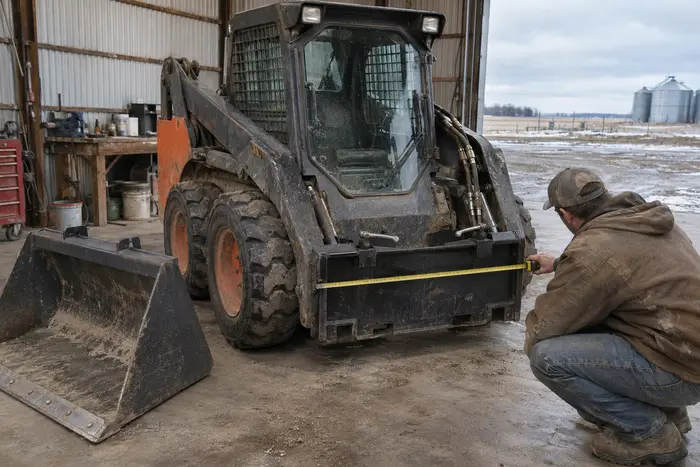
Skid steer guide
Skid Steer Attachment Maintenance Checklist
Quick answer
Maintain skid steer attachments by inspecting them before each shift, greasing pivots and pins on schedule, checking hoses and couplers for wear and leaks, replacing cutting edges and teeth before they wear into the body, and storing them clean and supported. The operator manual sets exact intervals.
Shopping for this now? Get a fit-checked, delivered quote.
Key takeaways
- Do a walk-around before each shift: pins, welds, hoses, couplers, guards
- Grease the points the manual lists, and keep couplers clean and capped
- Replace wear parts as sets before they damage the structure
- Motor-driven tools need clean oil and an unrestricted case drain
- Store attachments clean, dry and supported, with hose ends capped
Attachments make a skid steer worth owning, and they live a hard life. They are dragged through grit, struck by rock, thrown against the ground and left in the weather. Most failures are not sudden. They start as a worn pin, a rubbed hose or a dry bushing that nobody checked. A simple routine catches them. This checklist covers what to look at before each shift, weekly and at season's end.
The operator manual for the machine and the attachment sets exact intervals and torque values. Use this list as a framework and defer to the manual.
Why does attachment maintenance matter?
A skid steer is a quick-attach machine: you swap tools often, and the attachment, the hoses and the couplers all get handled. Each swap is a chance to pick up grit, damage a coupler or miss a leak. A tool that fails at work stops the whole job, and some failures are dangerous. A loose pin or a bent guard on a cutter can throw debris. Checks cost minutes and save days.
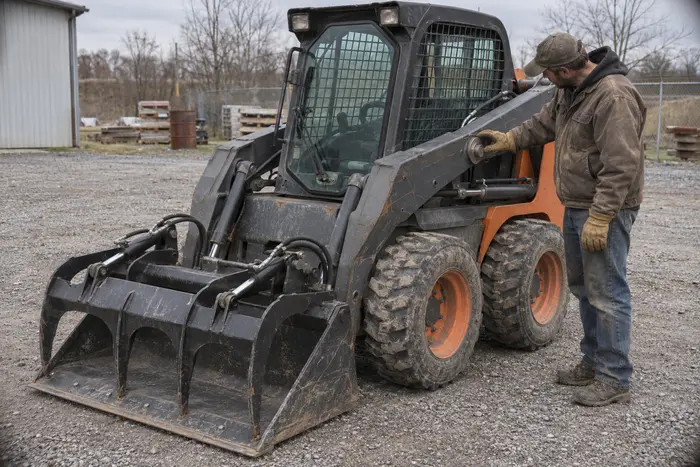
Daily walk-around checklist
- Look at the structure. Check welds, cutting edges, teeth, blades and frames for cracks, bends and wear.
- Check the mounting plate and locks. Look at the quick attach plate and make sure the locking wedges or pins engage fully. Test by curling the attachment against the ground after mounting.
- Look at the hoses. Check for rubs, cuts, bulges, kinks and leaks. Check that hoses are routed so they cannot be pinched at the hitch or the pivots.
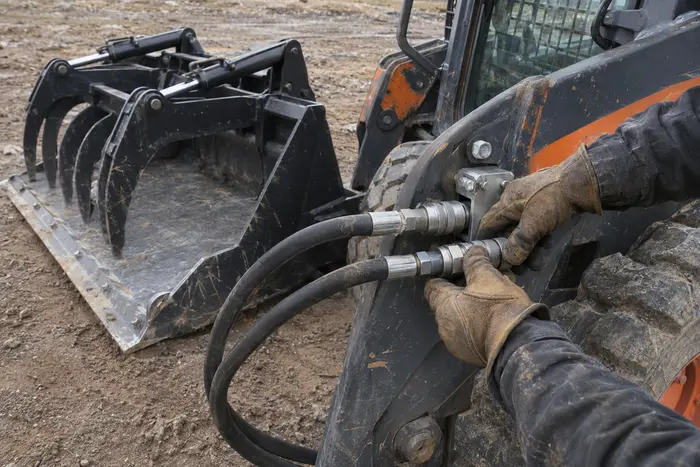
- Check the couplers. Clean the couplers before connecting to keep grit out of the hydraulic system. Look for dents and leaks. Cap them after use.
- Inspect pins and bushings. Look for looseness, wear and missing keepers or retainers.
- Check guards and shields. Make sure guards, chains and shielding are in place and not damaged.
- Grease what the manual lists. Pivot pins, bushings and bearings.
- Check fluid and temperature. Watch for hydraulic leaks, oil level on the machine and unusual heat from the attachment motor.
Maintenance by attachment type
| Attachment | Main wear items | What to check |
|---|---|---|
| Buckets and forks | Cutting edge, teeth, fork tips, heel | Edge wear, cracks near welds, bent tines or forks |
| Grapples | Pivot pins, bushings, cylinders | Pin play, cylinder leaks, jaw alignment |
| Augers | Auger bits, drive, gearbox | Tooth wear, gearbox oil, loose bolts |
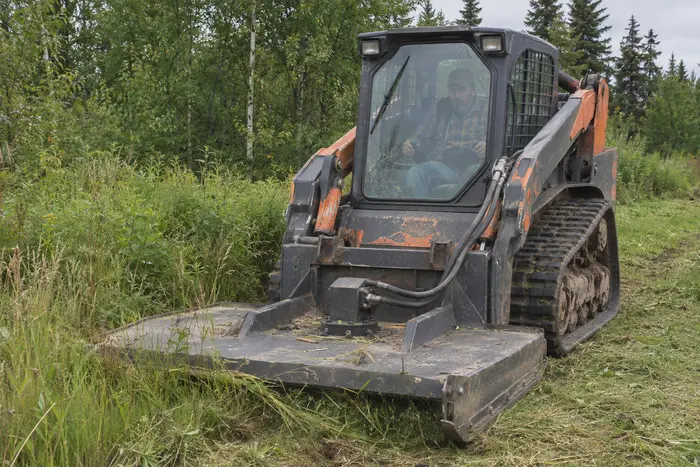
| Brush cutters and mulchers | Blades, teeth, bearings, motor seal | Blade wear and balance, bearing heat, case drain, shaft seal leaks |
| Trenchers and stump grinders | Teeth, chain, boom pivot | Tooth wear, chain tension, hose rubbing |
| Brooms and snow blowers | Bristles, cutting edges, drive | Bristle wear, chain or gearbox lubrication |
| Breakers | Tool bit, bushing, seals | Tool and bushing wear, grease, leaks |
Hydraulic hoses and couplers
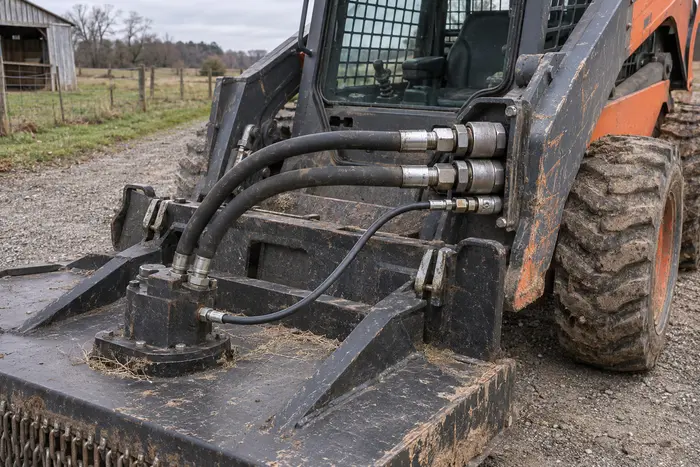
Hoses and couplers are easy to neglect. Skid steers use auxiliary hoses that run to the front and get yanked and dragged. Check for rubbing against sharp edges, kinks at tight bends and weeping at fittings. Replace damaged hoses rather than patching them. Use hoses with the right pressure rating and fittings that match.
Keep couplers clean. A speck of grit can damage a motor or a valve. Wipe the coupler faces before connecting, and use dust caps when disconnected. Relieve pressure before disconnecting, as the machine manual describes. Make sure each coupler is fully seated, since a half-connected coupler restricts flow and heats up. For more on this, read our guide to flat-face couplers and hoses.
Motor-driven tools and the case drain
Tools driven by a hydraulic motor, such as mulchers, brush cutters and trenchers, need special attention. The motor's case drain line has to stay unrestricted, since a blocked or pinched line raises case pressure and can damage the shaft seal. Check the drain hose for kinks, make sure the coupler is fully connected, and watch the shaft seal for weeping. Read what a case drain is for the details. Keep hydraulic oil clean and use the filters the manual specifies.
Wear parts: replace before damage
Cutting edges, teeth, blades and flails are meant to wear out. The goal is to replace them before they wear into the structure that holds them. A bucket edge that wears through the floor means a weld repair. A blade that is worn unevenly causes vibration that damages bearings. Replace blades and teeth in sets where the manual calls for it, check the bolts and use the torque the manual lists. Keep spare wear parts on hand, since downtime costs more than the parts.
Weekly and monthly tasks
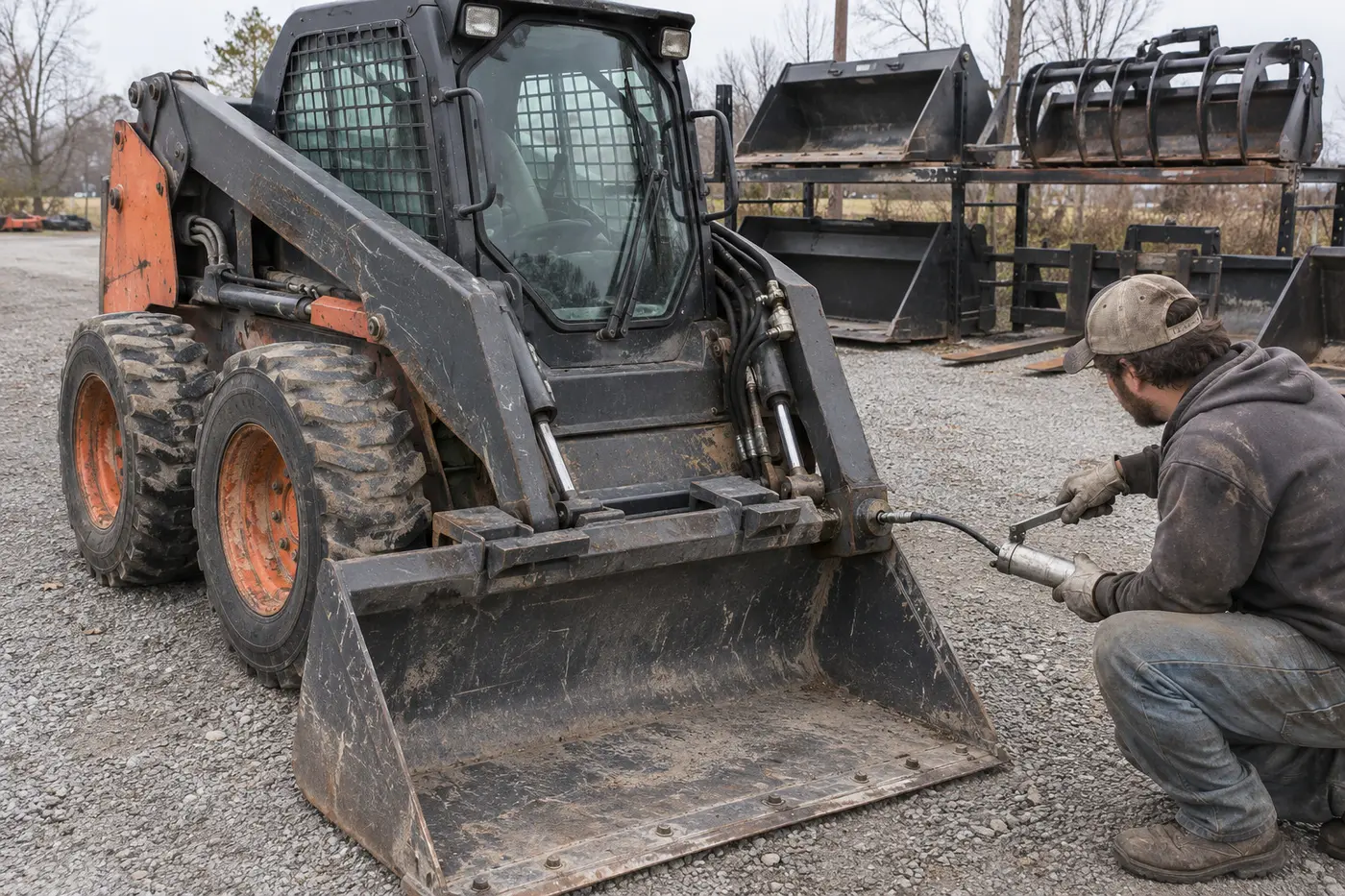
Keep spares and tools organized on an attachment rack, and check wear on buckets and forks first.
- Clean the attachment of mud, sap and debris, which hold moisture and hide cracks.
- Check bolts on the frame, the guards and the mounting plate.
- Check gearbox or chain case oil on drives that have one.
- Look for cracks near welds with a bright light after cleaning.
- Check the quick attach plate for wear and clean the locking pockets.
- Read the machine and attachment hour meters and compare them against the manual's service intervals.
End of season and storage
- Wash the attachment and let it dry.
- Touch up bare metal with paint to slow rust.
- Grease all points and cycle moving parts.
- Cap hose ends and couplers. Store hoses so they are not kinked.
- Park the attachment on a stand or blocks so the cutting edge or teeth are not in contact with damp ground.
- Rinse salt from snow tools and spreaders, since salt corrodes steel quickly.
- Write down what needs repair so you can fix it before next season.
When to repair and when to replace
Many repairs are routine: replace edges, hoses, bushings and pins. Others are a sign it is time to retire a tool: cracks in structure, bent frames, repeated weld repairs in the same place and gearboxes with metal in the oil. If repair costs approach the price of a replacement, or if a failure would be dangerous, replace the tool. Keep a simple log of repairs and hours so you can see patterns.
Keep records
A basic log pays off. Write the date, hours, what you checked and anything you replaced. When a tool starts to act up, the log tells you whether a part has been wearing for months or is a new problem. It also helps when you sell the tool or make a warranty claim. Warranty terms vary by maker, and many ask for proof of purchase and records of routine upkeep, so keep both.
Get the right fit the first time
Send us your machine make, model and year and what you plan to do with it. A person checks fit against the maker's specs, and you approve a delivered price before you pay. Get a fit-checked quote.
Questions buyers ask
How often should I grease skid steer attachments?
Follow the grease schedule in the operator manual, which lists the points and intervals. A common habit is to grease pivots and bearings at the start of each shift on heavy use and after washing. Dry bushings wear fast.
What should I check on a skid steer attachment before using it?
Check welds and structure, cutting edges and teeth, pins and keepers, mounting plate locks, hoses, couplers and guards. Look for leaks and loose bolts. After mounting, curl the attachment against the ground to confirm it is locked.
How do I keep skid steer hydraulic couplers in good shape?
Wipe the faces clean before connecting and fit dust caps when they are disconnected. Make sure they are fully seated, relieve pressure as the manual describes and replace damaged couplers. Dirt in a coupler can damage motors and valves.
When should I replace a bucket cutting edge or teeth?
Replace them before they wear into the bucket floor or the structure they bolt to. Check wear at each shift. Replacing a bolt-on edge usually costs far less than a weld repair to the bucket body.
How should I store skid steer attachments over winter?
Wash and dry them, touch up bare metal, grease the points, cap hoses and couplers, and store them on blocks or a stand off damp ground. Rinse salt from snow tools and spreaders, and note any repairs for next season.