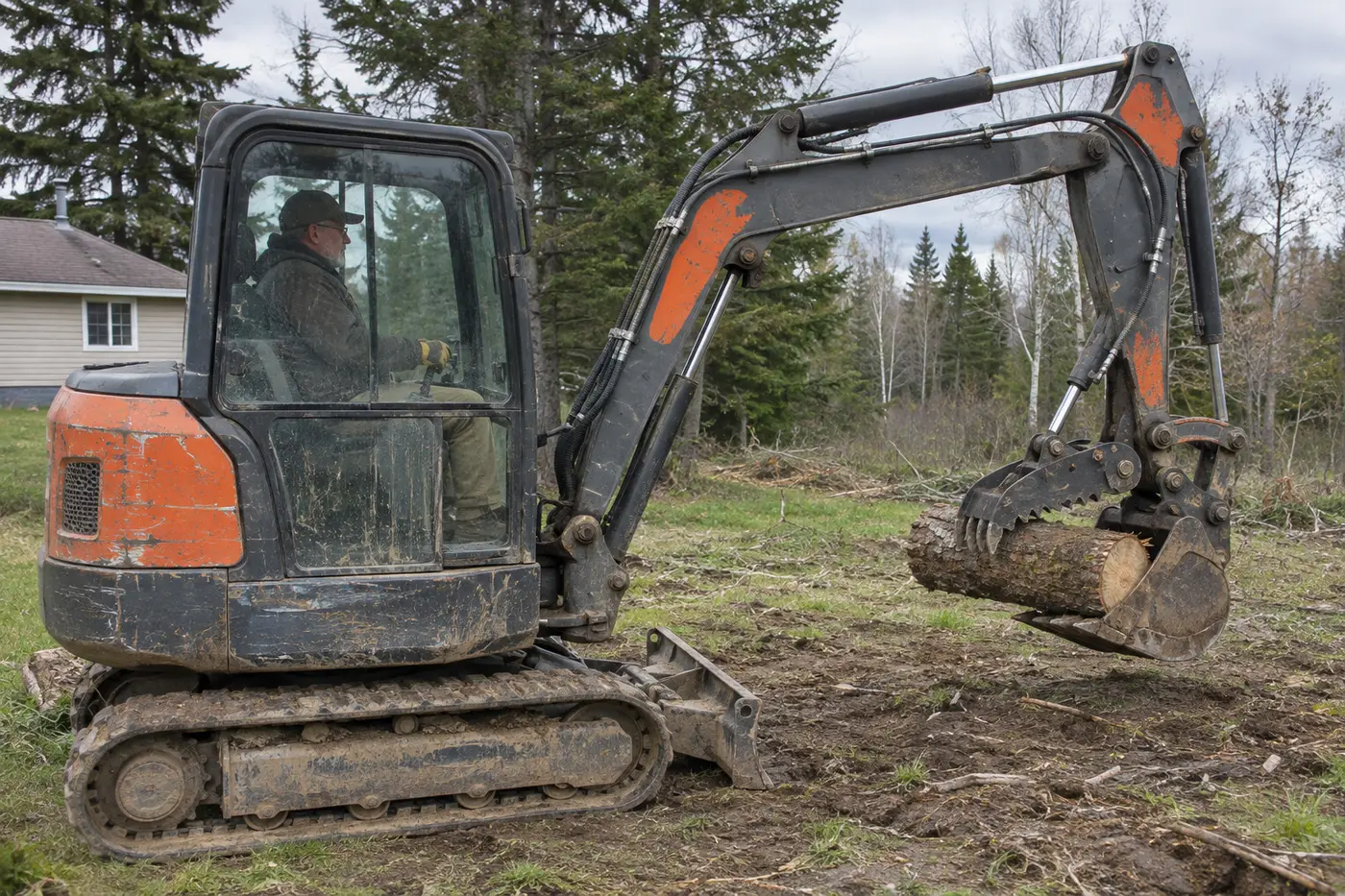
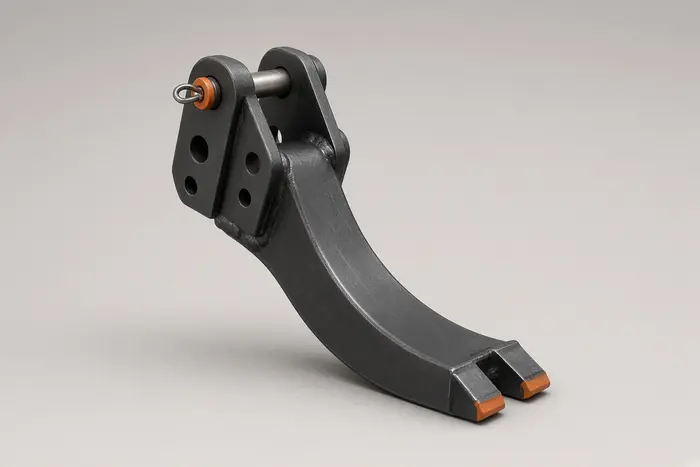
A mini excavator thumb is a hinged finger mounted on the arm that closes against the bucket to grip logs, rocks, pipe and debris. It turns the bucket into a simple grapple. Thumbs come in manual and hydraulic versions, and they let the operator pick, place and carry material the bucket alone cannot hold.
Attachment type. Maker, model, photos and availability for your machine are confirmed on your quote.
Progressive Link Hydraulic ThumbPhotos confirmed on your quote
Progressive Link Hydraulic Thumb
Mini excavators handling logs, pipe and rock
A hydraulic thumb with a linkage that keeps it in contact with the bucket through a wider range of bucket positions. It suits crews that handle heavy, awkward loads and need consistent holding force.
Attachment type. Maker, model, photos and availability for your machine are confirmed on your quote.
Fit check
What a person checks before you get a price
Fit is the first thing that goes wrong when you buy attachments online. Before we send a delivered price, a person checks your setup against the maker's specs. If we can't confirm fit, we tell you before you pay.
Make, model and year of your machine
Pin-on or quick coupler, with pin diameter and spacing
Stick width and ear dimensions
Auxiliary and case-drain hydraulics, flow and pressure
Machine operating weight class
Any thumb or tilt mounting needs
How hard you'll run it: acreage use or daily contractor work
How buying here works
Tell us your machine and the job.
A person checks fit and sends one delivered price, freight included.
Approve it and the supplier ships to your door.
We're a new dealer adding manufacturers now. If we can't source a fit-checked option for your machine and job, we'll tell you on the first call, with no obligation.
How to choose a mini excavator thumb
Start with manual or hydraulic. A manual thumb is pinned in a few fixed positions and is cheaper and simpler. A hydraulic thumb opens and closes from the seat and needs an extra hydraulic circuit and a cylinder. Our hydraulic versus manual thumb guide covers the tradeoffs.
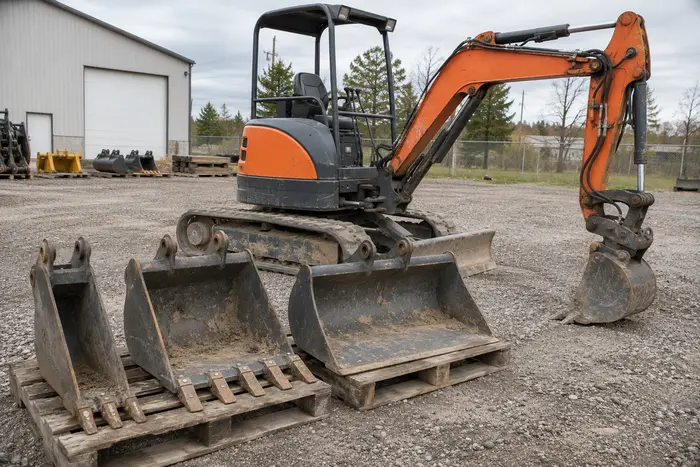
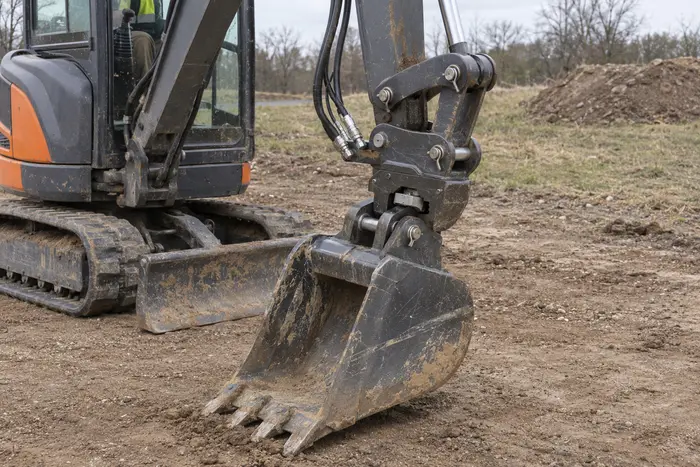
Then match the thumb to the bucket and arm. The thumb tines must meet the bucket teeth properly. A weld-on thumb is attached to the stick. A bolt-on or bracket style uses a mounting bracket. Check the bucket width, arm geometry and quick coupler before you order.
Tine count and spacing: fits the material you grip.
Mount style: weld-on or bolt-on.
Hydraulic circuit: auxiliary line and valve for hydraulic models.
Bucket match: the thumb must clear the bucket teeth.
What is a thumb on a mini excavator used for?
It gives the machine a grip. With the thumb closed, the bucket and thumb hold logs, rocks, pipe and brush so the operator can lift and place them. It helps with demolition, landscaping and land clearing. Without a thumb, those items slip out. See our bucket types guide and the quick coupler guide to plan the setup.
Check thumb and bucket clearance after every bucket change. A thumb that strikes the teeth can bend tines or damage the stick.
Send us your machine make, model and year. A person checks fit against the maker's specs, and you approve a delivered price, freight included, before you pay. Warranty terms, if any, are written on your quote. Ready to start? Request fit-checked quote for an excavator thumb.
It is a hinged finger on the arm that closes against the bucket to grip logs, rocks, pipe and debris. It turns the bucket into a simple grapple, so the operator can pick and place material.
What is the difference between a hydraulic and a manual thumb?
A manual thumb is set by hand in fixed positions and needs no hydraulics. A hydraulic thumb opens and closes from the seat but needs an extra circuit and cylinder. Choose by how often you grip loads.
Can I add a thumb to any mini excavator?
Most mini excavators can take a thumb. The mount, bucket match and hydraulic circuit must fit your machine. Send your make, model and year and we confirm fit before you order.
Do I need a thumb on my mini excavator?
A thumb helps when you handle logs, rock, pipe or debris. For plain digging you may not need one. It is a common add-on for landscaping, demolition and land-clearing work on small sites.