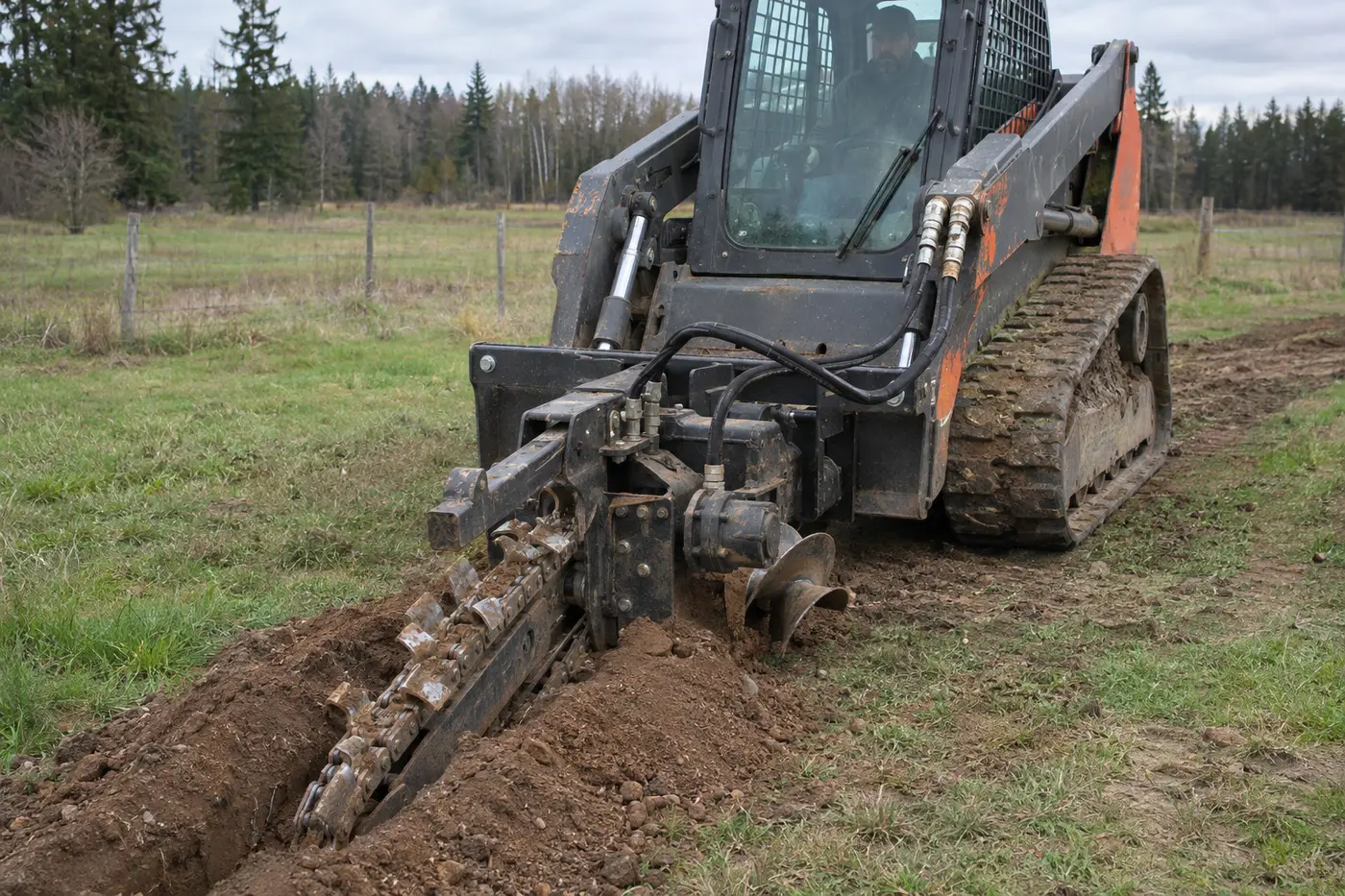
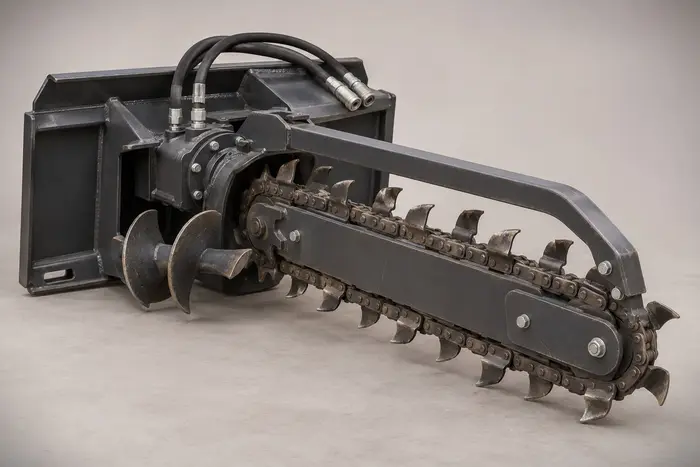
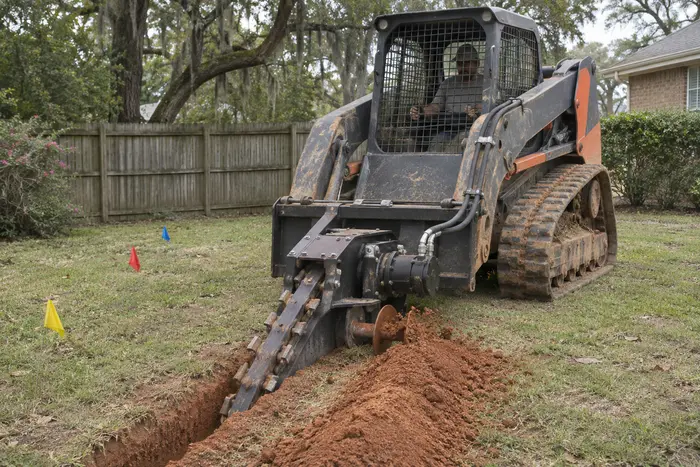
A skid steer trencher attachment is a hydraulic digging chain or wheel that cuts a narrow trench as the machine moves backward. It mounts on the quick attach plate and digs trenches for irrigation, drainage, electrical and utility lines. It is usually much faster than digging a long, narrow trench with a bucket.
Trenchers for skid steer and compact track loaders
Every option is quoted for your exact machine. Sizes, flow and couplers are confirmed on the quote.
Illustration
Standard Chain Trencher Attachment
Skid steers and compact track loaders with adequate auxiliary flow
A chain trencher for irrigation, conduit and shallow utility lines in typical soil. It suits landscapers and electricians who dig narrow trenches often and want clean results.
Digging chain with teeth
Hydraulic drive
Spoil conveyor
Universal quick attach
Get my delivered priceTypical listed price at other online dealers$6,000 – $7,250USD · shipping terms vary by seller · a guide, not our price
Attachment type. Maker, model, photos and availability for your machine are confirmed on your quote.
Heavy-Duty Deep TrencherPhotos confirmed on your quote
Heavy-Duty Deep Trencher
Larger skid steers and compact track loaders with high-flow hydraulics
A deeper-reaching trencher for utility crews digging lines through clay and compacted ground. It uses more hydraulic power to keep steady production going all day.
Long digging boom
High-flow motor
Heavy-duty chain
Reinforced frame
Get my delivered priceTypical listed price at other online dealers$8,350 – $8,650USD · shipping terms vary by seller · a guide, not our price
Attachment type. Maker, model, photos and availability for your machine are confirmed on your quote.
Rock Wheel TrencherPhotos confirmed on your quote
Rock Wheel Trencher
Skid steers and compact track loaders working in rocky ground
A wheel-style trencher with carbide teeth that cuts rock and frozen ground that a standard chain struggles with. Rock wheels usually need high-flow hydraulics, so flow is checked on your quote.
Attachment type. Maker, model, photos and availability for your machine are confirmed on your quote.
Price ranges show what two other North American online dealers listed comparable attachments for, checked November 2026. Shipping terms vary by seller. They are a guide, not our price: your delivered price, with freight to your address, is confirmed on your quote.
Fit check
What a person checks before you get a price
Fit is the first thing that goes wrong when you buy attachments online. Before we send a delivered price, a person checks your setup against the maker's specs. If we can't confirm fit, we tell you before you pay.
Make, model and year of your machine
Coupler: universal quick attach or another plate
Auxiliary hydraulic flow and pressure, standard or high flow
Hose coupler type (flat-face or poppet) and any electrical connector
Rated operating capacity against the attachment's weight
Width against your machine and the job
How hard you'll run it: acreage use or daily contractor work
How buying here works
Tell us your machine and the job.
A person checks fit and sends one delivered price, freight included.
Approve it and the supplier ships to your door.
We're a new dealer adding manufacturers now. If we can't source a fit-checked option for your machine and job, we'll tell you on the first call, with no obligation.
How to choose a skid steer trencher attachment
Choose the boom first. A chain trencher cuts a narrow, clean trench and suits most utility and irrigation work. A rock wheel cuts hard or rocky ground that a chain struggles with. Our guide on what a trencher is covers both.
Then match depth and width to the job. A deeper boom needs more hydraulic power and a heavier carrier. Check your machine hydraulics against the attachment. Standard-flow chain trenchers handle many irrigation and conduit jobs, deeper booms and rock wheels often need high flow, and the hydraulic flow guide explains what that means.
Chain and teeth: match the tooth style to your soil, from loam to clay and rock.
Trench width: chain width sets how wide the trench is.
Spoil control: a conveyor or auger moves loose dirt to the side.
Mount: universal quick attach is the common standard.
How deep can a skid steer trencher dig?
Depth depends on the boom length, your machine and the soil. Longer booms dig deeper but need more hydraulic power and carrier weight to work well. Hard ground slows the chain and calls for tougher teeth. Choose a boom that reaches your typical depth with room to spare, rather than one that is always at its limit. The maker lists the digging depth for each model.
Before you trench, have buried utilities marked: call 811 in the US, or your provincial one-call service in Canada. Cover depth rules for pipes and cables vary by region, so check local requirements.
Send us your machine make, model and year. A person checks fit against the maker's specs and sends one delivered price, freight included, for your exact setup. It ships direct from the supplier, and the ship-from location is on your quote. Warranty terms, if any, are written on your quote. Ready to start? Request fit-checked quote for a trencher attachment.
It is a hydraulic chain or wheel boom that mounts on a skid steer and cuts narrow trenches as the machine backs up. It is used for irrigation, drains, conduit and utility lines, and works faster than digging trenches by hand or with a bucket.
How do you use a skid steer trencher attachment?
Locate underground utilities, lower the boom into the ground and back the machine along the line while the chain digs. Keep a steady pace and watch for rocks. Keep people clear of the chain and follow the operator manual.
What is the best skid steer trencher?
It depends on your soil, depth and hydraulics. Chain trenchers suit most utility work, wheel trenchers suit rock. Compare flow requirements with your machine and size the boom to the trench you dig. We confirm fit before you order.
Can you dig a trench with a skid steer?
Yes. With a trencher attachment a skid steer digs clean, narrow trenches quickly. A bucket or backhoe attachment can also dig trenches, but they are slower and messier for long, narrow lines such as irrigation and conduit runs.