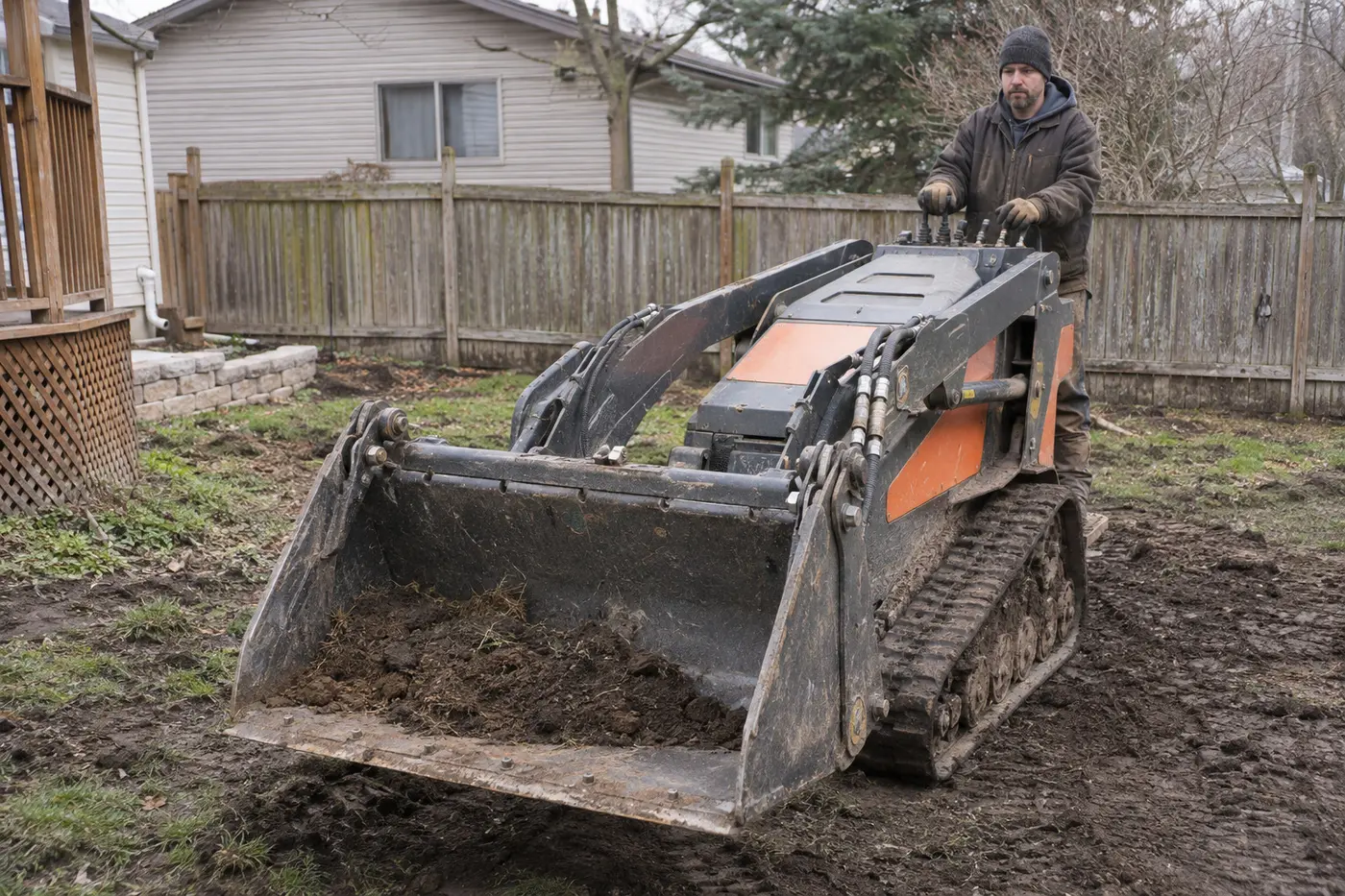
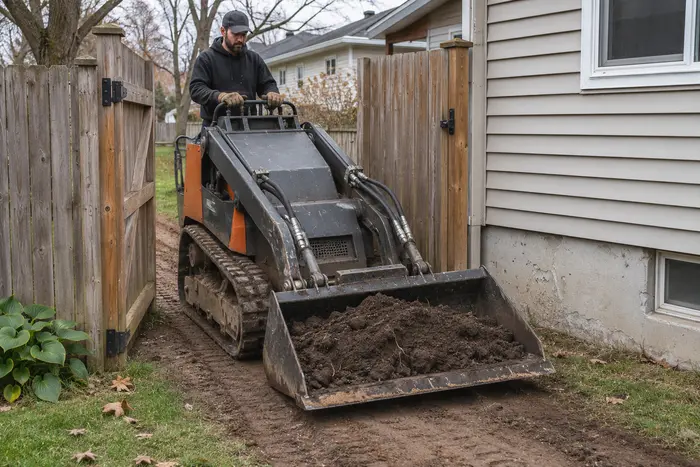
A mini skid steer bucket is the basic digging and carrying tool for compact utility loaders. It scoops, carries and dumps soil, gravel, mulch and debris, and it comes in general-purpose, low-profile, tooth and multi-function styles to suit different jobs. Sizes, flow and mount details are confirmed on your fit-checked quote.
Buckets for mini skid steer and compact utility loaders
Every option is quoted for your exact machine. Sizes, flow and couplers are confirmed on the quote.
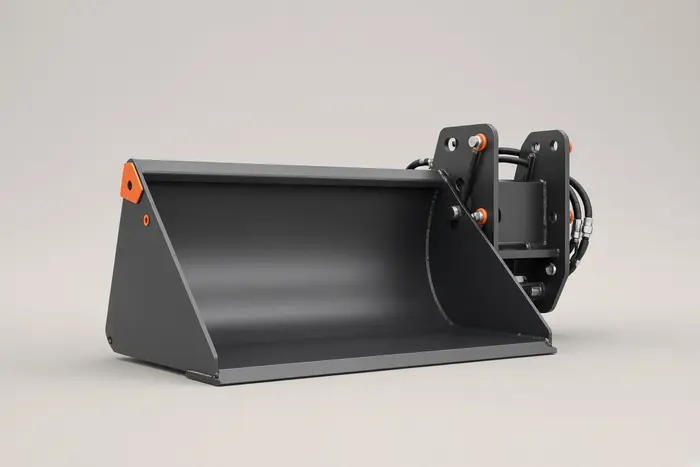
Illustration
General-Purpose Mini Skid Steer Bucket
Mini skid steers and compact utility loaders
A standard bucket for digging, loading and carrying. The everyday choice for mixed work in yards, gardens and job sites. Fit is confirmed against your machine's specs before you order.
Smooth cutting edge
Reinforced bottom
Quick attach mount
Get my delivered priceTypical listed price at other online dealers$960 – $1,100USD · shipping terms vary by seller · a guide, not our price
Attachment type. Maker, model, photos and availability for your machine are confirmed on your quote.
Toothed Digging BucketPhotos confirmed on your quote
Toothed Digging Bucket
Mini skid steers and compact utility loaders
A bucket with teeth for harder ground, roots and compacted soil. Digs deeper and breaks up material that smooth edges slide over. A person checks compatibility with your make and model first.
Bolt-on teeth
Heavy side plates
Strong cutting edge
Get my delivered priceTypical listed price at other online dealers$780 – $1,650USD · shipping terms vary by seller · a guide, not our price
Attachment type. Maker, model, photos and availability for your machine are confirmed on your quote.
Low-Profile Utility BucketPhotos confirmed on your quote
Low-Profile Utility Bucket
Mini skid steers and compact utility loaders
A wide, shallow bucket for light bulky material like mulch, snow and leaves. Moves more volume per trip when weight is low. Exact sizes and capacity are confirmed on your fit-checked quote.
Wide shallow design
Light material focus
Smooth edge for grading
Get my delivered priceTypical listed price at other online dealers$500 – $1,450USD · shipping terms vary by seller · a guide, not our price
Attachment type. Maker, model, photos and availability for your machine are confirmed on your quote.
Price ranges show what two other North American online dealers listed comparable attachments for, checked November 2026. Shipping terms vary by seller. They are a guide, not our price: your delivered price, with freight to your address, is confirmed on your quote.
Fit check
What a person checks before you get a price
Fit is the first thing that goes wrong when you buy attachments online. Before we send a delivered price, a person checks your setup against the maker's specs. If we can't confirm fit, we tell you before you pay.
Make, model and year of your machine
Mounting plate: the common mini plate or another style
Auxiliary hydraulic flow and pressure
Hose coupler type (flat-face or poppet) and any electrical connector
Rated operating capacity against the attachment's weight
Width against your machine and the job
How hard you'll run it: acreage use or daily contractor work
How buying here works
Tell us your machine and the job.
A person checks fit and sends one delivered price, freight included.
Approve it and the supplier ships to your door.
We're a new dealer adding manufacturers now. If we can't source a fit-checked option for your machine and job, we'll tell you on the first call, with no obligation.
How to choose the right mini skid steer bucket attachment
Bucket choice affects how much you move and how well the loader handles. Check these points.
Mount. Mini skid steers use their own quick attach patterns. Confirm yours before ordering, since not every bucket fits every compact loader.
Width versus machine. A bucket slightly wider than the tracks or tires is common. Too wide hurts balance, and too narrow slows work. Match width to the machine and to gates and doorways.
Capacity and weight. Heavy materials like wet soil and stone can reach your loader's weight limit before the bucket is heaped. Keep loaded weight inside the machine's rated operating capacity and choose a bucket sized for what you carry.
Edge and teeth. Smooth edges are best for finish grading and light material. Toothed buckets penetrate hard ground and dig harder soil. Heavy-use buckets benefit from bolt-on edges you can replace.
Before we quote, a person checks: your loader's quick attach pattern; bucket width versus machine and access; rated operating capacity versus load; smooth or toothed edge; bolt-on or weld-on cutting edge. Warranty terms, if any, are written on your quote. Always stay inside the rated operating capacity and follow the operator manual for your machine.
Get the right fit the first time
Send us the make, model and year of your loader and the job you plan to do. A person checks it against the maker's specs and confirms fit. You approve a delivered price before you pay, and the supplier ships direct to you. Ready when you are: get a fit-checked quote. Want more background first? See Mini skid steer guide: weight, width and common uses.
Width varies by machine and bucket type, and the right figure comes from the maker's spec for your model. Buckets are usually a little wider than the machine or its tracks. Send your make and model for a fit check.
What is a four-in-one bucket for a mini skid steer?
It is a multi-function bucket that opens like a clamshell. It can load, doze, grapple odd-shaped items and level or bottom-dump material, all in one tool. It needs auxiliary hydraulics to open and close, and it weighs more than a plain bucket, so check your rated operating capacity. We can check this against your machine.
How do I remove a mini skid steer bucket?
Park on level ground and set the bucket flat. Disconnect any hydraulic hoses, release the coupler locks and confirm they are fully open, then tilt the mount forward until it clears the bucket's top lip and back away slowly. Follow your operator manual for your quick attach style.
Should I choose teeth or a smooth edge?
Teeth help in hard ground and roots. A smooth edge is better for grading, light material and finish work. Some owners keep one of each. Tell us your main jobs and we help you choose. We can check this against your machine.