Landscaping guide
What Is a Landscape Power Rake and What Does It Do?
Quick answer
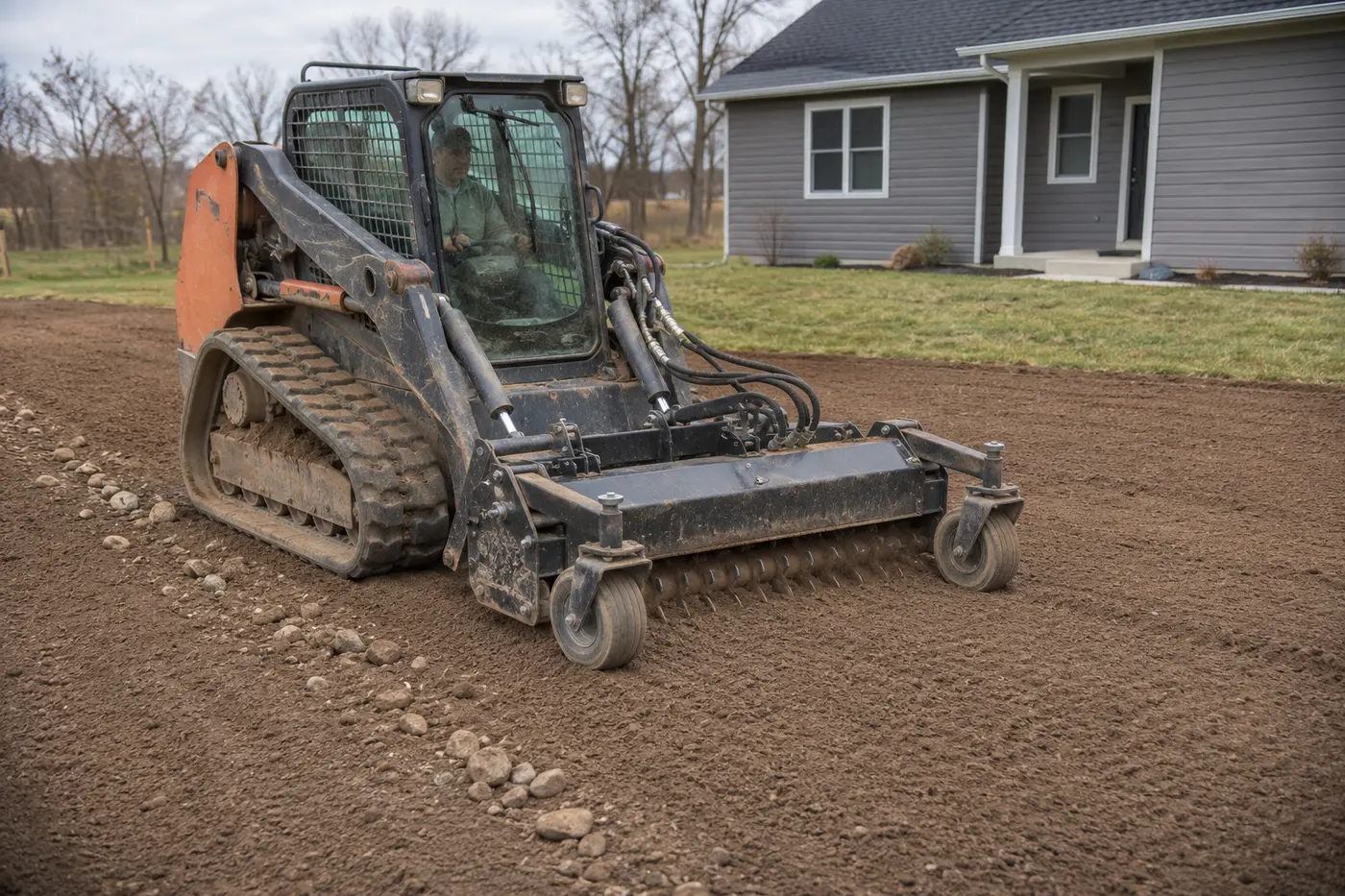
A power rake is a powered landscape attachment with a rotating, tined drum that loosens the top layer of soil, pulls out rocks and roots, and leaves a fine, level seedbed. It mounts on a skid steer or compact tractor and prepares ground for seed or sod much faster than hand raking.
Shopping for this now? Get a fit-checked, delivered quote.
Key takeaways
- Power rakes prep a seedbed in one pass: loosen, clean and level.
- They are not the same as a dethatcher, which works on living turf.
- Skid steer and tractor models differ in hydraulic or power takeoff drive.
- Match width and drive to your machine before you buy.
A power rake is one of the most useful tools for landscapers and property owners who want a smooth, seed-ready surface without hours of hand work. The name causes confusion, because some people use it for a lawn dethatcher. This guide explains what the landscape power rake is, how it works and when to choose it over other tools.
What is a power rake?
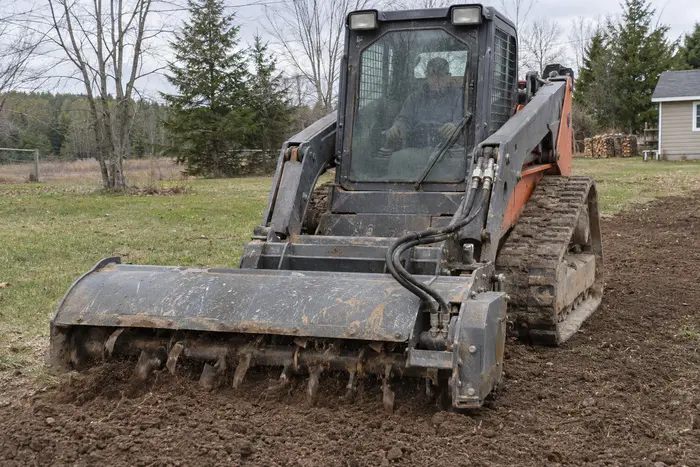
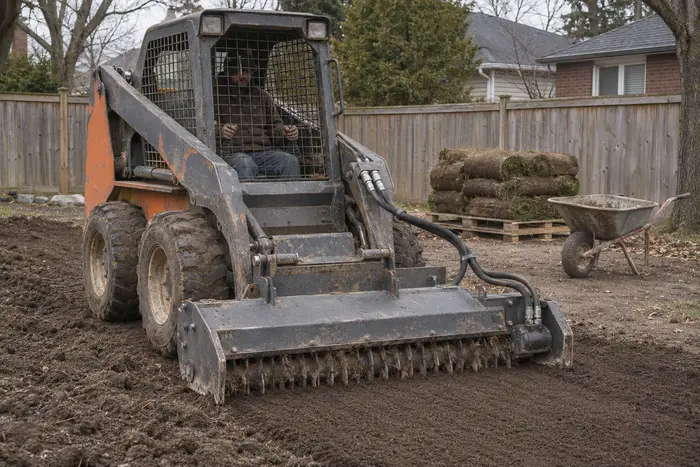
A power rake is a powered attachment with a rotating drum or rotor fitted with tines or teeth, inside a hood. It mounts on a skid steer loader, a mini skid steer, or a compact tractor. As you drive forward, the rotor turns against the ground. It breaks up crusted soil, throws small rocks and debris to the rear, and levels the surface. Behind the rotor, a screen or leveling bar smooths the finish.
Think of it as a very fast way to turn rough ground into a fine seedbed. You will also hear it called a landscape rake or a soil conditioner. Many skid steer versions also have a hydraulic angle function, which lets you angle the rake left or right.
What does a power rake do?
- Loosens and conditions topsoil so seed and roots can take hold.
- Removes rocks, roots and debris from the top layer, leaving them in a windrow behind the machine for pickup.
- Levels the surface by filling low spots and cutting high ones.
- Prepares seedbeds and sod beds for new lawns and overseeding.
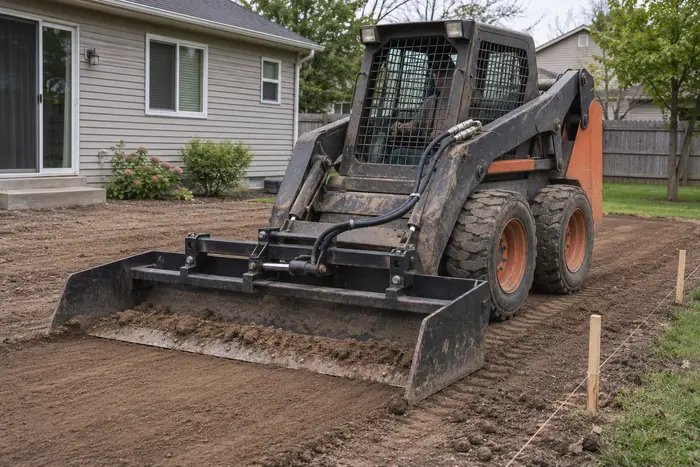
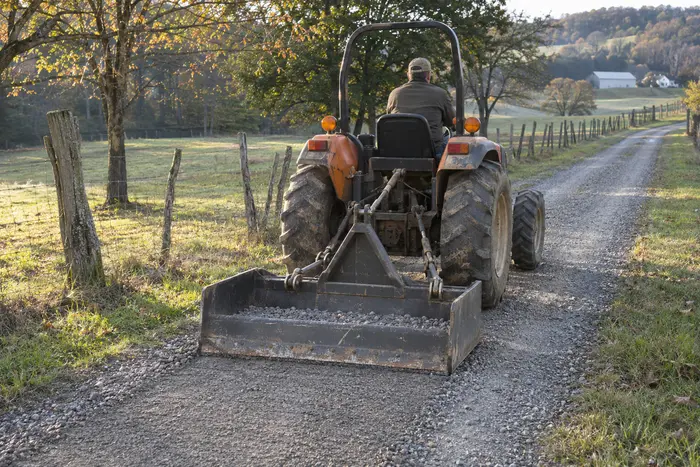
- Restores gravel and fills ruts on driveways and lanes, depending on the model.
- Mixes amendments such as compost, topsoil or fertilizer into the surface layer.
Power rake vs dethatcher
Many searches compare a power rake with a dethatcher, and the two overlap in name only. A dethatcher is a lawn tool that pulls dead grass and thatch out of living turf. A landscape power rake is a land-prep tool that works the soil surface. Some lawn dethatchers are called power rakes too, which is where the confusion starts. If you want to renovate existing turf, a dethatcher or aerator is the right tool. If you want to prepare soil for new seed or sod, you want the landscape power rake.
| Tool | Works on | Main job |
|---|---|---|
| Landscape power rake | Bare soil or rough ground | Loosen, clean, level, seedbed prep |
| Dethatcher | Living lawn | Remove thatch and dead grass |
| Box grader | Gravel and dirt | Shape and level large areas |
| Rotary tiller | Soil | Break up and mix deeper soil |
| Landscape rake (non-powered) | Loose soil and gravel | Light leveling and cleanup |
What are the types of power rake?
Skid steer power rakes
These attach to the quick-attach plate and run on the loader's auxiliary hydraulics. A hydraulic motor spins the rotor. Many offer hydraulic angling, so you can steer the rake and control how it throws debris. Browse the skid steer power rakes and the mini skid steer power rakes.
Tractor-mounted power rakes
These use a three-point hitch and a power take-off shaft. They suit compact tractors and farm use. Check our guide on three-point hitch categories to match one.
Walk-behind units
Small gas-powered units handle small yards and patches. They are slower but fit tight spaces.
How to choose a power rake
- Working width. Wider means more ground per pass but needs more power and a wider machine.
- Hydraulic flow and pressure. For skid steer models, compare the rake's requirement with your loader's output.
- Drive type. Hydraulic for loaders, PTO for tractors.
- Weight. The rake hangs on the front of the machine. Check the loader's rated operating capacity.
- Tine type and spacing. Finer spacing gives a finer finish. Heavier teeth deal better with rocks.
- Angle and tilt controls. Useful on slopes and for directing debris.
- Debris handling. Look at how the rake windrows rocks and whether a catch basket or screen is available.
How to use a power rake
- Walk the site and mark irrigation heads, utility covers and large obstacles.
- Rough-grade first if the ground is badly uneven.
- Set the rake depth with the loader arms and the gauge wheels or skid shoes if fitted.
- Drive at a steady, moderate speed. Make parallel passes with a slight overlap.
- Pick up the windrow of rocks and debris with a bucket or grapple.
- Make a second pass at a right angle if you need a finer finish.
- Seed or lay sod soon after, and water as needed.
Our guide on how to level ground with a skid steer shows how it fits into a full grading job.
Mistakes to avoid
- Raking wet soil, which clumps and smears.
- Running too fast, which throws debris and leaves a rough finish.
- Raking too deep, which pulls up subsoil and rocks you did not want at the surface.
- Ignoring buried utilities and sprinkler lines.
- Skipping the pickup, leaving rocks behind to damage mowers.
Safety
A power rake throws rocks and debris. Keep bystanders, pets and vehicles well away. Never reach under the hood while the rotor turns, and shut the machine down and relieve hydraulic pressure before changing tines. Follow the operator manual for the loader and the rake.
Maintenance
Check the tines for wear and missing pieces, grease the bearings and look for leaks at hoses and couplers. Clear wrapped roots and wire from the rotor. Worn tines leave an uneven finish, so replace them in sets. Our attachment maintenance guide covers a simple routine.
Is a power rake worth buying?
If you prep soil often, as landscapers, sod installers and groundskeepers do, a power rake can save hours on each job and gives a better finish than a bucket. If you do it once, renting one usually makes more sense. For general-purpose spreading and leveling of gravel, a box grader may suit better, so compare your jobs before you decide.
Rental yards sometimes carry power rakes, but not all do. If you want one for a single seeding project, call around early. For repeat work, buying a unit that fits your machine saves scheduling headaches.
Finishing the job
After raking, water the soil lightly, seed in two directions, and roll lightly to press seed into contact. A power rake gives you a seedbed that holds moisture well, but seed still needs steady water to sprout. Keep traffic off the area until grass establishes.
Before you buy, tell us the machine you plan to mount it on and the largest area you prep in a day. Those two facts, plus your hydraulic flow, decide the width and drive that will suit you best.
Get the right fit the first time
Send us the make, model and year of your machine and the job you have in mind. A person checks fit against the maker's specs, and you approve a delivered price before you pay. Begin with a fit-checked quote request.
Questions buyers ask
what is a power rake used for
It loosens topsoil, removes rocks and roots, levels the surface and prepares a seedbed or sod bed in one pass. It mounts on a skid steer or compact tractor and throws debris into a windrow behind it for pickup.
what is the difference between a power rake and a dethatcher
A landscape power rake works bare or rough soil to prepare a seedbed. A dethatcher pulls thatch and dead grass from living turf. Some lawn dethatchers are also called power rakes, so confirm which tool a seller means.
what size power rake do i need
Choose a width your machine can carry and power. Wider rakes cover more per pass but need more hydraulic flow or horsepower and more lift capacity. Check the maker's requirements against your loader or tractor before you buy.
can a skid steer run a power rake
Yes. A skid steer power rake mounts on the quick-attach plate and runs on the loader's auxiliary hydraulics. Check that the rake's flow and pressure needs are within your machine's output and that its weight fits your rated operating capacity.