Buying advice guide
Loader Bucket Types Explained: Sizes, Styles and Uses
Quick answer
The main loader bucket types are general purpose, low profile, heavy-duty, high-capacity, skeleton, 4-in-1 and side-dump buckets. Choose by what you move: dirt and gravel, light bulk material, rocky ground, or mixed work. Then match the bucket's width and weight to your machine's rated operating capacity.
Shopping for this now? Get a fit-checked, delivered quote.
Key takeaways
- General purpose buckets do most jobs, but a specialty bucket does one job better.
- Heavy-duty buckets resist wear in rock and abrasive material.
- High-capacity buckets suit light, bulky material like mulch and snow.
- Skeleton buckets sift soil from rock and debris.
- Bucket weight and width must fit your machine's rated operating capacity.
The bucket is the first attachment on almost every loader, and often the one that decides how productive the machine is. There are more loader bucket types than most people think. Choose the wrong one and you work slower, spill material or wear out steel. This guide walks through the common types for skid steers, compact track loaders, tractors and wheel loaders, and what each does best.
What is a loader bucket?
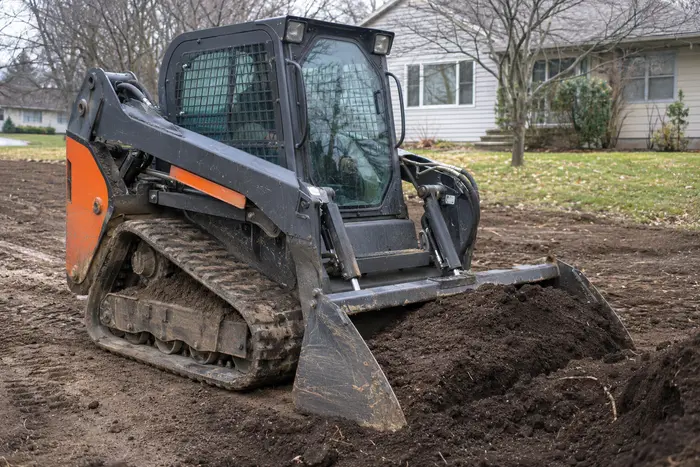
A loader bucket is the scoop on the front of a loader. It digs, carries and dumps material. On a skid steer it attaches to a universal quick attach plate. On a tractor it mounts to the front loader frame. Buckets differ in width, depth, capacity, cutting edge, wear parts and shape. Our bucket size guide covers width and capacity. This guide focuses on the types.
What are the main loader bucket types?
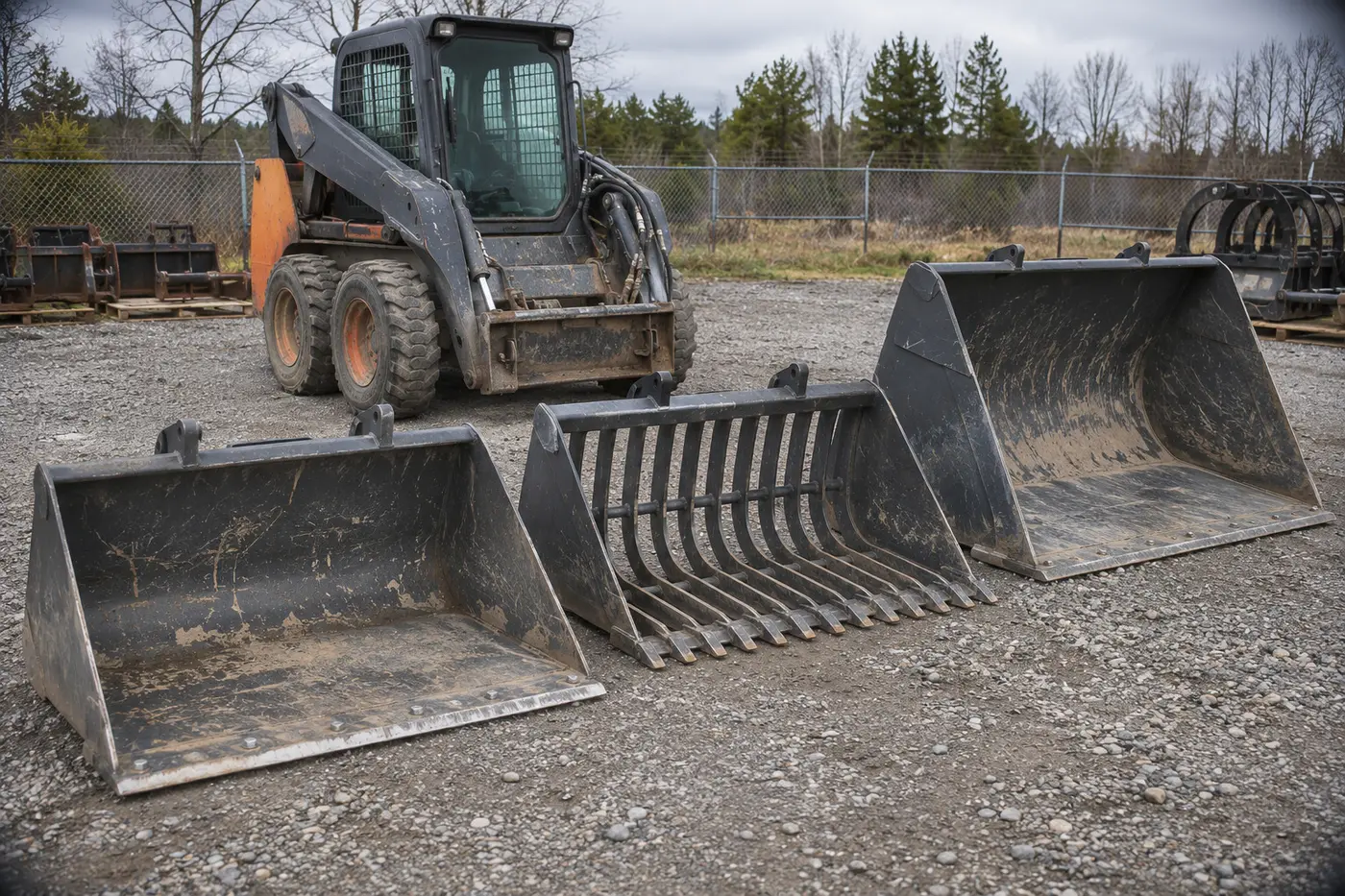
| Bucket type | Built for | Notes |
|---|---|---|
| General purpose | Dirt, sand, gravel, mixed work | Most common. A balanced starting point. |
| Low profile | Tight spaces, grading, shallow digging | Lower back wall improves visibility and reach |
| Heavy-duty | Rock, shot rock, abrasive soil | Thicker steel, reinforced edge and wear strips |
| High-capacity | Mulch, wood chips, snow, grain, light bulk | Taller and wider, holds more by volume |
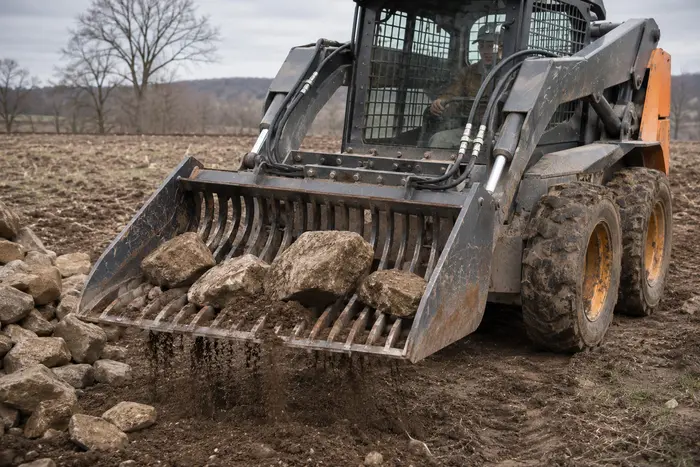
| Skeleton or rock bucket | Sifting soil from rocks and debris | Open bars let fines fall through |
| 4-in-1 (multi-purpose) | Dozing, clamping, dumping, grading | Clamshell bucket opens and closes |
| Side dump | Dumping to the side, tight spots | Good for trenches and narrow areas |
| Grapple bucket | Brush, stone, bulky loads | Top jaw clamps the load |
| Dirt or manure bucket | Loose dirt, manure and bedding | Lighter build, often with a smooth floor |
General purpose bucket
This is the all-rounder. It has a straight cutting edge, a moderate depth and a standard set of wear parts. It handles most digging, loading and moving. If you buy only one bucket, this is the usual choice.
Low-profile bucket
A low-profile bucket is shorter from front to back and sits lower than a general purpose bucket. That gives you a better view of the cutting edge, which helps with grading and finish work. It also fits under low roofs and into tight places. It holds less per scoop, so it is slower for bulk loading.
Heavy-duty bucket
For rock, gravel pits and abrasive materials, a heavy-duty bucket has thicker plate, reinforced sides and replaceable wear strips or bolt-on cutting edges. It weighs more, so check your machine's rated operating capacity. It lasts longer in rough use, which usually justifies the extra weight in quarries and demolition yards.
High-capacity bucket
Light material does not weigh much by volume, so a standard bucket fills up long before it hits its weight limit. A high-capacity bucket is taller and wider, so each scoop carries more. It suits mulch, wood chips, snow, grain and compost. Do not use it in heavy material such as wet clay or stone, because a full bucket can exceed the machine's rated operating capacity long before it looks full.
Skeleton or rock bucket
Instead of a solid floor, this bucket has spaced bars or tines. Soil falls through and rocks, roots and debris stay in. It is a sifting tool for land clearing, ground prep and cleaning up after construction. Spacing matters: wide tines let more material through, narrow ones hold smaller pieces. See our comparison of rock and skeleton buckets.
4-in-1 bucket
A 4-in-1 has a hinged front that opens and closes by hydraulics. It can be a bucket, a clamshell for grabbing, a dozer blade and a scraper. It is great for mixed work where you would otherwise change tools. It is heavier and more complex than a standard bucket, and it needs auxiliary hydraulics.
Side-dump bucket
Some buckets tip to the side. That lets you dump into a trench or onto a pile without lining up the machine head-on. It is a niche but useful tool for tight spaces and utility work.
How do you choose among loader bucket types?
- List your materials. Dirt, gravel, mulch, snow, rock and brush each call for something different.
- Match the density. Heavy material goes in a standard or heavy-duty bucket. Light material goes in a high-capacity bucket.
- Check the machine. Look up the rated operating capacity and the quick attach type. Add the bucket's weight to the load.
- Pick the width. A bucket that is a bit wider than the machine tracks or tires gives you a clean path. Too wide hurts visibility and may overload the loader.
- Choose the edge. A straight edge grades well. A toothed edge cuts hard ground. A bolt-on edge is replaceable.
- Think about options. Hydraulic hoses and couplers add auxiliary functions. Some buckets use a grapple or a tilt cylinder.
Which buckets fit which machines?
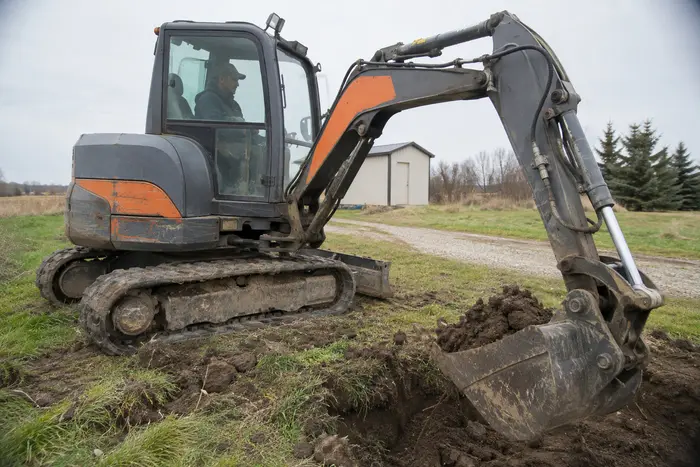
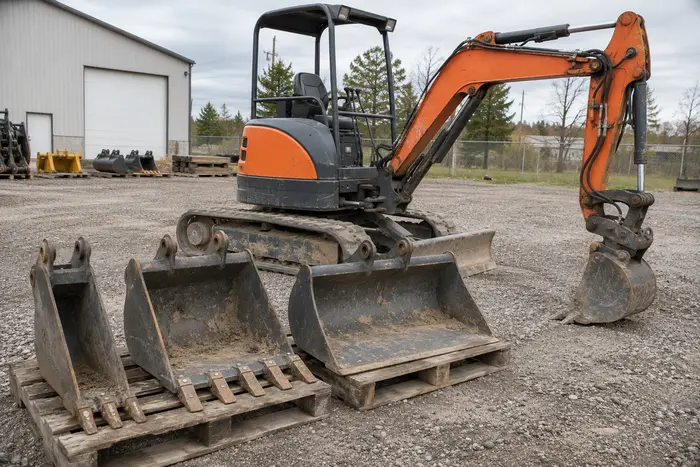
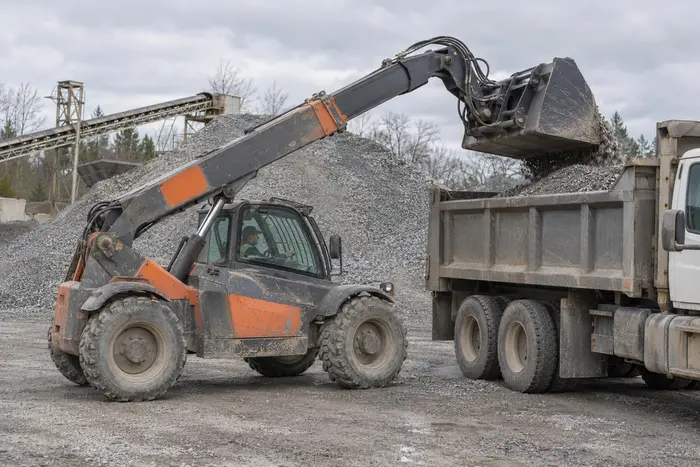
The same bucket types show up across machine classes, but sizes and mounting differ. Skid steers and compact track loaders use a universal plate. Telehandlers and excavators use different mounting arrangements. Browse by machine: skid steer buckets, mini skid steer buckets, telehandler buckets and excavator buckets. Excavator buckets, for example, come as general purpose with teeth, wide mud buckets for cleanup and leveling, and narrower trenching buckets.
What are tractor and wheel loader buckets like?
Tractor and wheel loader buckets follow the same logic but have their own quirks. A tractor front loader bucket mounts to a frame that is specific to the tractor, so a bucket made for one loader frame may not fit another. Wheel loaders use larger buckets with quick couplers and offer extra options such as spade-nose and rock edges. If you run a tractor, check the frame and the mounting pins before you order. For snow, mulch and compost, a lighter, wider bucket is the better fit. For stone and demolition work, a reinforced bucket is the better fit.
How do you keep a bucket working longer?
- Rotate or replace the cutting edge before it wears into the bucket body.
- Check bolts and edge hardware regularly.
- Avoid using the bucket as a hammer or a pry bar.
- Keep wear strips and teeth intact. They cost less than the bucket itself.
- Wash out packed clay and snow and inspect for cracks near welds.
- Do not overload. A bucket does not have to be filled to the top to be productive.
What about used buckets?
A used bucket is fine if the floor, sides and mounting frame are straight and the edge has life left. Check for cracks around the mount, bent plates and worn latch pockets. A bucket with a bent plate will not sit flat on the ground, and it will spoil your grading.
Get the right fit the first time
Bucket mounting, width and weight all have to suit your machine. Send us the make, model and year, and tell us what you move. We will confirm fit against the manufacturer's specs and give you a delivered price to approve before you pay. Start with a fit-checked quote.
Questions buyers ask
What are the types of skid steer buckets?
Common types are general purpose, low profile, heavy-duty, high-capacity, skeleton or rock, 4-in-1, side-dump and grapple buckets. General purpose suits most work. Specialty buckets handle rock, light bulk material, sifting and mixed jobs. Choose by the material you move and the rated capacity of your machine.
What is a low-profile bucket used for?
A low-profile bucket sits lower and shorter than a general purpose bucket, giving the operator a clear view of the cutting edge. It works well for grading, finish work and tight spaces. It carries less per scoop, so it is slower for bulk loading.
What is a high-capacity bucket for?
A high-capacity bucket is taller and wider so it carries more volume of light, bulky material such as mulch, wood chips, grain and snow. Avoid it with heavy loads like wet clay or stone, because the machine can reach its rated capacity before the bucket is full.
What is the difference between a rock bucket and a general purpose bucket?
A general purpose bucket has a solid floor and handles dirt, sand and gravel. A rock or skeleton bucket has spaced bars that let soil fall through, leaving rocks and roots in the bucket. Use it to sift and clean ground, not to carry loose fines.
How do I know what size loader bucket I need?
Check your machine's rated operating capacity and the density of the material you move. Choose a width close to the machine's track or tire width, and a capacity that does not overload the loader. Lighter material allows a bigger bucket. Always stay within the manual's rated limits.