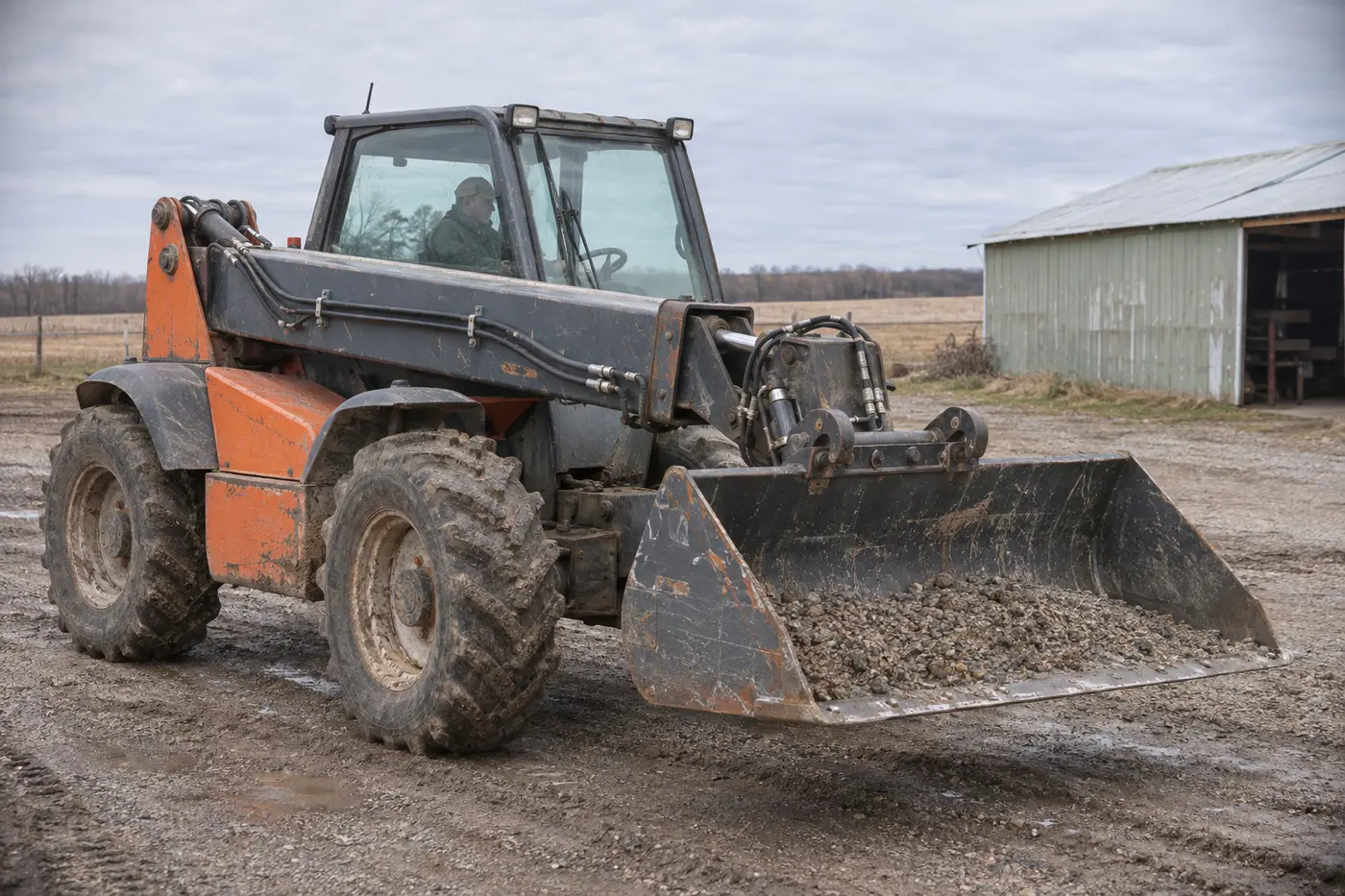
A telehandler bucket is a load-carrying bucket that mounts on the telehandler's carriage or boom head and moves loose material like soil, grain, gravel and debris. It gives a telehandler loader-style reach and lift height for filling trucks, hoppers and tall bins. Size, capacity and mount details are confirmed on your fit-checked quote.
Every option is quoted for your exact machine. Sizes, flow and couplers are confirmed on the quote.
Illustration
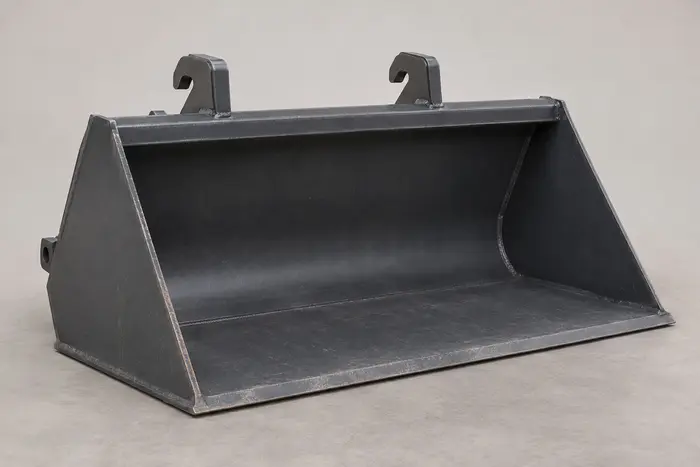
General-Purpose Telehandler Bucket
Telehandlers with fork carriage or quick coupler
A standard bucket for soil, gravel and general material. A solid everyday choice for construction and yard work. Fit is confirmed against your machine's specs before you order.
Smooth cutting edge
Wear-resistant floor
Carriage-style mounting
Get my delivered priceTypical listed price at other online dealers$3,150 – $4,400USD · shipping terms vary by seller · a guide, not our price
Attachment type. Maker, model, photos and availability for your machine are confirmed on your quote.
Light-Material Telehandler BucketPhotos confirmed on your quote
Light-Material Telehandler Bucket
Telehandlers with fork carriage or quick coupler
A large-volume bucket for grain, chips and light bulky material. Moves more volume per trip where weight is low. A person checks compatibility with your make and model first.
Attachment type. Maker, model, photos and availability for your machine are confirmed on your quote.
Heavy-Duty Rehandling BucketPhotos confirmed on your quote
Heavy-Duty Rehandling Bucket
Telehandlers with fork carriage or quick coupler
A reinforced bucket for demolition debris and tougher material. Built for contractors who work in rough conditions. Exact sizes and capacity are confirmed on your fit-checked quote.
Thick wear plate
Bolt-on edge on many models
Reinforced sides
Get my delivered priceTypical listed price at other online dealers$3,150 – $4,400USD · shipping terms vary by seller · a guide, not our price
Attachment type. Maker, model, photos and availability for your machine are confirmed on your quote.
Price ranges show what two other North American online dealers listed comparable attachments for, checked November 2026. Shipping terms vary by seller. They are a guide, not our price: your delivered price, with freight to your address, is confirmed on your quote.
Fit check
What a person checks before you get a price
Fit is the first thing that goes wrong when you buy attachments online. Before we send a delivered price, a person checks your setup against the maker's specs. If we can't confirm fit, we tell you before you pay.
Make, model and year of your machine
Carriage or quick-coupler type
Rated capacity at the load center, from your load chart
Auxiliary hydraulics, if the attachment needs them
Fork or attachment length and width
Anything the maker's manual restricts
How buying here works
Tell us your machine and the job.
A person checks fit and sends one delivered price, freight included.
Approve it and the supplier ships to your door.
We're a new dealer adding manufacturers now. If we can't source a fit-checked option for your machine and job, we'll tell you on the first call, with no obligation.
How to choose the right telehandler bucket attachment
Pick a telehandler bucket by the weight of the material you move and the carriage or coupler on your machine. Check these points before you order.
Mount. Telehandlers use a range of carriage styles. Confirm your carriage type and whether the bucket hangs on a fork carriage or a quick coupler.
Capacity versus load chart. Use the load chart for the bucket on your machine. Limits drop as the boom extends. A bucket full of dense material at full reach can exceed the telehandler's rating. Check the chart in your manual.
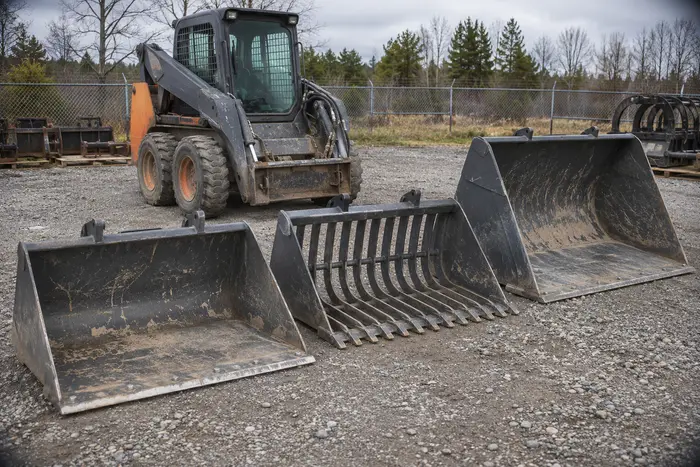
Bucket style. General-purpose buckets move soil and gravel. Light-material buckets are bigger for grain, wood chips and snow. Choose by the material density you move.
Duty rating. Loose material is easy. Rock and demolition debris need heavy plate and reinforced edges. Tell us your material so the bucket is built for it.
Before we quote, a person checks: carriage or coupler type on your telehandler; load chart limits at reach; material density and volume; bucket style: general, light-material or heavy-duty; edge type and wear parts. Warranty terms, if any, are written on your quote. Always stay inside the rated operating capacity and follow the operator manual for your machine.
Get the right fit the first time
Send us the make, model and year of your telehandler and the job you plan to do. A person checks it against the maker's specs and confirms fit. You approve a delivered price before you pay, and it ships direct from the supplier. Ready when you are: get a fit-checked quote. Want more background first? See Loader buckets explained: types, sizes and uses.
It is a bucket attachment that mounts on a telehandler's carriage or quick coupler. It lets the machine load, carry and dump loose material at height and reach, within the telehandler's load chart. Send your make and model and we will confirm.
What size telehandler bucket do I need?
Size depends on material density, the load chart at reach and your carriage style. Heavy material needs a smaller bucket for the same weight. We check your make, model and load chart before quoting.
How do I change a bucket on a telehandler?
The steps depend on your coupler. On many machines you lower the bucket flat on the ground, release the coupler lock (a manual pin or a hydraulic switch in the cab), then tilt and back away. Pick up the new tool, engage the lock and check that it is fully engaged before you lift. Follow your operator manual. Send your make and model and we will confirm.
Can I use a forklift bucket on a telehandler?
Only if the carriage and ratings match. Forklift and telehandler carriages are not always the same, and load charts differ. Many telehandler makers allow only attachments with a load chart for that machine. Send your make and model and we confirm fit before you order.