Snow guide
Snow Removal With a Skid Steer: Attachments and Tips
Quick answer
Snow removal with a skid steer works best with a snow pusher for lots, a snow blower for stacking or loading out, or a plow for drives and roads. A bucket also works in a pinch. Choose by site layout, snow depth and how far you need to move the snow.
Shopping for this now? Get a fit-checked, delivered quote.
Key takeaways
- Pushers move big areas fast; blowers move snow away; plows angle it aside.
- Buckets work but are slow and can damage pavement edges.
- Tracks or chains help on ice and packed snow.
- Match the attachment to your machine's size and hydraulics.
A skid steer is one of the most useful machines for winter. It maneuvers in tight lots, stacks snow in piles and swaps tools in minutes. The attachment you pick decides how well it does the job. Here is how to choose and how to work safely.
Which skid steer attachment is best for snow?
It depends on the site. Big open lots favor a pusher. Long driveways and roads favor a plow. Tight spaces where snow has to leave the site favor a blower or a bucket. The table compares the main options.
| Attachment | Best for | Strength | Limit |
|---|---|---|---|
| Snow pusher | Large lots, loading docks | Moves a lot of snow quickly | Needs space to stack; does not throw |
| Snow plow | Drives, roads, narrow lots | Angles snow to the side | Rolls snow in windrows |
| Snow blower | Deep snow, stacking, truck loading | Throws snow away from the site | Needs hydraulics; slower per pass |
| Bucket | Small jobs, tight corners, stacking | Already on the machine | Slow, hard on pavement edges |
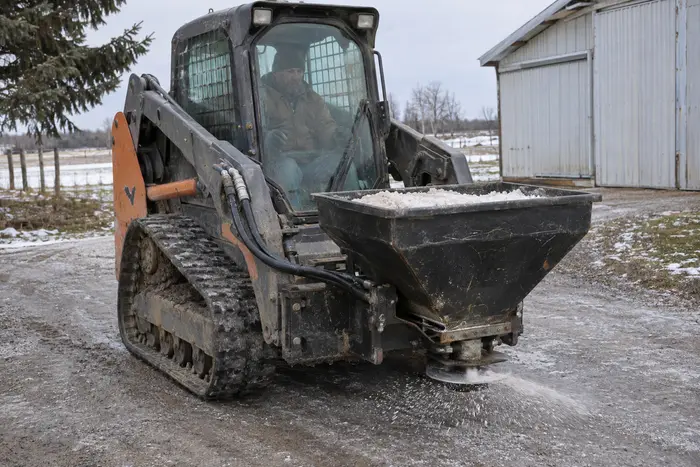
| Salt spreader | Ice control after clearing | Finishes the job | Separate pass |
Snow pushers
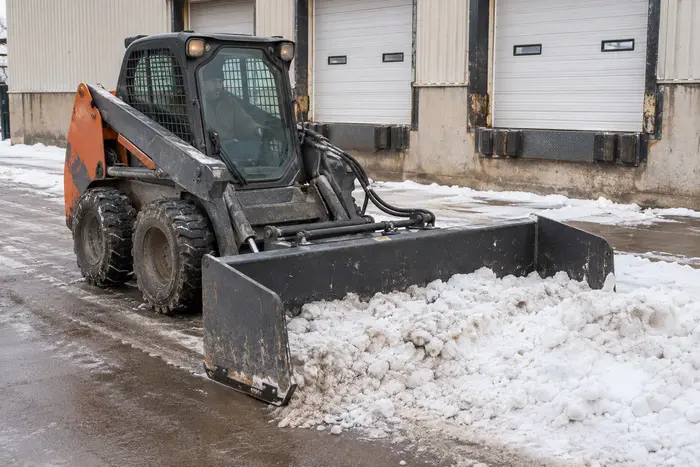
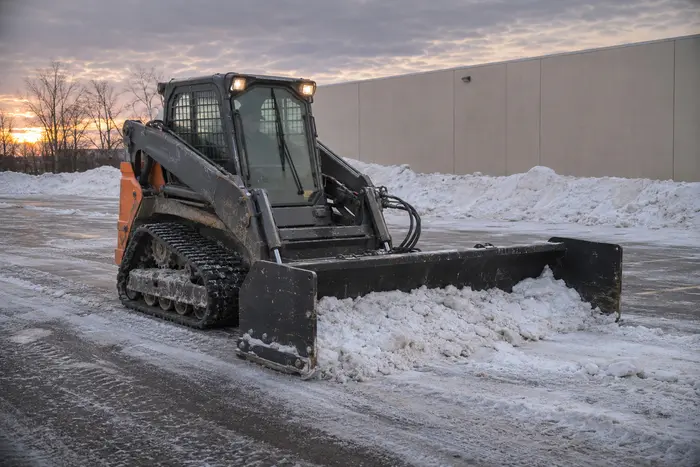
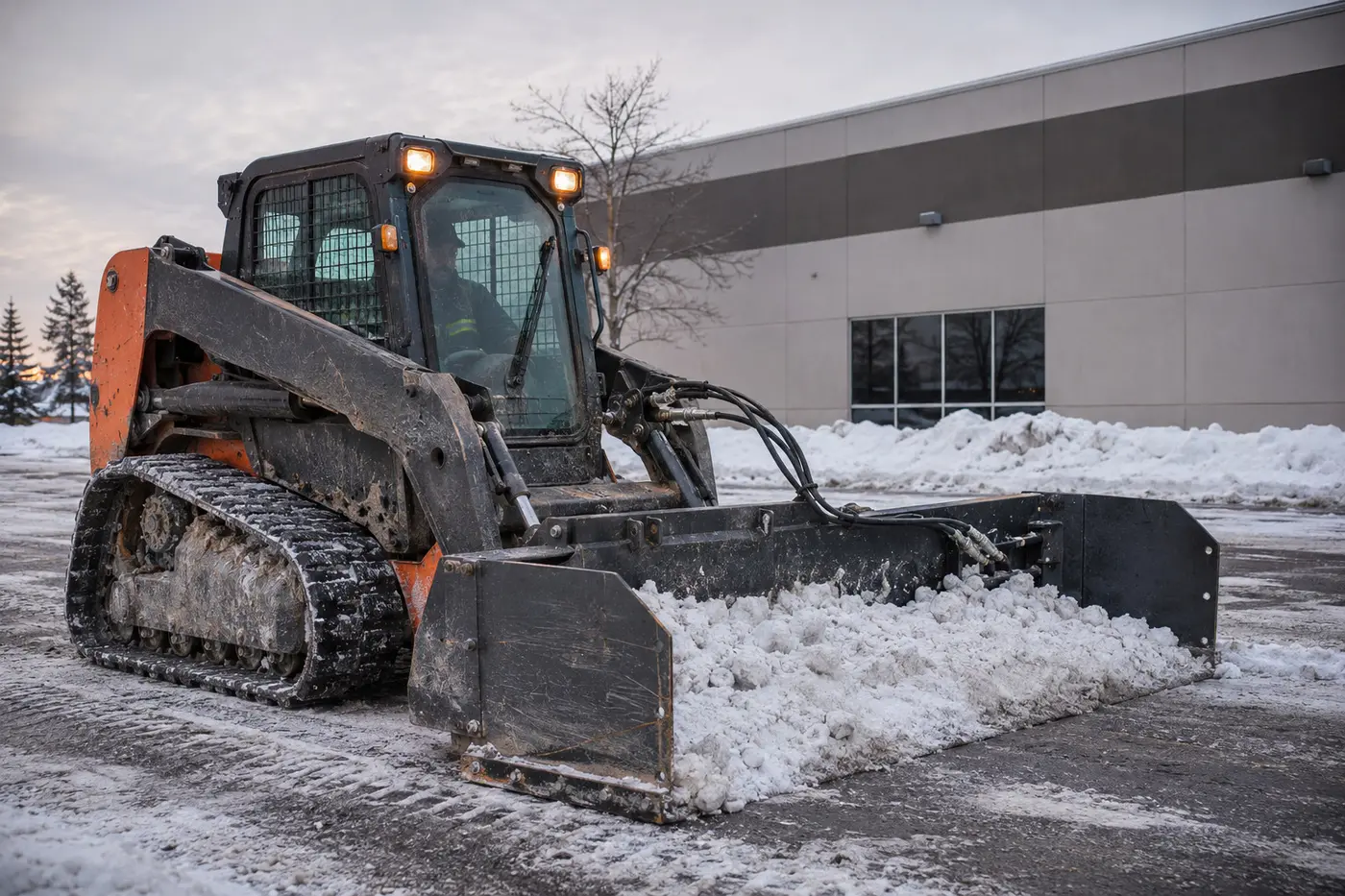
A snow pusher is a wide box-shaped blade with side walls. It scoops snow forward in a long pile. Pushers cover large areas with few passes because the box carries snow ahead of the machine. Some have a back drag that pulls snow away from a dock or door. They need somewhere to stack the snow, usually the edge of the lot. Read our snow pusher sizing guide and pusher vs plow. Browse snow pushers.
Snow plows
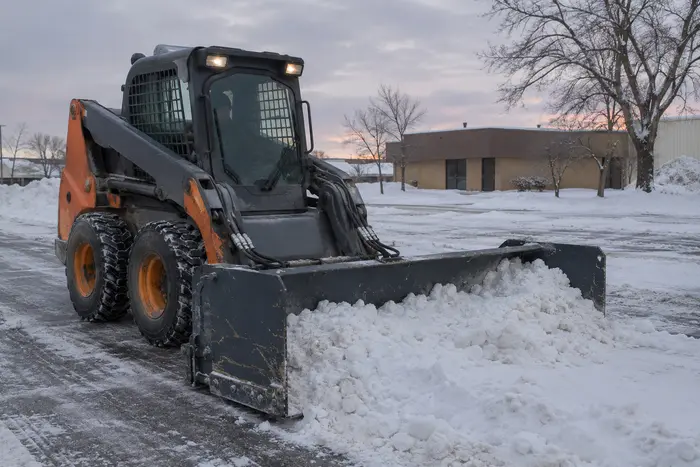
A plow blade angles left or right and pushes snow to the side as you drive. It is the right tool for driveways, narrow lanes and roads where windrows are acceptable. Many have trip edges that protect against hidden obstacles. See snow plows.
Snow blowers
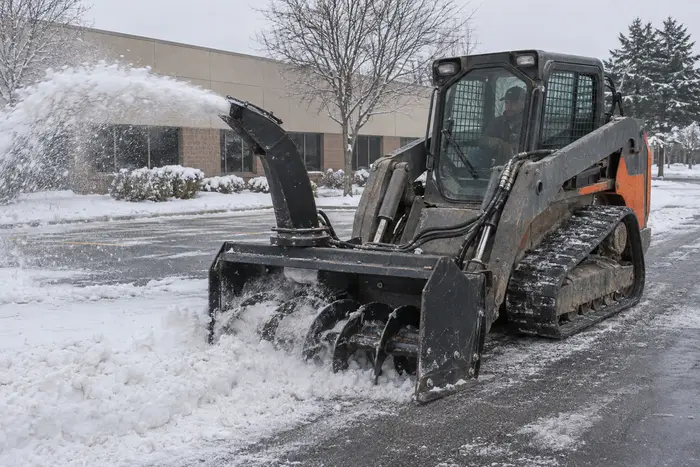
A hydraulic snow blower has an auger that feeds snow into an impeller and throws it out a chute. It is the tool for deep snow and for loading snow into trucks. It needs auxiliary hydraulics and cares about flow. Read our best skid steer snow blower guide and browse snow blowers.
Can you plow snow with a skid steer bucket?
Yes. It works for small jobs and clean-up. A bucket moves snow slowly, and the cutting edge can scrape the pavement if you do not float it. Hold the bucket just above the surface, tilt it slightly and push in straight lines. For anything larger than a small lot, a pusher or plow saves hours. See sidewalk snow removal equipment for sidewalks and walkways.
Can a mini skid steer plow snow?
Yes. A compact tracked machine fits sidewalks and tight lanes. Use smaller attachments built for it, such as snow blades and pushers or snow blowers. A smaller machine has less pushing power, so do not overload it with a wide blade in deep snow.
Wheels, tracks and chains
Traction decides how well you push. Tracks give better grip on packed snow and ice. Wheeled machines can use chains or over-the-tire tracks. Heavier machines hold the ground better. Read our wheels vs tracks guide and see over-the-tire tracks.
How to push snow well
- Walk the site first. Mark curbs, manholes, drains, bollards and landscape edges.
- Start at the center and push toward the pile area. Do not push snow into traffic lanes.
- Take overlapping passes so you do not leave ridges.
- Raise the blade slightly over expansion joints and curbs.
- Do not stack snow where it blocks sight lines or fire hydrants.
- Clean up with a bucket or small blade around cars and corners.
Safety and good practice
- Stay within the machine's rated operating capacity. Packed snow and ice are heavy.
- Use lights and a beacon. Visibility drops in storms.
- Move slowly around people and parked cars.
- Keep the cab clear and defrost the glass before you move.
- Check hoses and fittings before each storm. Cold stiffens them.
- Take breaks. Long overnight storms wear operators down.
Winter use of a skid steer as a business
Snow work is a source of winter income for many owners. Read our guide to starting a snow removal business. Plan insurance, contracts and equipment backup before the first storm. Remember that a machine down in a storm is a lost client.
What to ask before buying
- What is my machine's hydraulic flow and does the blower need more?
- What width pusher or plow suits my machine's size and weight?
- Does the attachment mount to my quick-attach plate?
- Will the cutting edge suit pavement or gravel?
- Who handles warranty claims, and how?
Send us your machine make and model and what you plan to clear. A person will check the fit and tell you which attachment to start with.
Seasonal setup and storage
Install your winter attachments before the first big storm, not during it. Grease pivots, check cutting edges and test any hydraulic functions. At the end of the season, wash off salt, which eats metal, and touch up paint. Store blades and pushers off the ground. A little care in spring means a working tool next winter.
Pavement, gravel and landscape protection
The surface decides the cutting edge. On asphalt and concrete, a rubber or poly cutting edge reduces scraping and noise. Steel edges bite into packed snow and ice better, but they will scratch pavement and can dig into gravel. On gravel lots, raise the edge slightly so you leave a thin layer of snow instead of scraping up stone. Shoes on the sides of a pusher or plow also keep the edge off the ground. Whatever you choose, mark landscape edges, sprinkler heads and curbs before the first storm, because buried hazards are a common cause of damaged attachments.
Working in a storm cycle
- Start early in a storm for light snow. A thin layer is easier to move than a deep one.
- Clear the main routes and fire lanes first.
- Return later to widen the cleared areas and push back piles.
- Finish with sidewalks, loading docks and corners.
- Apply salt or sand after clearing so it works on the pavement, not on a layer of snow. Some crews also pre-treat pavement before a storm; ask your de-icer supplier what suits your temperatures.
See our guide on sand or salt for winter maintenance if you are unsure which suits your area.
Cold-weather machine care
Cold affects hydraulics and batteries. Let the machine warm up so the oil circulates before you load the hydraulics. Keep the fuel tank topped up to limit condensation. Check that quick-attach pins are clear of ice before you lock an attachment on. Carry spare hoses and fittings if you run a blower. Follow the operator manual for cold-start procedure and fluid grade.
Get the right fit the first time
Fit problems are the expensive mistakes, and they are easy to avoid. Send us your machine make, model and year and what you plan to do with it. A person checks the fit against the maker specs, and you see the delivered price before you pay. When you are ready, get a fit-checked quote.
Questions buyers ask
What is the best skid steer attachment for snow removal?
It depends on the site. Pushers suit large lots, plows suit drives and roads, and blowers suit deep snow or loading trucks. A bucket works for small jobs. Match the tool to snow depth, layout and where the snow goes.
Can you plow snow with a skid steer bucket?
Yes, for small jobs. Keep the bucket just above the surface and push in straight lines. It is slow and the edge can scrape pavement, so a pusher or plow is better for anything bigger than a small lot.
Can a mini skid steer plow snow?
Yes. Compact tracked machines work well on sidewalks and in tight lanes with small blades, pushers or blowers. They have less pushing power, so use attachments built for their size and avoid deep or heavy snow.
Is a snow pusher better than a plow on a skid steer?
A pusher moves more snow per pass on large open lots and docks. A plow angles snow aside and suits drives and roads. If you need to stack or load out snow, a blower is the better tool.
Do skid steers need tracks for snow?
Not always, but tracks grip packed snow and ice better. Wheeled skid steers can use chains or over-the-tire tracks to improve traction. Weight and tire condition also matter. Your operator manual has the exact figures for your machine.