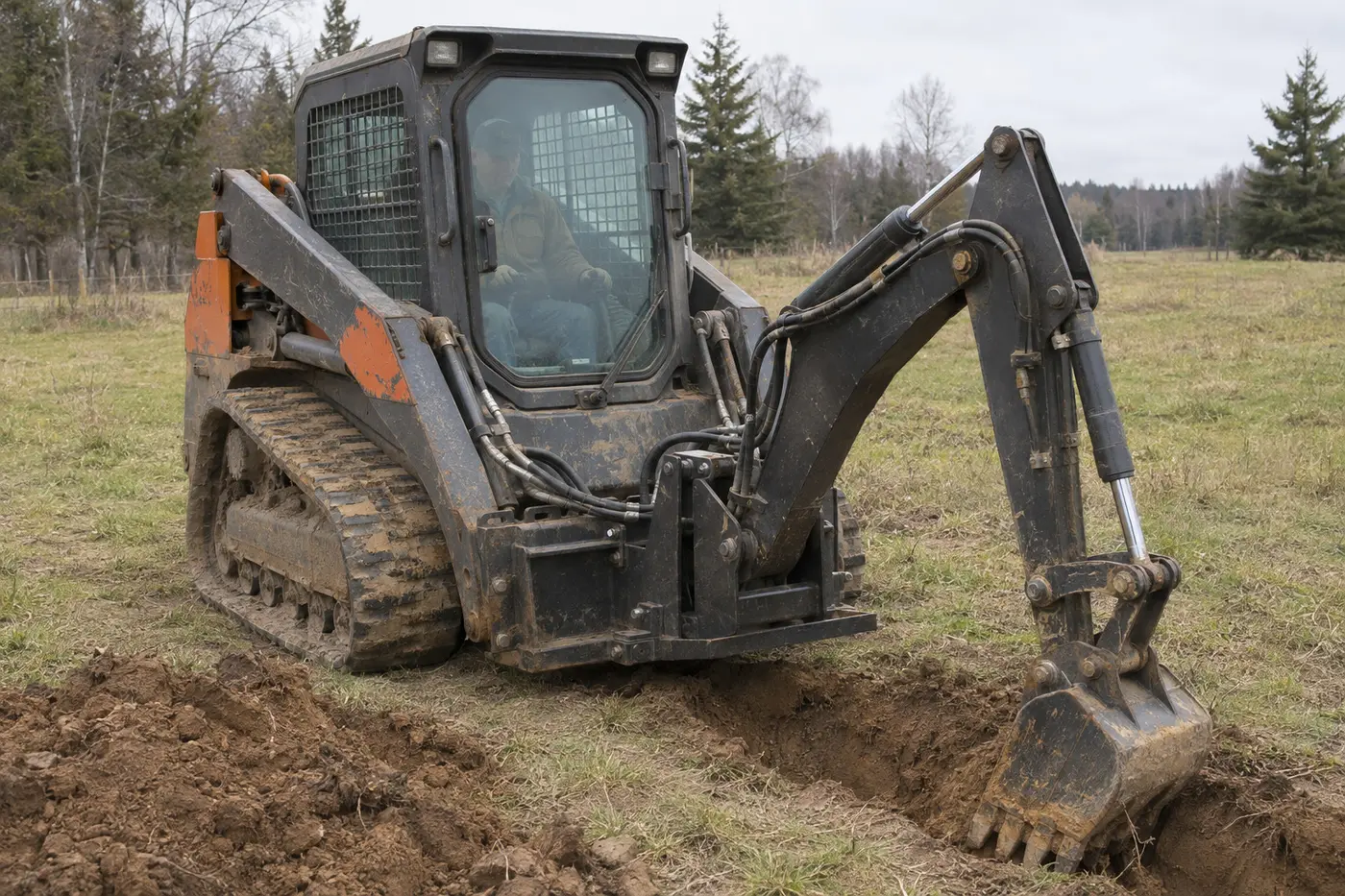
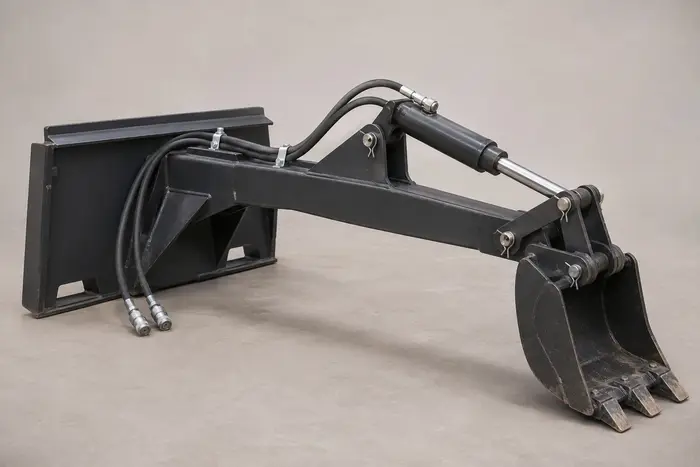
A skid steer backhoe attachment adds a hydraulic digging arm and bucket to the front of a skid steer or compact track loader. It lets the machine dig trenches, footings and holes below grade without a separate excavator. It mounts on the quick attach plate and runs off auxiliary hydraulics, and most use stabilizer legs to hold the machine steady while digging.
Every option is quoted for your exact machine. Sizes, flow and couplers are confirmed on the quote.
Illustration
Light-Duty Skid Steer Backhoe
Skid steers and compact track loaders with universal quick attach
Suited to homeowners and small contractors who dig occasional trenches and holes. A lighter frame keeps the carrier stable and keeps the hydraulic demand modest for smaller machines.
Compact digging arm
Stabilizer legs
Fits universal quick attach
Simple hose routing
Get my delivered priceTypical listed price at other online dealers$2,850 – $3,150USD · shipping terms vary by seller · a guide, not our price
Attachment type. Maker, model, photos and availability for your machine are confirmed on your quote.
Heavy-Duty Swing Arm BackhoePhotos confirmed on your quote
Heavy-Duty Swing Arm Backhoe
Larger skid steers and compact track loaders with enough hydraulic flow
Built for daily trenching and utility work. A swing arm lets the operator dig on either side while the carrier stays planted on wide stabilizers, even on uneven ground.
Attachment type. Maker, model, photos and availability for your machine are confirmed on your quote.
Backhoe With Hydraulic ThumbPhotos confirmed on your quote
Backhoe With Hydraulic Thumb
Skid steers and compact track loaders that handle rock and root work
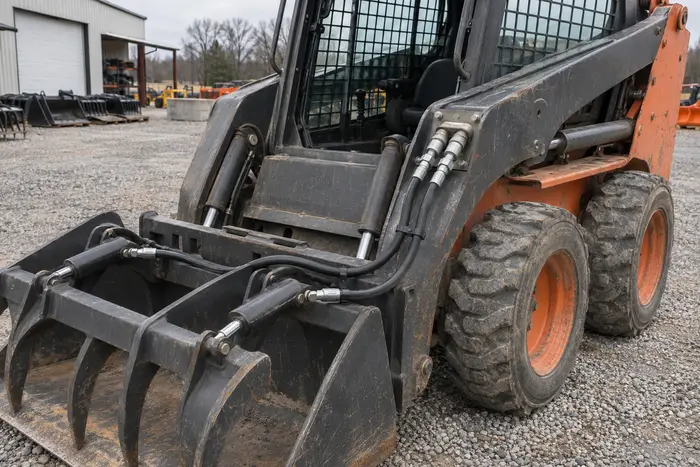
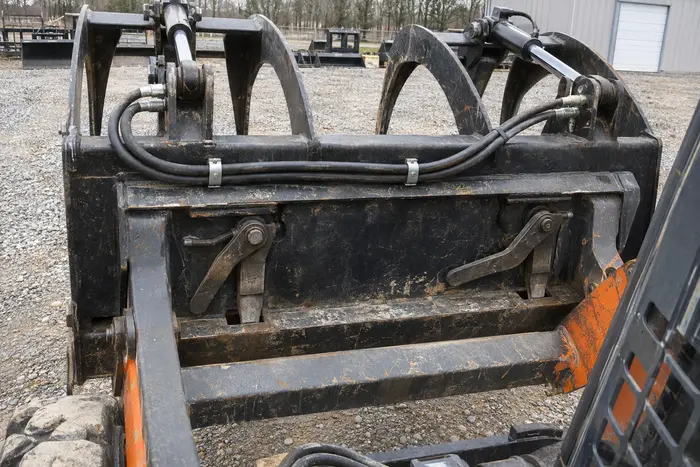
A backhoe with a thumb grips rocks, roots, logs and pipe. It suits landscape, drainage and site-prep jobs where material needs to be picked as well as dug.
Attachment type. Maker, model, photos and availability for your machine are confirmed on your quote.
Price ranges show what two other North American online dealers listed comparable attachments for, checked November 2026. Shipping terms vary by seller. They are a guide, not our price: your delivered price, with freight to your address, is confirmed on your quote.
Fit check
What a person checks before you get a price
Fit is the first thing that goes wrong when you buy attachments online. Before we send a delivered price, a person checks your setup against the maker's specs. If we can't confirm fit, we tell you before you pay.
Make, model and year of your machine
Coupler: universal quick attach or another plate
Auxiliary hydraulic flow and pressure, standard or high flow
Hose coupler type (flat-face or poppet) and any electrical connector
Rated operating capacity against the attachment's weight
Width against your machine and the job
How hard you'll run it: acreage use or daily contractor work
How buying here works
Tell us your machine and the job.
A person checks fit and sends one delivered price, freight included.
Approve it and the supplier ships to your door.
We're a new dealer adding manufacturers now. If we can't source a fit-checked option for your machine and job, we'll tell you on the first call, with no obligation.
How to choose a skid steer backhoe attachment
Start with the mount. Most units mount to a universal quick attach plate, but confirm your machine uses that plate before you order. Then check hydraulics. A backhoe needs auxiliary flow and a matching coupler style, and some models need extra hoses or an electrical hookup for their control valve. Our hydraulic flow guide explains the basics.
Match dig depth and reach to the work, not just the price. A longer boom digs deeper but asks more of the carrier. Weight matters too. The attachment hangs off the front, so a smaller machine can tip forward. Stay inside the rated operating capacity in your operator manual.
Swing: a boom that swings lets you dig off to either side without repositioning the machine.
Stabilizers: wide legs, often hydraulic, help keep the carrier level on soft or uneven ground.
Bucket width: narrow for utility trenches, wider for general digging.
It is a smaller digging tool, not a replacement for a full excavator. Reach, dig depth and breakout force are lower, and the carrier must stay stable on its stabilizers. For deep, long or heavy digging, a mini excavator is a better fit. For shallow trenching, footings and utility work, the attachment is a strong, flexible choice.
Need
Better fit
Shallow trenches and footings
Skid steer backhoe
Deep or heavy digging all day
Mini excavator
Common jobs for a skid steer backhoe
Digging utility, drain and irrigation trenches
Setting footings, fence corners and small foundations
Exposing buried lines and tanks, after utility locates are done
Loading and carrying with the front bucket, then digging with the same machine
If you mostly load and carry, a standard skid steer bucket may be all you need. If digging is the main task, a backhoe or a mini excavator is the better tool.
Get the right fit the first time
Send us your machine make, model and year. A person checks fit against the maker's specs and sends one delivered price, freight included, for your exact setup. Warranty terms, if any, are written on your quote. Ready to start? Request fit-checked quote for a backhoe attachment.
What is the difference between a skid steer and a backhoe?
A skid steer is a compact loader that pushes, lifts and carries with a front bucket or other attachment. A backhoe loader is a larger machine with a digging arm at the rear and a loader bucket at the front. A skid steer backhoe attachment gives a skid steer the digging arm, so one carrier does both jobs.
Can you dig with a skid steer backhoe attachment?
Yes. The attachment adds a hydraulic arm and bucket that digs below grade, typically trenches, footings and holes. It is not a full-size excavator, so depth, reach and breakout force are limited by the model. Check the specs against your job before you order.
How do you power a skid steer backhoe attachment?
It runs on the skid steer auxiliary hydraulics through quick couplers. The carrier must supply enough flow and pressure for the arm, swing and stabilizers. Some units need extra hose connections, so confirm your machine setup during the fit check.
What jobs can you do with a skid steer backhoe?
Typical jobs are utility and drain trenches, fence and footing holes, exposing buried lines and general site digging. Always have underground utilities located before you dig, and follow your operator manual, rated capacity and local rules for safe excavation work.