Skid steer guide
What Is a Skid Steer Used For? Jobs It Does Best
Quick answer
What is a skid steer used for? It is a compact loader that moves, digs, grades, loads and carries material in tight spaces, and with attachments it also clears snow, drills holes, grinds stumps, mulches brush and lifts pallets. Its strength is one machine doing many jobs, with limits set by size, capacity and hydraulics.
Shopping for this now? Get a fit-checked, delivered quote.
Key takeaways
- A skid steer is a compact loader that turns in place and works in tight spaces.
- Its main job is moving and digging material with a bucket.
- Attachments turn it into a snow tool, auger, mulcher, grapple and more.
- Its limits are rated operating capacity, reach and hydraulic output.
- Match each attachment to your machine before you buy.
A skid steer looks simple, but it handles more kinds of work than most machines its size. Contractors, farmers, landscapers and municipal crews all use one. This guide explains what a skid steer is used for, which jobs it handles best, and where it hits its limits.
What is a skid steer?
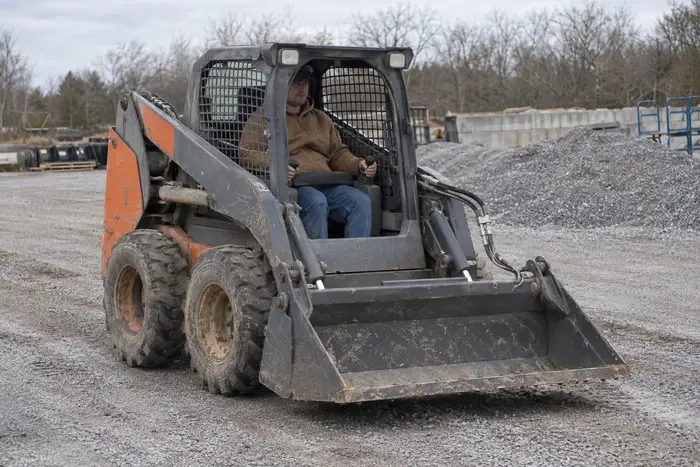
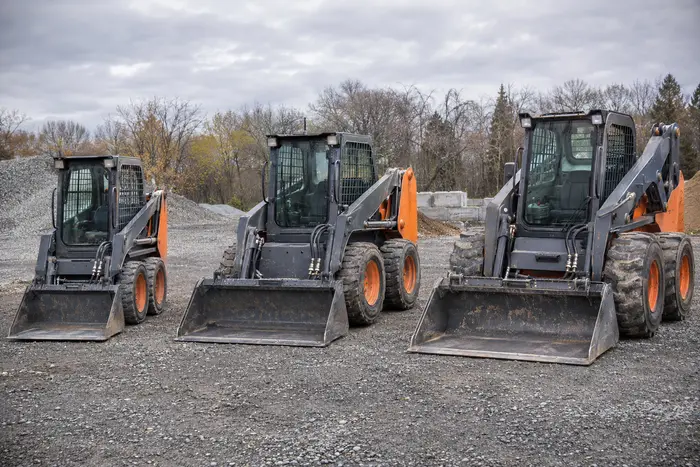
A skid steer, also called a skid loader or skid steer loader, is a compact, rigid-frame loader with lift arms that hold a tool at the front. It steers by running the wheels or tracks on one side at a different speed than the other, so it can turn almost in place. That makes it very maneuverable. A general reference on loader types describes skid loaders as having four hydraulically driven wheels, while track loaders run on continuous tracks. Our what is a skid steer guide covers the machine itself.
What are skid steers good for?
The short answer: moving things and digging in tight places. The machine is compact, powerful for its size and quick to change tools. Reference sources list these jobs, among many others:
- Digging, including pool excavation by cutting a ramp into the hole, and digging under structures with low overhead clearance.
- Moving raw material around a job site in a bucket or on pallet forks.
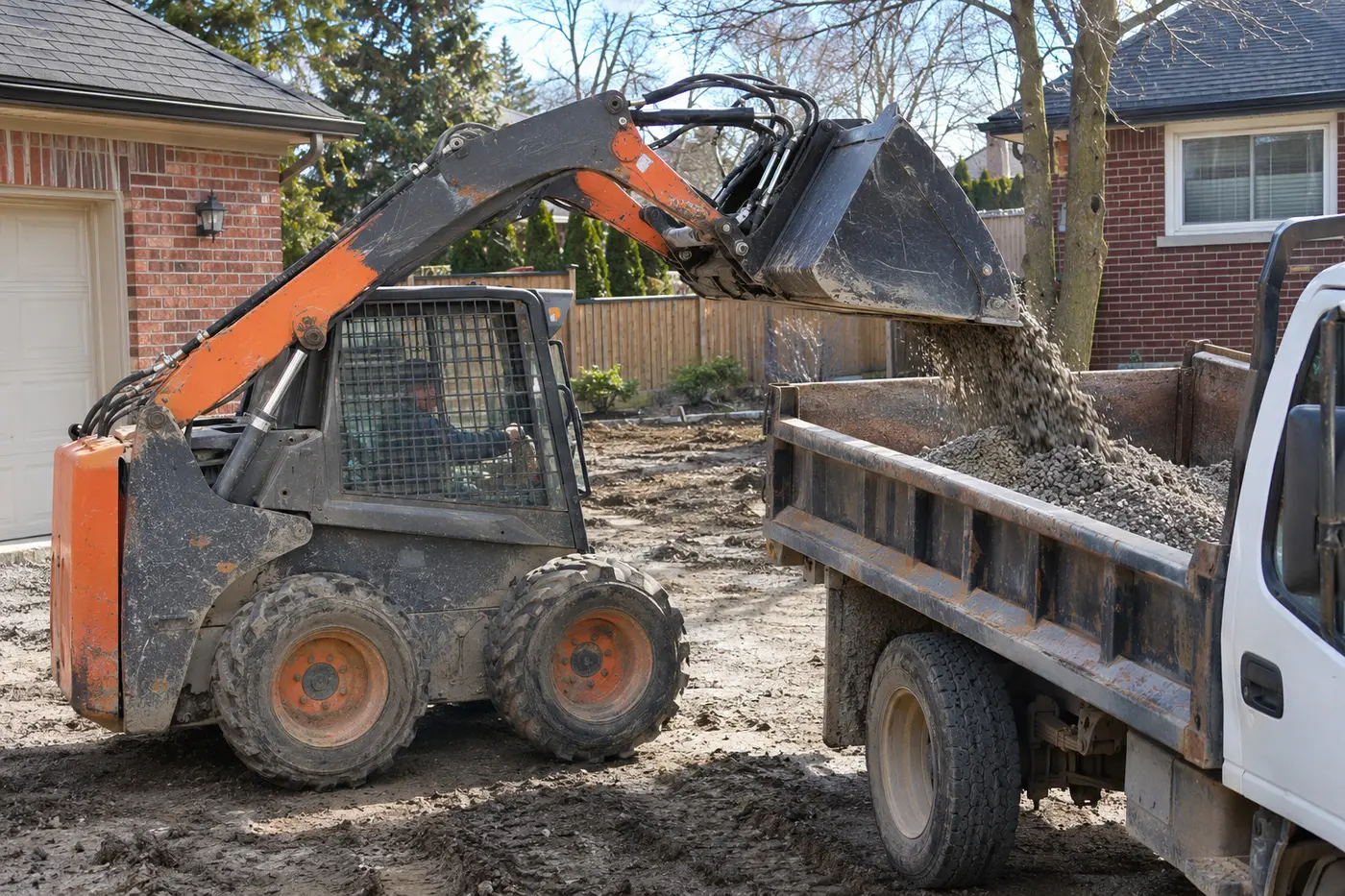
- Loading dump trucks, hoppers and trailers.
- Snow removal, especially in smaller parking lots, using pushers, angled blades, blowers and brooms.
- Light demolition and cleanup with breakers and grapples.
Skid steer jobs by industry
| Industry | Typical jobs | Common attachments |
|---|---|---|
| Landscaping | Grading, planting, moving soil and stone | Buckets, rakes, augers, forks |
| Construction | Site cleanup, backfill, loading, light demo | Buckets, breakers, grapples, forks |
| Farm and acreage | Manure, bales, fence lines, feed | Manure forks, bale spears, grapples |
| Snow removal | Lots, drives and walks | Pushers, blades, blowers, spreaders |
| Land clearing | Brush, small trees and stumps | Mulchers, brush cutters, grinders |
| Municipal and utility | Trenching, sweeping, material hauling | Trenchers, brooms, forks |
What is a skid steer bucket used for?
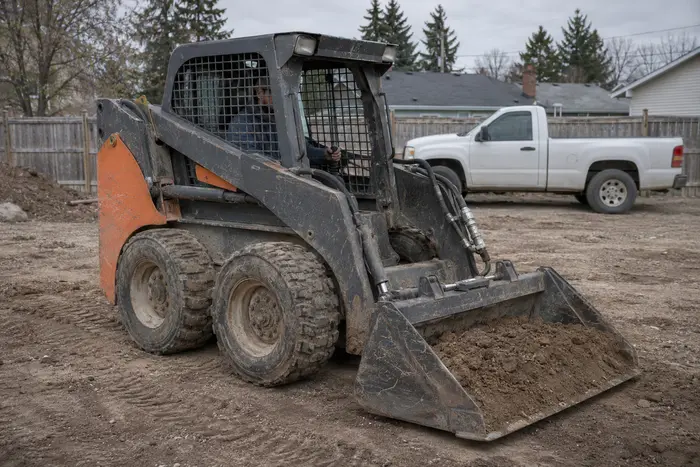
The bucket is the core tool: scooping, carrying, dumping and light grading. A rock bucket or skeleton-style bucket lets fine soil fall through while keeping stones, which is useful for clearing and screening. For help choosing, see loader bucket types and our rock bucket vs skeleton bucket comparison, then browse skid steer buckets.
What is a skid steer mulcher used for?
A mulcher shreds brush and small trees where they stand. A reference on forestry mulching describes uses such as right-of-way clearing, land clearing, trail creation, invasive species control and wildfire prevention. It needs a loader with enough hydraulic flow. See attachments that need high flow to check yours.
What is a power rake or landscape rake used for?
Both prepare ground. They level, remove stones and leave a fine seedbed. If you want to know how they differ, read what is a power rake.
How do attachments change what a skid steer does?
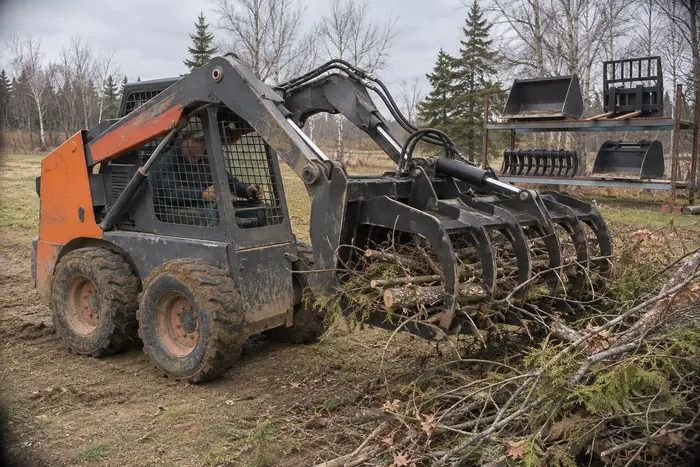
Many modern machines accept attachments through a quick-attach plate, so tools change in minutes. Some also have hydraulic couplers that let you connect without leaving the seat, and a few connect hydraulic lines automatically. Reference sources list augers, mowers, trenchers, grapples, jackhammers, stump grinders and wood chippers as typical tools. The attachment, not the base machine, decides the job.
What can a skid steer not do well?
- Deep digging. It digs at surface level and can ramp a hole, but it is not a replacement for an excavator at depth.
- High reach. Lift height is limited, so very high dumping needs a different machine.
- Long hauling. It is slow over distance. A wheel loader or truck is better.
- Very heavy lifts. The rated operating capacity limits every load. Never exceed it.
Skid steer or something else?
If you dig more than you carry, consider an excavator, and compare a skid steer and a tractor if you have farm work. For machine sizes and weight classes, our guide to skid steer sizes and frame classes helps you pick.
What does a skid steer cost to run?
That depends on the machine, fuel, wear parts and how many hours you use it. We do not quote prices here. A simple way to decide is to compare the number of days you would rent against the cost of owning. If you would rent one for more than a few weeks a year, price out owning too.
Operating basics and safety
Skid steers have a high power-to-size ratio and can tip if overloaded or driven across steep slopes with the load high. Keep the bucket low while traveling, use the seat bar and belt, and stay within the rated operating capacity. Only trained operators should run one. Read the operator manual before first use, and see how to operate a skid steer for a walk-through.
Checklist: is a skid steer right for your jobs?
- List the three jobs you do most.
- Check if a bucket and forks cover the first two.
- Note any specialty tool you will need and its hydraulic requirements.
- Measure your tightest gate and your trailer.
- Pick a machine whose rated capacity fits your heaviest regular load.
Wheels or tracks: does it change the jobs?
Yes, a little. A wheeled skid steer is quick and cheap to run on pavement, gravel and firm ground, and it is common in material handling and snow work. A compact track loader spreads its weight over a larger contact area, which helps on soft ground, turf and mud, and it tends to be the pick for land clearing, grading in wet conditions and finished landscapes. Many owners choose based on the surface they work on most. Our guide to skid steer wheels vs tracks goes through the trade-offs.
Everyday jobs, step by step
Moving a pile of material
Scoop with the bucket flat to the ground, tilt it back to hold the load, lift just enough to clear obstacles, travel with the load low, and dump over the target. Repeat. That simple loop is the heart of what most skid steers do all day.
Clearing snow from a lot
Fit a snow pusher or blade, push the snow in straight lines to a stacking area, and work out from the middle. A pusher moves snow in bulk straight ahead to a stacking area, while an angled plow rolls snow off to the side. See snow plow vs pusher for how to choose.
Drilling post holes
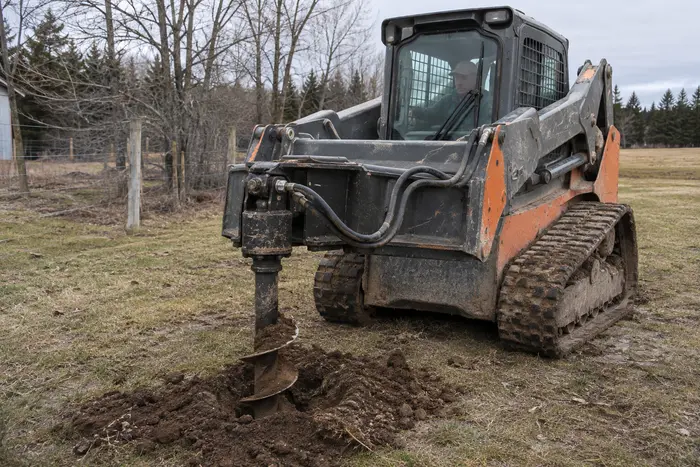
Mount an auger, set the bit on the mark, lower slowly and let the auger feed itself, lifting to clear spoil as needed. Check for buried utilities first.
How to decide what you need to buy
Start by writing down your jobs and how often each recurs. A tool you will use weekly is worth owning. A tool you will use twice a year is worth renting. Look at our list of the best skid steer attachments to see which tools commonly give owners the most use.
Get the right fit the first time
Send us your machine's make, model and year, and a person will check fit against the maker's specs. You approve a delivered price before you pay. Ask for a fit-checked quote.
Questions buyers ask
What is a skid steer used for?
A skid steer is used to move, dig, load and grade material in tight spaces. With attachments it also clears snow, drills holes, grinds stumps, mulches brush, sweeps and lifts pallets. Its value is one compact machine doing many jobs.
What is a skid loader used for?
A skid loader is the same machine as a skid steer. It loads and carries material, digs shallow, grades, pushes snow and runs hydraulic tools. Contractors, farmers, landscapers and municipal crews use it where space is limited.
What are skid steers good for?
They are good for work in tight spaces: material handling, loading trucks, grading, light excavation and clearing snow. Their quick-change attachments make them flexible. They are less suited to deep digging, tall lifts or long-distance hauling.
What is a skid steer mulcher used for?
A mulcher shreds brush and small trees in place, so you do not have to haul them away. It is used for land clearing, right-of-way work, trail building and fire-break creation. Larger mulchers need high-flow hydraulics; smaller standard-flow models suit lighter cover.
What is a mini skid steer used for?
A mini skid steer is a smaller version used for landscaping, small excavation, hardscape prep, snow clearing on walks and material moving in yards and tight sites. Its smaller size means lower lift capacity and hydraulic output than a full-size machine.