Snow guide
Skid Steer Snow Plow vs Snow Pusher: Which to Buy
Quick answer
A snow pusher moves snow straight ahead in a big box and carries it off the pavement. A snow plow blade angles and pushes snow to the side in a windrow. For large lots with space to stack, a pusher is usually faster. For narrow drives and clearing to one side, an angled plow suits better.
Shopping for this now? Get a fit-checked, delivered quote.
Key takeaways
- A pusher carries snow straight ahead in a box; a plow angles it to the side.
- Pushers excel on wide-open lots where snow can be stacked.
- Angled plows suit narrow drives, roads and clearing a path.
- Both mount to a skid steer; check plate, width and machine capacity.
- Stack snow where it will not block drainage or sight lines.
Skid steers are popular snow machines because they are small, quick and can work around parked cars. The choice that matters most is the front tool. A snow pusher and a snow plow both move snow, but in different ways, and the right one depends on your site. Here is a clear comparison.
Are skid steers good for snow removal?
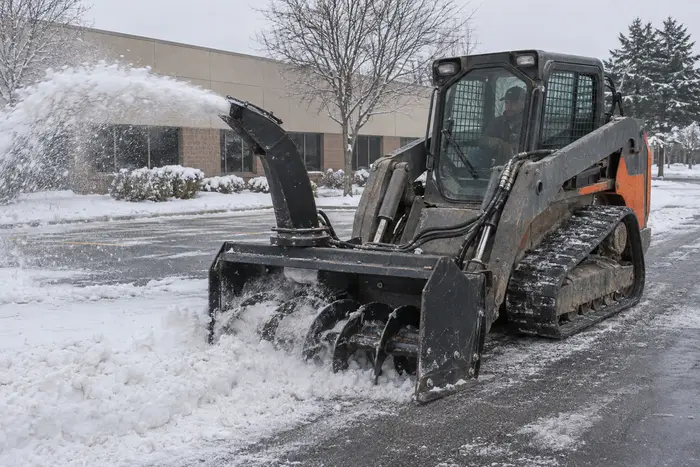
Yes. A general reference on skid steers lists snow removal as a common job, with pushers moving large volumes, angled blades pushing snow to the side, blowers clearing it away and angle brooms handling light snow and cleanup. It adds that skid steers are especially useful in smaller parking lots. They turn in place, so they can work in tight spaces where a truck-mounted plow cannot.
What is a snow pusher?
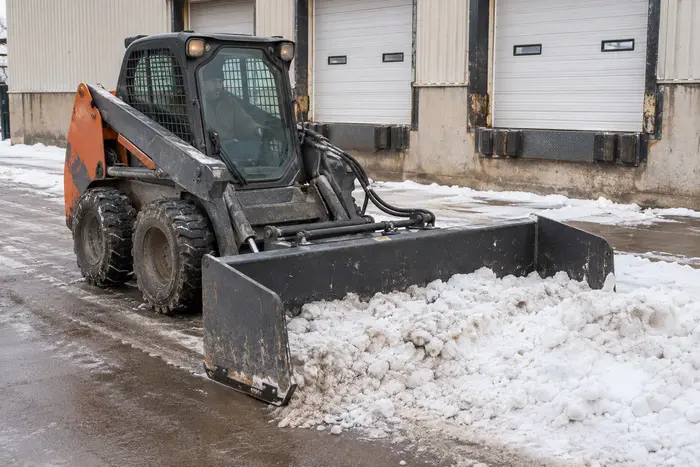
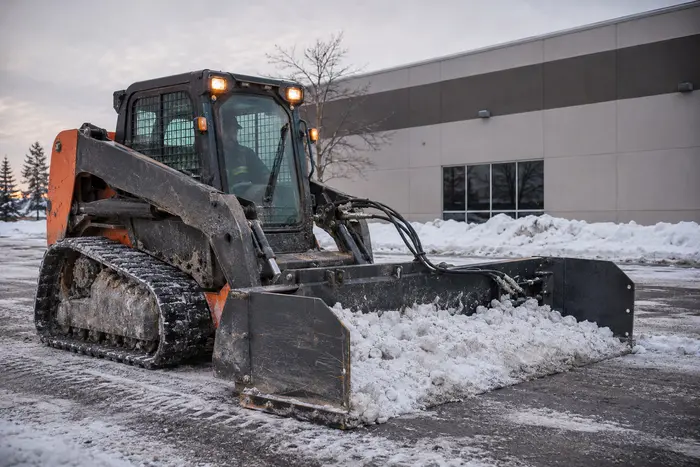
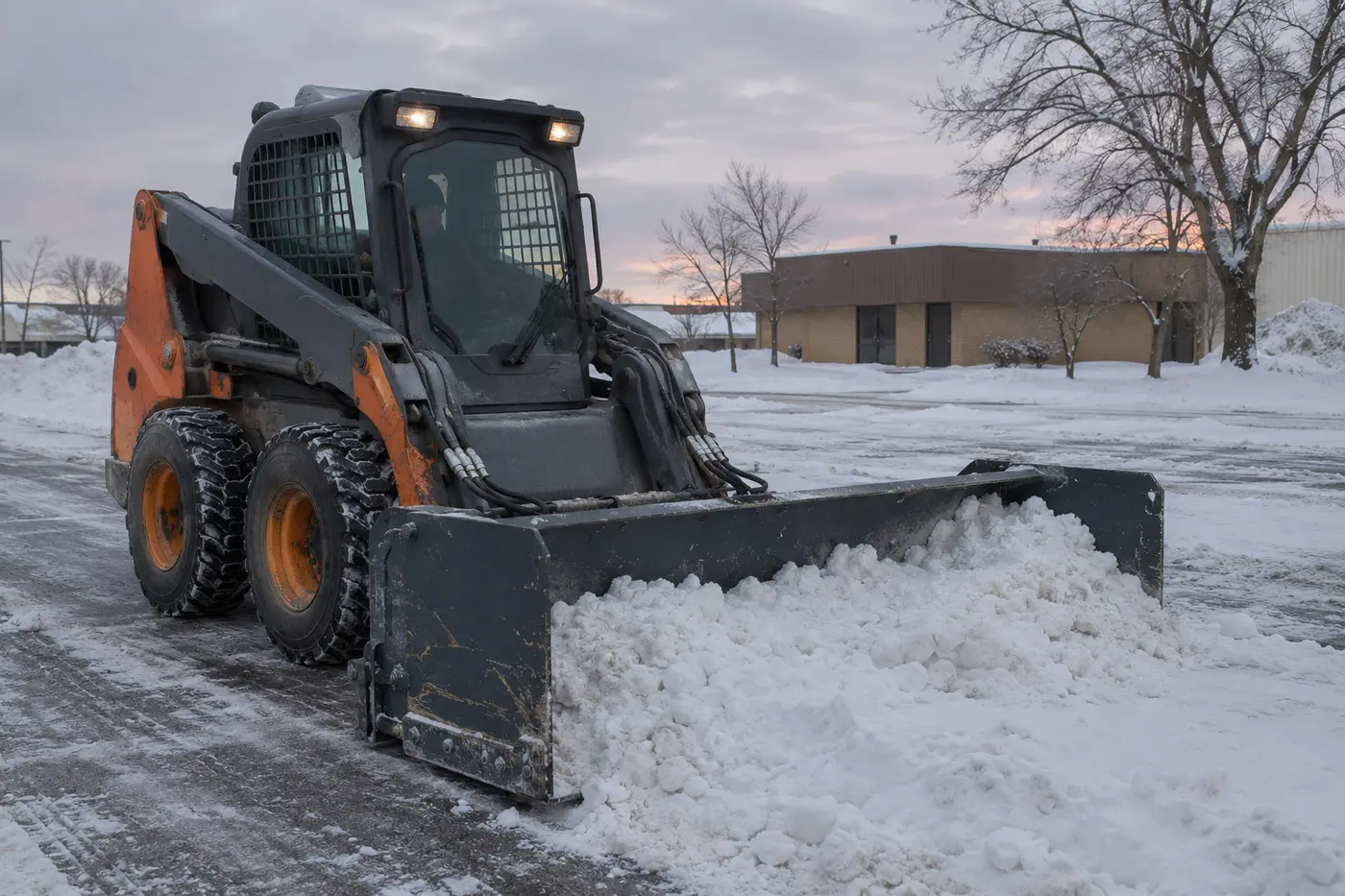
A snow pusher, also called a box plow or containment plow, moves snow straight ahead. Reference material describes a curved moldboard running across the direction of travel, with a sidewall at each end to contain the snow. Instead of throwing snow sideways, it carries a large load of snow forward and delivers it to a pile. A pusher lets snow be moved in bulk and carried completely off the pavement or off the site. Pushers are usually mounted on wheel loaders, skid steers or backhoes, and the same reference gives typical heights of about 3 ft to 5.5 ft, with widths from about 6 ft to 40 ft depending on the carrier. Skid steer pushers sit at the narrow end of that range.
What is a skid steer snow plow?
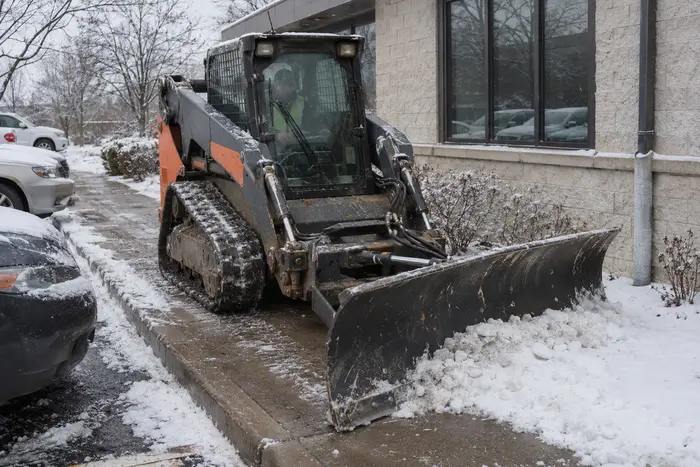
A snow plow, or angle blade, is a straight blade that can pivot left or right so snow rolls off to the side in a windrow. This is traditional plowing. It is good for clearing a lane, opening a drive and pushing snow to a side edge. It works best when there is a place to the side for the snow to go.
Snow pusher vs plow side by side
| Snow pusher | Angle plow | |
|---|---|---|
| How it moves snow | Straight ahead in a box | To one side in a windrow |
| Best for | Large open lots and loading docks | Drives, lanes and roads |
| Capacity per pass | Large, holds snow in the box | Smaller, snow rolls off |
| Stacking | Piled at the end of the run | Windrowed along the edge |
| Tight spaces | Needs room to push and stack | Works in narrow lanes |
| Control | Fixed, straight pushing | Adjustable angle |
| Machine needs | Enough power and traction for the load | Less strain per pass |
Which is better for a parking lot?
For a wide, open lot, a pusher is usually the faster tool. It moves large volumes in one pass and carries snow to a stack at the edge, which cuts down on the number of passes. For a lot with islands, cars and narrow lanes, an angled plow or a smaller pusher may be easier to maneuver. Many contractors carry both. See our snow pusher guide and browse skid steer snow pushers and skid steer snow plows.
What about back drag and wheels?
Some pushers include a back-drag edge that lets you reverse and pull snow out of corners and loading bays. Wheeled or shoe-supported pushers ride on the surface to protect the cutting edge and the pavement. Both features are worth checking for lots with uneven surfaces. Ask the manufacturer what the pusher is designed to do and how the edge is replaced.
Do you need a blower or a spreader as well?
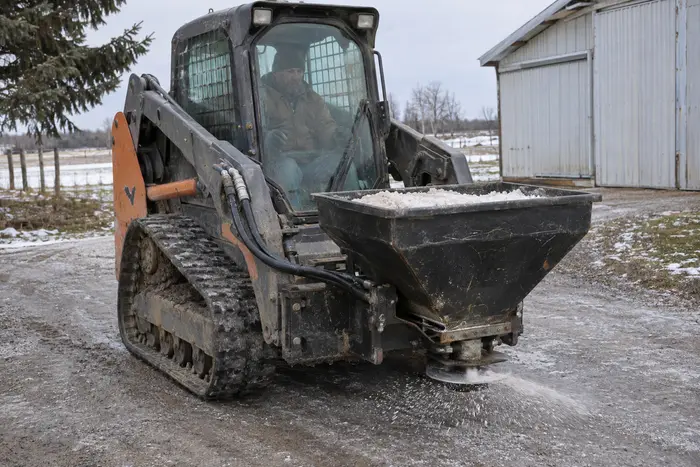
Often yes. A pusher and a plow move snow, but they do not remove it from tight spots. A snow blower throws snow off the site or into a truck. A salt spreader handles ice after you clear. See sand or salt for winter maintenance for guidance on what to spread.
How to size a pusher to your skid steer
- Find your loader's rated operating capacity and its weight.
- Pick a pusher width the machine can push with good traction, not just one that fits.
- Check the attachment's weight, since heavy pushers reduce capacity at the front.
- Confirm the mounting system. Many skid steer pushers use a quick-attach interface.
- Consider tracks or chains if you push in deep snow on ice.
Snow stacking and site planning
Pick stacking areas before the first storm. Keep piles away from drains, fire hydrants, sight lines at exits and the base of building walls. Do not pile snow where meltwater will refreeze across a walkway. Stacking snow efficiently often matters more than which tool you use.
Safety
Snow work happens in low visibility and slick conditions. Watch for pedestrians, use beacons and lights, and keep speeds low. Follow the operator manual and your machine's rated capacity, and do not push beyond what the machine can control.
Our recommendation by site type
- Big open lot: pusher, plus a blower for cleanup.
- Mixed lot with lanes: a pusher or angled blade, depending on layout.
- Private drive or narrow road: angled plow.
- Walkways: a smaller machine with a blade or blower. See sidewalk snow removal equipment.
Common pusher and plow mistakes
- Buying too wide. A pusher that is wider than the machine can handle in packed snow will stall the loader. Traction, not just width, decides what you can push.
- Pushing with tires spinning. Lower the load, back up and take smaller bites. Chains or tracks help on ice.
- Stacking in the wrong place. Piles that block sight lines or drains cause problems and complaints.
- Ignoring the cutting edge. A worn edge scrapes poorly. Check it often, and choose an edge style that suits the surface.
- Forgetting hitch and plate checks. Always check the latch is fully locked before pushing.
Pusher or plow for a skid steer vs a tractor or truck?
Trucks with plows are fast on roads and long drives. Skid steers shine in lots with islands, loading docks and tight turns. Wheel loaders and backhoes can carry large pushers, usually mounted with a universal system of posts or plates and chains, while skid steers more often use a quick-attach interface. If you have a skid steer already, adding a pusher is a relatively low-cost way to start clearing lots without buying a truck. Check the pusher's weight against your machine's rated capacity first.
Plan the whole storm, not just the push
Think in sequence. Clear first, haul or blow what you cannot stack, then treat for ice. A pusher saves the most time on the first step. A blower or sweeper handles the finish, and a spreader handles ice control. Good planning of the route and stack points saves more time than a larger tool.
Get the right fit the first time
Send us your machine's make, model and year, and a person will check fit against the maker's specs. You approve a delivered price before you pay, and the supplier ships direct. Get a fit-checked quote.
Questions buyers ask
What is the difference between a snow pusher and a snow plow?
A snow pusher moves snow straight ahead in a box and carries it to a pile. A snow plow blade angles to push snow to the side in a windrow. Pushers suit big open lots, while plows suit narrow lanes and drives.
Are skid steers good for snow removal?
Yes. They are maneuverable and work well in smaller parking lots and tight areas. With a pusher, plow blade, blower or broom, a skid steer can clear lots, drives and walks. Match the attachment to the machine's capacity.
Is a snow pusher better than a plow for a parking lot?
For wide, open lots a pusher is usually faster because it moves large volumes per pass and stacks snow in one spot. For lots with tight lanes and islands, an angled plow may be easier to maneuver. Many contractors use both.
What is a snow pusher with back drag?
A back-drag pusher has a rear edge that lets you reverse and pull snow out of corners, dock doors and tight areas. It saves time on cleanup. Ask the manufacturer how the back-drag edge works on your pusher design.
What size snow pusher fits my skid steer?
Match the pusher to your machine's rated operating capacity, weight and traction. Typical pushers range from about 6 ft wide upward, but wider is not always better. Confirm the plate type and capacity with the maker before you order.