Skid steer guide
What Is a Skid Steer? A Complete Guide
Quick answer
A skid steer is a compact, rigid-frame loader with lift arms and no steering axle. The left and right drive sides run at different speeds, so the machine turns by skidding its wheels or tracks. A quick-attach plate lets it carry buckets, forks, augers and many other attachments.
Shopping for this now? Get a fit-checked, delivered quote.
Key takeaways
- A skid steer steers by running the left and right sides at different speeds.
- It can turn within its own length, which suits tight sites.
- Quick-attach plates and auxiliary hydraulics make it a tool carrier.
- Wheels and tracks are both available; tracks add traction and flotation.
- Rated operating capacity and hydraulic flow decide which attachments fit.
A skid steer is a small, powerful loader that turns on the spot and swaps attachments in minutes. You see them on farms, construction sites, landscaping jobs and in snow removal. This guide explains what a skid steer is, how it works and why so many trades rely on it.
What is a skid steer, in plain terms?
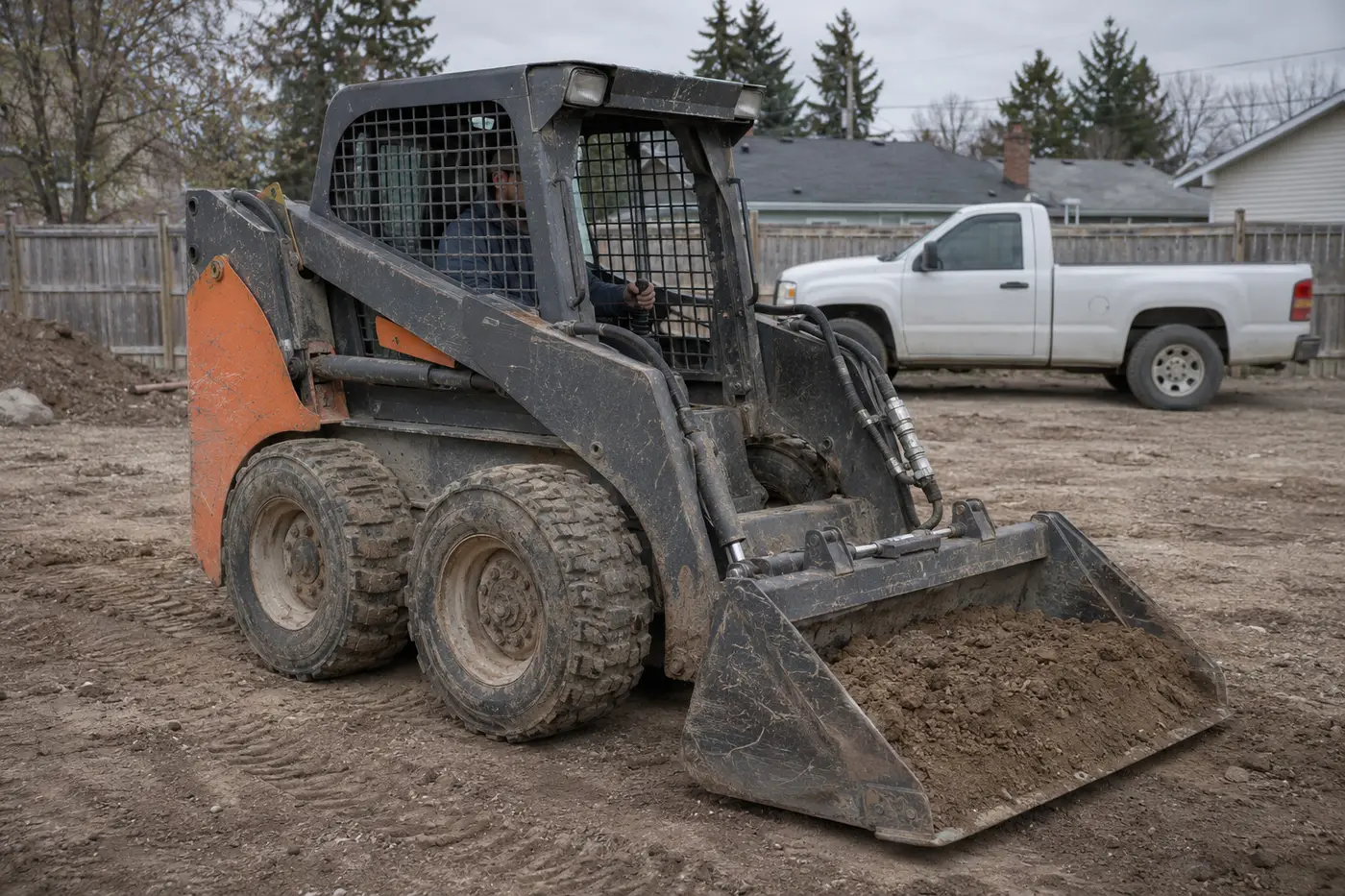
A skid steer loader is a compact machine with a rigid frame, an engine at the rear, two lift arms and a front-mounted attachment plate. The operator sits in a cab or open frame between the arms. There is no steering axle. Instead, the wheels on each side are driven independently. Drive one side faster than the other and the machine turns. Drive one side forward and the other backward and it spins within its own length, which is called a zero-radius turn.
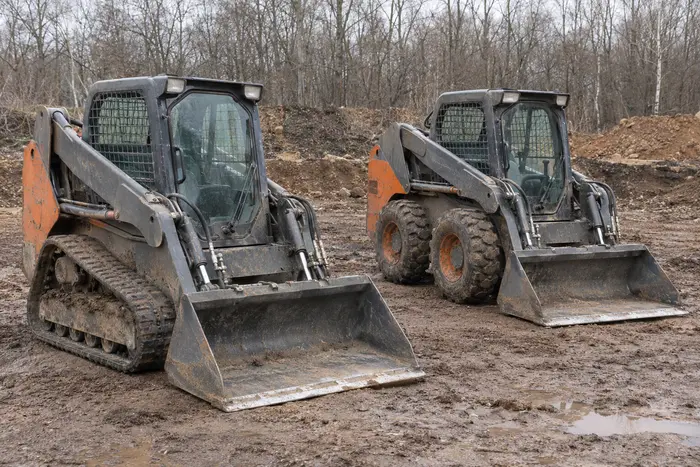
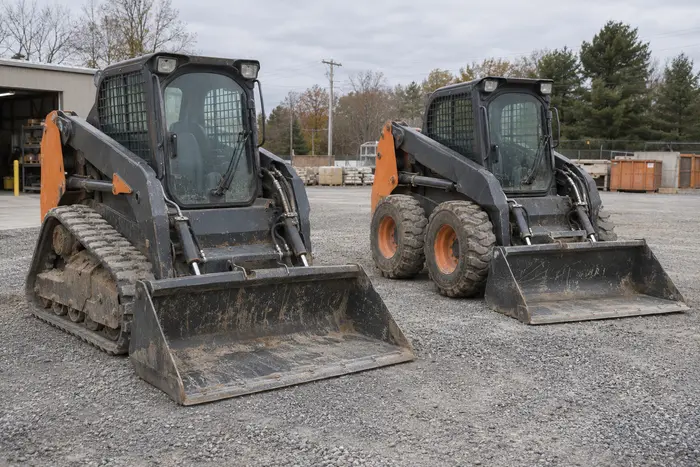
The same design is used on compact track loaders, which swap the wheels for rubber tracks. They steer the same way. The tracks give better traction in mud and soft ground and spread the machine's weight.
How does a skid steer steer?
The wheels stay fixed straight on the frame and skid across the ground to turn. Most modern machines use two separate hydrostatic drives, one for each side. The operator uses hand controls or foot pedals to speed up or slow down each side. Because the wheels skid, the machine can scuff turf and soft surfaces, so operators plan turns on finished ground. Tracked machines do the same but are gentler on soil in many conditions.
What does a skid steer do?
A skid steer loads, carries, digs, grades, pushes and lifts. With the right attachment it does far more. The basic list includes:
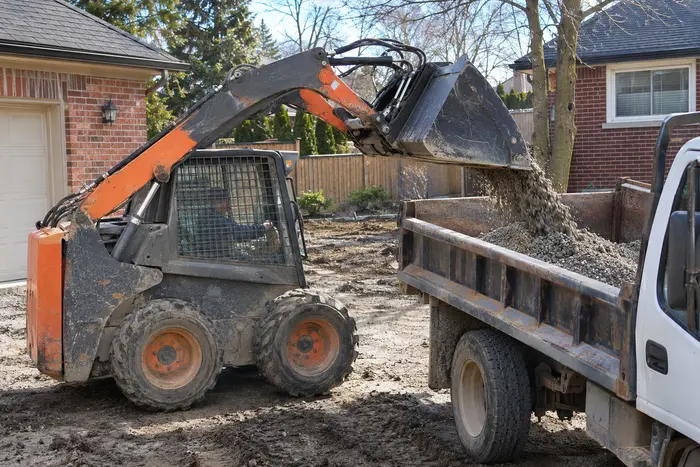
- Moving soil, gravel, mulch and snow with a bucket.
- Lifting pallets and materials with pallet forks.
- Drilling holes with an auger.
- Clearing brush with a brush cutter or mulcher.
- Grading with a box grader or land plane.
- Sweeping with a broom.
The full list is long. Browse the main skid steer buckets and other categories to see how wide it gets. The guide what is a skid steer used for goes through typical jobs by trade.
How did the skid steer start?
Reference sources trace the design to 1957, when two brothers built a three-wheeled loader in Minnesota to clean turkey barns. A North Dakota manufacturer bought the rights in 1958 and introduced a production machine the same year. In 1960 the company added a rear axle and offered what is described as the first four-wheel, true skid-steer loader. Other makers followed with similar machines in later years. For more detail, see the history of the skid steer loader.
What are the main parts?
| Part | What it does |
|---|---|
| Lift arms | Raise and lower the attachment; radial or vertical path |
| Quick-attach plate | Mounts and releases attachments |
| Auxiliary hydraulics | Powers motors and cylinders on attachments |
| Hydrostatic drive | Controls speed and direction of each side |
| Cab and ROPS | Protects the operator, with seat belt and restraint bar |
| Engine | Powers drive and hydraulics |
Wheels or tracks?
Wheels cost less to run and travel faster on hard surfaces. They scuff turf more when turning. Tracks give better flotation on soft ground, mud and snow, and better traction on slopes. They cost more to maintain and need undercarriage care. If you work mostly on pavement or gravel, wheels do well. If you work in wet soil or sensitive ground, tracks often make sense. See skid steer wheels vs tracks for the details.
What size are skid steers?
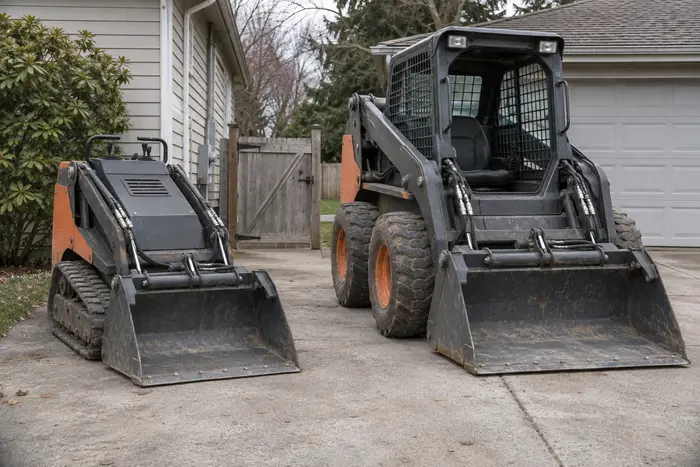
Machines range from small units that fit through a gate to large frames used on big construction jobs. Sizes are usually described by rated operating capacity and operating weight. Early production machines were small by today's standards, and modern machines are far stronger. The skid steer sizes and frame classes guide explains how the categories work. Smaller machines include mini skid steers, which are narrower and often stand-on or ride-on.
What should you know before running one?
- Read the operator manual and know the rated operating capacity.
- Wear the seat belt and keep the restraint bar down.
- Keep the load low when traveling.
- Avoid slopes beyond what the manual allows.
- Check that the attachment is locked into the quick-attach plate before lifting.
- Keep bystanders away from the machine's swing and lift area.
Training matters. The first hours on a skid steer teach how the machine reacts to loads and slopes. Take time on level ground before you try heavy work.
How do you pick attachments?
Skid steer attachments share a few standards, and a universal quick-attach plate is common. Still, fit depends on the machine's size, rated capacity and hydraulic output. Ask whether an attachment needs auxiliary hydraulics and whether it needs high flow. A person should confirm fit against the machine's specs before you buy. The guide are skid steer attachments universal explains what that standard covers and what it doesn't.
Why is the skid steer so common?
It is small, maneuverable and flexible. One machine and a set of attachments can do work that otherwise takes several specialized machines. It fits through gates and works inside buildings and barns. It loads and unloads from a trailer. For many small businesses, that mix of size, price and versatility is why it is often the first machine they buy.
There are trade-offs. A skid steer is not a replacement for a large excavator or wheel loader on heavy production work. It isn't a long-distance hauler. It does best on short, repeated tasks close to the work site, where its ability to turn in place and swap tools pays off every day.
What does a skid steer cost to run?
Running costs depend on the machine, the work and the attachments. Fuel, hydraulic oil, filters, tires or tracks, and wear parts like bucket edges all add up. Tracked machines have undercarriage wear that wheeled machines don't. Daily checks of fluids, tires or tracks, pins and the quick-attach lock prevent small problems becoming expensive ones. Keep the machine clean, grease pivot points on schedule and follow the maker's service intervals. Resale value follows maintenance records as much as hours.
Skid steer or something else?
A skid steer is a great all-rounder, but it isn't always the right pick. For deep digging, a mini excavator reaches farther and digs deeper. For long hauls, a wheel loader or truck is faster. For mowing and tillage on open ground, a tractor with implements can be cheaper. Many operators own a skid steer for flexibility and add a second machine when work volume grows. Browse pallet forks to see how one attachment can change what the machine does in a day.
Get the right fit the first time
Platforms, forks and hooks all depend on your machine and its rated capacity. Send us the make, model and year and a person will check fit against the maker's specs. You approve a delivered price before you pay. Get a fit-checked quote or call 1-888-245-1555.
Questions buyers ask
What is a skid steer used for?
A skid steer is used for loading, carrying, digging, grading, lifting and pushing in tight spaces. With attachments it also drills holes, clears brush, sweeps, trenches and removes snow. It is common on farms, construction sites and landscaping jobs.
How does a skid steer turn?
The wheels or tracks on each side are driven independently and don't steer. Driving one side faster than the other turns the machine. Running one side forward and the other backward spins it within its own length, which suits tight working areas.
What is the difference between a skid steer and a compact track loader?
Both use the same steering design. A skid steer has wheels, and a compact track loader has rubber tracks. Tracks give better traction and flotation on soft ground and cost more to maintain. Wheels are cheaper to run and quicker on hard surfaces.
Can a skid steer use different attachments?
Yes. A quick-attach plate and auxiliary hydraulics let one machine carry buckets, forks, augers, brooms, brush cutters and many other tools. Fit depends on the machine's size, capacity and hydraulics, so check each attachment against your machine.
Is a skid steer hard to operate?
Basic controls are simple, but handling loads, slopes and tight turns takes practice. Read the operator manual, wear the seat belt and restraint bar, and start on level ground with light loads before moving to heavier work.