Buying advice guide
Skid Steer vs Compact Tractor: Which Should You Buy?
Quick answer
A skid steer is better for loading, digging, grading and tight spaces because it turns in its own length and runs hydraulic attachments. A compact tractor is better for mowing, tilling and PTO-driven implements. Choose by whether most of your work is loader work or implement work.
Shopping for this now? Get a fit-checked, delivered quote.
Key takeaways
- Skid steers excel at loading, moving material and tight maneuvering
- Compact tractors excel at PTO work such as mowing, tilling and hauling
- A tractor's three-point hitch and PTO are the dividing line
- Attachment choice and hydraulics matter more than horsepower
- Many property owners end up wanting both, so start with the heavier job
Skid steer or compact tractor is one of the most common buying questions for people with acreage or a small business. Both can run a loader bucket, both take attachments, and both look like they can do everything. The answer depends on what you spend most of your time doing. This guide compares them on the points that matter.
What is the real difference?
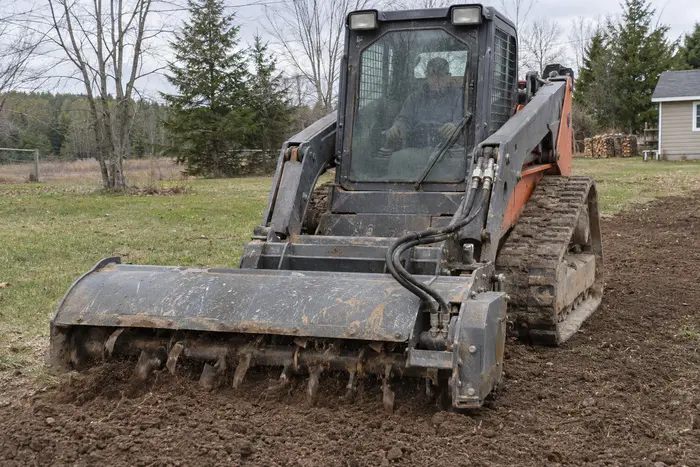
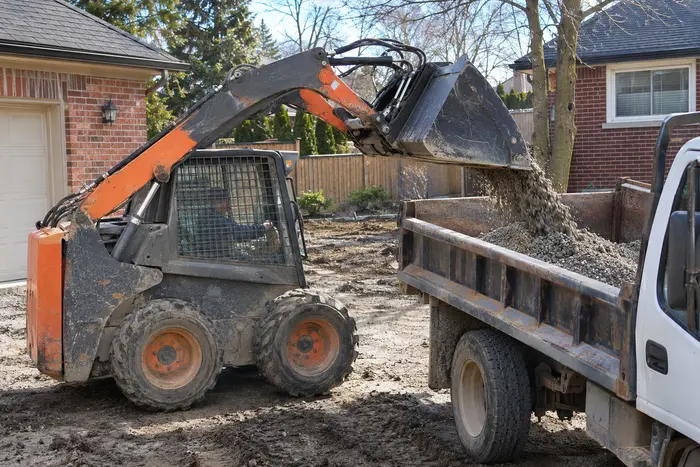
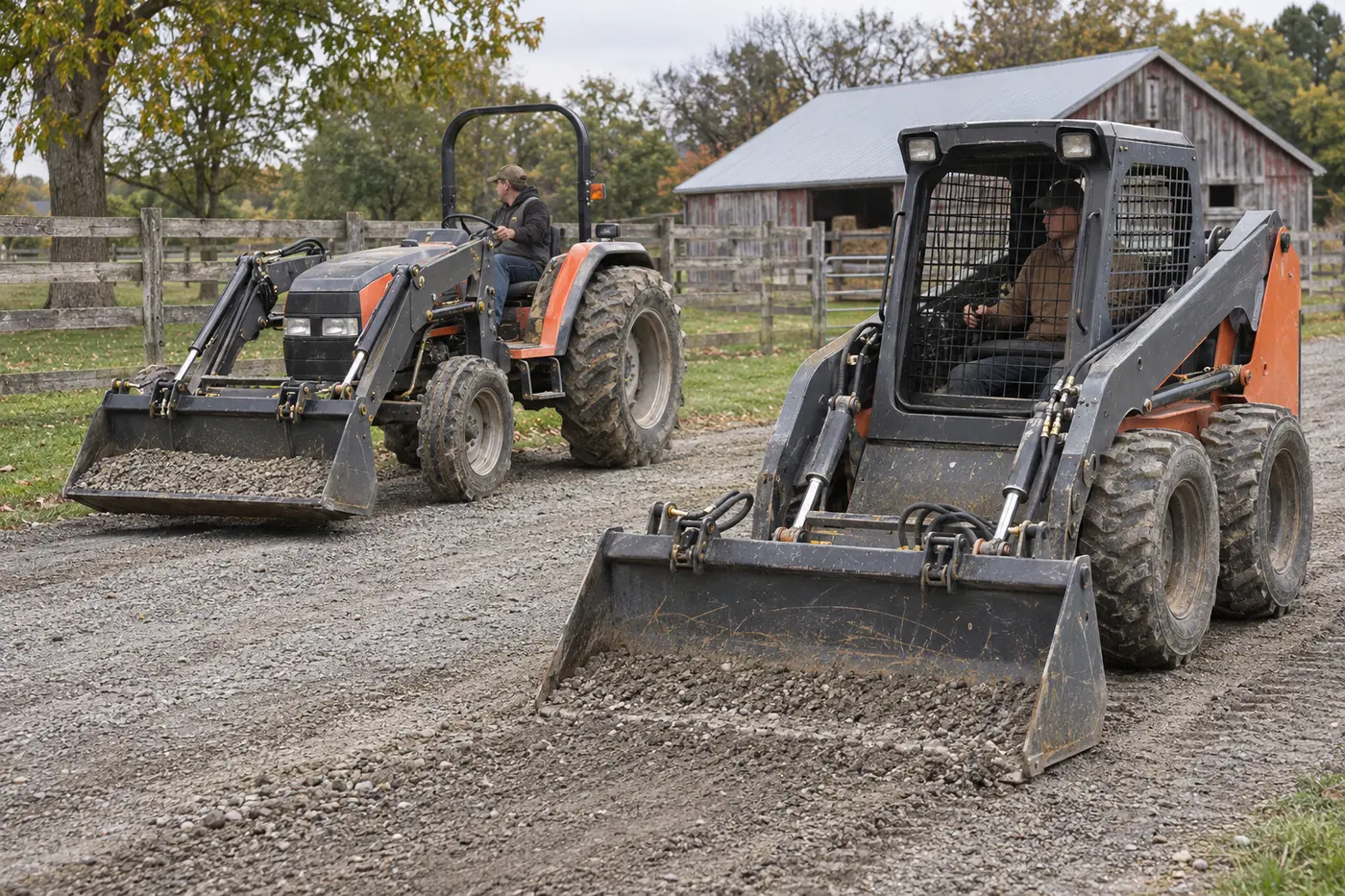
A skid steer loader steers by running left and right wheels or tracks at different speeds. That lets it spin within its own length, so it can turn in tight spaces. Its main job is loader work: scooping, carrying, digging, grading and powering hydraulic tools through a front quick-attach plate.
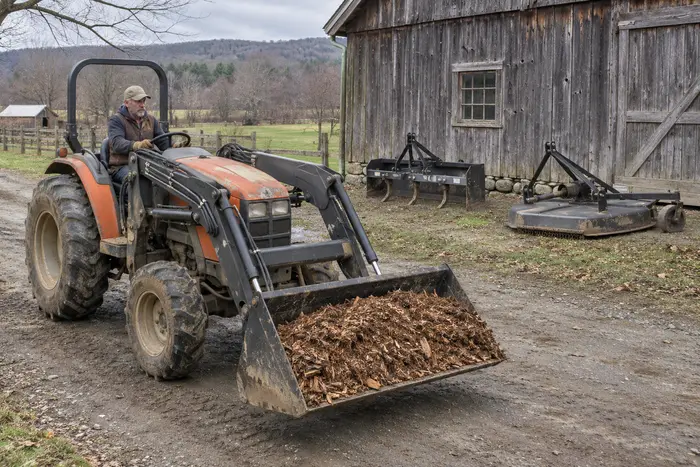
A tractor is an engineering vehicle built to deliver high tractive effort at low speeds for pulling and powering implements. A compact utility tractor, or CUT, is the small end of the family, usually well under 60 horsepower. It has a rear three-point hitch and a PTO, which provide rotary power to implements such as mowers, tillers and post-hole diggers. Many have a front-end loader as well.
Side-by-side comparison
| Question | Skid steer | Compact tractor |
|---|---|---|
| Steering | Skid steer, zero-radius turns | Conventional steering, wider turning circle |
| Main strength | Loader work, digging, grading, hydraulic tools | PTO and three-point hitch implements |
| Rear implements | Not standard | Rear three-point hitch and PTO |
| Front attachments | Quick-attach plate with many tools | Front loader, some front implements |
| Hydraulics for tools | Auxiliary circuit on the loader arms | Remote valves or the loader circuit |
| Ground | Tracks or wheels; scuffs turf when turning | Turf tires; gentler on lawns |
| Typical work | Construction, landscaping, farm yard work | Mowing, tilling, hay, acreage work |
Where skid steers win
- Tight spaces. The zero-radius turn and compact footprint let a skid steer work between buildings and in small yards.
- Loader-heavy work. Moving gravel, soil and debris all day.
- Digging and grading. Buckets, augers, trenchers and graders on a stiff, simple front end.
- Specialty attachments. A huge range of tools, from grapples to stump grinders.
- Fast attachment changes. A quick-attach plate takes minutes to swap.
Where compact tractors win
- Mowing and grass work. A belly or rear mower, rotary cutter or flail mower is a natural fit for a tractor's PTO.
- Tillage and seeding. Tillers, harrows and seeders work off the rear hitch.
- Hauling and towing. Tractors tow trailers and implements well at low speed.
- Turf friendliness. Turf tires and wide stance are gentler on lawns than skidding.
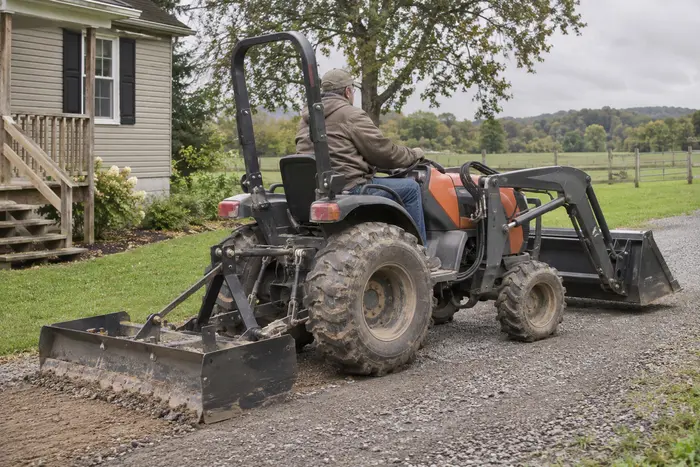
- Versatile with implements. Land plane, box blade, post-hole digger and more on the three-point hitch.
If most of your work is mowing, tilling and working with implements, look at the compact tractor attachments guide before you consider a skid steer.
What about attachments you can use on both?
Some tools work on both through adapters. A 3 point adapter lets a skid steer carry some three-point implements. In the other direction, a loader on a compact tractor can carry bucket forks and bale grabbers. But an adapter does not give a skid steer a PTO, and a tractor's loader circuit usually does not match a skid steer's auxiliary hydraulic output. Do not assume a tool will work on both without checking its specs.
Price, operating cost and upkeep
Prices vary by size, age and features, so compare machines at the same capability. Think about what each costs to keep. Skid steers wear tracks or tires fast in rough work, and the hydraulic hoses and couplers take a beating from attachments. Tractors need mower blades, PTO shafts and belts. Compare the maintenance schedule in the manuals, and check parts availability for the model you are considering. Used machines vary widely, so inspect them closely. Our used skid steer inspection checklist helps.
Hydraulics and how tools are powered
The two machines power tools in different ways. A tractor's PTO delivers rotary power through a shaft at a standard speed. Rear PTO on compact tractors usually runs at the 540 rpm standard, and many have a mid-mount PTO that turns faster for belly mowers. Tools such as rotary cutters and tillers run directly off it. A skid steer has no PTO. It sends hydraulic oil to a motor or cylinder on the tool, so a mulcher, trencher or auger has its own hydraulic motor. This is why attachments are not interchangeable between machines, and it is why checking flow and pressure matters on the skid steer side.
Ground impact and finished surfaces
Skidding turns tear turf and scuff pavement, especially on wheels. Tracks reduce ground pressure but still scuff in tight turns. A tractor with turf tires leaves lawns in better shape, which counts if you maintain a yard or finished landscape. If you must work on soft or wet ground, tracked skid steers float better than a wheeled tractor.
A note on size and transport
Think about how you will move the machine. A compact tractor usually drives to the work, while a skid steer often rides a trailer. Add the weight of the machine and its heaviest attachment, and compare the total with the trailer's rating and the tow vehicle's. A skid steer with a large attachment can be heavier than it looks, so do the arithmetic from the spec sheets, not from memory.
Which is safer on slopes?
Both can tip. Skid steers are more stable with a low load and the arms down. Most current skid steers and compact tractors have a rollover protective structure and a seat belt. Use the belt every time. Keep loads low, stay within the rated capacity, and follow the manual's slope limits. Never carry a raised load across a slope.
What about stability and ground conditions?
Ground conditions often decide the question. Mud, snow and soft soil favor a tracked skid steer or a tractor with wide tires. Gravel and pavement favor wheels. Slopes need attention for both. Keep loads low, keep the heavy end uphill, and follow the slope limits in the operator manual. If you work wet ground often, ask about tracks or high-flotation tires before you decide on either machine.
How to decide: three questions
- What is your biggest recurring job? If it is moving material or digging, choose a skid steer. If it is mowing or tillage, choose a tractor.
- How tight is your site? If gates and corners are tight, a skid steer's turning helps.
- How soft is your lawn or ground? If you protect finished turf, a tractor on turf tires is gentler, while tracks on a skid steer help on soft ground.
Many owners end up with both. A tractor handles the grass and implement work, and a skid steer handles heavy loader work. If you only can buy one, choose for the work you do most often and add what the other machine would do through attachments where you can.
Get the right fit the first time
Send us your machine make, model and year and what you plan to do with it. A person checks fit against the maker's specs, and you approve a delivered price before you pay. The supplier ships direct. Get a fit-checked quote.
Questions buyers ask
Is a skid steer better than a compact tractor?
Not in general. A skid steer is better for loader work, digging, grading and tight spaces. A compact tractor is better for mowing, tilling and any work run off a PTO. Choose by your most frequent job.
Can a skid steer replace a compact tractor?
For loader and hydraulic-tool work, yes. It has no PTO or standard three-point hitch, so it does not run PTO implements directly. Some three-point tools can be fitted with an adapter, but check each tool's requirements first.
Can a compact tractor do what a skid steer does?
A compact tractor with a front loader handles light loading and some digging. It is slower and less maneuverable than a skid steer, and its hydraulics for powered tools are more limited. For heavy loader work, a skid steer is stronger.
Which is better for a small acreage?
Mowing, tillage and hay point to a compact tractor. Gravel, post holes, brush clearing and material handling point to a skid steer. Pick the machine that handles your biggest recurring job and add the rest later through attachments where you can.
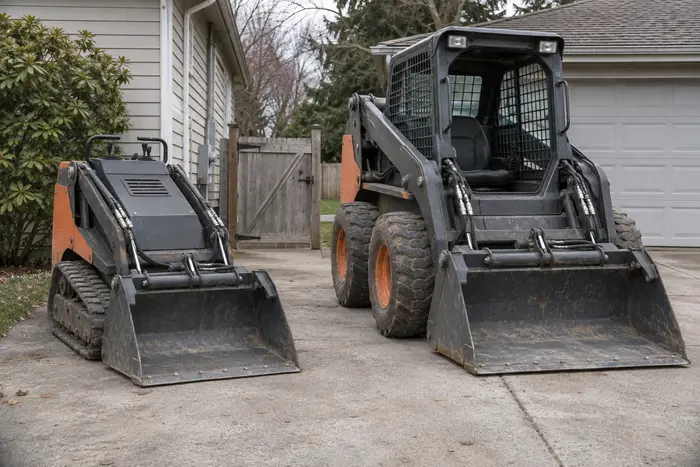
Is a mini skid steer or a sub-compact tractor better for a small property?
A mini skid steer suits digging, hauling material and tight yards. A sub-compact tractor suits mowing and light implement work. Think about the jobs you do most often, and measure the gates you must fit through.