Skid steer guide
How to Operate a Skid Steer: Controls and Attachments
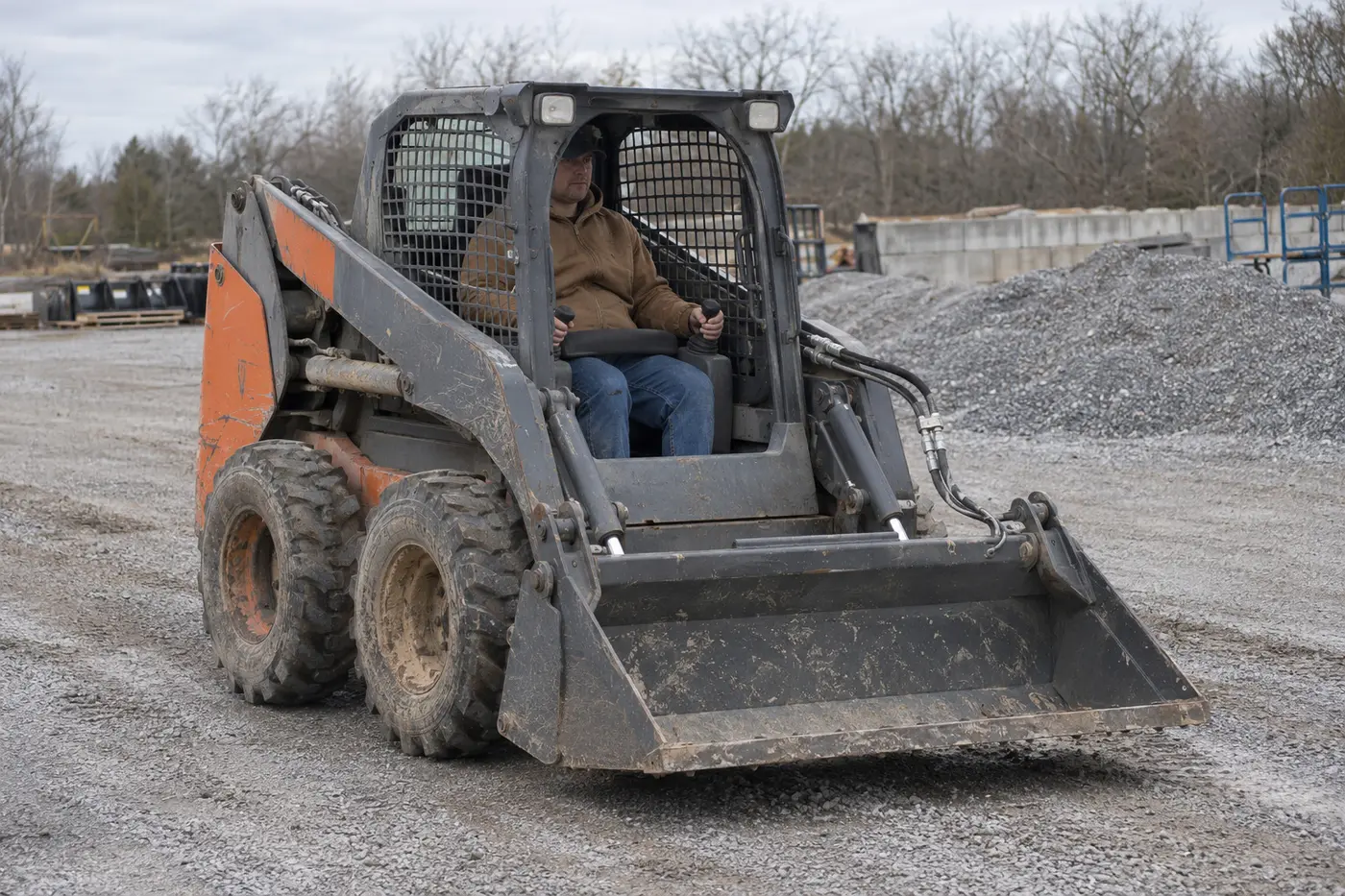
Quick answer
To operate a skid steer, do a walk-around, buckle in, lower the restraint bar and learn the control pattern in an open area. Keep loads low, make smooth inputs, drive straight on slopes and never exceed rated operating capacity. Follow your operator manual and get hands-on training before real work.
Shopping for this now? Get a fit-checked, delivered quote.
Key takeaways
- Walk around the machine and check fluids, pins and tires first.
- Learn your control pattern in open ground.
- Keep loads low and within rated operating capacity.
- Drive straight up and down slopes, not across.
- Confirm both quick attach pins are through before lifting.
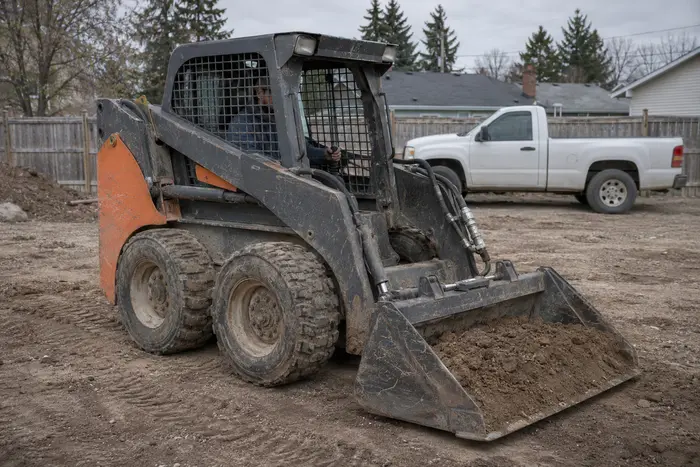
To operate a skid steer, buckle in, lower the restraint bar, start the engine, check your controls and move slowly with the load low. The machine steers by changing the speed of the left and right sides, so it turns very tight and reacts fast. Learn the controls in an open area before you work near anything.
This guide covers the basics. It does not replace training, your operator manual or your employer's rules. Read the manual for your exact machine first.
How does a skid steer steer?
A skid steer has no steering wheel. The wheels or tracks hold a fixed direction, and the machine turns by running one side faster than the other. Run one side forward and the other in reverse, and it spins in place. That is why it can turn within its own length and why it is so handy in tight spaces. It also means the machine drags its tires or tracks across the ground when it turns, so sharp turns tear up soft ground and wear tires.
Before you start: the walk-around
- Check fluids. Engine oil, hydraulic oil, coolant and fuel. Look for leaks under the machine.
- Look at tires or tracks. Check for cuts, damage and correct tension or pressure per the manual.
- Check the lift arms and pins. Look for cracks, loose pins and bent parts.
- Inspect the attachment. Look at the quick attach latch, pins, hoses and couplers.
- Test lights, horn, backup alarm and seat belt. Do not run a machine with missing or damaged safety gear.
- Clean the steps and cab. Mud on your boots is a slip risk.
Getting in and setting up
Use the steps and handholds, keep three points of contact, and face the machine as you climb. Sit down, fasten the seat belt and lower the restraint bar or close the door as your machine requires. Do not start the machine until the restraint system is in place. Adjust the seat so you can reach every control without leaning. Check mirrors and cameras if fitted.
Understanding the controls
Most machines use one of three control layouts. Your manual and the decal in the cab show which one you have. Many joystick machines can switch between the ISO and H patterns.
| Pattern | Drive | Lift and tilt |
|---|---|---|
| ISO joystick pattern | Left stick drives forward, back and steers | Right stick raises, lowers and tilts |
| H joystick pattern | Each stick drives one side, forward and back | Sideways motion of the sticks lifts and tilts |
| Hand and foot controls | Two hand levers drive each side | Foot pedals raise, lower and tilt |
The auxiliary hydraulics, which power attachments like augers and brush cutters, are usually controlled by a switch, a thumb roller or a lever. Some machines have a high-flow switch for tools that need it. Learn what each control does with the engine running and the machine in a wide, flat space before you load it.
Basic operating steps
- Start up. Make sure the area around the machine is clear and the seat belt is on. Start the engine and let it warm up as the manual suggests.
- Raise the arms slightly. Lift the bucket or attachment just off the ground and tilt back so the load is stable.
- Release the parking brake if your machine has one and move off slowly.
- Practice driving. Forward, reverse, wide turns, then tighter turns and spin turns. Smooth inputs avoid jerky motion.
- Practice lift and tilt. Raise and lower the arms, then tilt the attachment. Get a feel for how fast it reacts.
- Work with a load. Fill the bucket, tilt it back, keep it low and drive slowly to where you will dump.
- Dump and return. Raise only as high as you need. Dump slowly and back away before lowering.
How to change an attachment
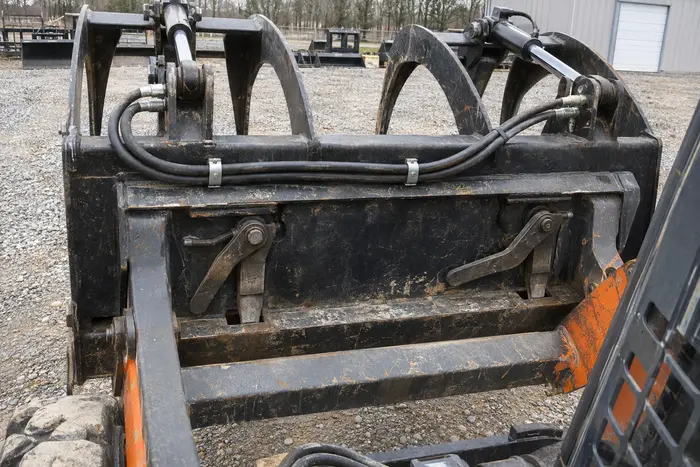
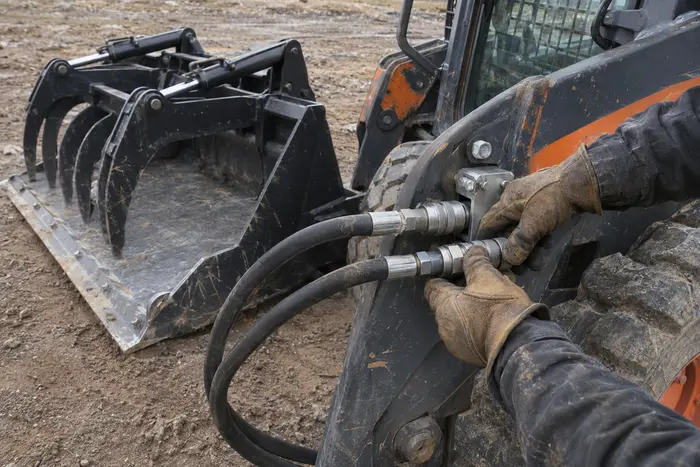
Most skid steers use a universal quick attach plate. You drive up to the attachment, tilt the plate so the top lip engages, raise the arms slightly, tilt it back to seat the plate, then engage the latch pins with the lever or the hydraulic control. Confirm that both locking pins are fully through before you lift. If the attachment is powered, stop the engine, relieve pressure as your manual says, then connect the hoses. Our guides to quick attach plate types and flat-face hydraulic couplers cover what you will see. If you need a plate or adapter, browse mounting plates.
Working with buckets and forks
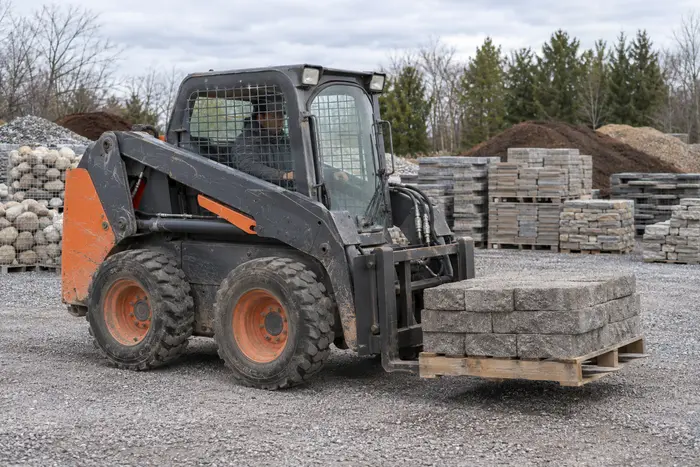
For a bucket, travel with it low and tilted back. Approach a pile square, scoop with the bucket flat, then tilt back and lift. For forks, keep the load low and tilted back slightly, drive in straight and never carry riders or lift people unless the attachment is a rated work platform and the manual allows it. Check the rated operating capacity of your skid steer before you load. Browse skid steer buckets and pallet forks for common choices.
Working on slopes and soft ground
- Drive straight up or down a slope, not across it.
- When carrying a load, keep the heavy end uphill. Keep the bucket low and tilted back.
- Avoid sharp turns on slopes and avoid turning at the top of a hill.
- Stay away from edges, ditches and soft or wet ground that may give way.
- Know the slope limits for your machine. They are in the manual.
Safety rules that matter every day
- Wear a seat belt and use the restraint bar every time.
- Keep arms, legs and head inside the cab. Do not climb in or out while the machine is moving.
- Never exceed the rated operating capacity.
- Look before you reverse. Use mirrors, cameras and a spotter if the view is blocked.
- Keep bystanders out of the work area.
- Do not use a raised lift arm as a platform unless the arm support is in place and the manual says it is safe.
- Check for overhead lines and buried utilities before you start.
Shutting down
Park on level ground. Lower the attachment flat to the ground, set the parking brake, idle the engine for a short cool-down if the manual says so, then shut off the engine and remove the key. Relieve hydraulic pressure per the manual if you plan to disconnect the attachment. Climb out facing the machine, using the steps and handholds.
Where to go next
New operators should spend time with a skilled operator, take any training required in your area and practice in open ground. For a primer on the machine, read what is a skid steer. Keep your attachments in good shape with our guide to attachment maintenance.
Get the right fit the first time
Send us the make, model and year of your machine and what you plan to do with it. A person checks fit against the maker's specs and sends a delivered price for you to approve before you pay, and the supplier ships direct. Ready when you are: get a fit-checked quote.
Questions buyers ask
How do you operate a skid steer for beginners?
Walk around the machine, buckle in, lower the restraint bar and learn the controls in an open space. Keep the load low, make smooth inputs and avoid sharp turns on slopes. Read the operator manual and get hands-on training from a qualified operator before you work near people or structures.
How do skid steer controls work?
Most machines use joysticks or hand and foot controls. In the ISO joystick pattern one stick drives and steers and the other lifts and tilts. In the H pattern each stick drives one side and sideways motion lifts and tilts. With hand and foot controls, two levers drive each side and pedals lift and tilt. Auxiliary hydraulics use a switch or roller. Check your manual.
What are the main skid steer control patterns?
The common layouts are the ISO joystick pattern, the H joystick pattern and hand and foot controls. Many joystick machines let you switch between ISO and H. The control pattern changes how you drive and lift, so learn yours before you work, and always check the diagram in the operator manual.
How do you attach a skid steer attachment?
Drive up to the attachment, tilt the quick attach plate forward so the top lip engages, raise the arms slightly and tilt back to seat the plate, then engage the latch pins. Confirm both pins are fully through before lifting. For powered attachments, relieve pressure and connect couplers per the manual.
Is it hard to learn to operate a skid steer?
Basic driving is quick to learn, but smooth, safe operation takes practice. The tight turning and fast hydraulic response surprise new operators. Start in open ground, learn the controls, work up to loads and slopes slowly, and follow the manual's limits.