Skid steer guide
Rock Bucket vs Skeleton Bucket: Which One You Need
Quick answer
A rock bucket, also called a skeleton bucket, has spaced tines or bars that let soil fall through while it holds rocks, roots and debris. A standard bucket holds everything. Choose a rock or skeleton bucket for sorting, clearing and separating material, and a standard bucket for hauling loose fill.
Shopping for this now? Get a fit-checked, delivered quote.
Key takeaways
- Rock and skeleton buckets sift soil away from rocks, roots and debris
- The gap between the tines controls what is kept and what falls through
- They hold less loose material than a solid bucket of the same width, because fines fall through
- A standard bucket is better for hauling fine material
- Check the width, tine spacing and mounting plate against your machine
Rock buckets and skeleton buckets are the same family of tool, and people use the names interchangeably. They solve a problem a standard bucket cannot: you want to pick up rocks, roots and debris, but not the soil around them. This guide explains how they work, how to tell the variations apart, and when to pick one over a solid bucket.
What is a rock bucket?
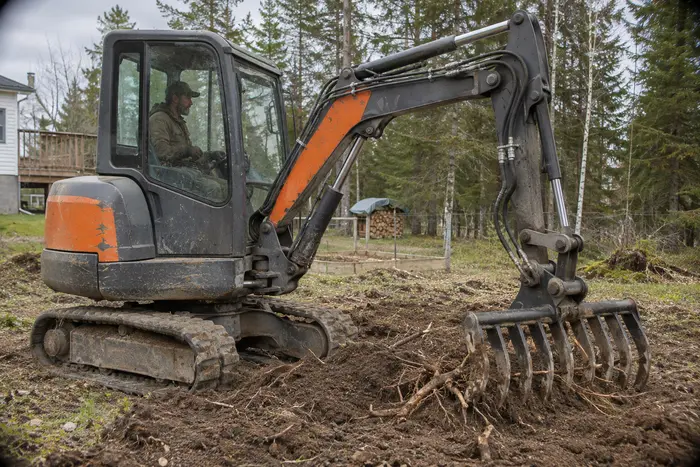
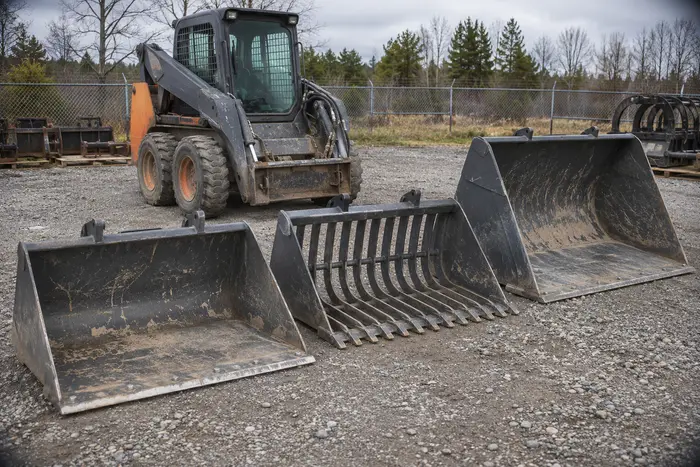
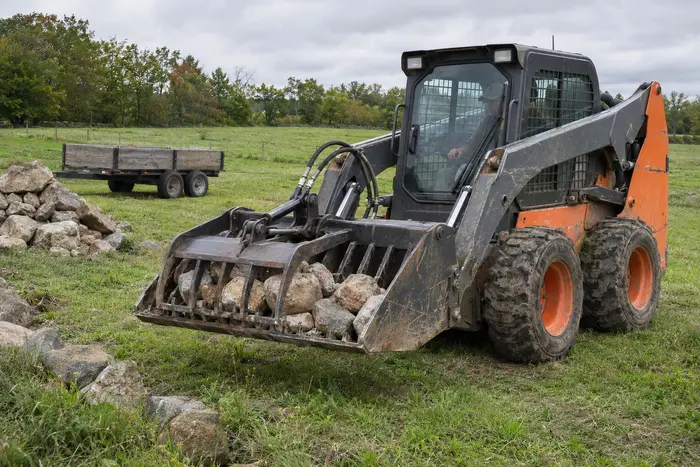
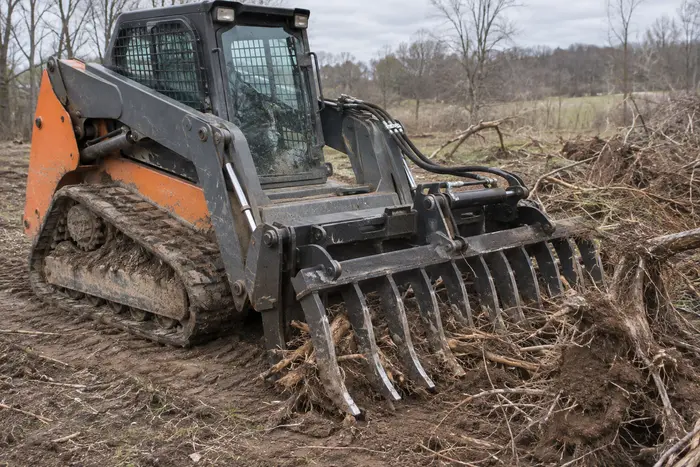
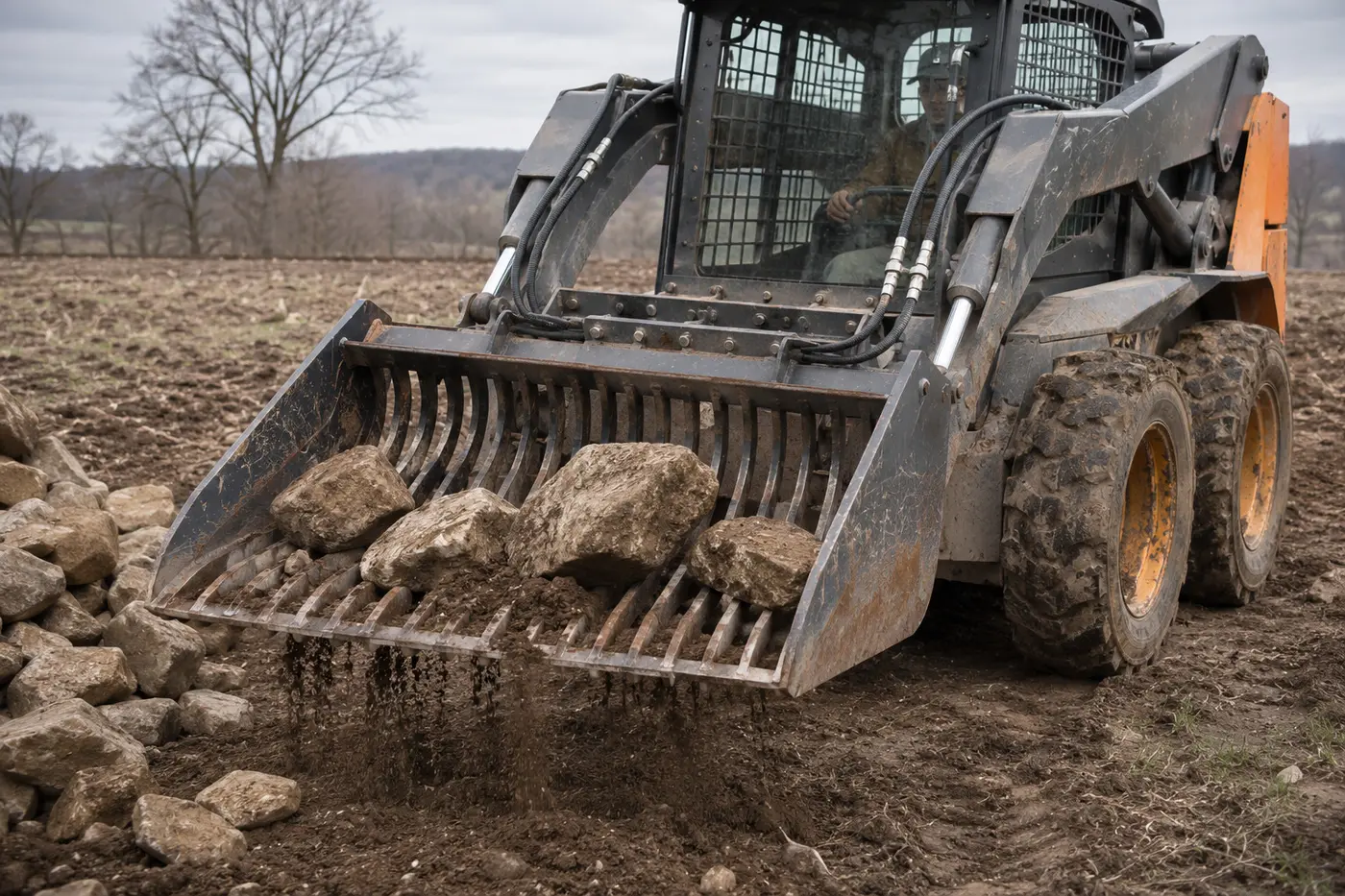
A rock bucket is a loader bucket whose floor, and sometimes sides, is made of spaced bars or tines instead of solid steel. Fine soil falls through the gaps as you scoop, and rocks, roots, brush and debris stay on top. Many have a solid back and sides to hold the load, and a cutting edge with teeth to bite into the ground.
"Skeleton bucket" describes the same design with a stronger emphasis on the open frame look. Some sellers use "skeleton" for wider tine spacing and "rock bucket" for tighter spacing. Because there is no fixed standard, compare the tine spacing in inches or millimeters and the width of the bucket.
Rock bucket vs skeleton bucket: how do they differ?
| Feature | Rock bucket | Skeleton bucket |
|---|---|---|
| Typical tine spacing | Tighter, keeps smaller stones | Wider, drops more material |
| Best at | Raking up rocks and roots from soil | Sifting heavier, coarser debris and demolition waste |
| Weight | Varies by build; often lighter than a solid bucket | Varies by build |
| Loose-material capacity | Lower than a solid bucket | Lower still |
Treat this as a rule of thumb, not a definition. Always check the maker's spec sheet for spacing and capacity.
Where does a rock bucket earn its keep?
- Clearing a field or lot. Pick up rocks and roots and leave the soil. See our guide on how to remove rocks from a field.
- Land clearing. Pull brush, stumps and roots, shaking soil out as you go.
- Landscaping. Prepare a lawn or garden bed by removing rocks before grading and seeding.
- Demolition cleanup. Sort rebar, concrete chunks and wood from sand and dirt.
- Site cleanup. Separate trash and debris from soil on a fill pile.
When is a standard bucket better?
If you carry loose soil, sand, gravel or mulch, a standard bucket is better because it holds the load. A tine bucket drops fine material through the gaps and spills as you carry. The gaps also let water drain, which helps with wet debris but does not help with fine fill. For general grading and hauling, see our guide to loader bucket types and bucket size guide.
Other bucket types also overlap with a rock bucket. A grapple holds large debris and brush with a clamp. A 4-in-1 bucket opens and closes like a clamshell and can dozer, scoop and grab. A tooth bucket or a smooth edge are options on a standard bucket and can change how it digs and scrapes.
How to pick a rock bucket for a skid steer
- Match the width. Pick a width a bit wider than the machine's tires or tracks if you want to clear the path, but check that the machine can lift it at full reach. A wider bucket adds weight and moves the load center forward.
- Check tine spacing. Pick a spacing that keeps the smallest rock you want and drops the soil. Tighter spacing holds more and drops less.
- Look at construction. A reinforced back, a replaceable cutting edge and strong welds are worth having. Rock buckets take a beating.
- Check the mounting plate. Most full-size skid steers use the universal quick attach plate, but mini loaders and some machines use other plates, so confirm it against your machine.
- Weigh it. The bucket's weight counts against your loader's rated operating capacity.
- Consider a thumb or a clamp. Some rock buckets have a clamp to hold the load as you carry it.
Browse skid steer buckets and mini skid steer buckets to see what is available. For an excavator, look at excavator buckets and the screening bucket, which is built to sort soil mechanically.
How to use a rock bucket well
Technique matters more than people think. Tilt the bucket slightly down and drive forward so the tines skim under the rocks, then curl it back and lift. Shake the bucket by tilting it back and forth to drop more soil. Do not dig deep with a skeleton design, since the open floor is made for sifting, not for deep digging. Dump the collected rocks into a pile, then bring in a solid bucket for the soil. Keep the load low when traveling and watch for large rocks that can slide off the tines.
Wear is normal. The cutting edge and the tines wear faster in rocky ground, so check them before each job and replace the edge before it wears into the bucket body.
Common mistakes
The first is buying by name. Because "rock" and "skeleton" are not standard terms, two buckets with the same label can behave very differently. Always compare tine spacing and bucket width. The second is picking a bucket that is too wide for the machine, which makes the front end heavy and hard to control with a full load. The third is expecting the bucket to carry fine fill. The fourth is ignoring wear: a worn cutting edge and bent tines cost you time and make the bucket harder to use. The fifth is overloading with wet, heavy soil that does not fall through. Slow down and shake the bucket more when the ground is wet.
Safety and upkeep
- Keep the load low while traveling and stay within the rated operating capacity.
- Watch overhead and avoid working under a raised bucket.
- Inspect welds, tines and the mounting plate for cracks and bends.
- Keep bystanders back, since rocks can roll off the tines.
- Follow the operator manuals for the machine and the attachment.
Rock bucket vs grapple vs screening bucket
These three tools overlap, so it helps to see the difference. A rock bucket is usually the simplest, lowest-cost way to separate rocks and roots from soil on a loader. A grapple holds larger or awkward debris such as logs, brush and concrete, and it carries a load that a rock bucket could not hold. A screening bucket uses a rotating drum or shafts to sift material to a finer, more even size, and it is used on excavators and some loaders. Choose by the size of the debris you need to move and the finish you need.
Get the right fit the first time
Send us your machine make, model and year and what you plan to do with it. A person checks fit against the maker's specs, and you see the delivered price on your quote before you pay. The supplier ships direct, and warranty terms, if any, are written on your quote. Get a fit-checked quote.
Questions buyers ask
What is the difference between a rock bucket and a skeleton bucket?
Both have spaced tines that let soil fall through while holding rocks and debris. The names are used loosely. Skeleton buckets usually have wider gaps and a lighter frame, while rock buckets have tighter spacing. Always check each maker's tine spacing before ordering.
What is a rock bucket used for?
It is used to pick up rocks, roots, brush and debris while letting soil fall through. Typical jobs include clearing fields and lots, preparing ground for seeding, sorting demolition waste and cleaning up building sites.
Can I use a rock bucket for regular digging?
Not well. The open floor lets fine material fall through, so it carries loose soil poorly. Use a standard bucket for digging and hauling fill, and keep the rock bucket for sorting, raking and clearing jobs.
What size rock bucket do I need?
Match the width to your machine and job, then check that the bucket's weight and load center stay within your loader's rated operating capacity. Choose tine spacing by the smallest rock you want to keep.
Should I get a tooth bucket or a smooth bucket?
Teeth help a bucket bite into hard or packed ground, while a smooth edge is better for grading and scraping. If you do both, a bucket with a bolt-on edge or a set of removable teeth gives you the option.