Skid steer guide
Skid Steer Attachments That Need High Flow
Quick answer
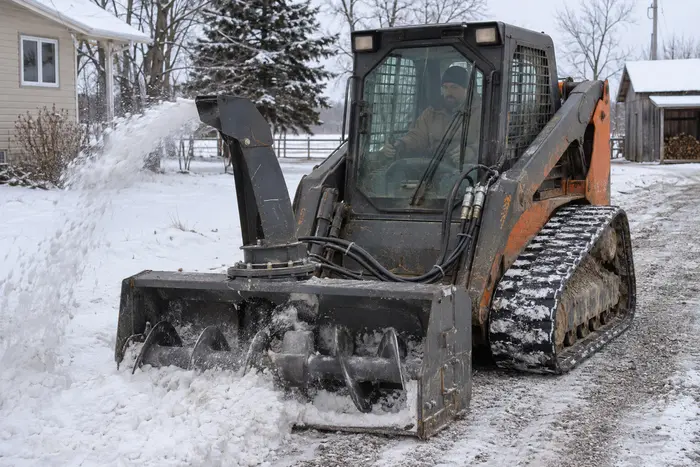
Skid steer attachments that require high flow are the ones that spin a heavy cutting or milling tool: forestry mulchers, cold planers, stump grinders, large brush cutters, big snow blowers and some trenchers. High flow means a larger volume of hydraulic oil per minute than the standard circuit supplies. Always match the attachment to your loader's rated flow.
Shopping for this now? Get a fit-checked, delivered quote.
Key takeaways
- High flow means more hydraulic oil per minute than the standard auxiliary circuit.
- Tools that spin a large cutter or drum are the usual high-flow users.
- Plain buckets, forks and grapples run on standard or no flow.
- Running a high-flow tool on a standard-flow loader means slow, weak work.
- Check your loader's rated flow and pressure before you buy.
Some skid steer buyers find out about hydraulic flow only after an attachment arrives and runs far below its rated speed. The fix is simple: know what high flow is, know which tools need it, and check your machine first.
What is high flow on a skid steer?
High flow is an upgraded auxiliary hydraulic circuit that delivers more oil per minute to the attachment. Flow is measured in gallons per minute (gpm) or litres per minute. Standard circuits suit tools that move a cylinder or turn a modest motor. High-flow circuits suit tools that have to spin a heavy drum, disc or auger at speed, because that takes a bigger supply of oil. Many loaders offer high flow as a factory option, and the number varies by machine and maker, so use the rated figure in your manual rather than a general number.
Flow is half the picture. Pressure matters too. A tool needs the right flow and the right pressure. If either is short, blade or drum speed drops and the tool bogs down. Our explainer on skid steer hydraulic flow goes deeper on reading both numbers.
Which skid steer attachments require high flow?
These are the usual high-flow users, though every model differs, so confirm with the maker:
| Attachment | Why it needs the oil |
|---|---|
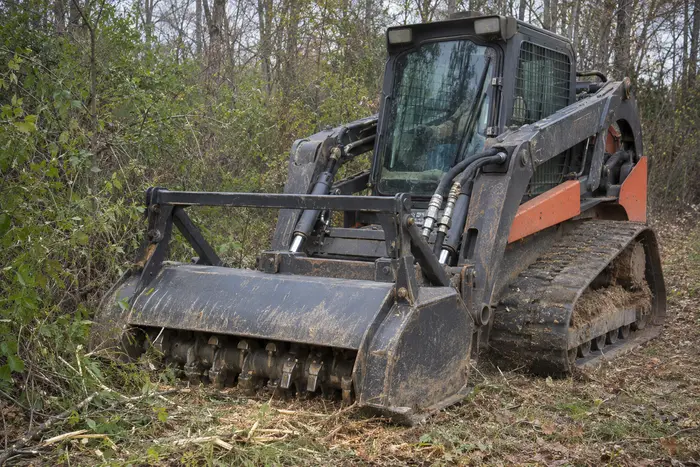
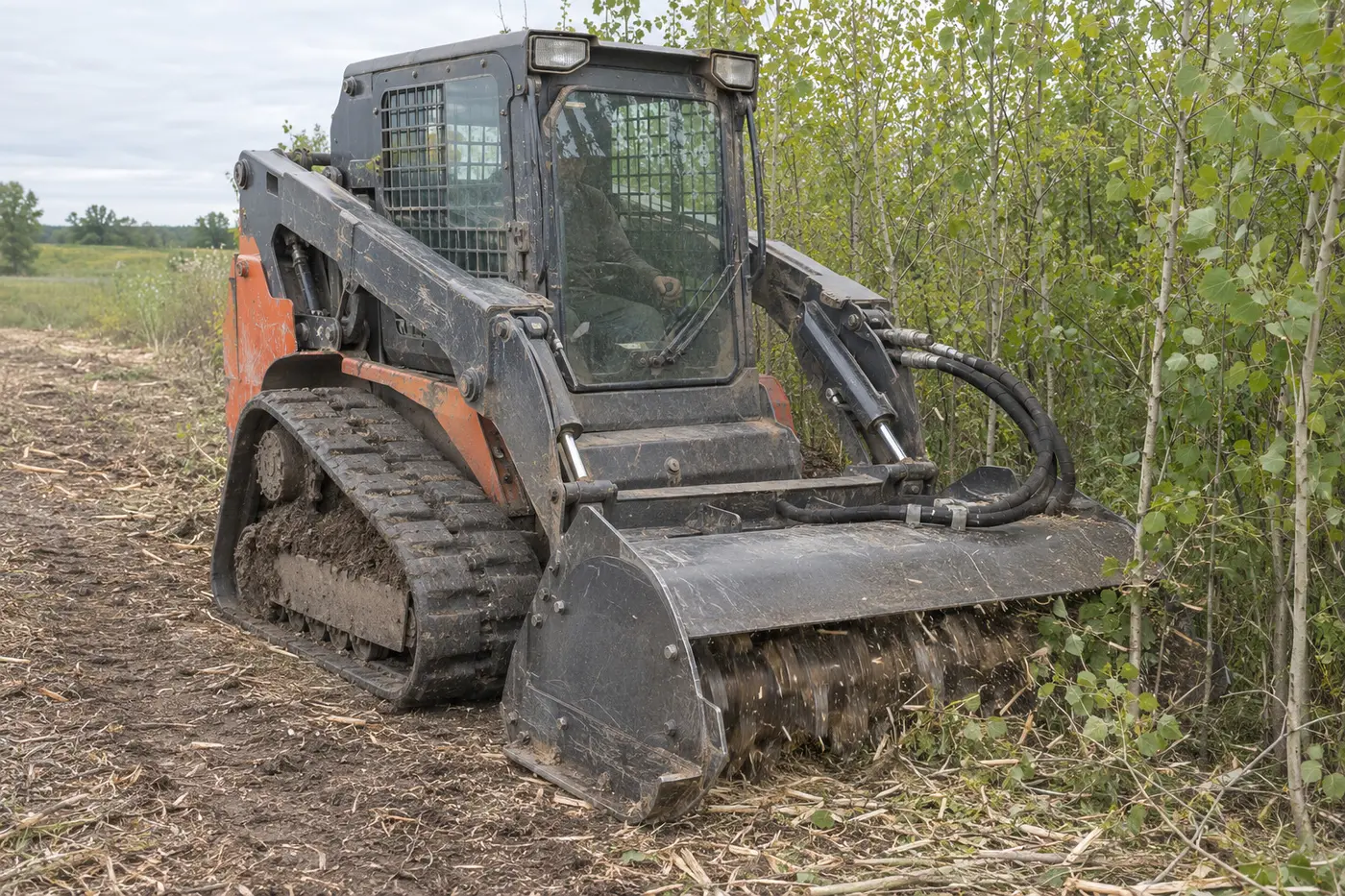
| Forestry mulcher | Spins a large rotary drum or disc with teeth through woody material |
| Cold planer | Turns a heavy milling drum against pavement |
| Stump grinder | Drives a cutter wheel through dense wood and soil |
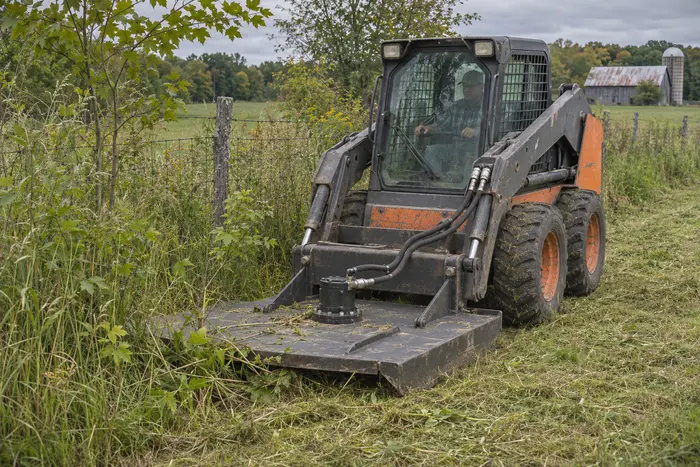
| Large brush cutter | Needs blade speed and torque in thick stems |
| Snow blower (large) | Drives an auger and impeller moving heavy snow volume |
| Wood chipper | Powers a feed system and a heavy chipping drum or disc |
| Large trencher | Drives a chain through hard ground |
| Vibratory roller or compactor (some) | Runs an eccentric vibrator |
Many of those come in a lighter version that works on standard flow. A small brush cutter or compact trencher is an example. The big, production-level versions usually want high flow.
Which attachments do not need high flow?
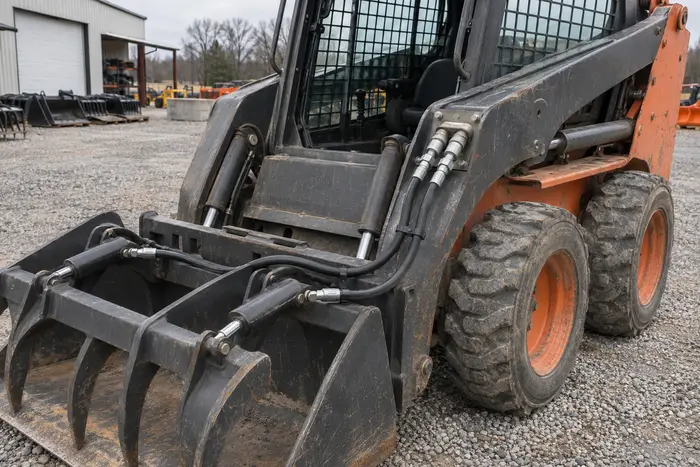
Most of what a skid steer does uses little or no auxiliary flow. Buckets, pallet forks, dozer blades, box graders and many grapples run on cylinder power or a standard circuit. Augers, broom sweepers, log splitters and light-duty post drivers typically work on standard flow too. A skid steer is a flexible tool carrier, and a general reference lists a wide range of tools run from the loader's hydraulic system, including augers, mowers, trenchers, grapples, stump grinders and wood chippers. Which ones you can run depends on the flow your machine delivers.
Do you need high flow on a skid steer?
Only if you plan to use tools that call for it. If your work is moving material, grading, loading pallets and clearing snow with a pusher, standard flow is enough. If you plan to mulch, mill or grind regularly, high flow is the reason to choose a machine with it, or to rent for the one-off job. Buying a high-flow attachment for a standard-flow machine is the costly mistake to avoid.
What happens if you run a high-flow tool on standard flow?
- The cutter or drum spins slower than designed and stalls in thick material.
- Production drops, and the machine works harder for less result.
- Hydraulic oil runs hotter, and parts wear faster.
- The tool may not meet the maker's warranty conditions if it is used outside its rated flow.
The reverse case matters as well. Putting too much flow into a tool built for less can overspeed a motor and damage it. Always stay inside the attachment's stated range.
Checklist: is this attachment right for your loader?
- Find your loader's auxiliary flow and relief pressure in the operator manual.
- Find the attachment's required flow range and pressure from the maker.
- Confirm the numbers overlap, with your loader inside the attachment's range.
- Check the coupler type, and whether a case-drain line is needed.
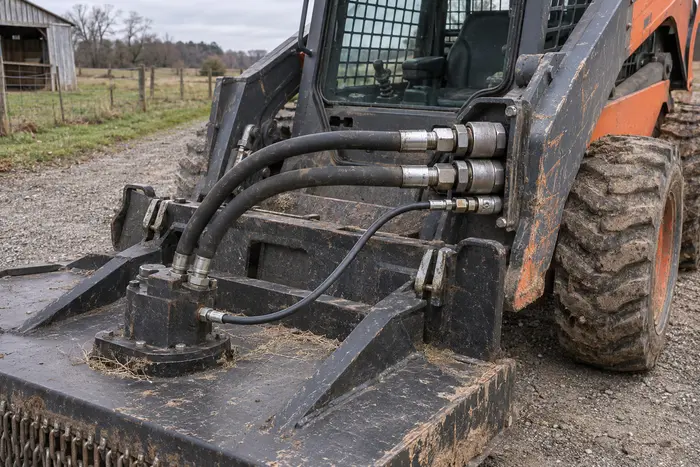
- Check the hose size. Small hoses throttle flow and create heat.
- Confirm the mounting plate matches your loader.
Hose, coupler and case drain details
High-flow work stresses the whole hydraulic path. Larger hoses and flat-face couplers reduce restriction and leaks, which is covered in our guide to flat-face couplers and hoses. Many motor-driven tools also need a return line for leakage. Read what a case drain is on a skid steer if your attachment lists one.
Where to start
Look at the tool first, then the machine. Our pages on skid steer mulchers, cold planers and stump grinders list the tools that usually want the most oil. For lighter work, see skid steer attachments for landscaping.
A note on safety
Spinning tools throw debris and can injure people nearby. Keep bystanders well clear, use the guards and shields the maker supplies, and follow the operator manual and the loader's rated operating capacity. Relieve hydraulic pressure and shut the machine down before you connect or disconnect any hose.
High flow vs standard flow: what changes in daily work
On a standard-flow machine, the auxiliary circuit is plenty for a rotating tool that works mostly with its own weight, like a broom, or for tools that run short bursts, like a log splitter. The circuit is not sized for a cutter that has to hold blade speed against dense wood for hours. High flow changes that. It keeps the drum or disc up to speed when the load hits, so the tool cuts instead of bogging. For a contractor who sells mulching or stump work by the hour, that difference is income. For a landowner who clears one fence line, it is probably not worth buying a machine for.
Do all high-flow machines work the same way?
No. Some loaders boost the auxiliary circuit on demand with a high-flow option, some have a single larger circuit, and some use a switch or a separate coupler. Pressure limits differ as well, and a few attachments are specified for very high pressure, not just flow. That is why the safe move is always to compare two numbers from the maker: the loader's rated auxiliary flow and pressure, and the attachment's required ranges. Our financing guide can help you plan if you are weighing a machine upgrade against renting.
Standard-flow alternatives for light work
If your loader does not have high flow, you are not stuck. Several tools come in lighter, lower-flow versions designed for standard circuits. A smaller brush cutter, for example, handles grass, saplings and light brush at lower flow. Our low-flow brush cutter guide explains where those fit. Snow pushers, land planes and pallet forks usually need no auxiliary flow at all, and many box graders don't either, so they are good first buys for any loader.
Signs your attachment is starved for flow
- Cutter speed drops sharply when the tool enters material.
- Hydraulic oil runs hot after short periods of work.
- The tool works fine in light material but stalls in dense material.
- Hoses vibrate or squeal, which can point to restriction.
If you see these, stop and diagnose. Check hose size, couplers, relief valve setting and the machine's high-flow switch before assuming the attachment is faulty.
Get the right fit the first time
Send us your machine's make, model and year, and a person will check fit against the maker's specs. You approve a delivered price before you pay. Request a fit-checked quote.
Questions buyers ask
What skid steer attachments require high flow hydraulics?
Forestry mulchers, cold planers, stump grinders, large brush cutters, big snow blowers and wood chippers are the usual high-flow tools. They spin heavy drums, discs or augers, which takes more oil per minute. Confirm each tool's required flow with the manufacturer.
What does high flow mean on a skid steer?
High flow means the loader's auxiliary hydraulic circuit delivers more oil per minute than the standard circuit. That extra volume lets a hydraulic motor spin a heavy cutter, drum or auger at working speed. The actual rated flow differs by machine, so read your manual.
Do you need high flow on a skid steer?
Only for tools that call for it. If you mostly move material, grade, lift pallets and push snow, standard flow is enough. If you plan to mulch, mill pavement or grind stumps regularly, high flow is worth having or renting for the job.
Can you run a high-flow attachment on a standard-flow skid steer?
You can often connect it, but it will run slowly and stall in thick material. It also makes more heat and may fall outside the warranty conditions. Match the attachment's flow range to your loader's rated flow before you buy.
Which skid steer attachments do not need high flow?
Buckets, pallet forks, dozer blades, box graders and most grapples need little or no auxiliary flow. Augers, brooms, log splitters and light-duty post drivers typically run on standard flow. Always confirm with the attachment's spec sheet.