Skid steer guide
Skid Steer Attachment Fit: How to Check Before You Buy
Quick answer
To check if an attachment fits your skid steer, confirm five things: the quick-attach plate style, the hydraulic couplers, the flow and pressure the tool needs, the machine's rated operating capacity and the attachment's weight and width. A matching plate alone does not guarantee a fit.
Shopping for this now? Get a fit-checked, delivered quote.
Key takeaways
- A universal-style plate matches the mount, not the hydraulics.
- Check flow, pressure, couplers and case drain for powered tools.
- Weight and reach must stay inside rated operating capacity.
- Ask for a person to confirm the fit before ordering.
Many people assume any attachment with the right plate will work on their skid steer. The plate is only one of five things that decide fit. A tool can bolt on perfectly and still be useless, or unsafe, because of the hydraulics or the weight. Here is a checklist you can use before you order.
Do skid steer attachments fit all brands?
Many skid steers use a standard quick-attach plate, often called universal. That lets many attachments mount to many machines. Skid steer quick-attach systems are credited with making machines easier and safer to use, and some machines also offer automatic attachment changers and automatic hydraulic connections. But a universal plate is only the mounting interface. It says nothing about hydraulic flow, coupler type or whether the tool's weight suits the machine. Read are skid steer attachments universal for more.
The five-point fit check
- Mounting plate. Does the attachment's plate match your quick-attach? Look at the plate type and locking pins.
- Hydraulic couplers and lines. Do the couplers match and are the lines long enough?
- Hydraulic flow and pressure. Does your machine supply what the tool needs?
- Weight and rated operating capacity. Is the combined load inside your machine's rating?
- Size and geometry. Will the tool clear tires, tracks and lift arms? Can you see to work?
Step 1: quick-attach plate
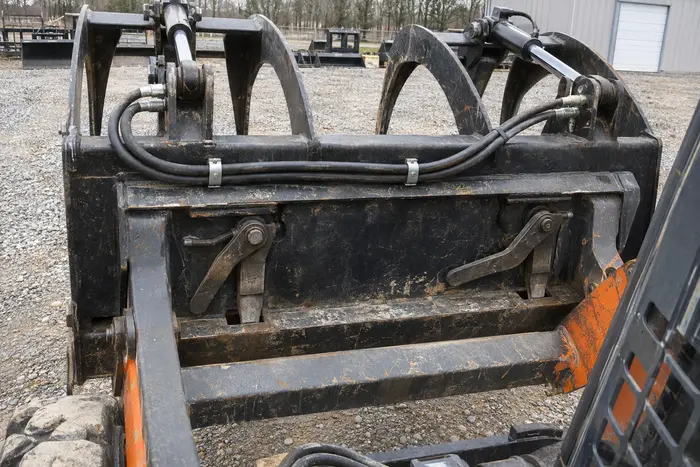
Look at your machine's attach plate and compare it with the attachment's. The plates may look alike but differ in height, locking pin spacing and wedge style. Our quick-attach plate types guide explains the common ones. If the plates do not match, a mounting plate or adapter may bridge the difference. Do not weld or modify a plate without the maker's approval.
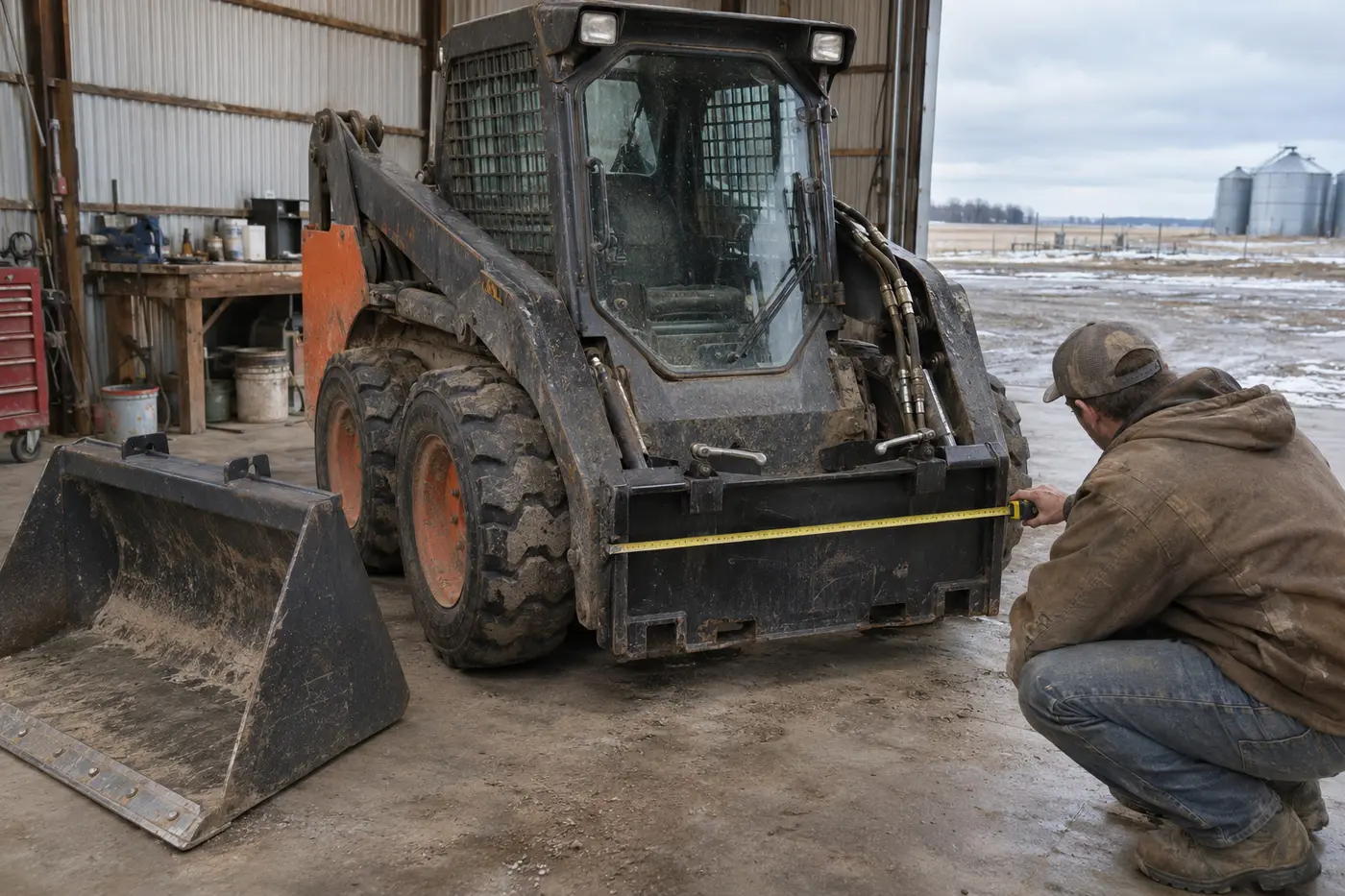
Measure what you can: plate width, plate height, locking pin positions and the spacing between locking pockets. Take photos of the plate on your machine. These help a person confirm fit quickly.
Step 2: hydraulic couplers
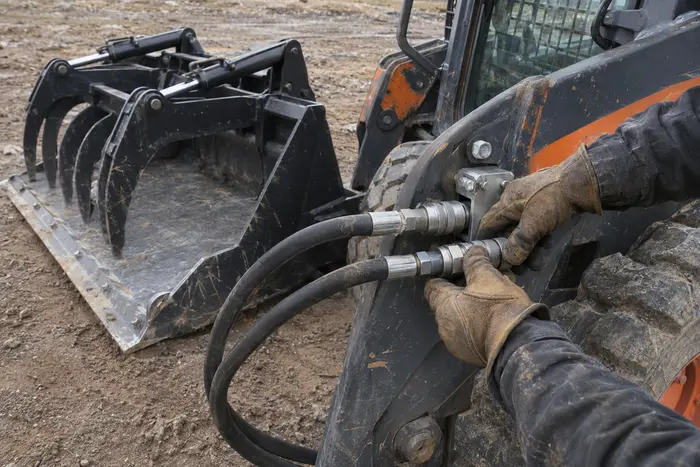
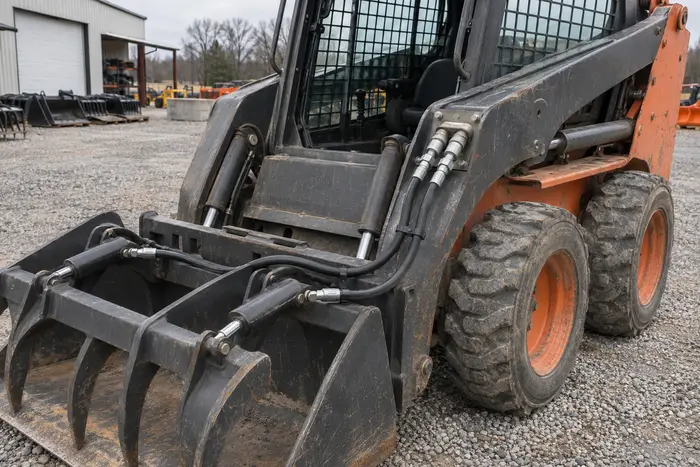
Powered attachments connect through hoses and couplers. Flat-face couplers are common on current skid steers because they keep dirt out and are easier to connect. Older machines and some attachments use other styles or thread sizes. Check the coupler size and style on both the machine and the attachment. If they differ, you can fit adapters, but check that the adapter and hose ratings match the pressure and flow. Read our guide on flat-face couplers and hoses.
Some attachment motors also need a case drain line, which returns internal leakage to the tank. Check whether your machine has a case drain port and whether the attachment needs one.
Step 3: hydraulic flow and pressure
This is where mismatches hurt most. High flow means the machine sends more hydraulic oil to the attachment than standard flow. Tools such as mulchers, some brush cutters and snow blowers may need more flow than a standard-flow machine provides. A tool with too little flow will work slowly. Running a tool above its rated flow can overheat the oil or damage the motor. Find your machine's flow and pressure in the manual. Then compare them with the attachment's recommended range. See skid steer hydraulic flow explained and attachments that need high flow.
Step 4: weight and rated operating capacity
Your machine has a rated operating capacity, a limit on how much it can carry safely. Heavy attachments use up part of that capacity before you lift anything. They also change the balance. A big grapple or a forestry mulcher can push the front axle down hard. Check the attachment's weight, how far its center of gravity sits from the machine and your manual's guidance. Never exceed the rating. See how much can a skid steer lift and skid steer weight and dimensions.
Step 5: size and geometry
Look at the attachment's width, height and reach. Check clearance around the lift arms, tires or tracks and cab. Make sure the bucket or tool can dump or tilt fully without hitting the machine. Make sure you can see the work. A wide tool on a small machine can limit visibility and stability. Our frame class guide helps match tool size to machine class.
What information do you need to check fit?
| Item | Where to find it |
|---|---|
| Make, model, year | Data plate on the machine |
| Serial number | Data plate |
| Rated operating capacity | Operator manual or plate in the cab |
| Auxiliary hydraulic flow and pressure | Operator manual or maker spec sheet |
| Coupler type | Visual check, photos of the couplers |
| Quick-attach type | Photos and measurements of the plate |
| Case drain port | Visual check, manual |
Will skid steer attachments fit tractors and other machines?
Not directly. Tractors, telehandlers and excavators use different mounts and hydraulics. Adapters exist: see telehandler skid steer adapters, excavator skid steer adapters and three-point adapters. Fit, flow and capacity limits still apply. Ask before assuming.
Why a person should confirm fit
Spec sheets are one thing and real machines are another. Older models, options and aftermarket changes can alter plates, hoses and flows. A person who checks the make, model and year against the maker's specs can catch mismatches that a quick glance does not. That is why a person confirms fit on every quote we send, and you see the delivered price before you pay. See also buying attachments online.
Red flags
- A seller who says it fits everything.
- No hydraulic specs listed.
- No weight listed.
- No clear warranty terms.
- No way to talk with a person about your machine.
A worked example
Say you own a mid-size wheeled skid steer and want a hydraulic auger. The plate on the auger matches your quick-attach, so step one passes. Your machine has flat-face couplers and the auger uses the same, so step two passes. The auger's recommended flow range sits inside what your machine supplies, so step three passes. The auger and a loaded bit weigh well under your machine's rated operating capacity, so step four passes. The auger's torque head clears the tires when you tilt it, so step five passes. That is a fit. Change one fact, for example a tool that needs high flow on a standard-flow machine, and the answer changes. That is why all five checks matter.
Mini skid steers and compact machines
Compact machines add another limit: small hydraulic output and low capacity. A tool built for a full-size loader will not work well on a mini. Use attachments designed for the class. Our mini skid steer guide explains more.
After you install
- Seat the attachment fully and confirm both locking pins are engaged. Tug test the attachment.
- Connect hoses and check for leaks at the couplers.
- Run the function slowly at low idle first.
- Check for hose rubbing and pinch points through the full range of movement.
- Stay inside rated operating capacity and follow the operator manual.
Get the right fit the first time
Fit is the one thing a person checks by hand on every quote. Send us your machine make, model and year and what you plan to do with it. A person checks the fit against the maker specs, and you see the delivered price before you pay. When you are ready, request a fit-checked quote.
Questions buyers ask
Do skid steer attachments fit all brands?
Many use a standard quick-attach plate, so they can mount to many machines. But hydraulic couplers, flow, weight and machine size also decide fit. A matching plate does not guarantee the attachment will work properly or safely.
How do I know if an attachment fits my skid steer?
Check the quick-attach plate, hydraulic couplers, flow and pressure needs, weight against rated operating capacity, and size clearances. Gather your make, model, year and photos, and have a person confirm the match against the specs. Specs vary by model, so confirm the details before you buy.
What are skid steer hydraulic fittings?
They are the couplers and hoses that connect a powered attachment to the machine's auxiliary hydraulics. Flat-face couplers are common on current machines. Some motors also need a case drain line. Match sizes and styles on both sides.
Will skid steer attachments fit a tractor?
Not directly. Tractors use different mounts and hydraulic setups. Adapters can help, but flow, weight and balance limits still apply. Check with a person before you buy an attachment for a different machine type. If you are unsure, a person can check it against your machine's specs.
What information is needed to check attachment fit?
Make, model and year of your machine, its serial number, rated operating capacity, auxiliary hydraulic flow and pressure, coupler type and photos of the quick-attach plate. With these, a person can check fit against specs. Ask for a fit check if you are not certain about your setup.