Skid steer guide
How Much Can a Skid Steer Lift? ROC Explained
Quick answer
How much a skid steer can lift is set by its rated operating capacity (ROC), which the maker publishes for each model. It is a fraction of the weight that would tip the machine. Attachments, forks, lift height and load position all reduce what you can safely carry, so always check the manual.
Shopping for this now? Get a fit-checked, delivered quote.
Key takeaways
- Rated operating capacity (ROC) is the number that matters, not tipping load.
- Capacity drops as the load goes higher or farther forward.
- Forks and heavy attachments eat into usable capacity.
- Radial lift and vertical lift loaders behave differently.
There is no single answer to how much a skid steer can lift. Machines range from small units to large frames, and each one has its own published number. What matters is the figure the maker gives for your model, and how your attachment and load change it. This guide explains the terms so you can read the data plate and avoid overloading.
What is rated operating capacity?
Rated operating capacity, or ROC, is the maker's stated maximum load the machine can carry safely under normal conditions. It is set well below the weight that would tip the machine forward. The gap is the safety margin for bumps, slopes, uneven ground and moving loads. Never confuse ROC with tipping load, which is where the rear wheels or tracks leave the ground.
The ROC is on the machine's data plate and in the operator manual. Use that figure for planning. The exact percentage of tipping load depends on the machine type and the standard the maker uses, so read the manual rather than relying on a rule of thumb.
How much weight can a skid steer lift?
The range is wide. For perspective, the very first machine of this type in 1958 listed a 750-pound lift capacity, and later early models had a rated operating capacity of 1,100 pounds. Modern machines are far stronger across all size classes, from mini loaders to large-frame track machines. Our guide to skid steer sizes and frame classes shows how makers group them. For a specific number, read your model's data plate.
Why lift capacity changes during a lift
Capacity is not constant. It changes as the load moves:
- Higher is less stable. Raising the arms moves the load's center of gravity up and forward.
- Farther forward is less stable. A longer reach puts more tipping moment on the front.
- Uneven ground reduces it. Slopes and soft ground reduce the safe margin.
- Moving loads add force. Braking, turning and bouncing add stress.
The ROC is a rating at a defined condition. In real work, drop the load low before you travel, and stay well inside the limit.
Radial lift vs vertical lift
The two arm designs behave differently. On radial lift machines, capacity and stability are best with the arms fully down, and stability falls as the arms reach mid-height. Most vertical lift machines keep more constant stability as the arms rise from fully lowered to fully raised. That makes vertical lift popular for loading trucks and placing pallets high, and radial lift popular for digging and grading near the ground.
| Design | Strength | Consideration |
|---|---|---|
| Radial lift | Strong near ground; good for digging and grading | Stability falls at mid-height |
| Vertical lift | More constant stability as arms rise; good for loading | More complex linkage; usually costs more |
How much can a skid steer lift with forks?
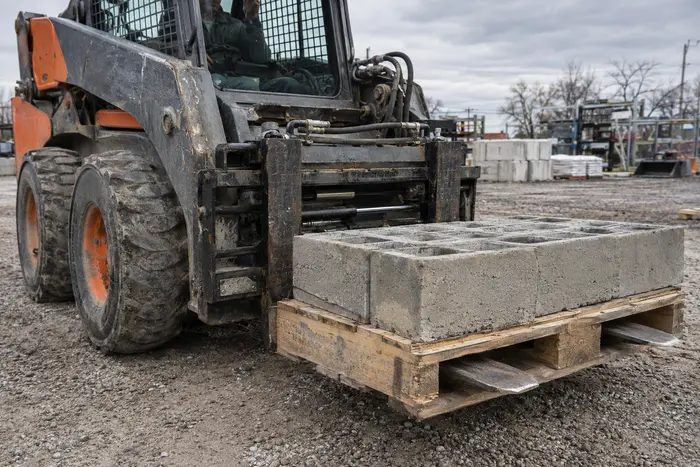
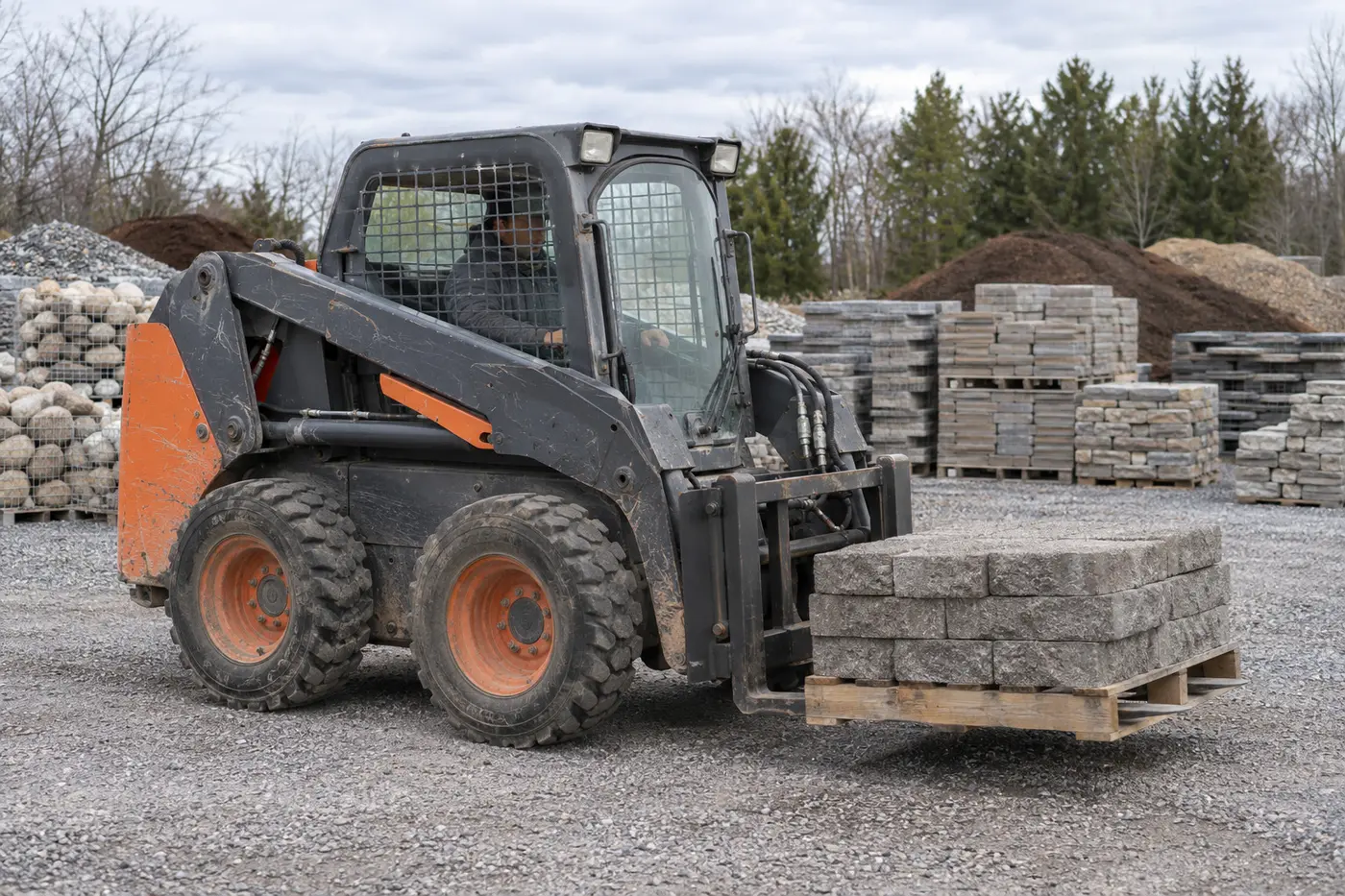
Forks put the load farther in front of the machine than a bucket does. That longer reach means you cannot lift the full ROC. The pallet fork's own weight also counts against the capacity, and the load center is further out. Check the maker's guidance for fork use on your machine, then subtract the fork weight and keep the load low and tilted back. Our guide to pallet fork weight capacity goes through it step by step, and the pallet forks category shows common types.
How much can a mini skid steer lift?
Mini skid steers carry less than full-size machines, and they are made for tight spaces rather than heavy loads. Their ROC is on the data plate, and the same rules apply: stay inside the rating, keep the load low and avoid slopes. See our mini skid steer guide.
Do attachments reduce capacity?
Yes. A heavy attachment weighs on the arms before you pick up anything. Grapples, mulchers, snow blowers and backhoes can be heavy, and they sit out front. Subtract the attachment's weight from what the machine can carry, and consider the changed balance. A wide bucket with a full load of wet material can exceed the ROC faster than you expect, because dirt and rock weigh more than they look.
A quick checklist before you lift
- Find the ROC on the data plate or in the manual.
- Estimate the load weight, then add the attachment's weight.
- Check the load stays within the ROC with margin.
- Keep the load low and tilted back while traveling.
- Drive slowly on level ground, and avoid side slopes.
- Use the seat belt and keep the restraint bar down.
- Keep people out of the lift and travel path.
Counterweights and tires
Some makers offer approved counterweight kits for certain models, and tire choice affects both grip and balance. Use only kits the maker approves for your machine. Foam-filled tires add weight and puncture resistance, but they do not raise the rated operating capacity. Our guide on foam-filled vs solid tires covers the tradeoffs. Any change to weight distribution can alter the rating, so check with the maker before you modify a machine.
What if you need to lift more?
If the job is regularly near the limit, step up to a larger frame or use a telehandler or forklift rated for it. Pushing a skid steer past its rating is how tip-overs happen. A bigger machine is cheaper than a repair or an injury.
Common lifting mistakes
- Reading the tipping load as if it were the working limit.
- Forgetting that wet soil, gravel and concrete weigh more than they look.
- Driving with the load raised.
- Lifting on a slope or soft ground with a full bucket.
- Using forks or a spear without checking the reduced capacity.
If you ever feel the rear of the machine get light, lower the load right away and reduce what you carry next time.
Where to find the numbers
Your machine's rated operating capacity is on the data plate, usually near the operator's seat or on the frame, and in the operator manual. If the plate is missing or unreadable, contact the maker with your serial number rather than guessing. Attachment weights are on the attachment's own plate or spec sheet. Add the numbers together before you lift, and write the total on a card in the cab if you often use the same combination.
When in doubt, split the load. Two trips with half the weight are safer than one risky lift, and you travel more smoothly without the near-tip moments that damage machines and nerves.
If you often lift pallets or loose material, look at pallet forks and buckets sized for your machine, and check their weight against your rating first.
Get the right fit the first time
Send us the make, model and year of your machine and what you plan to do with it. A person checks fit against the maker's specs, and you approve a delivered price, freight included, before you pay. The manufacturer ships direct. Start here: get a fit-checked quote.
Questions buyers ask
how much weight can a skid steer lift
It depends on the model. The maker publishes a rated operating capacity (ROC) on the data plate and in the manual. It is set well below the tipping load. Attachments, forks, lift height and uneven ground all reduce what you can carry safely.
how much can a skid steer lift with forks
Less than the full rated operating capacity, because forks hold the load farther forward and add their own weight. Subtract the fork weight, keep the load low and tilted back, and follow your manual. Check the maker's guidance for forks on your model.
how much can a mini skid steer lift
Mini skid steers lift less than full-size machines, and the limit is the rated operating capacity on the data plate. They are built for tight access, not heavy loads. Stay inside the rating and keep loads low.
what is rated operating capacity on a skid steer
It is the maximum load the maker says the machine can carry safely under normal conditions. It is set below the tipping load to give a safety margin. Find it on the data plate or in the operator manual.