Skid steer guide
How Much Does a Skid Steer Weigh? Weight by Size Class
Quick answer
How much does a skid steer weigh? Small frame machines run roughly 3,000 to 6,000 pounds, mid-frame machines about 5,000 to 7,000 pounds, and large-frame machines 7,000 pounds and up, some past 10,000. Tracks add weight over wheels. Always use the operating weight on the machine's data plate, then add the attachment and trailer.
Shopping for this now? Get a fit-checked, delivered quote.
Key takeaways
- Operating weight climbs with frame size: roughly 3,000 to 6,000 lb small, 5,000 to 7,000 lb mid, 7,000+ lb large.
- Operating weight is not the same as rated operating capacity, which is the load the bucket can carry.
- Attachments, fluids, cab options and tracks all add weight to the number in a brochure.
- Add the machine, the attachment and the trailer before you check a truck or bridge limit.
The short answer to how much does a skid steer weigh is "it depends on frame size." Published size-class guides put small machines at roughly 3,000 to 6,000 pounds, mid-size machines at roughly 5,000 to 7,000 pounds, and large-frame machines above 7,000 pounds, with some heavy-duty models past 10,000 pounds. This guide shows what drives those numbers and how to use them.
Skid steer weight by size class
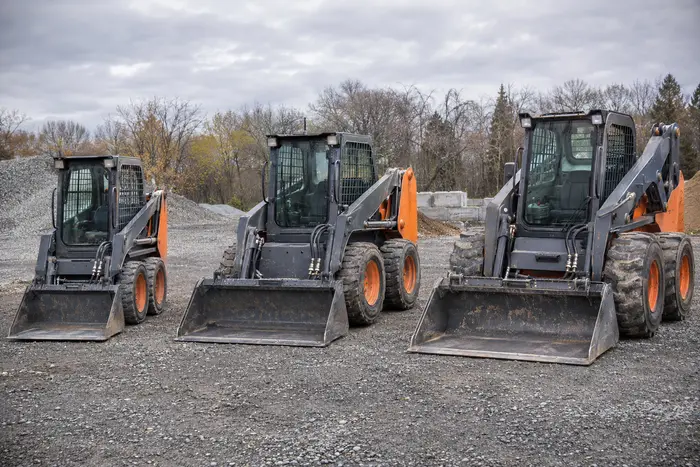
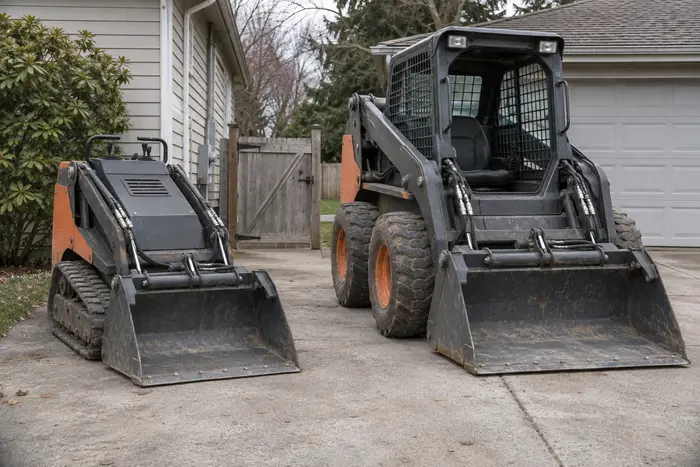
Operators sort skid steers into small, medium and large frames. The figures below are ranges quoted in published size guides, not a spec for any one machine. Treat them as a planning range and confirm the real number on your machine.
| Size class | Typical operating weight | Typical rated operating capacity |
|---|---|---|
| Small frame | About 3,000 to 6,000 lb | Roughly 700 to 1,750 lb |
| Medium frame | About 5,000 to 7,000 lb | Roughly 1,300 to 2,700 lb |
| Large frame | 7,000 lb and up, some over 10,000 lb | Roughly 2,200 lb and up |
The ranges overlap because different guides draw the lines in slightly different places. One rental-industry guide, for example, puts medium-frame machines at 5,000 to 6,000 pounds with a rated capacity of 1,300 to 1,900 pounds. Another puts the medium class at 6,000 to 7,000 pounds. Neither is wrong. The class boundaries are informal.
What is operating weight, and how is it different from lift capacity?
Operating weight is the weight of the machine ready to work: fluids, operator, and the standard configuration. It is the number you use for trailers, ramps, floors and soft ground.
Rated operating capacity, or ROC, is how much the machine can safely carry in the bucket. It is set as a fraction of the tipping load. On wheeled skid steers it is typically about half of the tipping load. Compact track loaders are commonly rated at a lower share, often 35 percent. A machine with a small ROC can still be heavy, and a heavy machine does not always have a big ROC. Read both lines on the spec sheet. We go deeper on that in our guide on how much a skid steer can lift.
How much does a skid steer weigh with tracks?
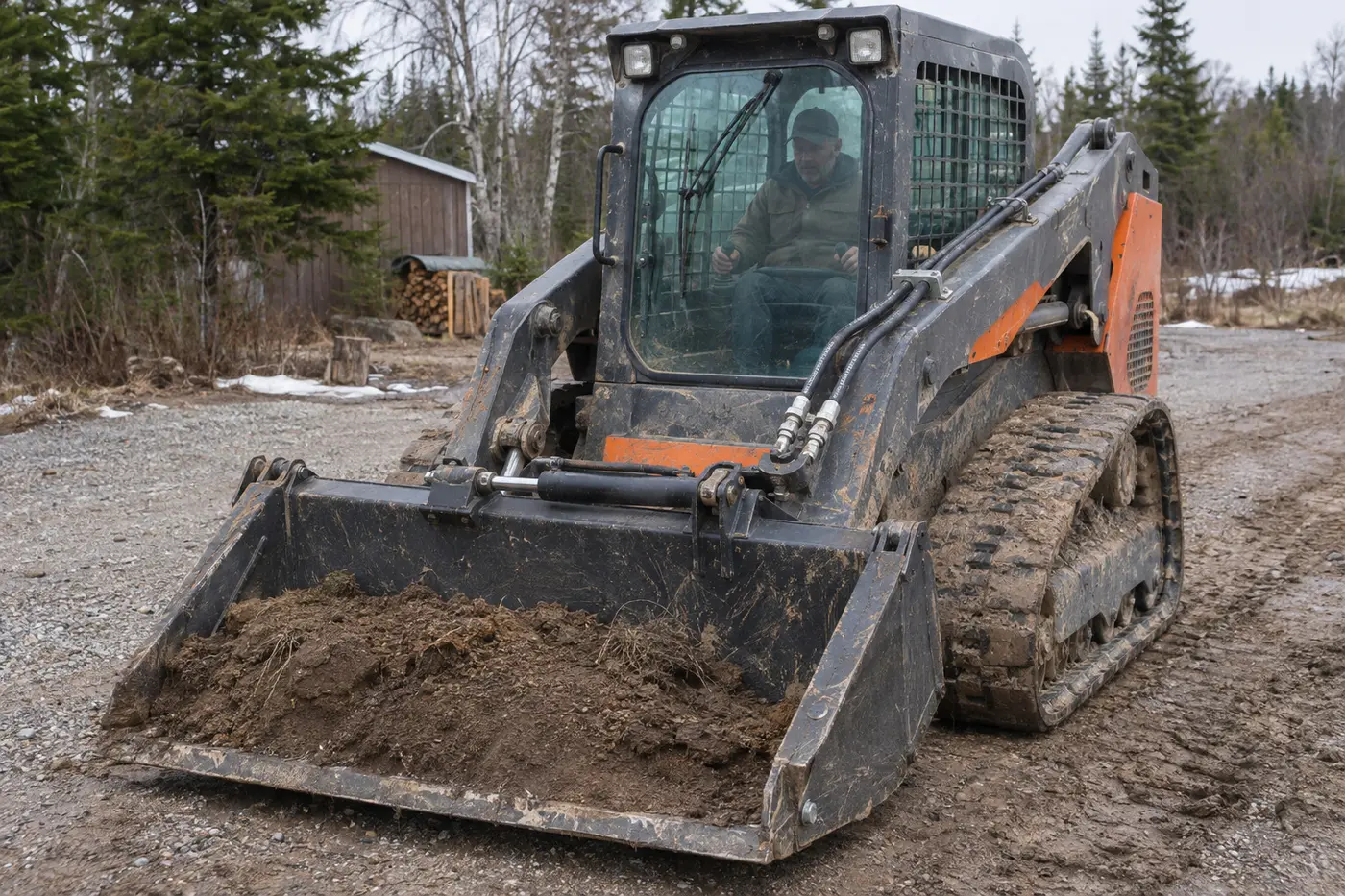
A compact track loader is a close cousin of the skid steer. It rides on rubber tracks instead of tires. Tracks and the undercarriage add steel and rubber, so a track machine is usually heavier than a wheeled machine of similar frame size. The extra weight spreads over a larger contact patch, which is why track machines float better on soft ground. The trade-off is a heavier trailer load.
Foam-filled or ballasted tires add weight to a wheeled machine too. If the owner has added a rear counterweight, a heavier tire fill, or a closed cab with heat, add that to the brochure figure.
How much does a skid steer weigh with a trailer?
People searching this usually need a hauling number. Do the math in four lines and write it down:
- Machine operating weight from the data plate or operator manual.
- Weight of the attachment on the machine, plus any attachment you are hauling separately.
- Trailer empty weight (the sticker on the trailer frame).
- Anything else on the deck: fuel cans, chains, tools, a second attachment.
Add all four. Compare the total to the tow vehicle's rated tow capacity and to the trailer's gross vehicle weight rating, not just the axle sticker. Check the tongue weight too. If any number is missing, weigh the rig on a public scale. A skid steer that is "about 6,000 pounds" on paper can ride closer to 7,000 once it carries a heavy attachment.
Kilograms and tons
Other searches ask for kilograms or tons. Convert pounds to kilograms by dividing by 2.2. Small-frame machines are then roughly 1,400 to 2,700 kg, and large-frame machines over roughly 3,200 kg. A short ton is 2,000 pounds, so a 6,000 pound skid steer is about 3 short tons. A metric tonne is about 2,205 pounds. Spec sheets in Canada often list kilograms, so confirm which unit you are reading.
Skid steer dimensions to check next to the weight
Weight is half the story. Before you buy an attachment or load the machine on a trailer, also check:
- Overall length without the bucket and with it. An attachment can add a foot or more of reach.
- Width over the tires or tracks. This decides whether it fits through a gate or between fence posts.
- Height to the top of the cab. Matters for garage doors, low trailers and overhead lines.
- Hinge pin height and dump clearance. Decides whether you can load a truck bed.
- Turning footprint. A skid steer turns on the spot, but tail and bucket still swing.
Our guide to skid steer sizes and frame classes explains how these measurements line up with the small, medium and large labels.
Why weight matters when you buy an attachment
An attachment moves the machine's center of gravity forward. A heavy attachment lowers the safe carrying capacity because the weight of the attachment counts against the ROC. A heavy grapple, snow pusher or mulcher can leave little capacity for the material you plan to carry. Check three things:
- Attachment weight against the machine's rated operating capacity.
- Hydraulic flow and pressure the attachment needs.
- The mounting standard on both sides, which for most machines is the universal skid steer quick attach plate.
If you are shopping for a heavier tool, browse our skid steer buckets or pallet forks and compare weights to your machine's capacity.
Common mistakes when using skid steer weight
Most weight errors come from using the wrong number. Watch for these.
- Using a brochure number for a loaded rig. Brochure weights are for a standard configuration. Add the attachment, the extra fuel, any counterweight and the operator.
- Mixing up operating weight and shipping weight. Shipping weight can leave out fluids. Operating weight is the safer number for hauling.
- Trusting a used machine's sticker. If a previous owner added ballast, a cab or foam-filled tires, the sticker may no longer match the machine. If in doubt, weigh it.
- Ignoring the ramp and the deck. A trailer deck and ramp have their own ratings. A rated trailer with weak ramps is still a risk.
- Forgetting soft ground. A wheeled machine can sink on wet soil or a thin driveway slab. A track machine spreads its weight and often handles it better.
When the numbers are tight, move up one trailer class rather than shaving the margin. It costs little compared with a failed hitch or a bent ramp.
A quick weight checklist before you haul or buy
- Find the operating weight on the data plate or in the operator manual.
- Note whether the machine runs wheels or tracks.
- List every attachment you will carry and its weight.
- Add the trailer's empty weight and anything else on the deck.
- Compare the total to the tow vehicle rating, the hitch rating and the trailer's gross rating.
- Check the route for bridge or road posting limits if the load is heavy.
Get the right fit the first time
Send us your machine's make, model and year and we will check the fit against the maker's specs. A person confirms it, you see a delivered price before you pay, and the supplier ships direct. Ready? Get a fit-checked quote.
Questions buyers ask
How much does a skid steer weigh on average?
There is no single average, but published size guides put small machines at about 3,000 to 6,000 pounds, mid-size at about 5,000 to 7,000 pounds, and large-frame machines above 7,000 pounds. Check the data plate on your own machine, since tracks, cab and ballast change the number.
How much does a skid steer weigh in tons?
Divide the pounds by 2,000 for short tons. A 6,000 pound machine is about 3 short tons. A large-frame machine over 7,000 pounds is 3.5 short tons or more. A metric tonne is about 2,205 pounds, so check which unit a spec sheet uses.
How much does a skid steer weigh with tracks?
A track loader is normally heavier than a wheeled machine of the same frame size because of the undercarriage. The weight spreads over a larger area, so ground pressure is lower. Use the operating weight listed for that exact configuration, not a wheeled figure.
How much does a skid steer weigh with a trailer?
Add the machine's operating weight, the attachment, any extra gear, and the empty trailer weight. Compare that total with the tow rating and the trailer's gross weight rating. If the figures are unclear, weigh the loaded rig on a public scale before you drive.
Is skid steer operating weight the same as lift capacity?
No. Operating weight is how heavy the machine is. Rated operating capacity is how much it can safely carry, and it is set as a fraction of the tipping load. A heavier machine usually has a higher capacity, but read both numbers on the spec sheet.