Skid steer guide
Skid Steer Flat Face Couplers: Sizes, Hoses and Fit
Quick answer
Skid steer flat face couplers are quick-connect hydraulic fittings with a flush, valve-in-the-face design that limits oil loss and keeps dirt out. Many follow the ISO 16028 interchange standard. To match them, check the body size, thread type and flow rating on both the machine and the attachment hoses, and add a case drain line where needed.
Shopping for this now? Get a fit-checked, delivered quote.
Key takeaways
- Flat face couplers have a flush face that wipes clean and spills little oil.
- Body size, thread type and flow rating must match from machine to attachment.
- Mini and small machines often use smaller bodies than full-size loaders.
- A hydraulic motor attachment often needs a third line, the case drain.
- If couplers are hard to connect, trapped pressure is usually the cause.
A skid steer attachment is only as good as its hydraulic connection. If the couplers do not match, the attachment will not work, or it will leak, or it will run hot. Flat face couplers are the standard quick-connect fitting on most modern skid steers. This guide explains what they are, how sizes work, and what to check so the hoses on your attachment actually connect to your machine.
What are flat face couplers?
A flat face coupler is a hydraulic quick-connect with a flush, flat surface on each half. The valve sits right at the face. When you disconnect, the valve closes and the faces are flat, so there is very little fluid loss and dirt has less room to hide. Flat face couplers are easy to wipe clean before you connect. That matters because hydraulic systems hate dirt. The commonly used standard for this style is ISO 16028.
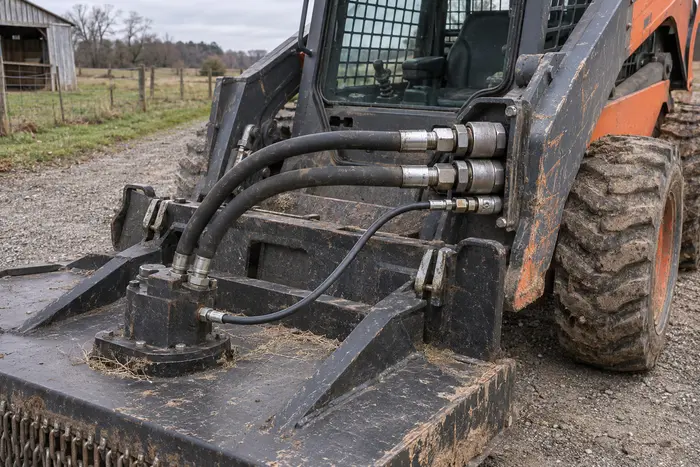
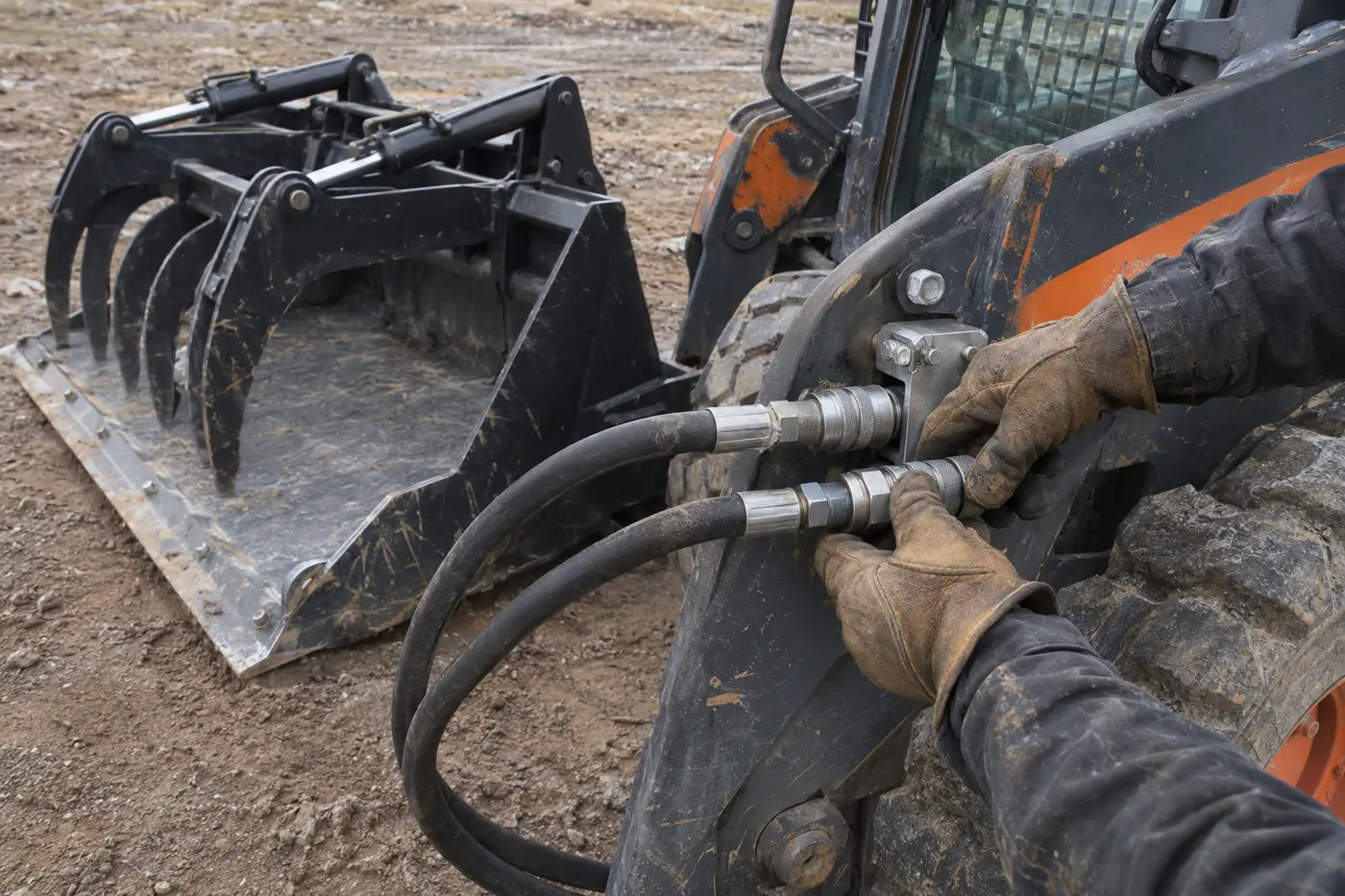
On a skid steer, the couplers usually sit near the front of the lift arm or near the cab. The attachment hoses end in the matching halves. A flat face coupler set has two halves: a male half (also called the plug or nipple) and a female half (the body or socket).
How do flat face hydraulic couplers work?
Each half has a spring-loaded valve. When the halves connect, the valves open against each other and the oil flows through. When you disconnect, the valves close so the oil stays in the hose. The locking mechanism is usually a ball or sleeve type. Pushing the halves together locks them, and pulling back a sleeve or collar releases them.
What sizes of flat face couplers are there?
Couplers are sized by body size, which roughly follows the hose and port size. Flat face ISO 16028 couplers come in a range of body sizes, commonly from 1/4 inch up to 2 inch, including 3/8, 1/2, 5/8, 3/4 and 1 inch. The general pattern is simple: a bigger body carries more oil flow with less pressure loss.
| Body size | What it generally suits |
|---|---|
| Smaller bodies (1/4 and 3/8 inch) | Low-flow circuits, small machines, case drain and control lines |
| Mid bodies (1/2 and 5/8 inch) | Standard-flow attachment circuits on many skid steers |
| Larger bodies (3/4 inch and up) | High-flow circuits and heavy-duty attachments |
This is a general guide, not a rule for any one machine. Makers differ, and the size on your loader may not be the one you expect. Always check the operator manual and the hose ends on the attachment. Mini machines tend to have lower flow than full-size loaders, so their couplers and attachment hoses are usually sized to match. Never assume a full-size attachment's hose ends will fit a mini machine, or the other way round.
What do you need to match?
- Body size. Both halves must be the same body size to connect.
- Thread type and size. The end of the coupler threads into the hose or machine port. Types include NPT, BSP, SAE O-ring, ORFS and JIC. Thread type and size must match the fitting they screw into.
- Flow rating. A coupler has a maximum flow. If your attachment needs more flow than the coupler is rated for, you get pressure loss, heat and wasted power. Large flow needs a larger body.
- Pressure rating. The working pressure of the coupler must be above the system pressure.
- Gender. The male half goes on one side and the female half on the other. The convention is usually the same on the machine and on the attachment, but check yours before you replace anything.
- Standard. Most skid steers use flat face, but some older machines or farm equipment use poppet-style ISO couplers with a different face. They do not mix.
What is a case drain, and why is it a third line?
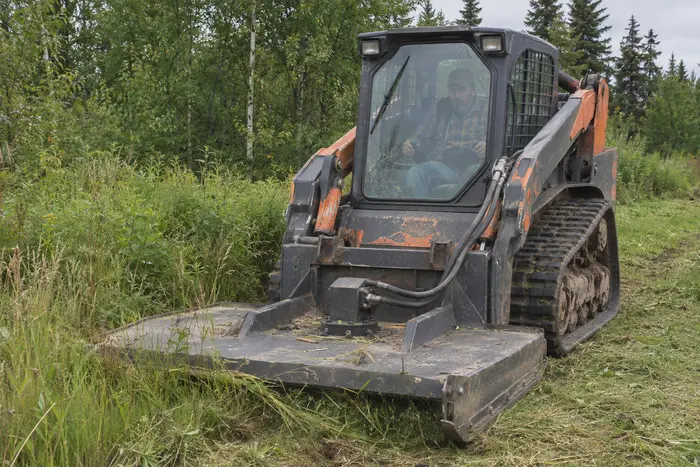
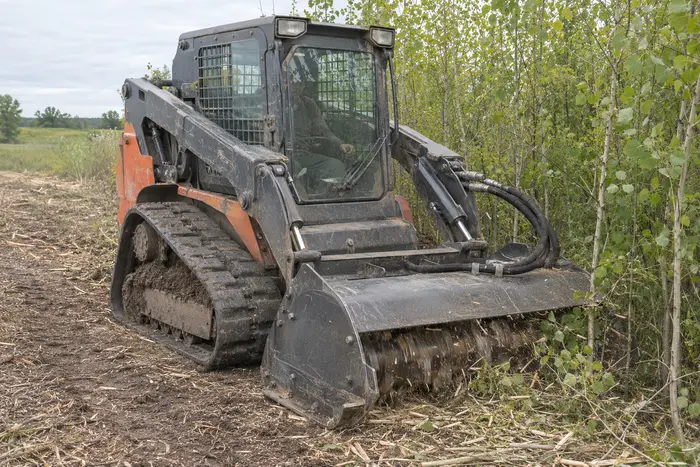
Many attachments run on a hydraulic motor. A motor with a shaft seal cannot take full system back pressure on its case. A case drain is a separate low-pressure line that returns leaking oil from the motor housing straight to the tank. Without it, the shaft seal can blow out. Motor-driven attachments such as mulchers, brush cutters and some augers often have a third hose with a smaller coupler for the case drain. If your machine has a case drain port, hook it up. See our guide on the case drain on a skid steer.
Why are flat face couplers hard to connect?
This is a very common complaint, and trapped pressure is the usual cause. Heat makes oil expand in a closed hose, and the pressure can hold the valve shut. You cannot push the halves together by hand. To fix it:
- Shut off the engine and relieve pressure following your operator manual.
- Move the auxiliary control back and forth to release trapped pressure in the lines. Some machines have a pressure release switch.
- Wipe both faces clean before you connect.
- Push straight in, without angling the halves.
Some people use a hand-held pressure release tool for stubborn couplers. If a coupler still will not connect, replace it. Worn or damaged couplers also resist.
What hose do you need?
Match the hose to the pressure and flow of the system. The hose has a rated working pressure and a minimum bend radius, and the end fittings have to match the coupler threads. Do not guess. Use hose assemblies rated for your system's pressure, and replace any hose that is cracked, rubbed through or leaking. Keep hose lengths reasonable and route them so they are not pinched or stretched when the lift arms move.
How do you keep couplers clean and leak-free?
- Cap or plug every coupler when it is not in use.
- Wipe the faces before every connection.
- Look for seeping around threads and O-rings.
- Replace couplers that leak or have damaged faces.
- Never try to tighten a hydraulic fitting while the system is under pressure.
- Wear eye protection. Hydraulic oil under pressure can penetrate skin, so never check for leaks with your hands. An injection injury needs medical help right away, even if the wound looks small.
Which attachments depend on the right couplers?
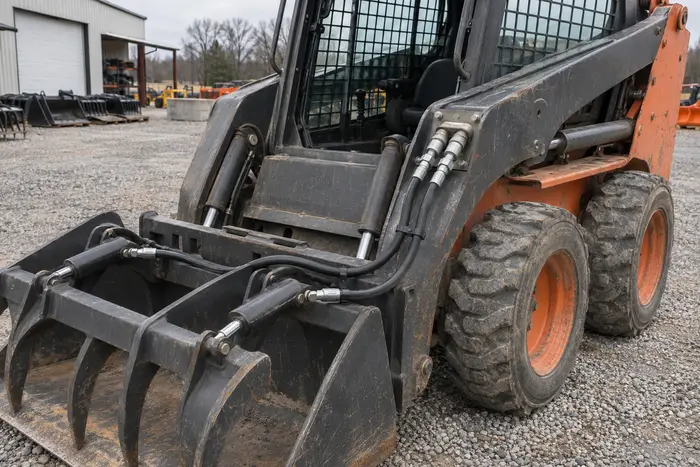
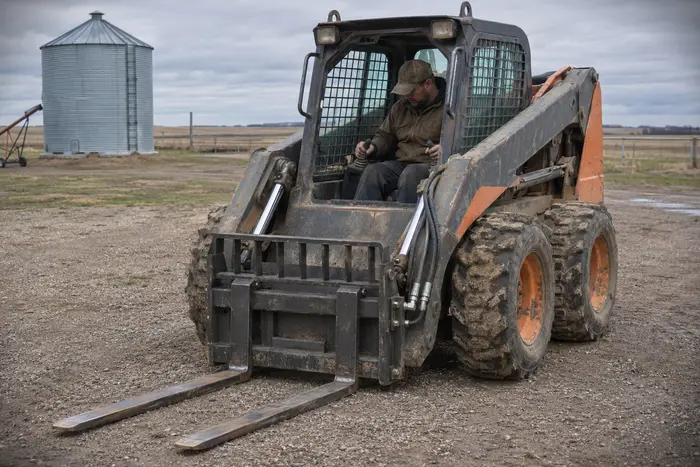
Any attachment with a hydraulic cylinder or motor. That includes augers, mulchers, grapples, brooms, snow blowers and cold planers. Smaller machines pair with mini skid steer augers and similar tools. For the flow side of the story, read skid steer hydraulic flow explained.
Get the right fit the first time
Coupler size, hose ends and flow rating all have to match before an attachment works properly. Send us your machine's make, model and year. We will confirm fit, including coupler and hose requirements, against the manufacturer's specs and give you a delivered price to approve before you pay. Start with a fit-checked quote.
Questions buyers ask
What size flat face coupler does my skid steer use?
It depends on the machine and its flow. Many small and medium skid steers use 1/2 inch bodies, mini machines often use smaller bodies, and large or high-flow machines may use 5/8 or 3/4 inch. Check your operator manual and the hose ends on your attachment to be sure.
Why are my flat face hydraulic couplers hard to connect?
Trapped pressure is the usual cause. Heat expands oil in a closed hose and holds the valve shut. Shut off the engine, move the auxiliary control to relieve pressure, wipe the faces clean and push straight in. Replace couplers that are worn or damaged.
Do all skid steers use the same flat face couplers?
Most use flat face couplers, often built to ISO 16028, but body size, thread type and flow rating vary by machine. Some older machines use other coupler styles. Match the body size, threads and rating on both the machine and the attachment before you buy.
What is the third hose on my skid steer attachment?
It is usually the case drain, a low-pressure return line from the hydraulic motor housing straight to the tank. It protects the motor's shaft seal from back pressure. Mulchers, brush cutters and some other motor-driven tools need it, so connect it to the machine's case drain port when the attachment has one.
Can I use flat face couplers on a mini skid steer?
Yes. Many mini skid steers use flat face couplers in smaller body sizes. Check the manual for the body size, thread type and flow rating. Attachments for mini loaders are made to suit their lower flow, so do not assume a full-size attachment's hoses will connect.