Mini skid steer guide
Mini Skid Steer Guide: Size, Weight, Width and Uses
Quick answer
A mini skid steer is a compact loader, narrow enough for gates and backyards, that runs hydraulic attachments such as buckets, augers and trenchers. Its weight, width and lifting capacity are well below a full-size skid steer, so check each spec against the jobs and the trailer you will use.
Shopping for this now? Get a fit-checked, delivered quote.
Key takeaways
- Mini skid steers fit gates, backyards and tight job sites that bigger machines cannot reach
- Weight and width matter for transport, ground damage and where you can work
- Lifting and hydraulic limits are lower than full-size machines
- Many attachments exist, but check flow and coupler fit
- Stand-on and walk-behind styles differ in comfort and use
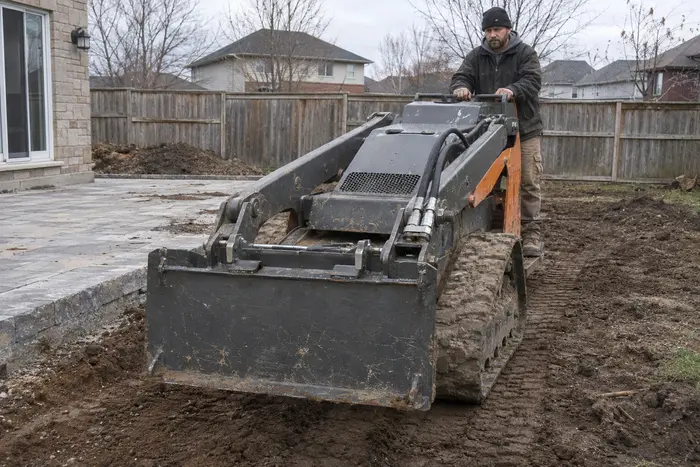
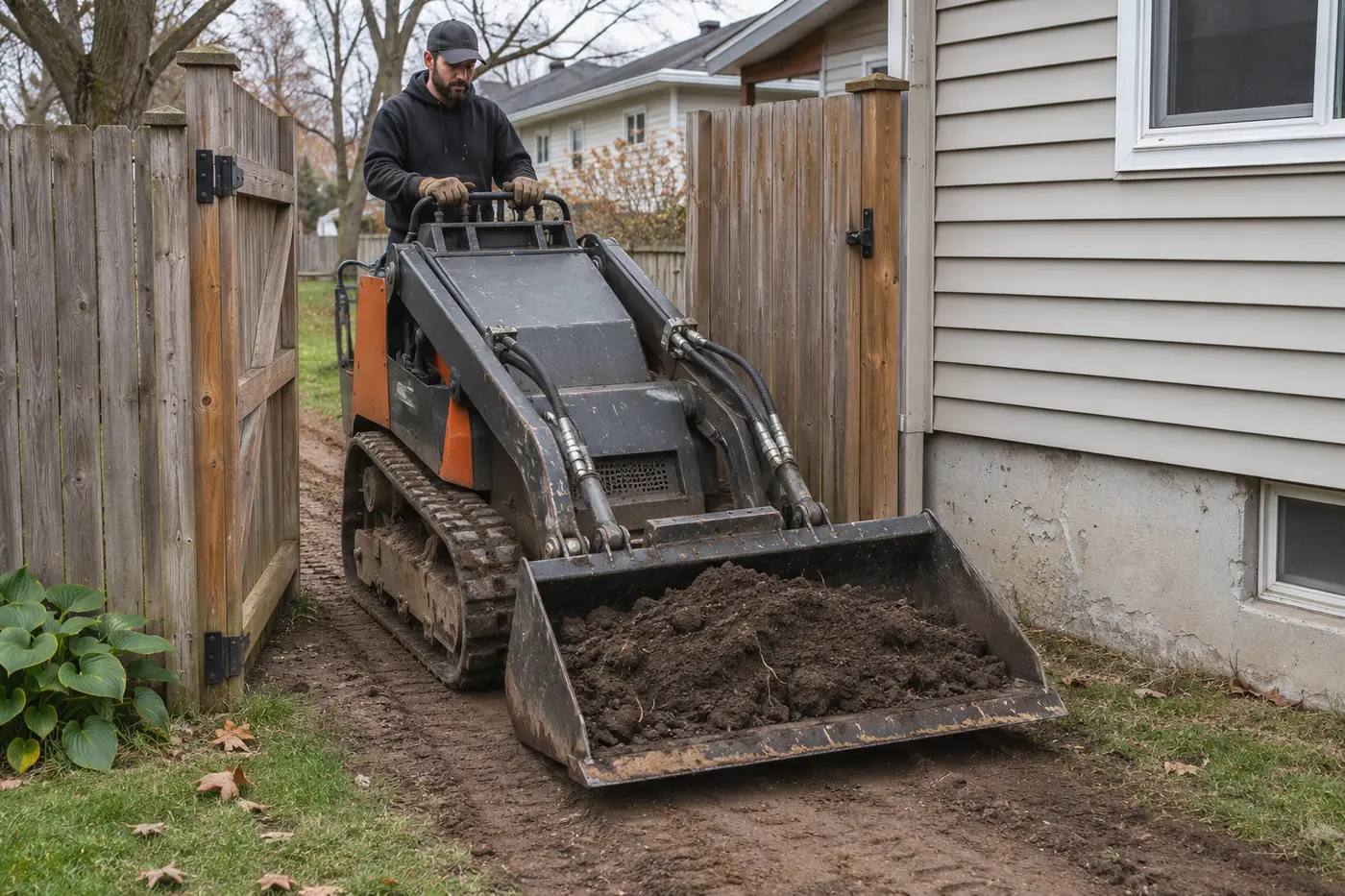
A mini skid steer is the answer when a full-size loader will not fit. The machine is built small and narrow, often on tracks that spread weight, so it can cross lawns, pass through gates and work beside buildings. It is not a smaller version of everything a full-size machine does, so it helps to know what changes at this size.
What is a mini skid steer?
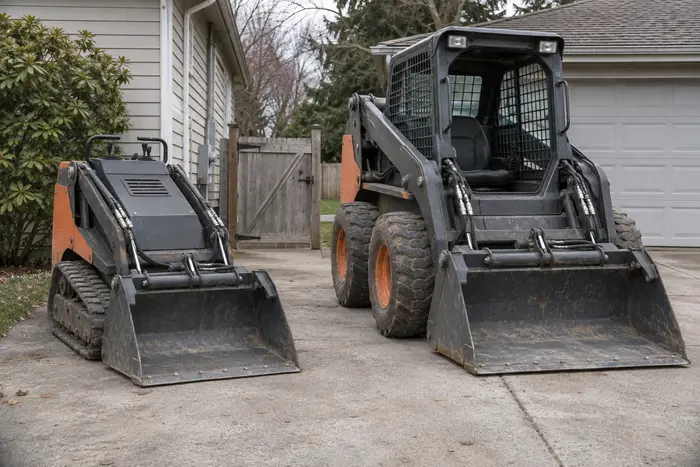
A skid steer loader turns by running its left and right wheel or track pairs at different speeds, which lets the machine pivot within its own length. A mini skid steer is the compact end of this family: low weight, narrow width, and often a stand-on or walk-behind operator position. Many use rubber tracks. A mini has an auxiliary hydraulic circuit for attachments just as the larger machines do, but with less flow and less lift.
Sellers and makers define "mini" in different ways, so do not rely on the name. Compare the actual operating weight, width and rated operating capacity in the spec sheet.
What do weight and width mean in practice?
| Spec | Why it matters |
|---|---|
| Operating weight | Sets the trailer and tow vehicle you need, and how much pressure the machine puts on the ground |
| Width | Decides whether it fits through gates, between buildings and along paths |
| Rated operating capacity | The load the loader can carry; attachment weight counts against it |
| Auxiliary flow | Limits which attachments will run well |
| Tracks or wheels | Tracks float on soft ground; wheels are quicker on firm ground |
| Operator position | Stand-on is compact, seated gives more comfort on long shifts |
Look up weight with attachments on. A mini that is easy to tow bare can be much heavier once an auger or a tiller is mounted. If you are comparing sizes between types of loader, the guide on skid steer vs mini skid steer goes through the tradeoffs.
Weight also decides the ground damage. Tracks spread weight over a larger area than wheels, which makes them a better fit for lawns and finished surfaces. Skid-steering still scuffs turf in tight turns, so plan wide arcs and avoid pivoting in place on grass.
What are mini skid steers used for?
- Landscaping. Moving soil, mulch and stone, grading, tilling and installing sod. See landscape rakes and rotary tillers.
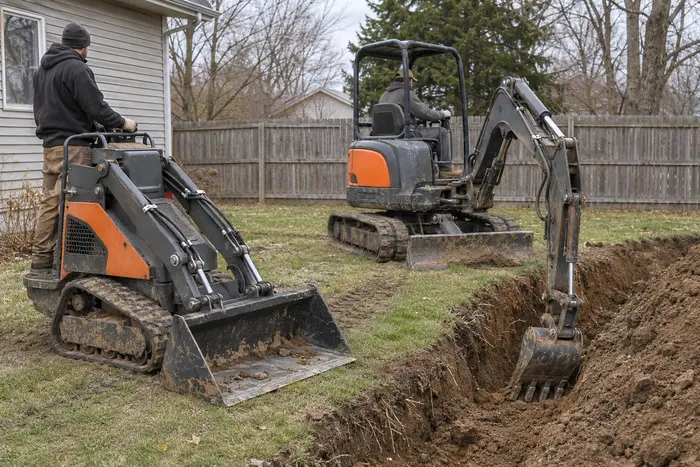
- Digging. Augers for posts and plantings, trenchers for utility lines and drainage.
- Light demolition and concrete. Breakers, mixers and small buckets for interior work.
- Snow. Narrow blades, pushers and blowers for walkways.
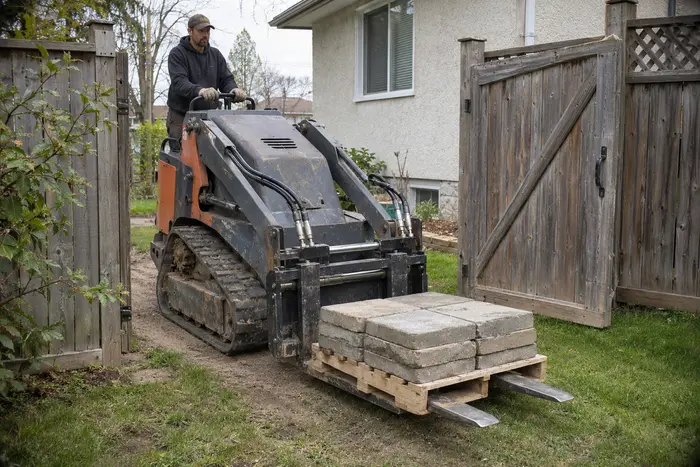
- Material handling. Pallet forks and buckets for moving goods around a site.
The attachment list is long, and you can see it in mini skid steer buckets and the other category pages. Our guide to the best mini skid steer attachments covers the common ones.
What can a mini skid steer not do?
It will not move as much material per trip as a full-size loader, and it will struggle with heavy digging. Its hydraulic flow limits attachments that need high output, such as large mulchers. Lift height is lower, so loading a tall truck can be awkward. And because it is light, big loads at full reach can tip it. Always check the rated operating capacity and keep loads low and close.
Mini machines also carry less fuel and less hydraulic oil, so long shifts of heavy attachment work can run them hot. Watch temperature and take breaks if the manual suggests.
How to size a mini skid steer for your jobs
- List your top three jobs. Size for the heaviest one you do often, not the one you do once a year.
- Measure the tightest access. Gate or pathway width sets the maximum machine width.
- Check your trailer and tow vehicle. The machine plus attachments must be inside the trailer's rated capacity and the tow vehicle's rating.
- Match attachments to flow. Check each attachment's flow and pressure against the machine.
- Think about surface. Lawns and finished surfaces favor tracks and lighter weight.
- Plan for upkeep. Tracks and hoses wear faster in rough work.
Transport and storage
One of the biggest reasons to choose a mini is that you can trailer it with a smaller truck. Even so, check the numbers. Add the machine's operating weight, the heaviest attachment you will carry on the trailer, and any fuel and tools. Compare the total with the trailer's rated capacity and the tow vehicle's rating, and confirm the trailer deck is wide enough for the tracks. Chain or strap the machine at the points the manual shows. Use a ramp rated for the weight, and keep the arms low while loading. If you store the machine over winter, keep it dry, charge or maintain the battery, and run the hydraulics a few times to keep seals lubricated.
Operator position: stand-on, walk-behind or seated
Stand-on machines let the operator step on and off easily and keep a small footprint. They are good for short jobs and for working around tight obstacles, but standing for hours is tiring. Walk-behind units are the smallest, but the operator has to walk behind and the loader capacity is limited. Seated machines offer a more comfortable platform and usually more power. Choose the one you can run safely for the number of hours you need.
Attachment fit and compatibility
Most mini skid steers use a smaller plate than the full-size universal skid steer quick attach. Many share a common mini pattern, but some use a maker-specific one. Hydraulic couplers also differ. That is why we confirm fit against the maker's specs before a quote. Check our guide on whether skid steer attachments are universal before you order.
Running costs and upkeep
A mini skid steer is economical to run, but tracks and hoses are the wear items to watch. Check track tension and condition on a schedule, clean packed mud from the undercarriage, and grease the pivot points the manual lists. Hoses and couplers take a beating on attachments such as augers and breakers, so inspect them often. Keep a spare set of hydraulic couplers and a few common fittings in the truck. If the machine will see commercial use, keep service records. Buyers and insurers like them, and they help when you are tracking down a recurring problem.
Safety basics
- Read the operator manual before the first use and follow its rated operating capacity.
- Keep loads low while traveling and keep the arms lowered on slopes.
- Do not work on slopes steeper than the manual allows.
- Keep bystanders away from the machine and attachment.
- Call before you dig so buried utilities are marked.
Get the right fit the first time
Send us your machine make, model and year and what you plan to do with it. A person checks fit against the maker's specs, and you see the delivered price on your quote before you pay. The supplier ships direct, and warranty terms, if any, are written on your quote. Get a fit-checked quote.
Questions buyers ask
What is a mini skid steer?
A mini skid steer is a compact loader that turns by running its left and right tracks or wheels at different speeds. It is narrow and light enough for gates and tight sites and runs hydraulic attachments, though its lift and hydraulic output are below a full-size skid steer.
How much does a mini skid steer weigh?
Weights vary a lot between models, so use the spec sheet for the machine you are considering and add the attachment you will mount. Operating weight sets the trailer, the tow vehicle and how much pressure the machine puts on the ground.
What can a mini skid steer lift?
Lifting is set by the machine's rated operating capacity, which is lower than a full-size skid steer and is reduced by heavy attachments. Check the number on the spec sheet or data plate, remember that the attachment's weight counts against it, and keep loads low and close to the machine.
What attachments fit a mini skid steer?
Buckets, augers, trenchers, tillers, rakes, grapples, forks, snow blades, brush cutters and breakers are all common. Fit depends on the machine's quick attach, its hydraulic flow and its couplers, so confirm each one against the maker's specs before ordering.
Is a mini skid steer worth it compared with a full-size one?
It is worth it when access is tight, surfaces are delicate, or you need to trailer with a smaller truck. If you move heavy material all day or run high-flow tools, a larger machine is usually the better fit.