Buying advice guide
Skid Steer Quick Attach Plates: Universal vs Other Types
Quick answer
The skid steer quick attach plate is the coupler that locks attachments to the loader arms. Types include universal mechanical, hydraulic, pin-on and maker-specific styles, and adapters convert between them. Universal is the common standard, but you must still check plate geometry, rated capacity and hydraulics before buying.
Shopping for this now? Get a fit-checked, delivered quote.
Key takeaways
- Universal is the common plate style, but not a guarantee of fit.
- Hydraulic quick attach lets you lock tools from the seat.
- Adapters add weight and reduce lift capacity.
- Always confirm both lock pins are fully engaged.
What is a skid steer quick attach plate?
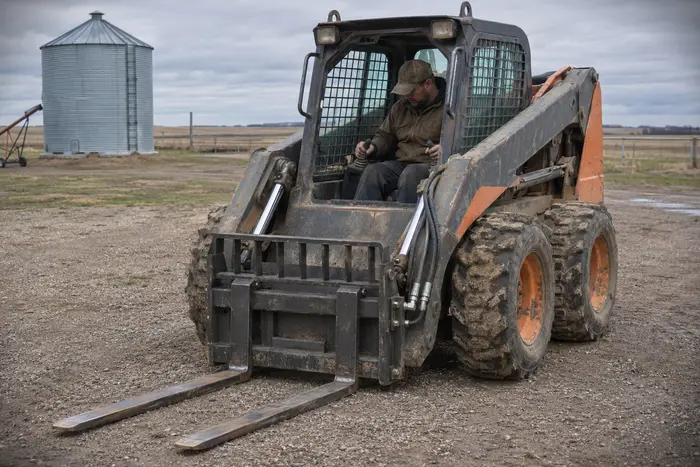
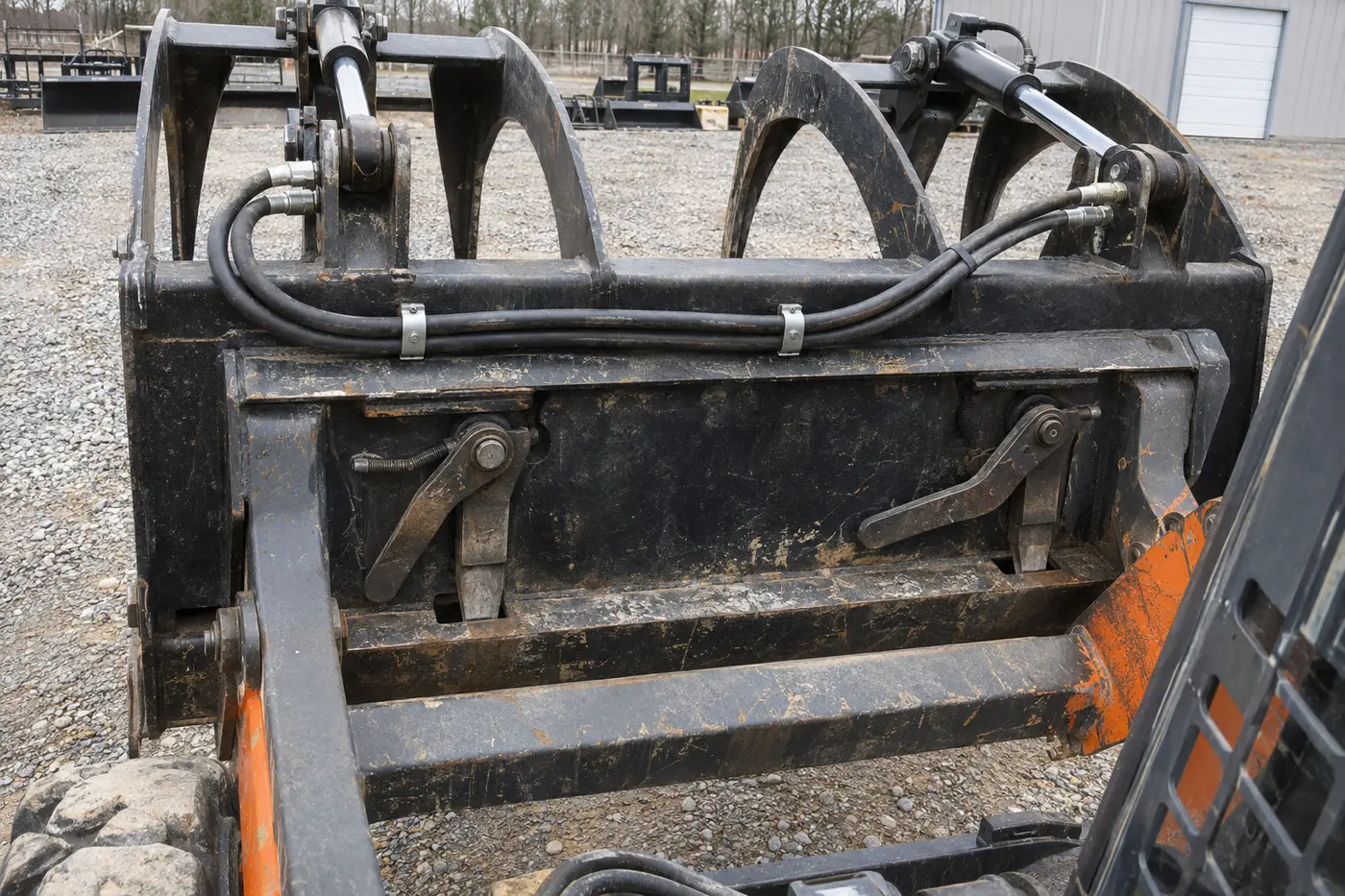
A skid steer quick attach plate is the interface between the loader and the attachment. On the loader side, a coupler sits at the end of the lift arms. On the attachment side, a matching mounting plate is welded or bolted to the tool. The two lock together so you can swap a bucket for forks, a broom or an auger without tools. The conventional bucket on a skid steer can be replaced with a wide range of specialized tools, and the quick attach system is what makes that practical.
Most machines in North America use a standard that people call the universal skid steer quick attach, sometimes shortened to universal quick attach or universal plate. "Universal" is a trade term for a common mounting geometry. It does not guarantee that every attachment fits every machine, because hydraulics, weight and size still matter.
Types of skid steer quick attach systems
| Type | How it works | Pros | Cons |
|---|---|---|---|
| Universal mechanical quick attach | Manual levers drive locking wedges or pins through the attachment plate | Widely supported, simple, large attachment range | Operator leaves the cab to latch and release |
| Hydraulic quick attach | Hydraulic cylinders drive the locking pins from the cab | Fast changes without leaving the seat | More cost and more parts to maintain |
| Pin-on or bolt-on | Attachment is pinned directly to the arms with no coupler | Rigid and robust for dedicated machines | Slow to change; limited compatibility |
| Maker-specific styles | Proprietary coupler shapes | Can match specific loaders closely | Narrower attachment choice; may need an adapter |
| Adapter plates | Convert one mounting style into another | Lets a tool fit a different carrier | Adds weight and pushes the load forward |
Manufacturers have also created automatic attachment changer systems that let a driver change tools from the seat, and automatic hydraulic connection systems that connect lines without hand-coupling them. These save time on jobs that switch tools often.
Universal vs other plates: what matters?
If your loader and your attachment both use the universal style, the plate generally lines up. Two details still need checking. First, plate geometry, including the lock pin spacing and the upper lip, must match. Variations exist between makers. Second, the locking engagement must be clean, with both pins fully through the plate. A partially engaged pin is a serious hazard because the attachment can fall off.
If you have a machine with a maker-specific coupler, you have two options: buy attachments made for that coupler, or fit an adapter that converts to the universal style. Adapters add weight and move the load forward, which reduces lift capacity. Check the loader's rated operating capacity with an adapter in place. Browse our mounting plates to see what is available, and read are skid steer attachments universal for the bigger picture.
How do you check that an attachment fits your plate?
- Identify your coupler. Look at the quick attach on your loader. Note the make, model and year, and any markings on the plate.
- Identify the attachment's plate. Confirm it is built to the style your coupler accepts.
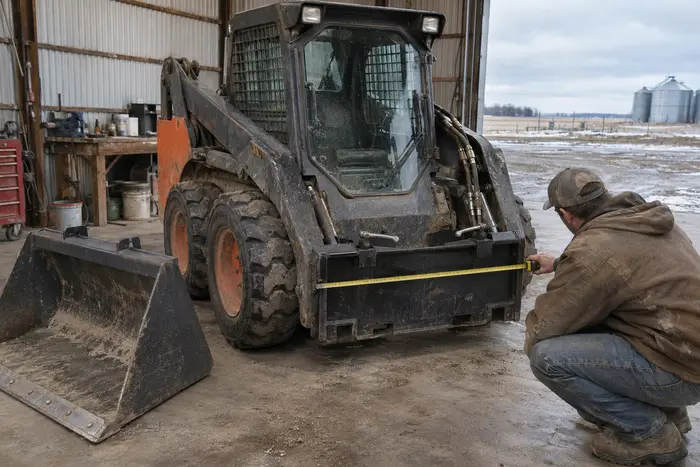
- Measure. Check plate width, lock pin hole spacing and the lip that hooks the top of the coupler. Our guide on how to measure skid steer attachment fit walks you through it.
- Check weight and rated operating capacity. The attachment and its load must stay inside the loader's limit.
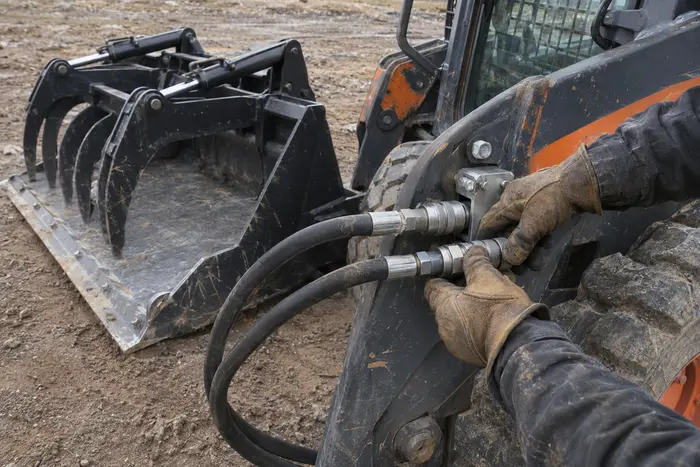
- Check hydraulics. For powered attachments, confirm flow, pressure and the coupler type. See coupler hoses and flat-face connectors.
- Test the lock. After you pick up a new tool, curl it and confirm both pins are fully engaged before you lift.
Do tractors and telehandlers use skid steer plates?
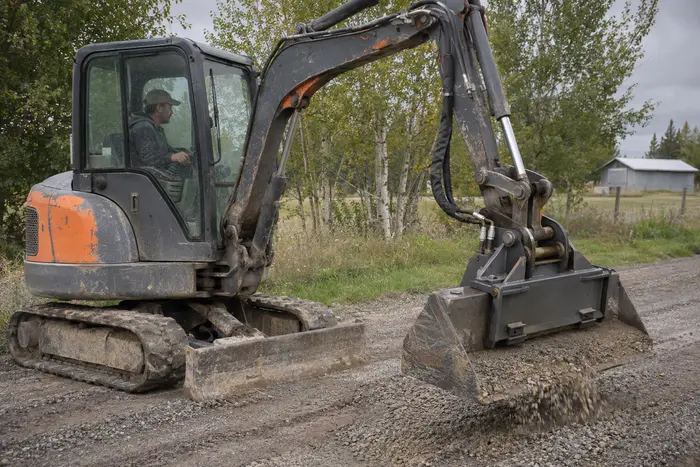
Some do, through adapters. You can mount skid steer tools on certain tractor loaders, telehandlers and compact excavators using a conversion adapter. These adapters let you share buckets, forks and other tools across machines. They are useful, but they must be rated for the carrier and the load. See telehandler skid steer adapters and excavator skid steer adapters. If you want to run a three-point tool on a loader, look at three-point adapters. Always confirm the adapter's capacity with the manufacturer.
Quick attach safety
- Always confirm both locking pins are fully extended and engaged before lifting or using the tool.
- Keep the coupler and plate clean. Dirt and ice prevent full engagement.
- Inspect the plate and coupler for cracks, bent lips, worn pin holes and loose bolts.
- Lower the attachment to the ground before you shut off the machine.
- Never exceed the loader's rated operating capacity, and consider the effect of adapters and heavy attachments on lift capacity.
- Read both the loader and attachment manuals.
Maintenance tips
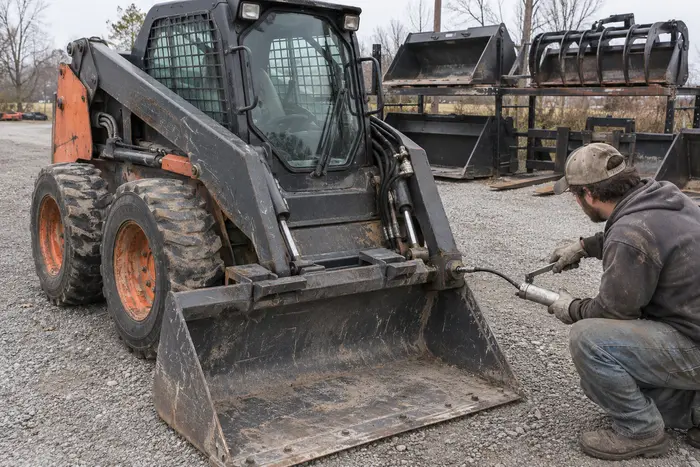
Grease the coupler pivot points and lock mechanism per the manual. Clean debris out of the plate area. Check pin holes for wear because an oversized hole lets the tool rattle and wears the pins faster. For hydraulic couplers, inspect hoses and cylinders. Our attachment maintenance guide has a basic schedule.
When to ask for help
If you are not sure what plate your loader has, or whether a tool fits it, ask before you buy. A wrong plate wastes time and can be unsafe. Send us your machine make, model and year and a person will check the mount against the maker's specs.
Manual or hydraulic: which should you choose?
If you change attachments a few times a week, a manual system is fine and costs less. If you swap tools many times a day, such as a landscaper moving between a bucket, forks and a broom, a hydraulic system saves real time and keeps you out of the mud and snow. Hydraulic systems also help in cold weather, when climbing down to throw levers is a chore. Think about your own routine, not just the brochure. Whichever you pick, the attachment plate on the tool must match the coupler on the loader.
Retrofit and conversion kits
Some owners want to move from a pin-on arrangement or an older coupler to the universal style. Conversion kits and replacement couplers exist for this. Fit them to the loader's arm geometry, follow the instructions closely and have a qualified person do the welding or bolting when the manual calls for it. A bad conversion can weaken the arm or put the load in the wrong place. Re-check rated operating capacity after any change to the front of the loader.
Get the right fit the first time
Send us your machine make, model and year and tell us the job. A person checks the attachment against the maker's specs, then you get a fit-checked quote with delivered pricing before you pay. The supplier ships direct, and warranty terms, if any, are written on your quote.
Questions buyers ask
What is the universal skid steer quick attach?
It is a common mounting style that many skid steers and attachments use. A coupler on the loader arms locks into a matching plate on the tool. The term is a trade standard, but you still need to check plate geometry, weight and hydraulics.
Are all skid steer quick attach plates the same?
No. Many use the universal style, but some machines have maker-specific couplers or older pin-on arrangements. Plate dimensions can vary slightly even among universal plates. Always verify your coupler and the attachment plate before buying.
How do I know which quick attach my skid steer has?
Look at the coupler on the end of the lift arms and check the loader's make, model and year in the manual. Measure plate width, lock pin spacing and the top lip. If you are unsure, send us the details and we can check.
Can you use a skid steer quick attach adapter?
Yes. Adapter plates convert one mounting style to another so a tool can fit a different carrier. They add weight and push the load forward, which reduces lift capacity, so check the loader's rated operating capacity with the adapter fitted.
What is a hydraulic quick attach on a skid steer?
A hydraulic quick attach uses cylinders to drive the locking pins, so you change attachments from the cab without leaving the seat. It costs more and has more parts than a manual system but saves time on jobs that swap tools often.