Buying advice guide
What to Check When Buying a Used Skid Steer: Checklist
Quick answer
When buying a used skid steer, check the frame and lift arms for cracks and weld repairs, test every hydraulic function cold and warm, inspect tires or tracks, listen to the engine and drivetrain, and verify the serial number and service records. Hours matter, but condition and care matter more.
Shopping for this now? Get a fit-checked, delivered quote.
Key takeaways
- Inspect the machine cold, then again after it warms up.
- Look for cracks, repairs, leaks and play in pins and bushings.
- Wear on tires, tracks and cutting edges tells you how it was used.
- Service records and a clean title matter as much as the walk-around.
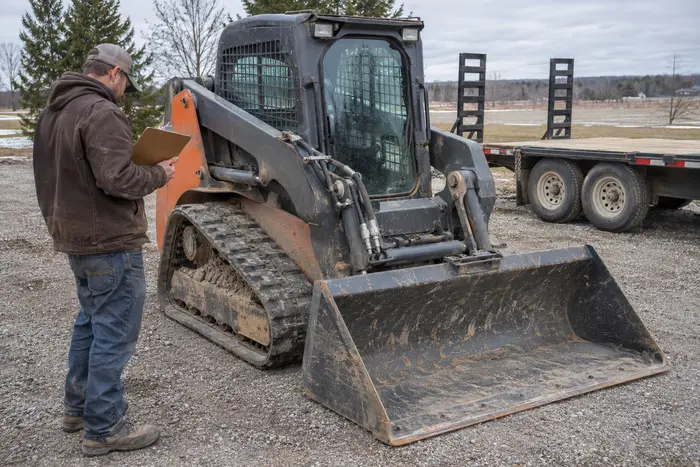
A used skid steer can save money, but a bad one can cost more than a new one. This checklist is for the walk-around and the test drive. Take it with you, take photos and do not rush. If you are not sure what you are looking at, bring someone who knows these machines or pay for a professional inspection.
Before you go
- Ask for the make, model, year, serial number and hour meter reading.
- Ask for service records, past repairs and any accident history.
- Ask why it is for sale and what attachments come with it.
- Ask that the machine be cold when you arrive. Cold starts reveal problems that warm engines hide.
- Check the serial number against the data plate and any ownership paperwork.
How many hours is too many?
Hours are a rough guide. A machine with moderate hours that was well maintained can outlast one with fewer hours that was abused. Look at how the machine was used and cared for. A used loader that worked on a farm at light duty is different from one that ran in demolition or a rental fleet. Compare the hour meter with the wear you see on pedals, seat, pins and tires or tracks. Heavy wear on a low-hour machine is a warning sign, and the meter itself can be wrong.
Walk-around inspection checklist
| Area | What to check | Red flag |
|---|---|---|
| Frame and lift arms | Welds, paint cracks, bends, patches | Cracks, fresh welds, mismatched paint |
| Pins and bushings | Play in the bucket pins and lift arm pivots | Visible slop or egg-shaped holes |
| Cylinders and hoses | Leaks, scoring on rods, chafed hoses | Wet cylinders, scored chrome |
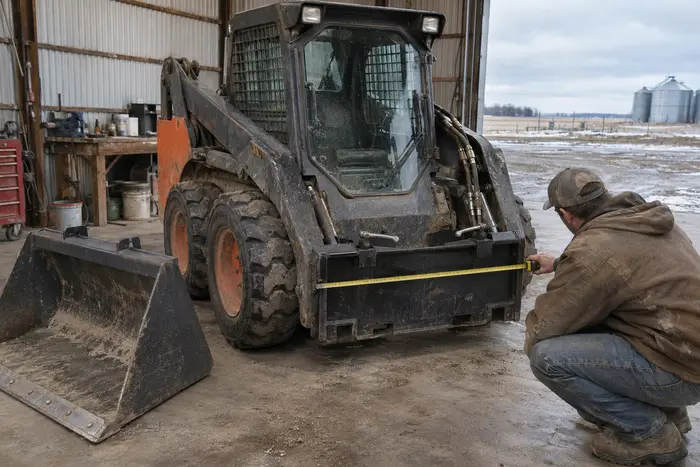
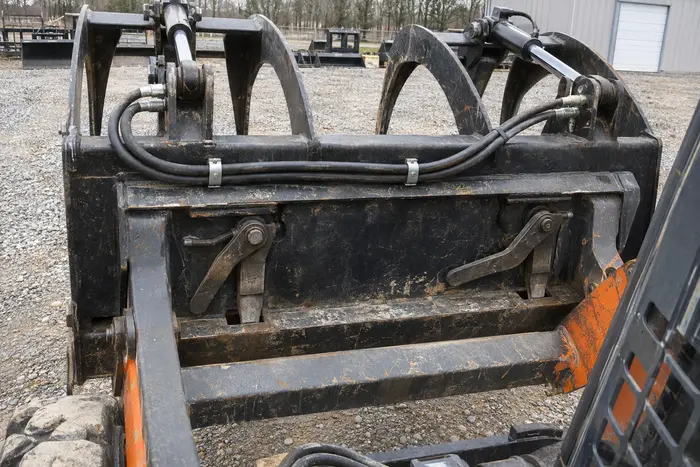
| Quick-attach plate | Wear, bent latches, locking pins | Pins that do not lock or a worn plate |
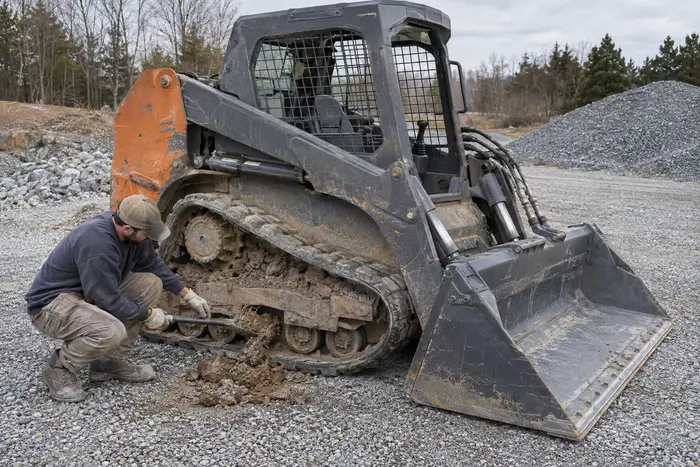
| Tires or tracks | Tread, cuts, cracks, uneven wear, track tension | Bald tires, missing lugs, cracked rubber |
| Chain cases and axles | Oil leaks, noise, play | Oil on the ground, grinding |
| Engine bay | Leaks, belts, hoses, air filter, coolant | Fresh oil sprayed everywhere |
| Cab and controls | Seat bar, seat belt, safety interlocks, lights, gauges | Bypassed or disabled safety devices |
Cold-start and engine check
- Start the engine cold. Watch for hard starting, long cranking or heavy smoke.
- Listen for knocks, ticks and unusual noises.
- Check that all gauges and warning lights work.
- Watch the exhaust. Blue smoke suggests burning oil, white may suggest coolant issues and black may suggest fueling or air problems.
- Check oil and coolant condition. Milky oil or oil in coolant is a serious problem.
- Let the engine warm up and check again for leaks and noises.
Hydraulics and controls test
- Raise and lower the arms through the full range. Movement should be smooth, not jerky.
- Tilt the bucket fully both ways.
- Hold the arms up and watch for drift. Cylinders that sink on their own may be leaking internally.
- Run the auxiliary hydraulics with a hydraulic attachment if possible. Listen for whine and check for heat.
- Check the couplers for leaks and damage. See our guide on flat-face couplers.
- Check that safety interlocks lock the controls when the seat bar is raised.
Drive test
Drive forward and back, make turns in both directions and stop. The machine should track straight with the joysticks centered, without pulling to one side. Listen for grinding in the drive and chain cases. On a track machine, check track tension and look for worn sprockets and rollers. Our undercarriage care guide explains what wear looks like. For a wheeled unit, check tire condition and read about wheels vs tracks if you are still deciding.
Attachments and fit
If the machine comes with attachments, test them too. Check that the quick-attach plate fits the tools you plan to use. A plate that looks standard can still be worn. Learn the machine's hydraulic flow and rated operating capacity, since those set which attachments are suitable. See are skid steer attachments universal. You can also browse buckets and mounting plates if you need to adapt.
Paperwork checklist
- Matching serial number on the machine and in the paperwork.
- Proof of ownership and a clear title or bill of sale.
- Check for liens before you pay.
- Service history and any recall or warranty status.
- A written bill of sale with the machine's details and condition.
Red flags that should make you walk away
- Cracked frame or lift arm welds.
- Seller will not let you start the machine cold.
- Fresh paint over a wet engine or hydraulic components.
- No serial number plate or a plate that looks altered.
- Safety systems that have been bypassed.
- A price far below similar machines with no good reason.
Mini skid steers and used attachments
The same checks apply to a mini skid steer, with extra attention to track condition and the hydraulics on a smaller machine. For used attachments, look at cutting edges, cylinder leaks, bent frames and worn pins. Read our mini skid steer guide. Buying used saves money, but warranty and support are limited, so factor in repair risk.
Should you buy used or new?
Used machines are a fair choice if you have the knowledge to inspect them and the budget for repairs. New equipment and new attachments usually come with a written manufacturer's warranty. For attachments in particular, buying new is often easier, because fit and hydraulic specs are published and any warranty terms are in writing. We can help you confirm fit for an attachment before you commit. Send your machine's make, model and year, and a person will check it against the specs.
Negotiation and next steps
Write down every defect you find, with photos. Use them to ask for a lower price or for the seller to fix the issues before sale. Be ready to walk away. A machine that needs a track set, new hoses and a hydraulic repair can cost more than the same machine in better shape at a higher price. Estimate repair costs with a local dealer before you agree on a number.
Where used machines come from
Used skid steers come from dealers, auctions, rental fleets and private owners. Dealers may offer inspection and some support. Auctions often sell as-is with limited time to inspect. Rental fleets often have high hours and regular maintenance but heavy use. Private owners can offer honest machines at a fair price, but you carry the risk. Whoever you buy from, the inspection steps above stay the same.
After you buy
- Change engine oil, hydraulic oil and filters so you know the baseline.
- Inspect and grease all pivot points.
- Check and replace hoses that look worn.
- Test the safety systems again and fix any bypasses.
- Start a maintenance log with hours and dates.
Get the right fit the first time
Fit problems are the expensive mistakes, and they are easy to avoid. Send us your machine make, model and year and what you plan to do with it. A person checks the fit against the maker specs, and you see the delivered price before you pay. When you are ready, get a fit-checked quote.
Questions buyers ask
What should I check when buying a used skid steer?
Check the frame and lift arms for cracks and repairs, test every hydraulic function, inspect tires or tracks, start the engine cold and listen, and verify the serial number and service records. Take a test drive and look for leaks and worn pins.
How many hours is too many for a used skid steer?
There is no single number. Condition, maintenance and how the machine was used matter more than hours alone. Compare the hour meter with wear on pedals, seat, pins and tires or tracks, and ask for service records.
What are red flags when buying a used skid steer?
Cracked or freshly welded frames, a seller who will not let you start it cold, bypassed safety interlocks, a missing or altered serial plate, fresh paint over leaks and a price far below similar machines are all reasons to walk away.
Should I buy a used skid steer?
It can make sense if you can inspect it well and have a repair budget. You trade lower purchase cost for higher risk and little or no warranty. Get service records, test it carefully and consider a professional inspection.
Can I use any attachment on a used skid steer?
Not always. Check the quick-attach plate, hydraulic flow, couplers and rated operating capacity first. A plate that looks standard may be worn or different. Ask a person to confirm fit before you buy an attachment. Your operator manual has the exact figures for your machine.