Snow guide
How to Start a Snow Removal Business: A Practical Guide
Quick answer
To start a snow removal business, choose your services and customer type, get licensed and insured, buy or lease equipment that fits your sites, write clear contracts, plan routes and a backup, and line up salt and labor before the first storm. Start small, price on a site visit and protect against liability.
Shopping for this now? Get a fit-checked, delivered quote.
Key takeaways
- Decide first: residential drives, commercial lots, sidewalks or a mix.
- Equipment follows the site: a plow truck, a skid steer with pusher or blade, and hand tools for walks.
- Insurance, written contracts and clear service terms protect you from storm-day disputes.
- Plan routes, backups and salt supply before the first snowfall.
- Start with a few accounts you can serve well and grow from there.
Snow removal looks simple: a plow, a storm and a customer. In practice it is a logistics business that lives or dies on how fast you can clear sites before people need them. This guide walks through the steps for starting one, from picking a niche to getting equipment and insurance, and flags the mistakes that sink new crews.
Is snow removal a good business to start?
It can be, in places with regular snowfall. Municipalities, businesses, property managers and homeowners all pay to have snow cleared, and in snowy regions that demand comes back every winter. The work is seasonal and weather-driven, though. Income arrives in bursts, and you need to be ready at 3 a.m. Think of it as a business with a short, intense season and a long preparation period.
What services should you offer?
| Service | Typical tools | Notes |
|---|---|---|
| Residential driveways | Truck plow, small tractor, walk-behind blower | Many small stops; routing matters |
| Commercial lots | Truck plow, skid steer or loader with a pusher, salt spreader | Larger contracts, tighter timing, more liability |
| Sidewalks and entrances | Walk-behind blower, shovels, small sidewalk machine | Slip-and-fall risk makes this a careful job |
| Salting and de-icing | Spreaders, bulk salt or brine | Repeat visits and a strong add-on |
| Snow hauling | Loader, blower, dump trucks | Needed where there is no space to pile |
Pick a focus you can serve well. A crew that covers residential drives in one neighborhood will make more of its time than one that criss-crosses a city. Commercial work asks for more equipment, more insurance and more paperwork, but a route of lots can be efficient.
What equipment do you need?
Contractors use hand shovels, walk-behind snow blowers, truck plows, skid steers, tractors and front-end loaders, often with tire chains for traction. Start with the tools that match your first contracts, then add as you grow.
- A plow vehicle. A pickup or truck with a mount-ready plow is the classic start for driveways and small lots.
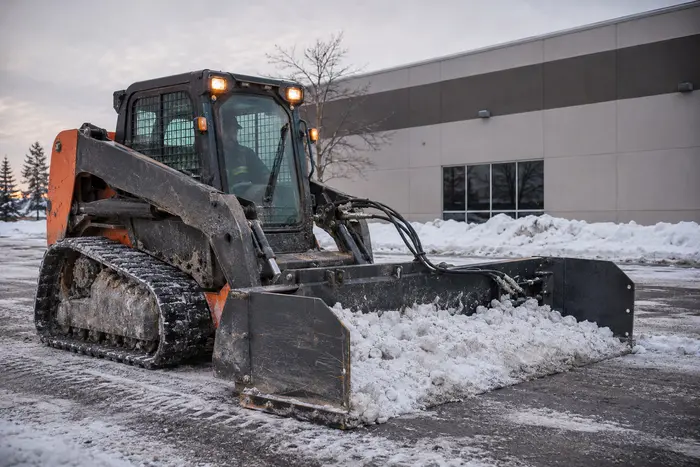
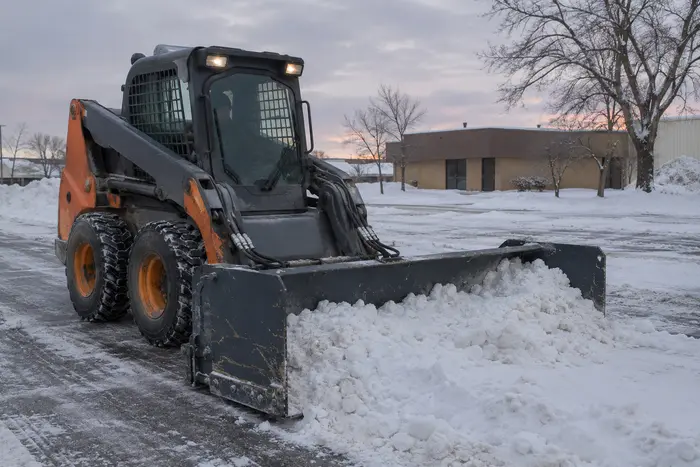
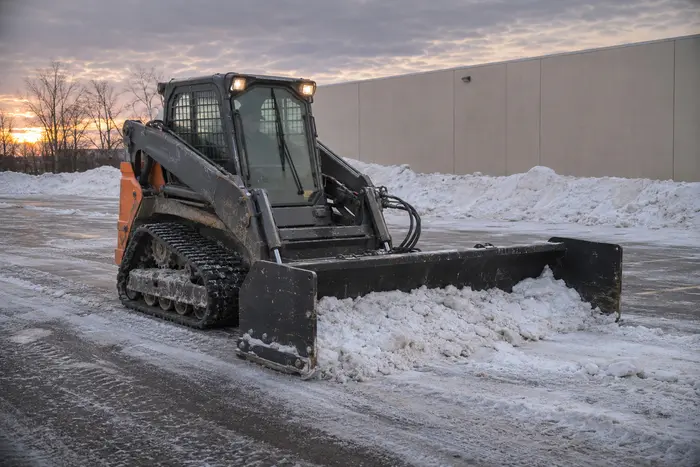
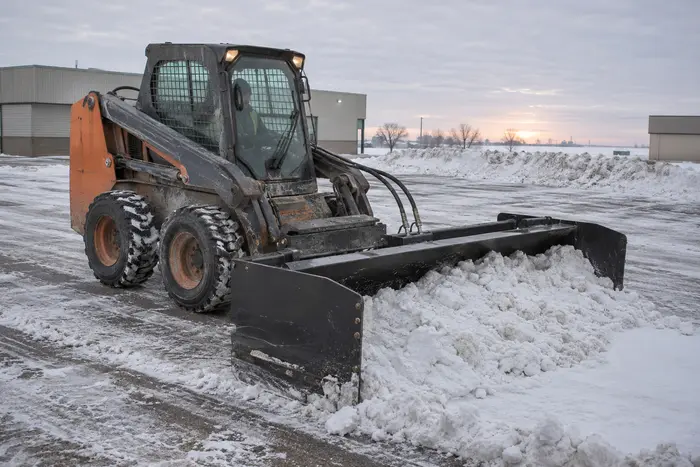
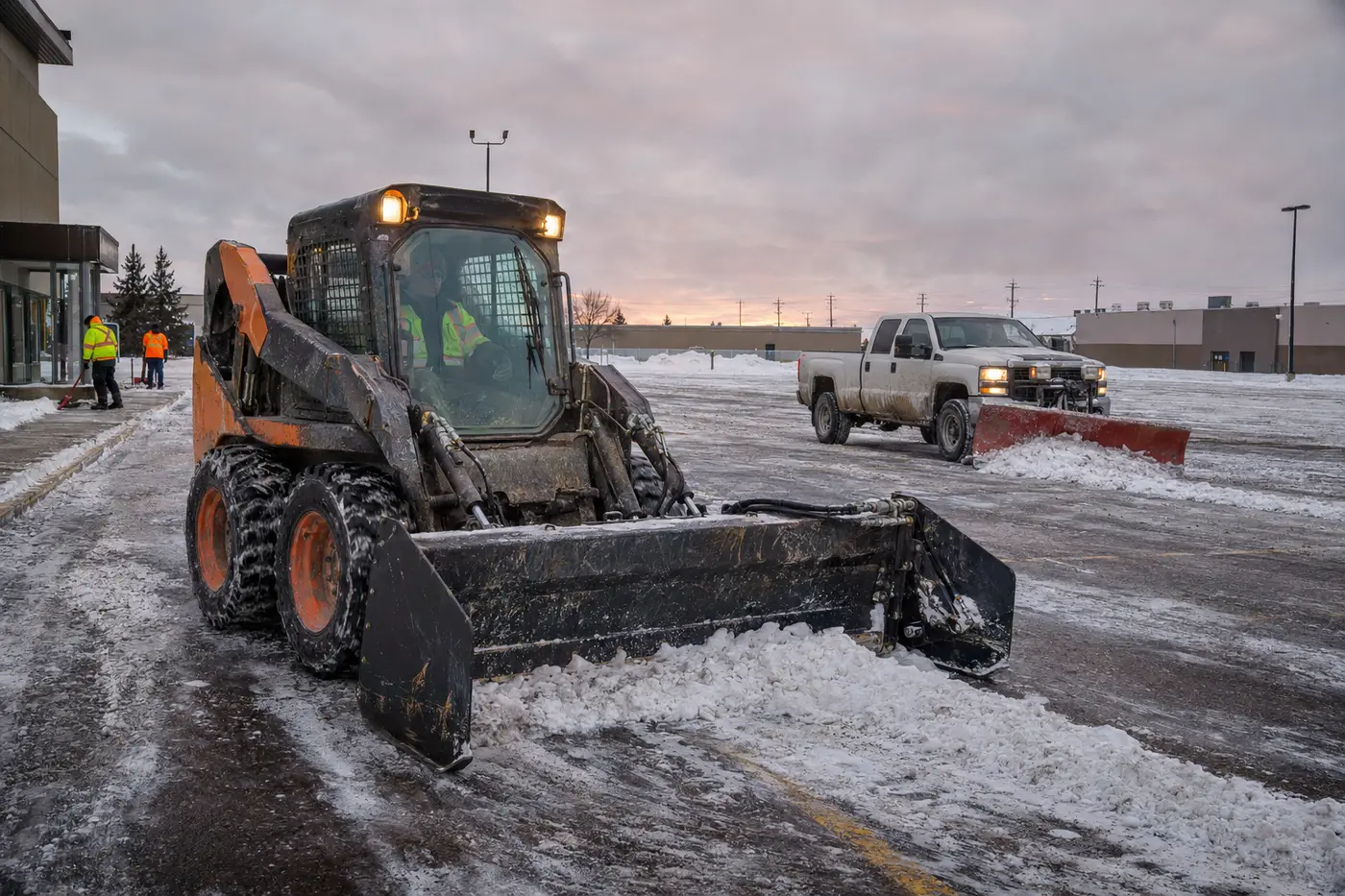
- A skid steer or compact track loader. A loader with a pusher or blade handles lots and loading docks, and it can stack snow. It turns on the spot and works in tight spaces. See snow removal with a skid steer.
- Attachments. Compare snow pushers, snow plows and snow blowers, and read plow vs pusher.
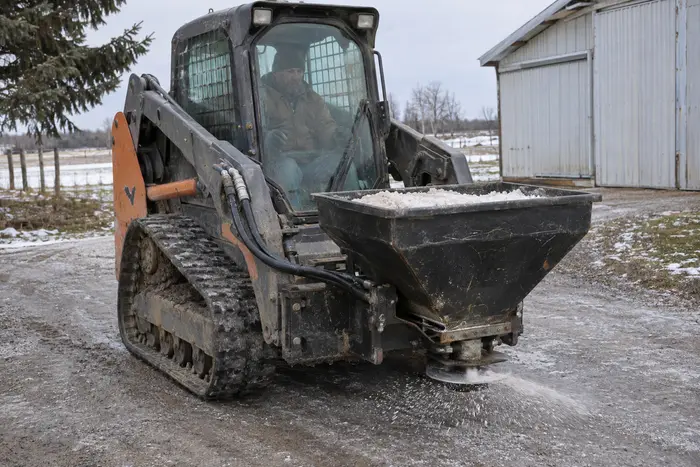
- A spreader. Browse salt spreaders if you offer de-icing.
- Hand tools and a walk-behind blower. Sidewalks and doorways need them.
- Safety and visibility gear. Beacons, work lights, reflective clothing and a first aid kit.
For Canadian work, our snow attachments for Canada guide covers cold-weather concerns. If you handle walks, read the sidewalk equipment guide. Match every attachment to your carrier's weight, mount and hydraulics.
How do salt and chemicals fit into the business?
Plowing clears the snow. Salt and other products stop what is left from bonding. Anti-icing means applying chemicals before or during a storm, and brine applied shortly before a storm can reduce the salt needed and make plowing easier. Rock salt is cheap, but it slows sharply in deep cold, losing most of its practical effect somewhere between about -10 °C and -18 °C (15 °F to 0 °F), and it corrodes vehicles and rebar. Calcium and magnesium chlorides work at lower temperatures. Sand adds traction but does not melt ice and can clog drains.
Chlorides also harm plants, aquatic life and surfaces, so many clients and local rules limit them. Learn what your area requires and store product dry.
What licenses and insurance do you need?
Requirements vary by country, province or state and city. Common items include a business registration, a vehicle registration and commercial plates if needed, a tax number, workers' compensation if you have staff, and a trade or contractor license in some places. Insurance for snow work typically covers property damage, injury and equipment. Slip-and-fall claims are a major risk for lots and walks. Talk to a licensed insurance broker and your local authority before you take a customer. Do not skip this step.
How do you write a snow contract?
A written contract protects both sides. At a minimum it should state:
- Exactly which areas you plow, shovel and salt.
- The snow depth that triggers service, and how that is measured.
- Where snow will be piled, and what happens when piles get too big.
- What you are not responsible for, such as hidden obstacles or unmarked edges.
- Payment terms and how the season, per-visit or per-event structure works.
- Who is responsible for damage, and how to report it.
Mark driveway edges with poles or stakes to protect landscaping. Take photos of the site before and after each visit. Pricing is a business decision. Set it from your costs, your time and local market conditions, not from a number in a guide.
How do you plan routes and backup?
- Map your accounts and group them by area so you spend time plowing, not driving.
- Order the route by priority: emergency access, critical businesses, then the rest.
- Plan for equipment breakdowns. A backup truck, a spare plow edge and a second operator save accounts.
- Keep a log of times, depths, products used and issues. It settles disputes.
- Set up a way for customers to reach you during storms.
What mistakes sink new snow businesses?
- Taking on more accounts than the equipment can finish in time.
- Working without insurance or without written terms.
- Underestimating where the snow will go once piles build up.
- Running worn equipment through the season. Service it in the fall.
- Ignoring the summer plan. If the business is only seasonal, cash flow can be tight in the off months.
Start with a handful of accounts you can serve well, build a reputation and add from there. For a closer look at the work itself, read what snow plowing is.
What does a first-season checklist look like?
- Summer: register the business, get insurance quotes and decide on services.
- Late summer: line up equipment and attachments and check that each one fits your carrier.
- Early fall: service trucks and loaders, replace cutting edges and test hydraulics.
- Fall: sign contracts, mark properties and photograph every site.
- Before the first storm: stock salt, fuel and spare parts, and confirm your backup operator.
- During the season: keep logs, bill on time and review what is working.
A short, boring list like this beats improvising on the night of the first big storm.
Get the right fit the first time
Equipment is the biggest early decision in a snow business. Send us the make, model and year of your machine. A person checks fit against the maker's specs, you approve a delivered price before you pay, and the supplier ships direct. Get a fit-checked quote or call 1-888-245-1555.
Questions buyers ask
How do I start a snow removal business?
Choose your services and customers, register the business, get insured, buy or lease equipment suited to your sites, write clear contracts, plan routes and backups, and secure salt and labor before the first storm. Start with a few accounts you can serve well.
What equipment do I need to start a snow plow business?
Most start with a plow vehicle and hand tools, then add a skid steer or loader with a pusher or blade, a walk-behind blower for walks and a salt spreader. Match attachments to your carrier's weight, mount and hydraulics.
Do I need insurance to plow snow?
Yes, in practice. Plowing creates risk of property damage, injury and slip-and-fall claims. Many clients require proof of insurance. Requirements vary by region, so speak to a licensed insurance broker and your local authority before taking on customers.
Is salt necessary for a snow removal business?
Many clients expect it, especially commercial lots. Rock salt loses most of its practical effect somewhere between about -10 °C and -18 °C (15 °F to 0 °F), while calcium and magnesium chlorides keep working at lower temperatures. Follow local rules, because salts can corrode surfaces and harm plants.
How do I start a snow removal business in Canada?
Follow the same steps: register the business, get licenses and insurance required in your province and city, buy cold-rated equipment, write contracts and plan routes. Demand is steady wherever winters are reliable, but rules and insurance requirements vary by province and city.