Snow guide
How to Choose a Skid Steer Snow Blower
Quick answer
Choose a skid steer snow blower by matching its hydraulic flow and pressure to your loader, then pick a width, chute and impeller style for your snow type. A two-stage design with an auger and impeller handles deep or packed snow and throws it clear of the pile.
Shopping for this now? Get a fit-checked, delivered quote.
Key takeaways
- Hydraulic flow and pressure decide whether a blower runs well.
- Two-stage designs use an auger plus an impeller and throw snow further.
- Hydraulic chute rotation and deflector save time from the cab.
- On open lots, pushers and plows move snow faster; blowers remove it from tight sites.
If you plow or clear snow for a living, a skid steer snow blower gives you a way to remove snow rather than just push it. That matters where there is nowhere to stack it, such as tight lots, sidewalks and driveways. Choosing one is mostly about matching it to your machine and your snow. Here is what to check.
How does a skid steer snow blower work?
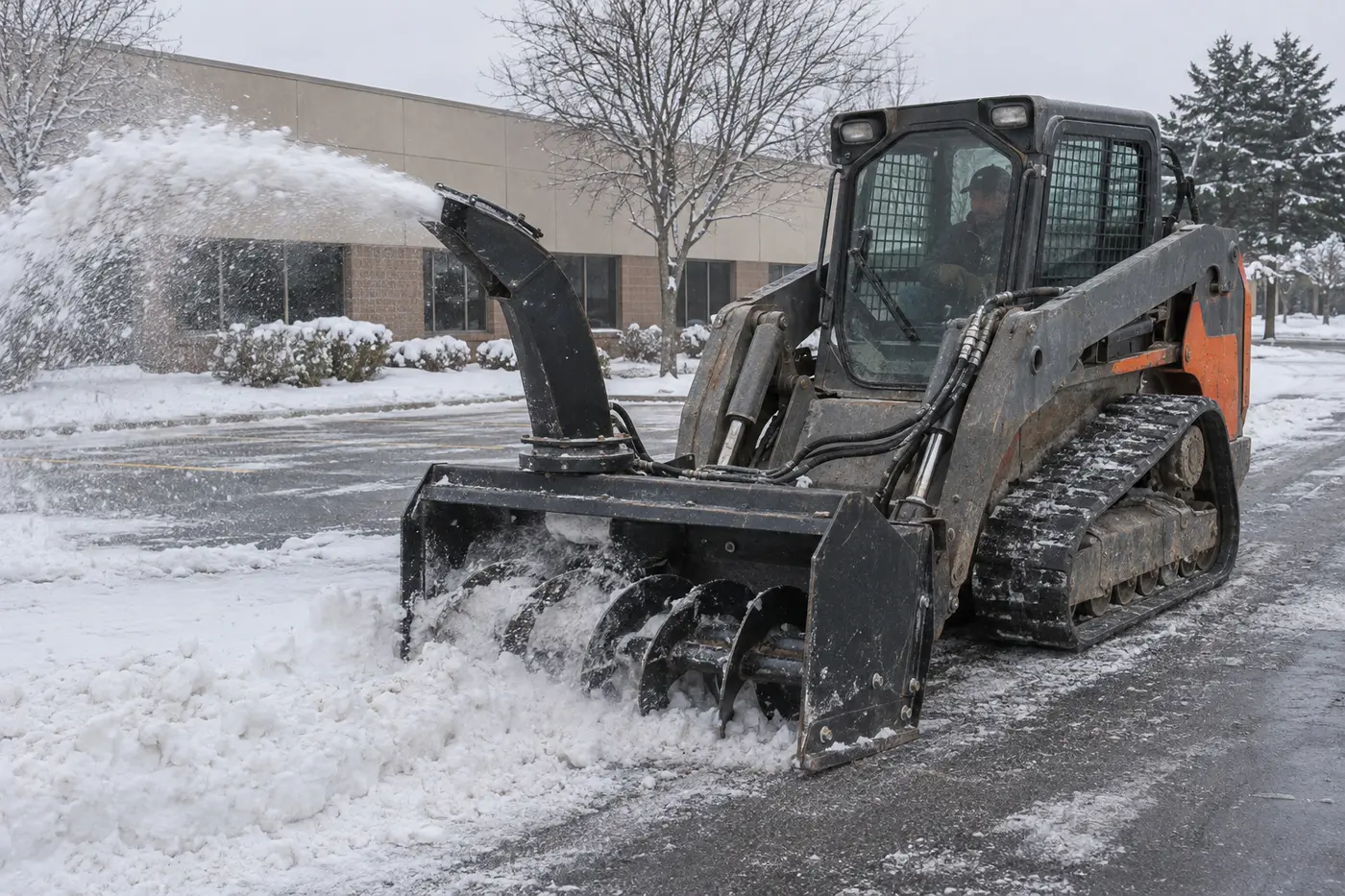
A snow blower attachment mounts on the quick-attach plate and uses the loader's auxiliary hydraulics. A general reference on snowblowers describes the two-stage design this way: an auger pulls snow in and feeds a high-speed impeller, which throws it out of a chute. Single-stage units rely on an auger alone, and that auger can contact the ground. Skid steer blowers are usually two-stage, because the impeller throws snow further and handles more of it.
Chutes on most blowers swing across a wide arc in front of the machine, so you can direct the snow where you want it. See the options in the skid steer snow blowers and mini skid steer snow blowers categories.
What are the hydraulic requirements?
This is the first question to ask. A blower's auger and impeller are driven by a hydraulic motor, and they need a certain flow and pressure from your loader. If your loader cannot supply enough flow, the blower will throw snow weakly and bog down in deep drifts. High-flow loaders can run larger blowers at full speed. Check the maker's stated requirement against your loader's published auxiliary output. Our hydraulic flow guide explains these numbers.
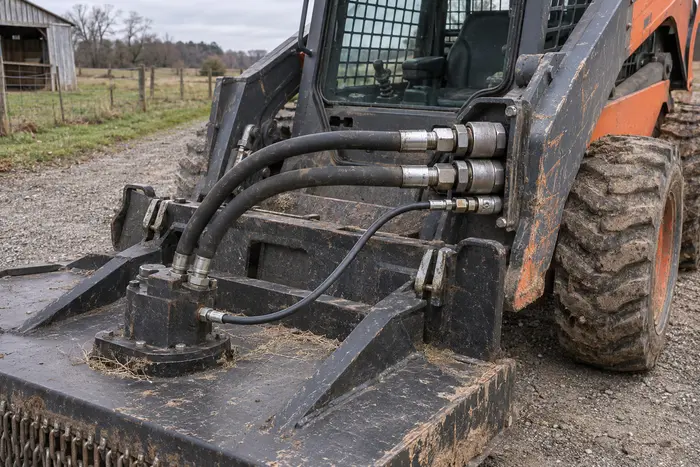
Some attachments also need a case drain line to protect the motor seals. Check that your machine has the port, and that the attachment's hoses and couplers match. Our case drain explainer shows why.
Blower, pusher or plow: which one?
| Tool | Best for | Limit |
|---|---|---|
| Snow blower | Removing snow from tight sites, deep or drifted snow, sidewalks | Slower; needs hydraulic flow |
| Snow pusher | Large open lots, fast clearing | Needs space to stack |
| Snow plow or blade | Driveways and roads, angled pushing | Pushes snow aside, not away |
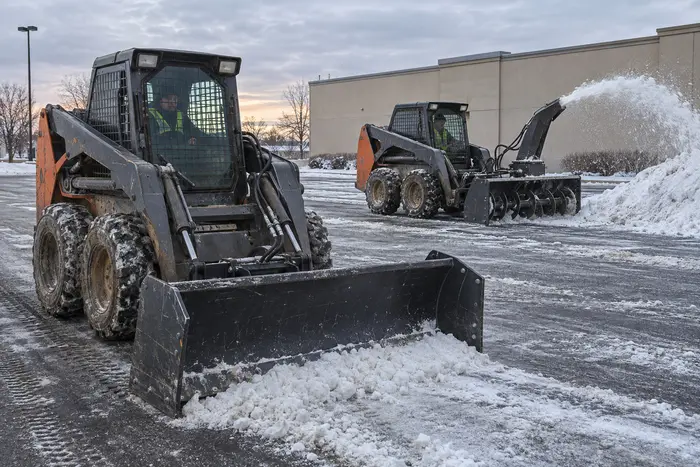
Many operators carry both: a pusher or plow to do the bulk, and a blower to remove piles. See snow plow vs pusher and snow blower vs snow plow to compare.
Features to look for
- Working width. A wider head clears more per pass but needs more flow and weight capacity.
- Hydraulic chute rotation. Lets you aim snow from the cab without stopping.
- Hydraulic deflector. Adjusts how high or low the snow is thrown.
- Cutting edge and skid shoes. Replaceable wear parts protect pavement and the housing.
- Impeller design. Impeller size and speed affect how far the blower throws and how well it copes with wet snow. Compare the maker's specs.
- Back drag option. Some blowers have a back-drag feature that lets you pull snow away from doors and edges.
- Shear bolts or protection. Guards the drive if the auger hits something solid.
Which snow types matter?
Light, dry snow is easy for any blower. Wet, heavy or packed snow loads the impeller and demands more flow. Ice chunks and frozen windrows left by plows can jam the auger. If your area gets heavy, wet snow, choose a blower with a stronger drive and check that the loader has enough flow. In very cold areas, check the hydraulic fluid and the attachment's lubrication points for cold-weather use.
Skid steer snow blowers in Canada
Buyers in Canadian winters often want a blower with good impeller strength, hydraulic chute control and a durable cutting edge for hard-packed snow. The same specs matter: flow, pressure and weight. If you ship across the border, ask us about cross-border delivery before you order. Our snow attachments for Canada guide covers more.
Checklist before you buy
- Find your loader's auxiliary flow and pressure in the manual.
- Pick a blower whose requirement is within that range.
- Check the attachment's weight against the loader's rated operating capacity.
- Confirm the mounting plate, hose connectors and case drain.
- Choose width based on your typical sites and snow depth.
- Look at wear parts and how easy they are to replace.
- Decide whether you also need a pusher or plow.
Operating and safety notes
- Keep people and pets well clear. A blower can throw ice and debris with force.
- Never reach into the chute or auger. Shut down and relieve pressure first, then clear jams with a tool.
- Scout the site for curbs, covers, rocks and hidden obstacles before the snow hides them.
- Drive slowly and keep the head low and close to the surface.
- Follow the operator manuals for the machine and the attachment.
Maintenance
After each shift, clear snow and ice from the housing, and grease the auger bearings and chute pivot. Check the cutting edge, skid shoes and hoses. Replace worn parts before the season, not in the middle of a storm. Store the blower with the hydraulic couplers capped and clean.
Where a blower earns its place
Blowers shine where snow has nowhere to go: dense downtown lots, loading docks, narrow drives with walls on both sides, and sidewalks lined with banks. They also help when snowbanks have grown and you need to cut them back or load trucks. On large open lots, a pusher moves more snow per minute, so a blower is the second tool, not always the first.
What it means for your season
Think about your whole winter route, not one site. If most of your accounts have room to stack, a pusher or plow will do most of the work and a blower is a bonus. If most sites are cramped, the blower becomes the main tool and flow and chute control should drive your choice. Either way, keep spare cutting edges, shear parts and hoses on hand, because the first big storm is a bad time to wait on a part.
Try to test the setup before the first storm. Run the blower on a quiet day to check that the chute and deflector respond, the hoses do not rub, and the machine has the power you expect. Fix problems in the shop, not on a lot with a customer waiting.
Keep spare shear pins or bolts, a cutting edge and a short length of hydraulic hose in the cab during storm season. A small repair kit can turn a day-ending breakdown into a quick roadside fix and helps keep your route on schedule.
Get the right fit the first time
Send us the make, model and year of your loader and the kind of sites you clear. A person checks fit against the maker's specs, and your quote shows one delivered price, freight to your address included. Ready when you are: get a fit-checked quote.
Questions buyers ask
what hydraulic flow does a skid steer snow blower need
It varies by model, so compare the blower's required flow and pressure with your loader's published auxiliary output. Too little flow gives weak throwing and stalls in deep snow. High-flow loaders can run larger blowers. Some models also need a case drain line.
is a snow blower better than a snow pusher on a skid steer
They do different jobs. A blower removes snow from tight sites with nowhere to stack it. A pusher moves snow fast across large open lots. Many operators use a pusher for bulk clearing and a blower to remove piles.
what is a two-stage skid steer snow blower
It uses an auger to pull snow in and feed a high-speed impeller that throws it out the chute. This handles deeper snow and throws it further than an auger alone. Most skid steer blowers use this design.
can a mini skid steer run a snow blower
Yes, if the blower is sized for the machine. Mini loaders have lower flow and weight limits, so choose a narrower blower built for compact machines. Compare the attachment's requirements with your mini's published output before you buy.