Snow guide
Skid Steer Snow Removal in Canada: Attachments That Work
Quick answer
For skid steer snow removal in Canada's deep snow, loaders typically run a snow pusher for open lots, an angle plow for lanes, a blower for deep snow and stacking, a broom for finishing and a spreader for traction. Plain salt works poorly below about 15 degrees Fahrenheit pavement temperature (about minus 9 Celsius), so cold regions often add sand or treated blends.
Shopping for this now? Get a fit-checked, delivered quote.
Key takeaways
- Pushers for volume, plows for lanes, blowers for deep snow.
- Check hydraulic flow before ordering a blower.
- Cold oil, ice-packed couplers and batteries need attention.
- Plain salt works poorly below about 15 F (about -9 C) pavement temperature.
What snow removal equipment works in a Canadian winter?
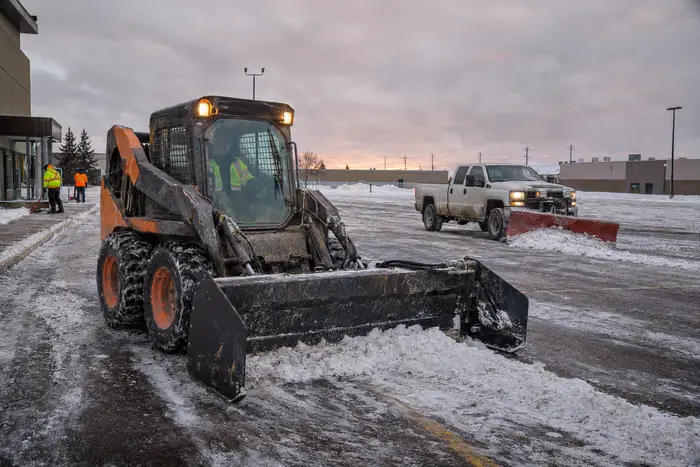
For deep, heavy and repeated snowfall, the usual loader-mounted toolkit is a snow pusher or plow for volume, a snow blower for throwing and stacking, a broom for finish work and a salt or sand spreader for traction. Which you need depends on your site, how much snow you get per storm, and where you can put it. Skid steer loaders use specialized snow attachments depending on conditions and work. Snow pushers move larger volumes across open areas, angled blades direct snow to the side, and snow blowers collect and discharge it.
Canadian winters add three complications: long cold stretches, large storms and nowhere to put the snow. Snowbanks fill lot edges and block sight lines. Operators stack, haul or blow snow away. The attachment you choose has to match the job.
Which attachment for which job?
| Job | Best attachment | Why |
|---|---|---|
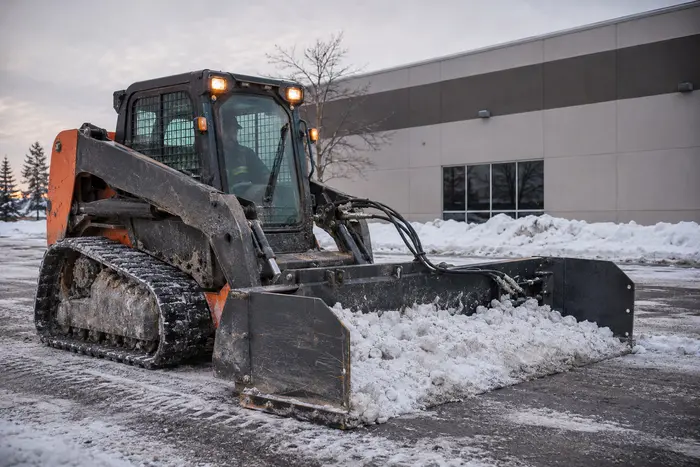
| Large open lots | Snow pusher | Moves a big volume per pass and stacks at the edge |
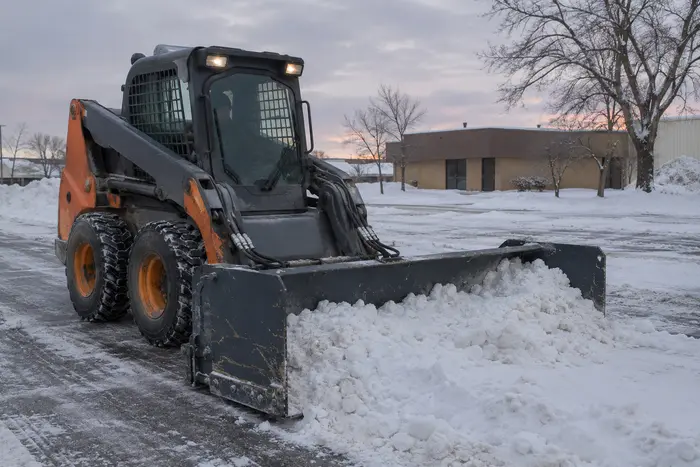
| Driveways and lanes | Angle plow | Casts snow to the side as you drive |
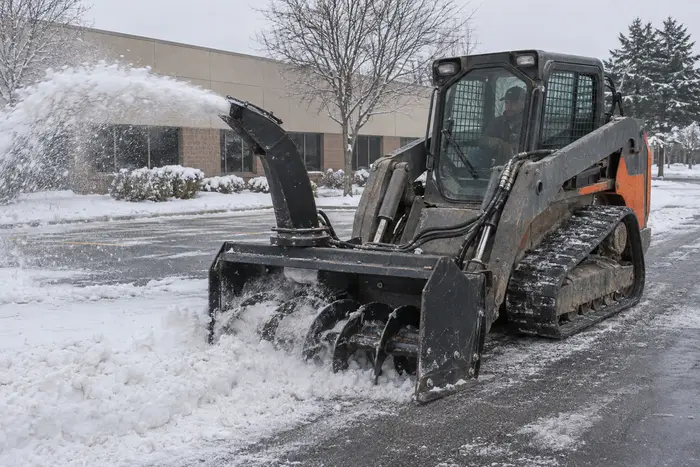
| Deep snow or stacking away from the site | Snow blower | Throws snow a distance and loads trucks |
| Sidewalks and finish passes | Broom | Cleans the final layer after plowing |
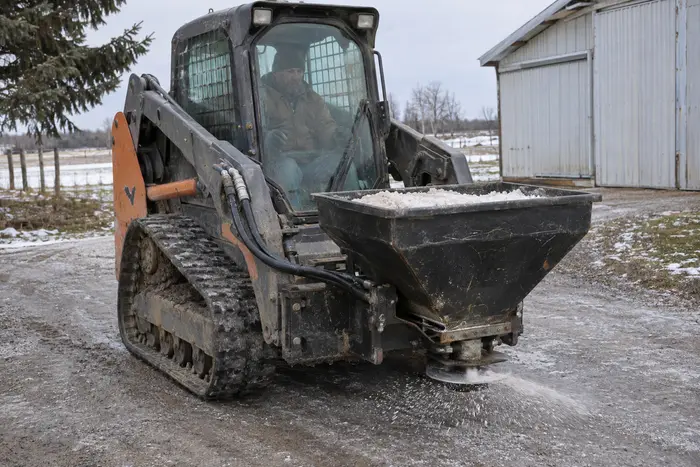
| Ice and traction | Salt or sand spreader | Treats surfaces after clearing |
| Compact snow or tight spots | Bucket with grapple or smaller blade | Handles piles and crowded areas |
Snow pusher or plow?
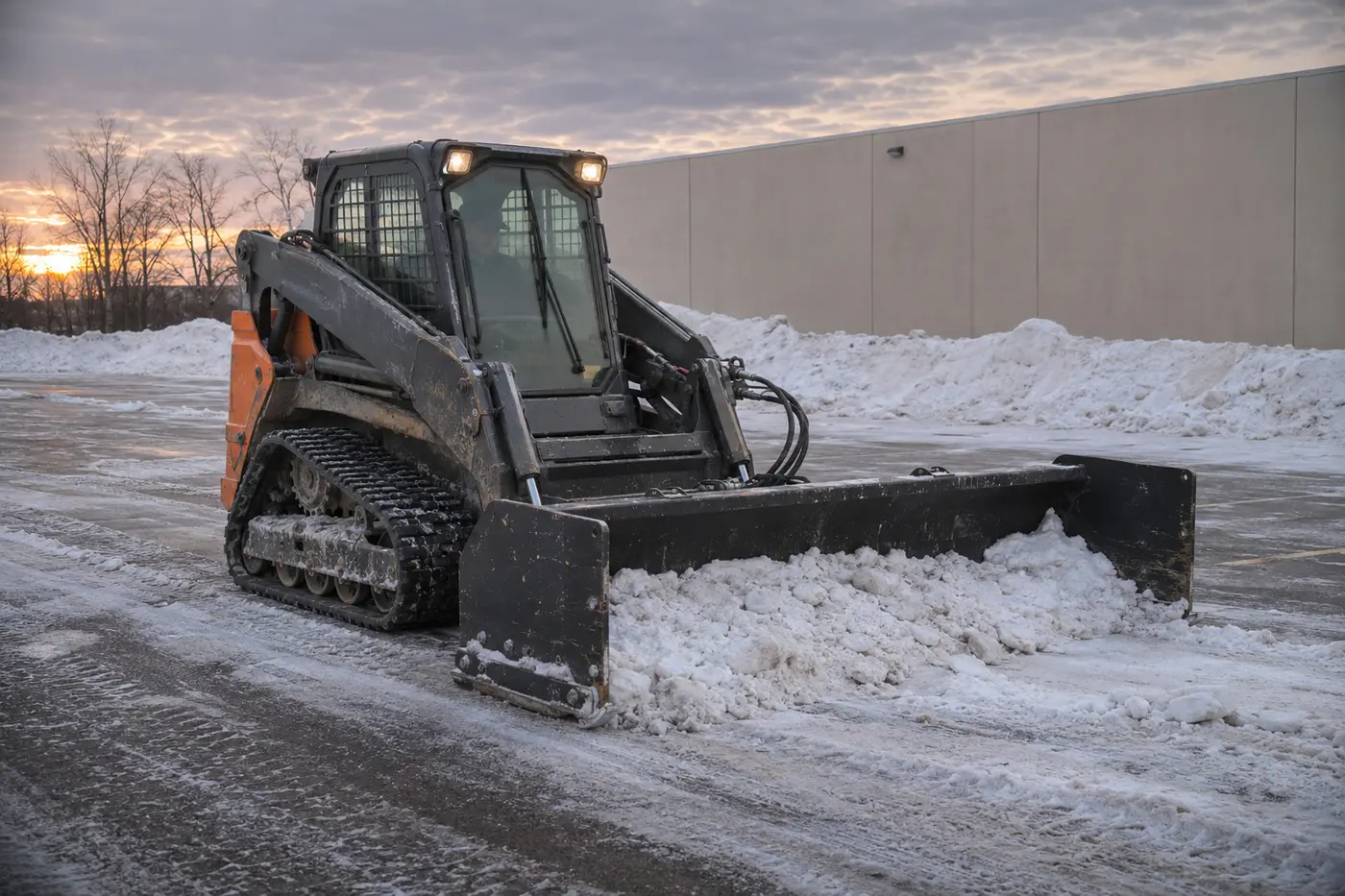
A pusher has a box shape with side wings. It holds a big load of snow in front of the machine and pushes it to a stack, which suits large lots with an open place to put snow. A plow or angle blade turns snow to the side as you drive, which suits narrow lanes and driveways. A pusher usually clears more area per hour on big lots. A plow is more flexible in tight spaces. Read our snow plow vs pusher guide and the snow pusher guide for detail.
When do you need a snow blower?
When the snow is deep, the snowbanks are tall or you need to remove snow from the site. A blower attachment cuts into the pile and throws the snow through a chute, away from the path or into a truck. Smaller blowers run on standard flow, but larger and faster ones need high-flow hydraulics, so check your machine's flow against the blower's requirement. Read our best skid steer snow blower guide and snow blower vs snow plow to compare.
Cold-weather considerations
- Hydraulic oil. Cold oil is thick and slow. Warm up the machine before you work, and follow the maker's guidance on cold-weather oil.
- Tracks or tires. Compact track loaders float and pull better than bare tires in deep or soft snow, though rubber tracks can still slide on hard ice. Over-the-tire tracks add traction to a wheeled machine. See over-the-tire tracks and the wheels vs tracks guide.
- Cab and visibility. A heated cab, working wipers and lights make a big difference on night and early morning shifts.
- Couplers and plates. Ice and snow can pack into plates and hydraulic connections. Clean them before you latch on.
- Battery and starting aids. Cold drains batteries. Block heaters and good batteries keep you running.
- Fuel. Use the right winter fuel grade for your engine.
When does salt work in Canada?
Many Canadian winter days are colder than salt can handle. A Minnesota Department of Transportation handbook says the working temperature of salt ends at about 15 degrees Fahrenheit pavement temperature, which is roughly minus 9 degrees Celsius. Below that, untreated salt melts very little ice and works slowly. In deeper cold, even treated blends lose much of their effect, and traction materials such as sand may be the practical option. If you work in northern or prairie climates, plan for sand or treated blends and a spreader that handles them. See our sand or salt guide and skid steer salt spreader guide.
Which machine carries the attachments?
A mid-size or large-frame loader is a common winter workhorse, since pushers are wide and the bigger blowers need more hydraulic power. Smaller machines handle sidewalks and driveways well. Weigh the attachment against your loader's rated operating capacity, check the hydraulic flow and confirm the mounting plate. Our snow removal with a skid steer guide and the sidewalk snow removal equipment guide help you build a set-up.
Starting a snow business
If you plan to plow for hire, you will want a pusher, a blower, a spreader and some form of liability insurance and contracts. Our guide on how to start a snow removal business covers the basics. Check municipal by-laws on snow storage, dumping and salt use, which vary by city and province.
Plan ahead
Order attachments before the season, not during the first storm. Test fit, hydraulics and controls in the fall, and keep spare cutting edges, hoses and pins on hand. Parts and freight lead times can stretch in winter, and a machine that is down in a blizzard costs far more than the part.
Where does the snow go?
In a Canadian winter, storage is as important as removal. Choose snow storage areas before the first storm: away from drains, doorways, fire hydrants, sight lines and places where meltwater will run onto walkways and freeze. Stack snow high instead of wide, so it does not eat parking. Pushers and blowers differ here. A pusher stacks at the end of its run, which works if you have a place to pile. A blower can throw the snow a distance or load it into trucks to haul away, which matters when the site is tight. Dumping rules vary by municipality, and some prohibit dumping snow into waterways. Check local by-laws.
Plan your winter set-up
- List your sites and how big each one is.
- Decide where snow will be stacked or hauled.
- Pick the main clearing tool for each site: pusher, plow or blower.
- Add a broom for finishing and a spreader for ice control.
- Check your loader's capacity, hydraulic flow and mounting plate against each tool.
- Stock wear parts and service the machine before the season.
With those steps done, send us your machine make, model and year. A person confirms fit against the maker's specs and checks that the hydraulics and mounting suit what you plan to run.
Get the right fit the first time
Send us your machine make, model and year and tell us the job. A person checks the attachment against the maker's specs, then you get a fit-checked quote with delivered pricing before you pay. The supplier ships direct, and warranty terms, if any, are written on your quote.
Questions buyers ask
What is the best attachment for deep snow?
A snow blower handles deep snow and tall banks because it throws or loads the snow away from the site. Pushers move big volumes across open lots. The best choice depends on where you can put the snow and on your loader's hydraulic flow.
Can a skid steer remove snow?
Yes. Skid steers excel at snow removal, especially in smaller parking lots where maneuverability around cars, light poles and curbs matters. Common attachments are pushers, angle plows, blowers and brooms. Match each tool to your loader's capacity and hydraulics.
Do I need tracks for snow removal in Canada?
Not always, but tracks help on soft, packed or icy ground. Compact track loaders float better than bare tires in deep or soft snow, though rubber tracks can slide on hard ice. Over-the-tire tracks add traction to a wheeled machine and are a middle option.
At what temperature does road salt stop working?
A Minnesota DOT handbook says the working temperature of salt ends at about 15 degrees Fahrenheit pavement temperature, roughly minus 9 degrees Celsius. Below that, untreated salt melts little ice. Treated blends or sand may be needed in deep cold.
Can a forklift or telehandler use snow attachments?
Some telehandlers and forklifts can run snow pushers, blades or buckets made for them, but capacity, mounting and hydraulics vary a lot. Check the machine's manual and rated capacity. A skid steer or compact track loader is the more common carrier for winter attachments.