Snow guide
Sidewalk Snow Removal Equipment: What Works and When
Quick answer
Sidewalk snow removal equipment ranges from walk-behind blowers to compact loaders, tractors and mini skid steers fitted with a plow, pusher, blower or broom. Choose by path width, snow depth, how many sites you clear, and whether you need a cab, then add a spreader for de-icing.
Shopping for this now? Get a fit-checked, delivered quote.
Key takeaways
- Path width and turning room decide machine size more than snow depth does
- Pushers and plows move snow fast; blowers throw it away from tight areas
- A cab and heated seat matter on long shifts
- Brooms and spreaders handle the finish and de-icing
- Check hydraulics, quick attach and coupler fit before you buy an attachment
Sidewalks are a different problem from parking lots. The paths are narrow, they are shared with people, and there are curbs, signs, benches and utility covers in the way. The machine that clears a lot well can be too big for a walkway. This guide compares the equipment people use for sidewalks and paths, how to match it to your sites, and what to ask before you buy.
What equipment is used for sidewalk snow removal?
There are four broad families. Each has a place.
- Walk-behind and ride-on blowers. Small, low-cost to run and good for short walks and steps. They throw snow to the side, so they suit light and medium snowfalls.
- Compact tractors with a front blade, blower or loader. A compact tractor can carry a blower on the back and a loader or blade on the front, which suits long paths and mixed properties.
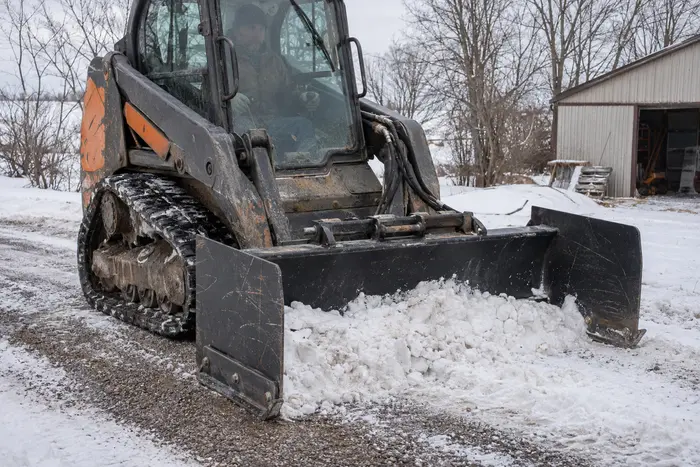
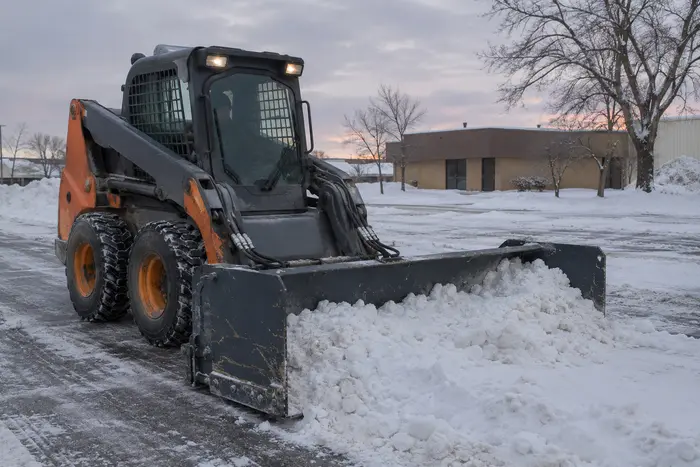
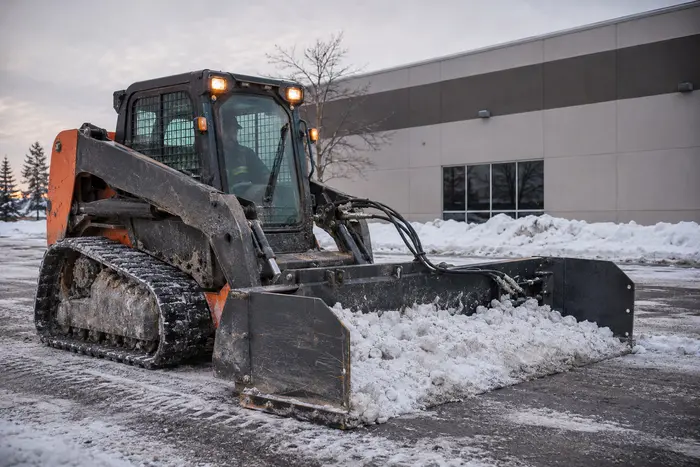
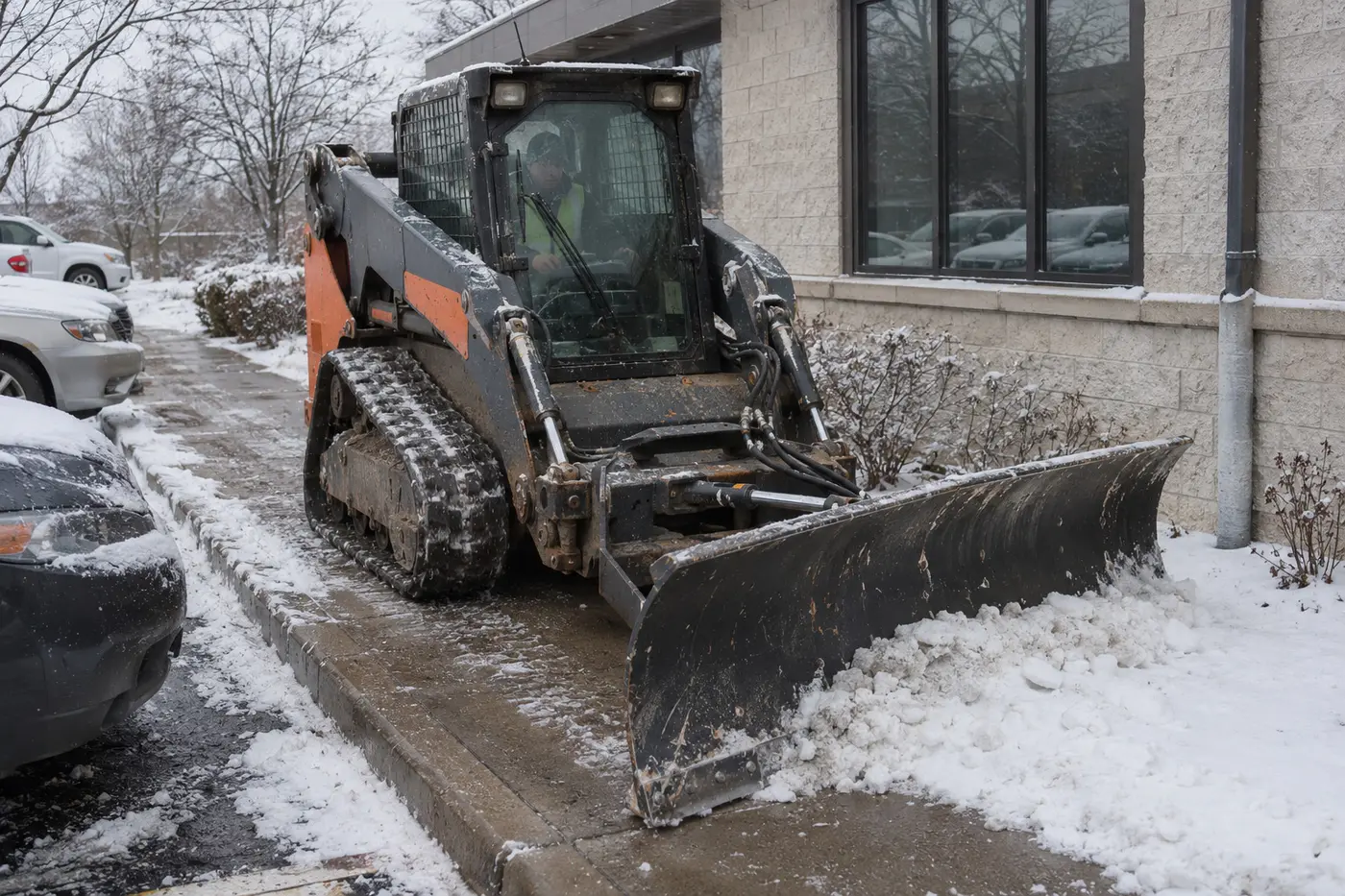
- Mini skid steers and compact loaders. Narrow, tight-turning machines that carry a snow blade, pusher, blower or broom through gates and along walkways.
- Utility vehicles and dedicated sidewalk machines. Articulated, narrow machines built for city walkways, often with a cab.
If you already own a compact loader or skid steer, attachments are the cheapest way into sidewalk clearing. See mini skid steer snow blades and pushers and skid steer snow blowers for the options.
How do the attachments compare?
| Tool | Best at | Watch out for |
|---|---|---|
| Snow blade or plow | Moving snow to the side along a straight path | Piling snow against walls; angle and cutting edge wear |
| Snow pusher | Pushing large amounts forward into a pile | Too wide for narrow paths; needs space to stack |
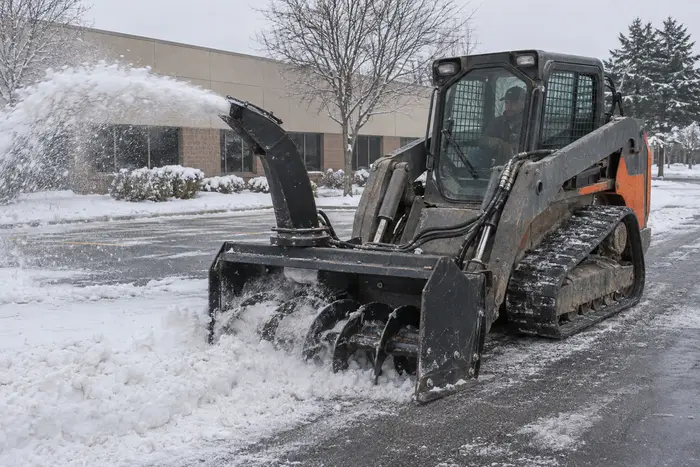
| Snow blower | Throwing snow away from tight spaces and onto lawn | Needs hydraulic flow; chute direction near people |
| Broom | Final sweep after plowing; dry, light snow | Slower; wet snow clogs bristles |
| Salt spreader | Applying de-icer evenly after clearing | Corrosion and plant damage; calibration |
A common combination is a blade or pusher for the first pass and a broom or spreader for the finish. See our guide on snow plow vs pusher for more on the choice.
How do you choose by machine size?
Start with the width of the narrowest path and gate you must pass through. A machine and blade that do not fit will cost you more time than a smaller, slower one. Then think about turning space at the end of a run, how deep the snow gets, and how many sites you clear in a shift.
Skid steers steer by skidding their wheels or tracks, which lets them turn within their own length. That is useful in tight spots, and it is the reason they are popular for sidewalk work. High ground friction when skidding can damage soft or fragile surfaces, so check pavers and lawn edges before the first storm. Tracked versions are called compact track loaders and they grip well in packed snow.
- Measure path and gate width at the narrowest point.
- Pick the blade width a little narrower than the path so you can turn without clipping edges.
- Confirm lift and weight. A heavy pusher or blower must sit within the machine's rated operating capacity.
- Check hydraulic needs. Blowers and angle blades use auxiliary hydraulics. Confirm flow, pressure and couplers.
- Decide on tires or tracks. Tracks spread weight and grip well in packed snow, but rubber tracks can slide on bare ice. Some wheeled machines use chains or snow tires.
Do you need a cab?
If you clear sidewalks for hours at a time in winter, a cab is worth serious thought for comfort and safety. A heated cab helps keep the operator alert and keeps snow and wind off the controls. If you clear in short bursts or have other help, an open machine can work. Check that the cab you pick has good visibility to the sides, since you will be next to curbs, posts and people.
Hydraulics, quick attach and fit
Most full-size skid steers use the universal quick attach plate. Mini skid steers often use a smaller mounting pattern of their own, so check yours. The hydraulic couplers vary by machine and tool. Angle blades need hydraulic cylinders for angling, and blowers need a motor. Many machines have limits on auxiliary flow, and a blower that needs more flow than the machine can supply runs slowly. Ask the seller for the tool's flow and pressure range and check it against your machine. A person confirming fit against the maker's specs is the cheapest insurance on this.
Sidewalk-specific safety and etiquette
- Look for people before every move. Sidewalks are shared. Keep reversing slow, and use a spotter in busy areas.
- Aim the chute carefully. Blowers can throw material and ice far.
- Do not stack snow on crossings. Leave sight lines at corners and driveways.
- Protect surfaces. A skid shoe, rubber edge or poly cutting edge reduces scuffing on pavers and concrete.
- Follow local rules. Some cities restrict where you can pile snow or what de-icers you can use.
- Follow the manuals. The machine and attachment manuals govern.
What about de-icing?
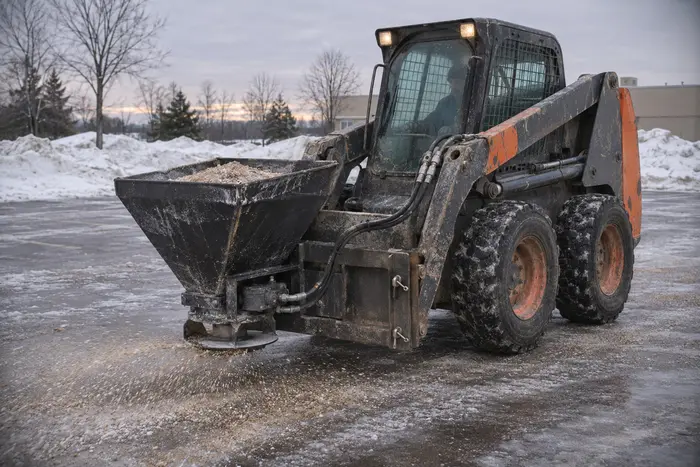
Clearing leaves a thin layer that can freeze into ice. Spreaders apply salt, sand or blends in an even layer after the pass. Chlorides corrode metal and can harm lawns and plants near the path, so use only what you need. Our guide on sand or salt for winter maintenance covers the tradeoffs, and skid steer salt spreaders shows the equipment.
A simple plan for a storm
Good sidewalk crews work to a routine, and the routine saves more time than a faster machine. Walk the site before the first storm and mark curbs, posts, hydrants, drain covers and any raised pavers with stakes or flags. Decide where snow will be stacked so it does not block drains, crossings or the next storm's pile. Start with the main entrance and the path to it, then work outward to secondary walks. Make the first pass early in the storm on heavy snowfall, so the snow does not compact under foot traffic and turn to ice. Finish with a broom or spreader pass once the snow stops.
Keep notes on what each site needed and how long it took. After a season, those notes tell you which sites suit a small machine and which need a bigger one.
Operating costs to think about
Running costs for a sidewalk machine are mostly wear items, and they add up. The cutting edge, shoes, bearings in broom drives and hydraulic hoses are the usual items. A bolt-on cutting edge is a routine replacement. Storage matters too: keep attachments dry, and rinse salt from steel at the end of the season. Plan for an indoor or covered place to park the machine so it starts in the cold.
Buying checklist
- List your sites and the narrowest path at each.
- Choose machine size and decide on tracks, tires or chains.
- Pick the main tool and a finishing tool.
- Check hydraulics, couplers and quick attach.
- Decide whether you need a cab and lights.
- Plan de-icing and storage.
Get the right fit the first time
Send us your machine make, model and year and what you plan to do with it. A person checks fit against the maker's specs, and you approve a delivered price before you pay. Get a fit-checked quote.
Questions buyers ask
What equipment do you need for sidewalk snow removal?
Most crews use a compact loader, mini skid steer or tractor with a snow blade, pusher or blower, plus a broom or spreader for the finish. Choose by path width, snow depth, how many sites you clear and whether you want a cab.
What is the best machine for clearing sidewalks?
There is no single best. A narrow, tight-turning machine such as a mini skid steer or compact loader fits most walkways, while tractors suit long paths. Measure your narrowest gate and match the machine and tool to it.
Can a skid steer be used for sidewalks?
Yes, if it fits the width of the path and the surface can take the weight. Skid steers can turn in about their own length, which helps. Their skidding can mark pavers and soft surfaces, so test on a small area first.
Is a snow pusher or a snow plow better for sidewalks?
A plow moves snow to the side along a straight path, so it is usually the better fit for narrow walks. A pusher moves large volumes forward into a pile and suits wide, open areas that have room to stack the snow it collects.
Do I need a cab for sidewalk snow removal?
If you work long shifts in winter, a cab is worth having for warmth, visibility and wind protection. For short runs or occasional use, an open machine can work. Check side visibility since you work close to curbs and people.