Snow guide
Skid Steer Snow Pusher: Sizing and Buying Guide
Quick answer
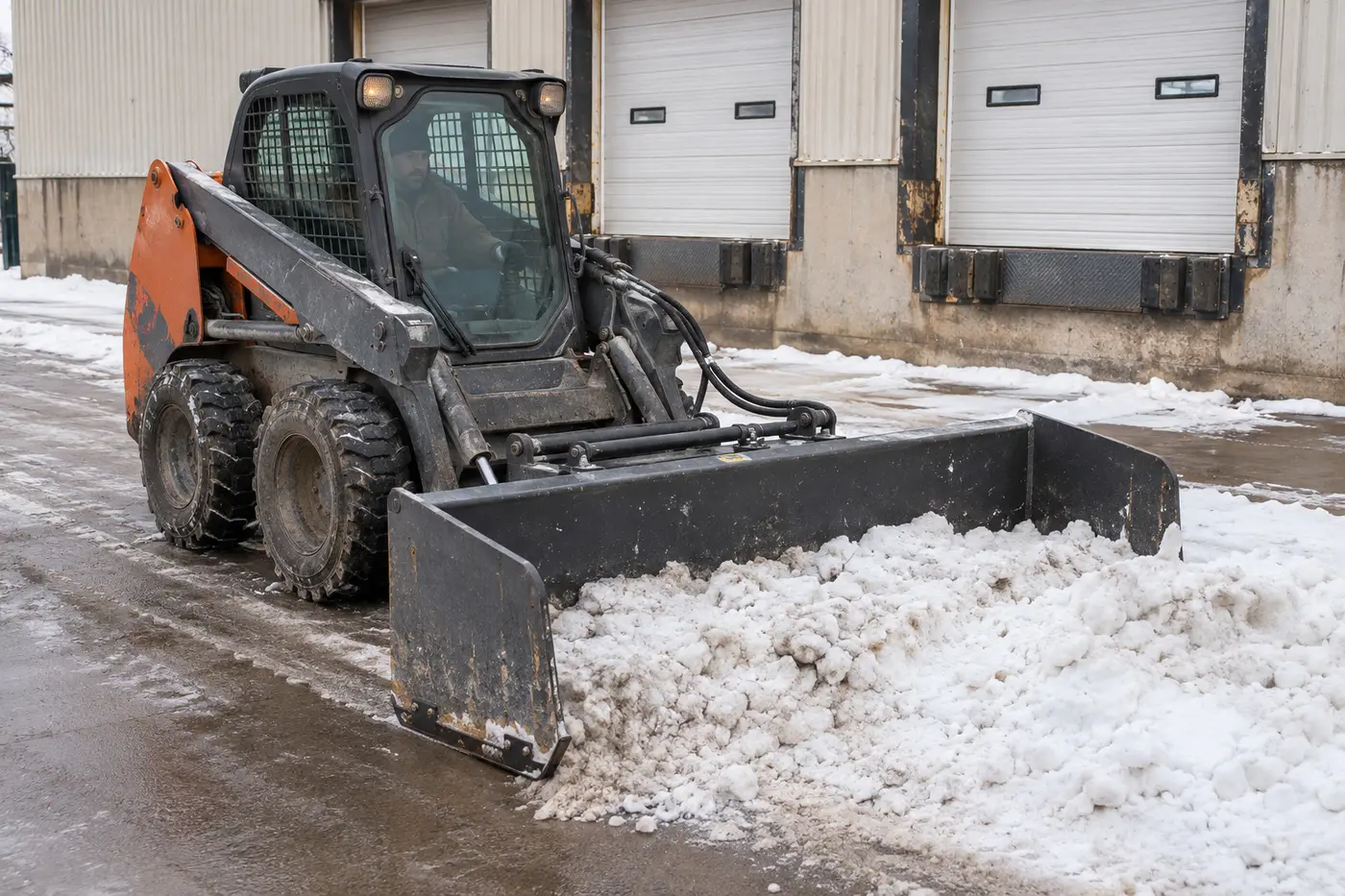
A skid steer snow pusher is a wide box-shaped blade that carries snow ahead of the machine. Size it to your loader's weight and rated capacity, not to the widest one available. Look at box depth, cutting edge, side wings and whether you need a back drag edge.
Shopping for this now? Get a fit-checked, delivered quote.
Key takeaways
- Pushers move a lot of snow per pass on large, open surfaces.
- Width must match your machine's weight, traction and visibility.
- Cutting edge type depends on the surface you clear.
- Wings and back drag add capability and weight.
A skid steer snow pusher is the workhorse for parking lots and loading docks. It looks simple, but the details decide how well it works and how hard it is on your machine. This guide covers how to size one, which features matter and how to check fit before you order.
What is a snow pusher?
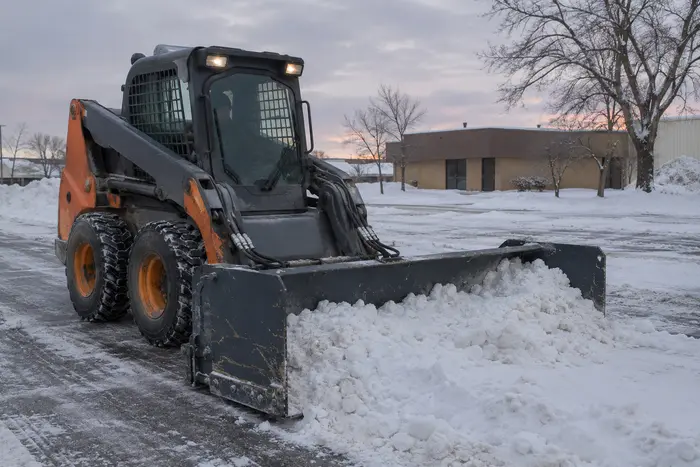
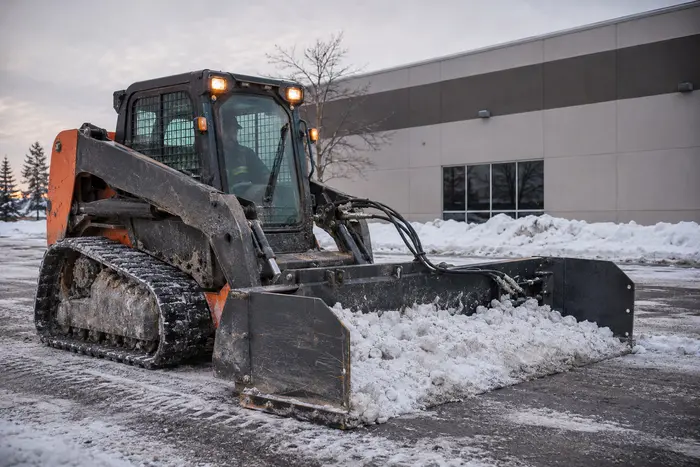
A snow pusher is a wide box with a flat front blade and fixed side walls. As you drive forward, snow collects inside the box and rolls ahead in a long pile. You push the pile to a designated stacking area. Because the sides keep snow inside, a pusher moves a lot more snow per pass than a plain bucket or a plow that rolls snow to the side. It does not throw snow. For that you need a blower. Our guide to pusher vs plow compares the two. For the whole picture, see snow removal with a skid steer.
How to size a skid steer snow pusher
Bigger is not always better. A pusher that is too wide for your machine will overload it, reduce traction and make it hard to steer in a storm. Think about these factors:
- Machine weight and traction. A heavier machine, especially on tracks, can push a wider box than a light wheeled machine.
- Rated operating capacity. Snow in a pusher is heavy, especially wet snow. Stay inside your machine's rating and follow the operator manual.
- Hydraulic and lift capability. A big box puts load on the lift arms when you raise it for transport.
- Site layout. Tight lots favor narrower boxes. Wide-open lots favor wider ones.
- Visibility. A wide box can block your view of corners. You should be able to see the edges.
If you do not know the width that suits your machine, send us your make, model and year. We check the fit against the maker's specs.
Key features to compare
| Feature | What it does | Good for |
|---|---|---|
| Box depth | Sets how much snow fits in the box | Deep drifts need more depth |
| Side wings | Fold out to widen the sweep or in to narrow it | Lots with changing widths |
| Back drag edge | Lets you pull snow back from a dock or door | Loading docks and garage doors |
| Cutting edge | The wear strip at the base | Steel for hard-packed snow, rubber or poly for finished pavement |
| Trip edge | Lets the cutting edge fold back when it hits a hidden obstacle | Lots with curbs, manholes and uneven pavement |
| Adjustable skid shoes | Set the height of the edge above ground | Gravel lots |
Pushers with wings
Wing pushers have side panels that angle outward to make a wider box, or fold back to push a narrower path. They help you clear big areas fast and then fit between parked cars or posts. They add weight and complexity. If you work mostly on open lots, a plain box is simpler and cheaper to maintain. If you work lots with a lot of variety, wings are worth a look.
Back drag pushers
A back drag edge, also called a pull-back, is a second cutting edge on the back of the box. It lets you reverse and pull snow away from a building face or dock. This keeps you from pushing snow against a door. It is a good feature if you clear loading areas. If you work mostly in open parking, you may not need it.
Cutting edge options
- Steel edge. Scrapes hard-packed snow and ice well. It can scratch asphalt and wear faster on abrasive pavement.
- Rubber or poly edge. Gentler on pavement and quieter. It does not cut ice as cleanly.
- Replaceable bolt-on edge. Lets you swap edges by season or surface.
Do you need high hydraulic flow?
Most simple pushers need no auxiliary hydraulics. Some wing and angle models use hydraulic cylinders. Check what yours needs and compare it with your machine. See skid steer hydraulic flow explained.
Fit and mounting
Pushers attach through the quick-attach plate. Confirm yours matches the plate type. Read quick-attach plate types and our fit-check guide. If your machine uses a nonstandard system, a mounting plate can adapt it. Browse snow pushers and mini skid steer snow blades and pushers for smaller machines.
Operating tips
- Clear a path to the stacking area before you start.
- Push in straight lines with overlapping passes.
- Do not drive fast with a loaded box. Control matters more than speed.
- Lift the box over curbs, manholes and speed bumps.
- Do not stack snow where it blocks sight lines or drains.
- Check the cutting edge and bolts after each storm.
What it costs to run
A pusher is a simple tool and wears mainly at the cutting edge and side shoes. Replace edges before they wear into the box. Keep the box clean, touch up paint and store it off the ground. Salt speeds rust, so wash it when you can.
When a pusher is the wrong choice
If you need to move snow off site, you need a blower or a truck-loading setup. If your lots are narrow and twisting, a plow or a smaller pusher may fit better. If your machine is small, a very wide pusher can overload it. Choose the tool for the site, then size it for the machine.
Not sure what suits your site and machine? Send us a note with the make, model and year and a description of the lots you clear. A person will recommend a fit.
Pre-season checklist
- Inspect the box for cracks, bent panels and loose bolts.
- Check the cutting edge and replace it if it is worn near the box.
- Grease any pivot points and check hydraulic hoses on wing models.
- Test the quick-attach lock and confirm both pins seat fully.
- Mark your lot with stakes or reflectors for curbs and hazards before snow hides them.
Pushers for small and mini machines
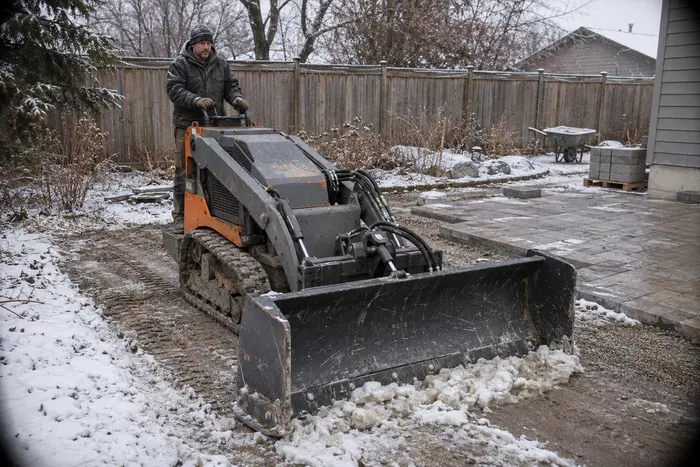
Compact machines can run pushers too, but at smaller widths. They have less weight, less traction and less lift capability, so a narrower box is the right call. Wet snow is much heavier than dry snow, and a machine that handles a dusting easily can struggle with a slushy storm. Use smaller passes when snow is heavy and wet. Check our best mini skid steer attachments guide for more.
Common problems
- The pusher digs into gravel. Use adjustable shoes and raise the edge a bit above the surface.
- The machine loses traction. Reduce the load, add weight or use tracks or chains.
- Snow spills over the top. Choose a box with more depth or take shallower passes.
- Edges wear quickly. Rough pavement and salt cut edges faster. Check them often.
Get the right fit the first time
Fit problems are the expensive mistakes, and they are easy to avoid. Send us your machine make, model and year and what you plan to do with it. A person checks the fit against the maker specs, and you see the delivered price before you pay. When you are ready, get a fit-checked quote.
Questions buyers ask
What size snow pusher do I need for my skid steer?
Match width to your machine's weight, traction and rated operating capacity rather than choosing the widest. Heavier tracked machines can push wider boxes. Check visibility and site layout, and ask for a fit check against your make and model.
What is a back drag snow pusher?
A back drag pusher has a second cutting edge on the rear of the box. You can reverse to pull snow away from a dock or building face instead of pushing it against a door. It is useful at loading areas.
Is a snow pusher better than a plow?
A pusher moves more snow per pass on open lots and docks. A plow angles snow aside and suits drives and roads. To load trucks or throw snow off a site, a blower is the better tool. Choose by site layout. Specs vary by model, so confirm the details before you buy.
Do snow pushers with wings work better?
Wings let you widen the sweep for open areas and narrow it for tight spots. They add weight and moving parts, so they pay off on varied sites. For open lots a plain box is simpler.
What cutting edge is best on a snow pusher?
Steel edges cut hard-packed snow and ice but can scratch pavement. Rubber or poly edges are gentler on finished surfaces. A replaceable bolt-on edge lets you swap by surface and season. If you are unsure, a person can check it against your machine's specs.