Snow guide
Sand or Salt for Ice? What Works on Lots and Drives
Quick answer
Sand or salt for ice? Use salt when you want ice to melt and the pavement is about 15°F or warmer. Use sand when it is colder or you only need traction, because sand does not melt anything. For lots that need both, spread sand with under 10 percent salt mixed in.
Shopping for this now? Get a fit-checked, delivered quote.
Key takeaways
- Salt melts ice; sand only adds traction.
- Rock salt works at pavement temperatures of about 15°F and warmer.
- Sand works at any temperature but must stay on the surface.
- Keep salt under 10 percent of a sand mix just to stop it freezing in the pile.
- More salt does not melt faster. Use the right amount once.
The sand-or-salt question comes up every winter on parking lots, driveways and walkways. The two do different jobs. Pick the wrong one and you either waste material or leave a slick surface. Here is the short version, then the detail.
Is sand or salt better for ice?
It depends on what you need and how cold it is. Salt is a deicer. It lowers the freezing point of water so ice and snow can melt. Sand is an abrasive. It sits on top of the ice and gives tires and boots something to grip. It does not melt anything.
| Salt (sodium chloride) | Sand | |
|---|---|---|
| What it does | Melts snow and ice | Adds traction |
| Works when | Pavement about 15°F and warmer | Any temperature |
| Speed | Faster when warmer, slow when cold | Immediate grip |
| Weakness | Stops working in deep cold | Gets buried and must be reapplied |
| Cleanup | Mostly washes away | Has to be swept up in spring |
How cold can it be for salt to work?
A university facilities guide that reproduces Minnesota winter-maintenance data says sodium chloride is effective at pavement temperatures of 15°F (about -9°C) and warmer. The practical lower limit for plain salt is listed at 15°F, with a theoretical limit of -6°F (about -21°C). Calcium chloride goes much lower, to about -20°F (about -29°C) in practice. Note that this is pavement temperature, not air temperature. Pavement in sun can be warmer than the air, and shaded concrete can be colder.
Speed also changes with temperature. In the same chart, one pound of salt melts about 46 pounds of ice at 30°F in around 5 minutes, but only about 6 pounds at 15°F, and that takes about an hour. Below that, dry salt is described as ineffective and can blow away before it melts anything.
When should you use sand instead?
Use sand when it is too cold for salt, when you only need grip, or when you want less chloride on a site. The guide notes that sand works well at cold temperatures when deicers are not effective. It does not melt snow or ice once it lands on pavement.
Two limits to plan around. First, sand has to stay on top. If it is buried under new snow, it is no longer helping and needs another pass. Second, sand has to be cleaned up later, or it washes into drains and clogs them.
Should you mix sand and salt?
Yes, but keep the ratio right. The guidance says less than 10 percent salt should be mixed into winter sand, and the only job of that salt is to keep the pile from freezing solid so it flows through a spreader. Go above 10 percent and you are trying to melt ice with sand, which is inefficient. A 50-50 mix is flagged as being always half wrong: too much salt for traction, too little sand for melting. If you need melting, use a deicer. If you need traction, use sand.
How much salt should you use?
Less than most people think. The same guidance says that if the proper amount is already down, more salt will not make snow and ice melt faster, and adding more of the same deicer wastes money and salt. Apply once, then wait for it to work. Plow or push the slush off first so you are not melting a thick layer.
What to do on a lot, step by step
- Clear the snow first. Salt works on a thin layer of ice, not on a thick pack.
- Check the pavement temperature, not just the air reading.
- If it is about 15°F or warmer, spread salt evenly at the lowest effective rate.
- If it is colder, spread sand, or sand with under 10 percent salt.
- Recheck after traffic and snowfall. Reapply sand if it is buried.
- Sweep up leftover sand once the thaw arrives.
Spreading it fast on a big site
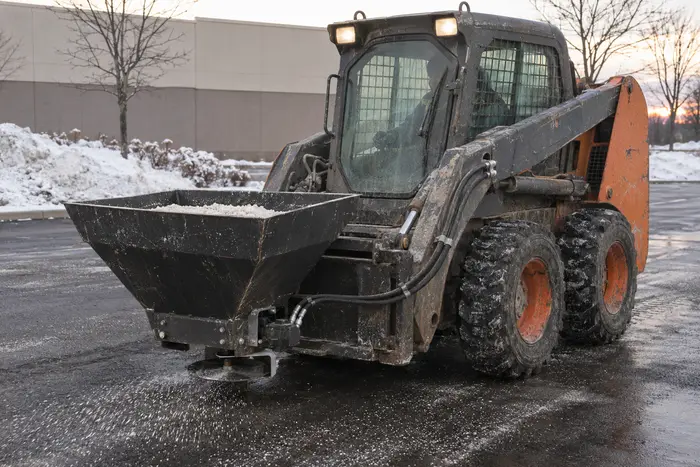
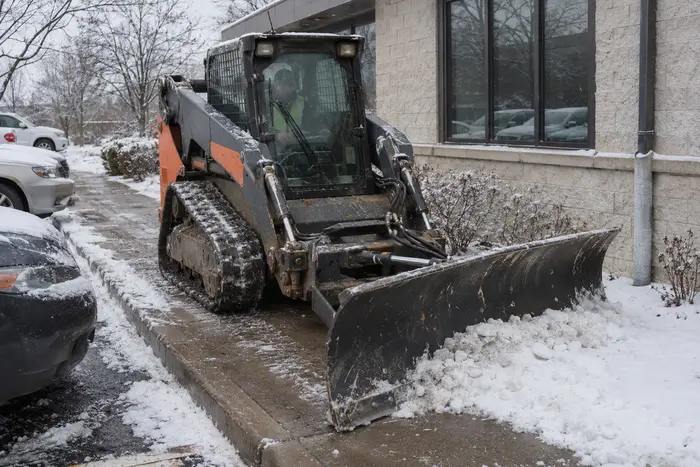
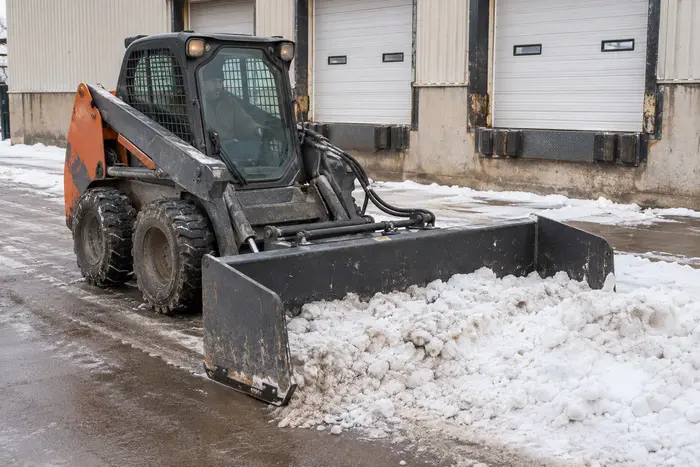
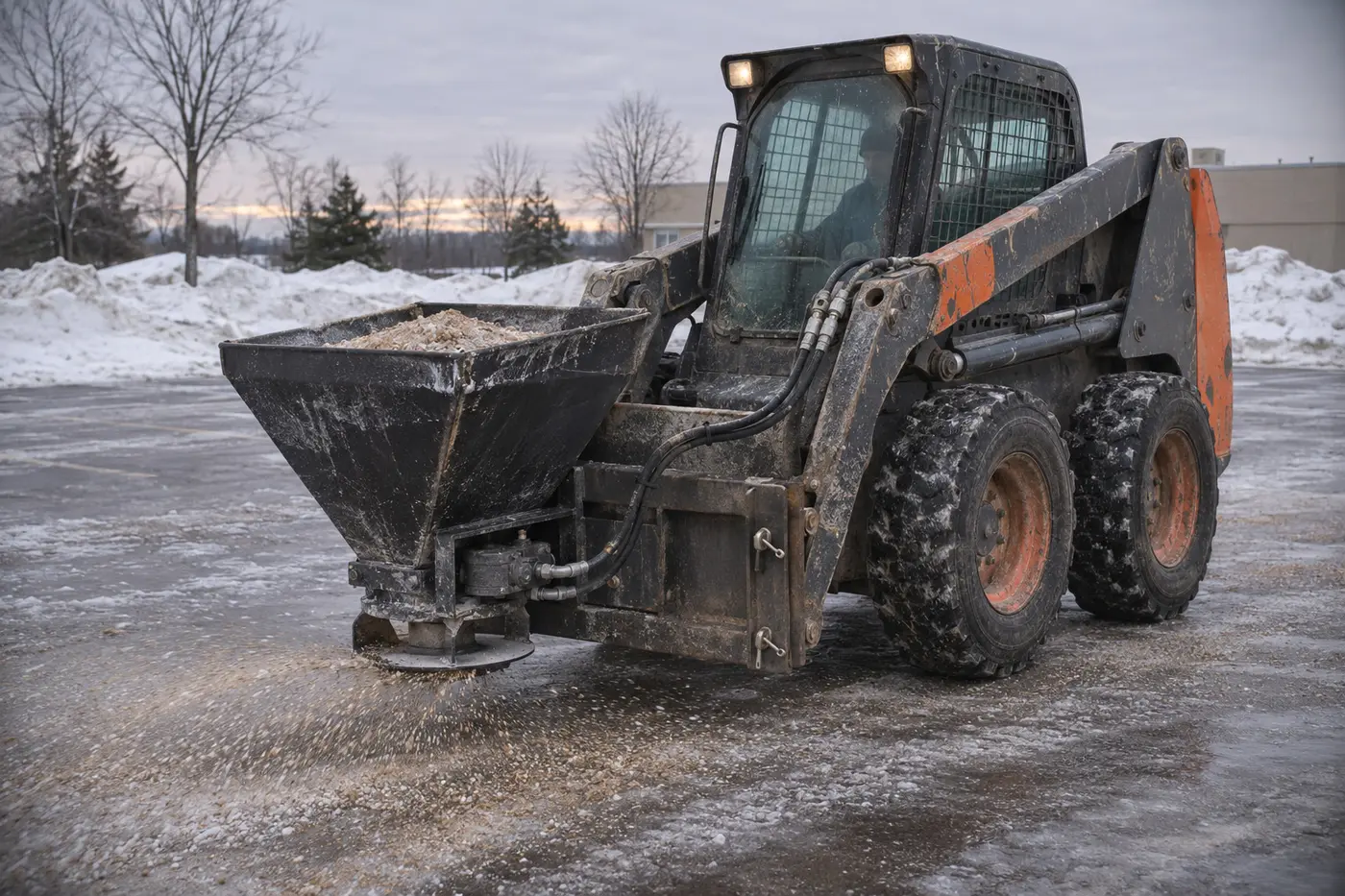
On a larger property, hand spreading does not scale. Loader-mounted salt spreaders let a skid steer or track loader put down material evenly, and a snow pusher clears the surface first. A broom or sweeper handles spring cleanup of leftover sand. For the plowing side of the job, see our guide on snow removal with a skid steer.
Environmental and equipment notes
Chlorides add up in soil and water, which is why professional guidance stresses using only what you need. Rinse spreaders after use. Salt is corrosive to steel, so wash attachments and hydraulic fittings at the end of the season. Follow the manual for your machine and the spreader's rated capacity when loading hoppers. A full hopper of wet sand is heavy, so keep the load within your loader's rated operating capacity.
Common questions on sand and salt
Why does salt stop working when it gets very cold?
Salt works by dissolving into the thin film of water on ice and lowering its freezing point. The colder the pavement, the less water is there, and the less brine the salt can make. Winter-maintenance guidance puts it plainly: the warmer the temperature, the faster deicers work, and when it is too cold they will not melt anything. That is also why dry salt can bounce and blow off the surface before it does anything in deep cold.
Is liquid deicer better than dry salt?
Dry material has to dissolve into a solution before it can melt anything. Liquids are already in solution, so they act faster, and they stay put instead of bouncing. That is the reason many contractors pre-wet salt or apply brine ahead of a storm. If you are using a loader-mounted spreader, ask the manufacturer what the hopper and gate are designed to carry, since damp salt and sand flow differently than dry.
Does pretreating help?
Applying material before a storm can stop snow from bonding to the pavement, which makes plowing cleaner. The goal is to loosen the bond between ice and surface so the blade or pusher can scrape it. Over-applying just wastes product and adds chlorides to the site.
Sand versus salt for different surfaces
- Asphalt lots. Either works. Use sand in deep cold and salt on milder days.
- Concrete. Deicers can damage new or poorly cured concrete, so it is common advice to avoid them on concrete in its first winter. Check with the installer.
- Gravel drives. Salt does little to improve traction on gravel and can add chloride to the soil. Sand or fine screenings give more grip.
- Walkways near plants. Sand avoids the chloride load that can stress turf and shrubs beside the path.
A final practical point: store sand dry and covered. A wet pile freezes into a block, and a block does not go through a spreader.
Get the right fit the first time
Running a loader on winter lots? Send us your machine's make, model and year and we will check which spreader, pusher or broom fits. You get a delivered price to approve before paying. Request a fit-checked quote.
Questions buyers ask
Is sand or salt better for ice?
Salt is better when you want ice to melt and the pavement is about 15°F or warmer. Sand is better when it is colder or you only need traction. Sand never melts ice, so many sites use salt on mild days and sand on very cold ones.
Is sand or salt better for an icy driveway?
For an icy driveway, use salt if the pavement is about 15°F or warmer and you want the ice gone. If it is colder, use sand for grip. Clear loose snow first, and use only the amount you need.
Can you mix sand and salt for ice?
Yes, but keep salt under 10 percent of the mix. That small amount keeps sand from freezing in the pile and flowing through a spreader. More than 10 percent means you are trying to melt ice with sand, which is inefficient.
Does sand melt ice?
No. Sand does not melt snow or ice. It only gives tires and boots something to grip on top of the surface. It works at any temperature, but it needs to stay on top and be reapplied if buried under new snow.
At what temperature does salt stop working on ice?
Plain rock salt is rated effective down to about 15°F pavement temperature in winter-maintenance guidance. Below that it works very slowly, and the theoretical limit is about -6°F. Other chloride deicers work in colder conditions, such as calcium chloride to around -20°F.