Excavator guide
Backhoe vs Excavator: Key Differences and How to Choose
Quick answer
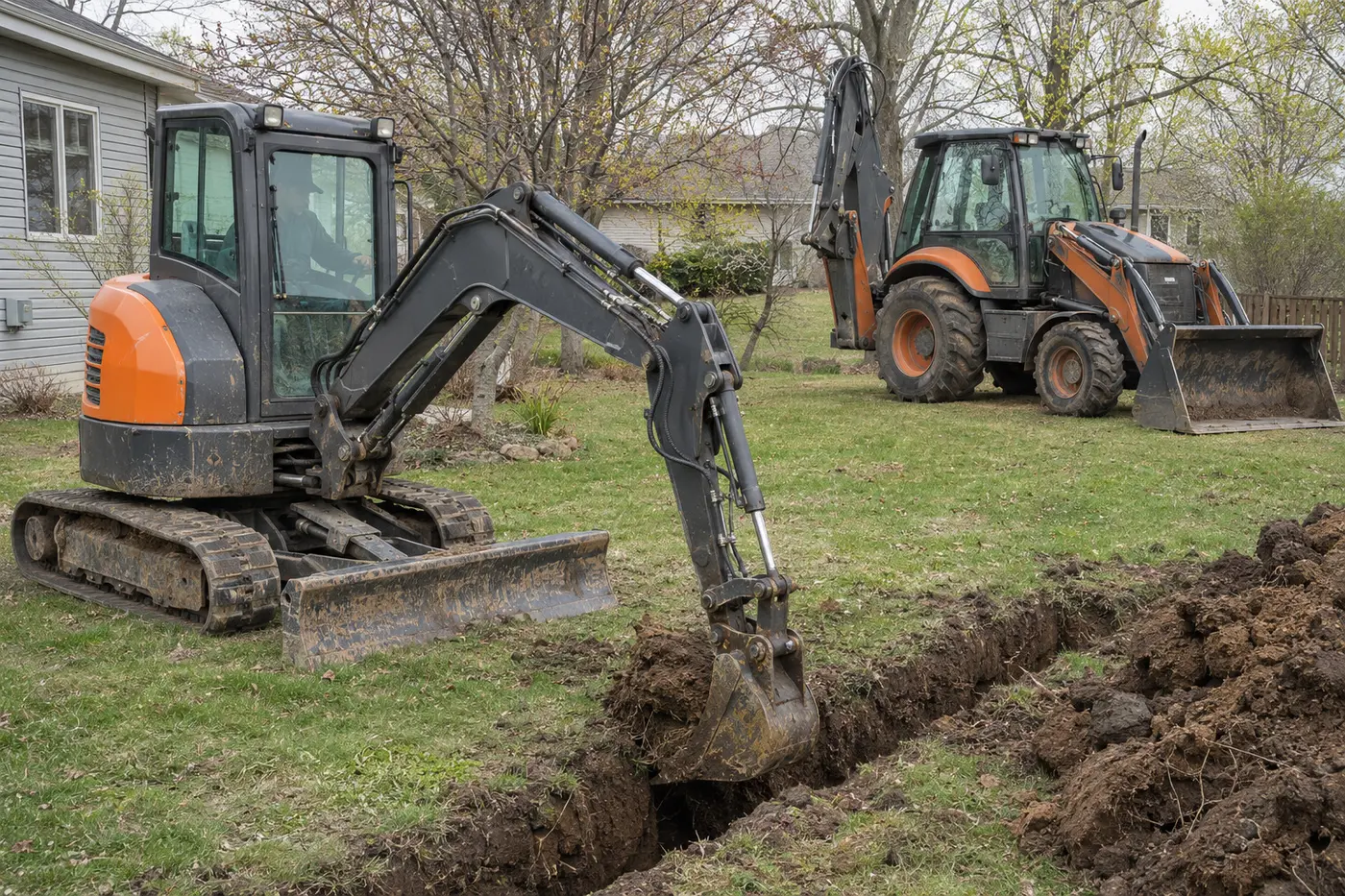
A backhoe loader is a tractor-style machine with a loader bucket in front and a digging arm behind. An excavator is a tracked or wheeled machine with a rotating cab and a boom, arm and bucket. Excavators dig better and reach farther. Backhoes load, dig and can drive between nearby sites.
Shopping for this now? Get a fit-checked, delivered quote.
Key takeaways
- Backhoes combine a front loader and a rear digging arm.
- Excavators rotate 360 degrees and are built to dig.
- Backhoes can often drive between nearby sites; excavators usually need a trailer.
- Both accept hydraulic attachments, but they need different couplers.
People mix up the two machines because both dig. They are built for different work. The backhoe vs excavator choice comes down to what you do most: dig, load, travel, or all three. Here are the real differences, in plain terms.
What is a backhoe loader?
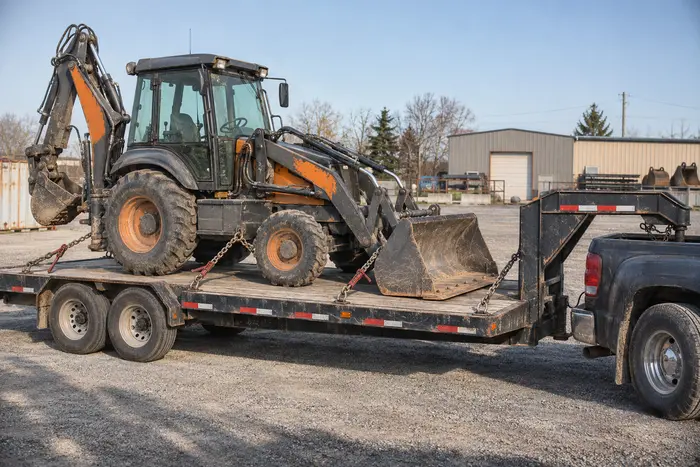
A backhoe loader is a tractor-like unit with a loader-style bucket on the front and a backhoe, a digging arm, on the back. It needs hydraulic stabilizers or outriggers when it digs. To move, you raise the bucket and retract the outriggers. That makes it versatile and a little slower to switch between jobs. Many models have quick couplers and auxiliary hydraulic circuits for attachments such as breakers, augers and grapples.
What is an excavator?
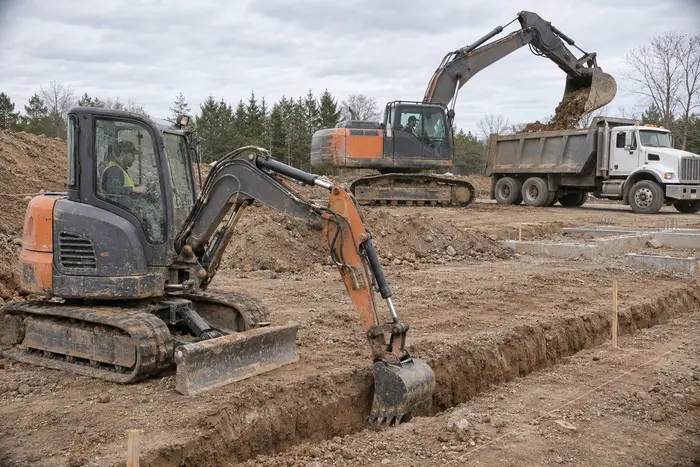
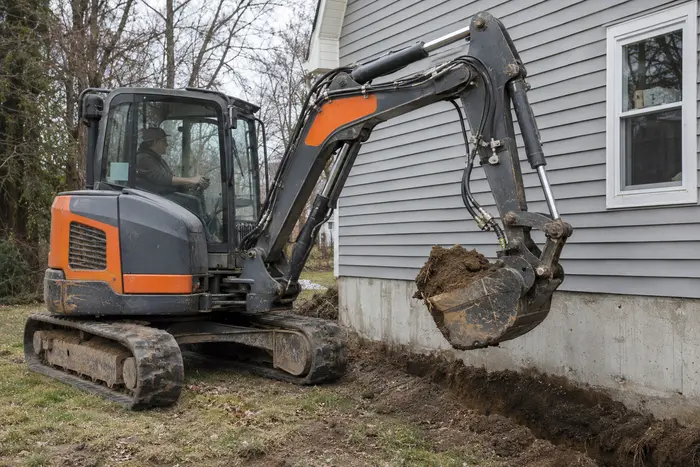
An excavator is a digging machine with a cab that rotates on top of a tracked or wheeled undercarriage. Its boom, arm and bucket reach out and down. Compact (mini) excavators are generally up to about 8.5 tonnes in operating weight, and they often have a backfill blade and independent boom swing. For larger projects, a tracked excavator is generally the machine used. Our guide to types of excavators and excavator sizes shows the range.
Backhoe vs excavator at a glance
| Feature | Backhoe loader | Excavator |
|---|---|---|
| Layout | Front loader plus rear digging arm | Rotating cab, boom, arm, bucket |
| Rotation | Arm swings on a limited arc | Full 360 degree swing in most models |
| Digging strength and reach | Good for utility trenching | Better for deep, heavy digging |
| Loading and carrying | Strong: front loader built in | Not built for it |
| Travel | Can drive between nearby sites, where road rules allow | Usually moved by trailer |
| Stability | Needs outriggers to dig | Stable on tracks; blade adds support |
| Tight spaces | Larger footprint | Compact and zero-tail-swing models fit tight sites |
Controls: are they the same?
No. Excavators have two joystick controls for boom, arm, bucket and swing. Backhoes may use joysticks or levers, and the control pattern can differ by model. Operators who move between machines often have to adjust. Many excavators let you switch between pattern layouts. Always check the pattern before you start and follow the operator manual.
Which one digs better?
An excavator, in most cases. A miniature tracked excavator trades the loader function and road-driving ability for better digging efficiency. An excavator can swing the boom while the tracks stay put, so it digs and loads trucks without repositioning. A backhoe loader trades some of that digging efficiency for versatility. It is the one to choose if you need to trench in the morning and load trucks in the afternoon.
Which one is better for small sites?
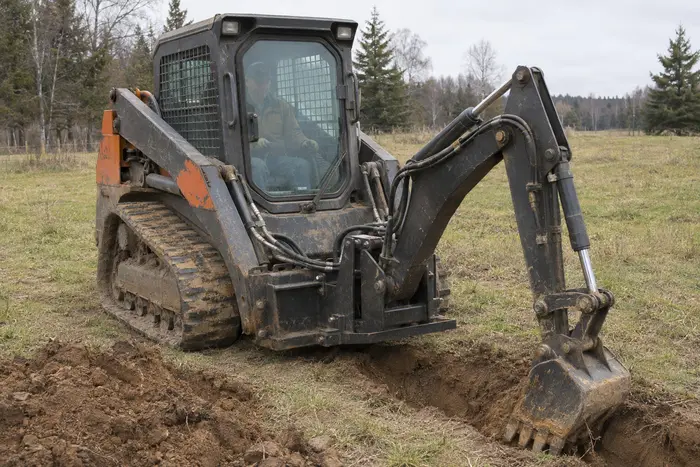
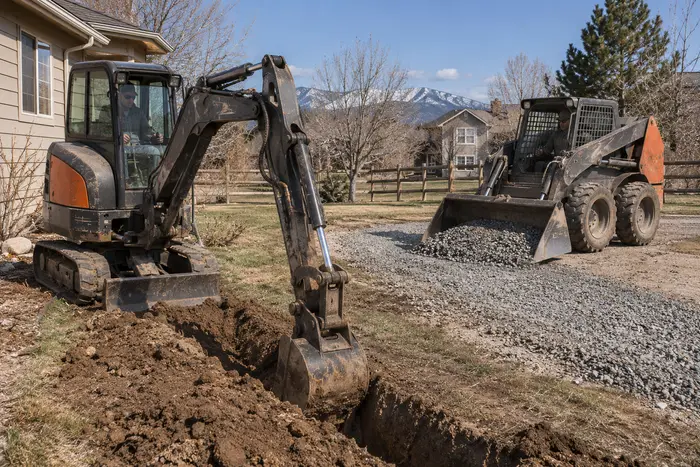
Compact excavators win in tight spaces. Zero-tail-swing models keep the house inside the track width so you can work against a wall. Some micro excavators have retractable undercarriages that fit through a gate. Backhoes are bigger and need more room. For yards and backyards, an excavator or a mini skid steer is usually the better fit. See mini excavator vs skid steer and mini skid steer vs mini excavator.
What about a skid steer, bulldozer or wheel loader?
A skid steer loads, carries and pushes with a bucket and runs many attachments, but it does not dig deep. A bulldozer pushes and grades with a front blade. A wheel loader moves large volumes of material on larger sites. See excavator vs digger, what is a wheel loader and what is a skid steer. Each has a place. The job decides.
Attachments for each machine
Both accept hydraulic attachments. Excavators use thumbs, buckets, breakers, augers, grapples and tiltrotators, often through a quick coupler. A tiltrotator lets an excavator act as an effective tool carrier. See our tiltrotator guide. Backhoes can use breakers, augers and grapples through their auxiliary hydraulic circuits. Browse excavator buckets, thumbs and quick couplers.
Cost of ownership
Do not compare only the purchase price. Think about transport (trailer vs drive), fuel, repairs, parts availability and resale. A backhoe may save you a second machine for loading. An excavator may dig faster per hour and need fewer repositioning moves. Think about the work you do in a year, not the work you do on your best day.
How to choose
- List your top three jobs and estimate the hours for each.
- If digging is more than half, lean toward an excavator.
- If you need to load, carry and travel between sites, lean toward a backhoe loader.
- Check access: gates, slopes, overhead lines.
- Check your trailer and tow vehicle rating.
- Ask about attachment compatibility before you buy.
Operator learning curve
Backhoes have a loader side and a digger side, and operators switch between them by turning the seat. That takes practice. Excavators have a simpler cab layout but demand coordination between boom, arm and swing. New operators often find the excavator easier to learn for digging and the backhoe easier to use for general chores. In either case, training and the operator manual are the starting points. Learn the machine's rated capacities and stability limits.
If you are comparing a specific backhoe with a specific excavator, or want to know which attachments fit, send us the make, model and year. A person will check the specs for you.
Real-world job examples
| Job | Usually better with | Why |
|---|---|---|
| Utility trench along a road | Excavator | Faster, deeper, less repositioning |
| Small lot with a mix of digging, loading and hauling | Backhoe loader | One machine does it all |
| Backyard pool or foundation dig | Compact excavator | Fits through gates, digs cleanly |
| Cleaning up and moving piles of material | Skid steer or backhoe | Loader bucket does the carrying |
| Breaking concrete | Excavator with a breaker | Stable base and strong hydraulics |
Common mistakes
- Buying a backhoe to dig all day. If digging is 90 percent of your work, an excavator is more efficient.
- Buying an excavator and expecting it to load and carry. It can load a truck, but it will not carry material across a site.
- Skipping the transport plan. Excavators usually travel by trailer. A trailer and tow rig are part of the real cost.
- Ignoring attachments. The coupler type and hydraulic flow decide which tools you can use. Confirm before you buy.
One last point: think about who will run the machine. If you hire operators, the control pattern they already know may tip the choice. If you run it yourself, pick the machine whose daily work matches your biggest jobs and rent the other for the occasional task. Renting a second machine twice a year is usually cheaper than owning one.
Get the right fit the first time
Fit problems are the expensive mistakes, and they are easy to avoid. Send us your machine make, model and year and what you plan to do with it. A person checks the fit against the maker specs, and you see the delivered price before you pay. When you are ready, get a fit-checked quote.
Questions buyers ask
What is the main difference between a backhoe and an excavator?
A backhoe loader has a front loader bucket and a rear digging arm on a wheeled tractor-style body. An excavator has a rotating cab with a boom, arm and bucket on tracks or wheels, and it is built mainly for digging.
Which is better, a backhoe or an excavator?
It depends on the job. An excavator digs deeper and faster and works well in tight sites. A backhoe loader digs and loads and can drive between nearby sites. If you need both functions and travel, a backhoe fits. If you mostly dig, choose an excavator.
Can a backhoe do what an excavator does?
For light to moderate digging, yes. A backhoe trenches and loads trucks. It digs less efficiently than an excavator, has a limited swing arc and needs outriggers set. For heavy, deep or repetitive digging an excavator is the better tool.
Do backhoes and excavators use the same attachments?
Not usually. Both use hydraulic attachments like breakers, augers and grapples, but the couplers and flow differ. Excavators commonly use quick couplers and thumbs. Check the machine's coupler and hydraulic specs before you buy any attachment.
Are the controls the same on a backhoe and an excavator?
No. Excavators use two joysticks for boom, arm, bucket and swing. Backhoes may use joysticks or levers and the pattern can vary by model. Check the control pattern before you start and follow the operator manual.