Excavator guide
How Much Does a Backhoe Weigh? Weight by Size
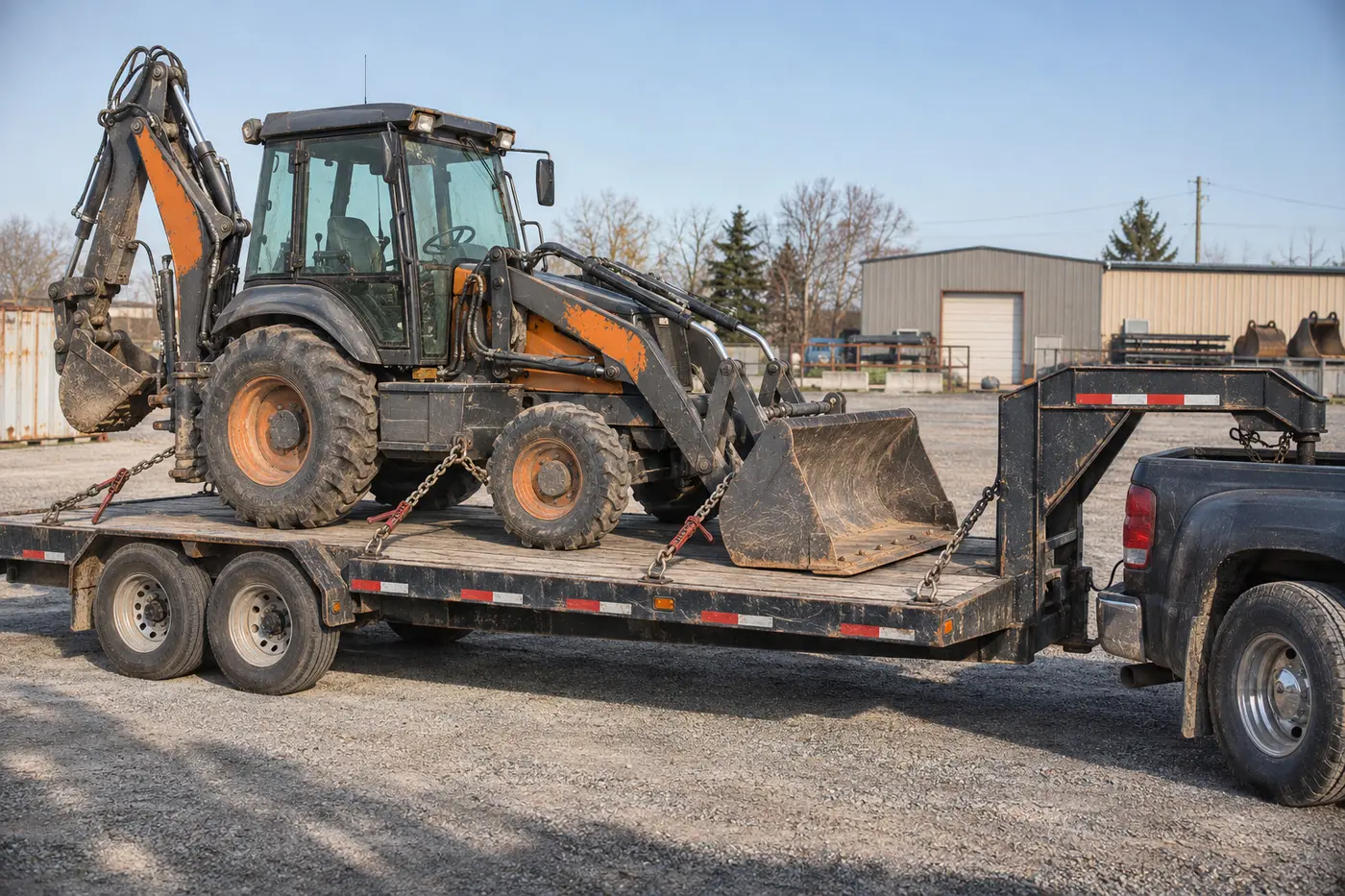
Quick answer
A backhoe loader typically weighs from about 1,500 kg for mini and compact models to roughly 9,000 to 10,900 kg for full-size machines, with most mid-size construction units between about 6,000 and 9,000 kg. Check the maker's operating weight for your exact model before you trailer it.
Shopping for this now? Get a fit-checked, delivered quote.
Key takeaways
- Backhoe weight depends on size class and options.
- Operating weight is the figure that matters for trailers and ground pressure.
- Spec-sheet weights come in three kinds: operating, shipping and crated.
- Always confirm the actual weight of your exact machine and attachments.
If you need to know how much a backhoe weighs, you are probably planning to move it, park it or buy a trailer. The right answer depends on the size class and how the maker states the weight. Here is a plain guide with sourced ranges.
How much does a backhoe loader weigh?
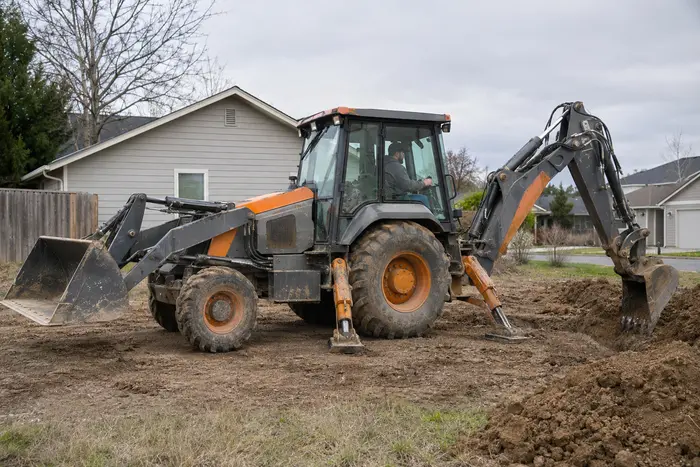
Backhoe loaders come in classes. A published spec guide puts operating weights across the classes roughly as shown below. Figures are approximate and vary by model and configuration.
| Class | Typical operating weight |
|---|---|
| Mini / compact (including electric) | About 1,500 to 2,400 kg |
| Small / utility | About 3,500 to 4,500 kg |
| Mid-size | About 6,000 to 8,000 kg |
| Heavy / full-size | About 9,000 to 10,900 kg |
The same source says the overall span runs from about 1,500 kg up to roughly 10,870 kg, and that most mid-size construction machines fall between about 6,000 and 9,000 kg. If you think in pounds, multiply kilograms by about 2.2. The numbers are a guide, not a promise. Your model's spec sheet is the final word.
Three weights on a spec sheet
Makers publish more than one weight. Know which one you are reading.
- Operating weight: the machine ready to work, usually with full fluids and standard buckets. Some makers include an operator allowance and some do not, so read the footnote. This is the one to use for trailer planning and ground pressure.
- Shipping weight: the machine prepared for transport, with fluids drained and parts removed. It is usually lighter than operating weight, so don't use it for trailer planning.
- Crated or transport weight: shipping weight plus packing and spares. It is used for container planning.
Why "7-ton" labels can mislead
Machines are often marketed with a round number. That number may describe a size class or a capacity rather than what the machine actually weighs, and two machines with the same label can differ by a lot. Always ask for the official operating weight from the maker.
How much does a mini or small backhoe weigh?
Small and compact units sit at the low end of the table, from about 1,500 kg for mini and compact models up to roughly 4,500 kg for small utility units. They are lighter, easier to trailer and tend to fit through gates. They also dig less deep and carry less in the bucket. Many owners of small machines compare them with compact excavators and mini skid steers. Our guides to mini excavator sizes and weight and mini excavator vs skid steer help you compare.
Why weight matters
- Trailer and tow vehicle. The machine plus attachments must be inside the trailer's rated capacity and your tow vehicle's rating.
- Ground pressure. Heavy wheels on soft ground leave ruts or sink.
- Bridges, driveways and slabs. Heavy machines can damage them.
- Stability. A heavier machine is usually more stable when digging, but needs good ground under the outriggers.
- Insurance and permits. Some jobs and routes have weight limits.
Does the bucket or attachment add much weight?
Yes, and it adds up. A wider bucket, a breaker, a grapple or a thumb all add weight, and some attachments sit far from the machine's center, which changes balance. Add attachment weights to the operating weight when you plan transport. A breaker adds real weight at the end of the arm. Check each attachment's data plate. Our guide to backhoe vs excavator compares the machines. For the equipment side, browse backhoe attachments for skid steers and breaker hammers.
How to find the actual weight of your machine
- Look at the data plate on the machine. It often lists weight or serial information.
- Check the operator manual or the maker's spec sheet for operating weight.
- Ask the dealer or maker with your serial number.
- For used machines, confirm weight with a certified scale if you plan to trailer it near the limit.
How a backhoe compares with other machines
A compact backhoe is often lighter than a mid-size excavator and heavier than a skid steer. Compact excavators are generally up to about 8.5 tonnes in operating weight, so there is overlap. Check our guides to parts of a backhoe loader and excavator sizes to compare the classes.
Moving a backhoe safely
- Use a trailer and ramps rated for the machine's full weight.
- Lower the bucket and stabilizers and secure the machine with rated tie-downs at the points the maker specifies.
- Check height and width against road limits.
- Follow local transport rules.
If you are buying an attachment for a backhoe, excavator or skid steer and want to be sure it suits your machine's weight class, send us the make, model and year. A person will confirm fit against the maker's specs.
Backhoe weight vs other machines
It helps to put backhoe weights in context. A mid-size backhoe loader sits in the same weight range as a mid-size compact excavator, since compact excavators are generally up to about 8.5 tonnes in operating weight. A skid steer is lighter again. A big wheel loader is much heavier. If you are choosing between machines, weight is only one factor, but it affects transport cost and ground damage more than most buyers expect. See how much a forklift weighs and skid steer weight and dimensions for more comparisons.
Trailer planning checklist
- Get the operating weight from the maker's spec sheet.
- Add the weight of any attachments you will carry on the machine.
- Check the trailer's rated capacity and its own weight.
- Check your tow vehicle's rated towing capacity.
- Confirm ramp rating, deck length and width.
- Use rated chains or straps at the designated tie-down points.
- Follow local rules for oversize or overweight loads.
A note on used machines
Used backhoes often carry extras: a bigger bucket, a breaker mount, a thumb or a heavier counterweight. These can change real weight from the published spec. If you tow close to the limit, weigh the loaded rig on a certified scale. It is a small cost compared with a roadside stop or an accident.
Remember that weight is also a safety number. The rated capacities of trailers, ramps, straps and tow vehicles all assume you know the real load. Treat a guess as a hazard. If you cannot find the weight, ask the maker or a dealer with the serial number, and write the answer on a card you keep with the trailer paperwork.
Get the right fit the first time
Fit problems are the expensive mistakes, and they are easy to avoid. Send us your machine make, model and year and what you plan to do with it. A person checks the fit against the maker specs, and you see the delivered price before you pay. When you are ready, get a fit-checked quote.
Questions buyers ask
How much does a backhoe weigh?
Typical backhoe loaders weigh from about 1,500 kg for mini and compact models to about 9,000 to 10,900 kg for full-size units. Most mid-size construction machines fall between about 6,000 and 9,000 kg. Check your model's operating weight.
How much does a small backhoe weigh?
Small and compact backhoe loaders typically weigh from about 1,500 kg up to roughly 4,500 kg, depending on class. Confirm the exact operating weight for your model from the maker's spec sheet before you trailer it.
What is the difference between operating weight and shipping weight?
Operating weight is the machine ready to work with fuel, oil and a standard bucket. Shipping weight is the machine prepared for transport, often with fluids drained or parts removed, so it is usually lighter. Use operating weight for trailer planning.
How much does a backhoe bucket weigh?
It depends on width and type. Bucket weight is on the attachment's data plate and in the maker's specs. Add it to the machine's operating weight when planning transport, along with any other attachments. Specs vary by model, so confirm the details before you buy.
Does a 7-ton backhoe weigh 7 tons?
Not necessarily. A round-number label may describe a size class or a capacity rather than the machine's weight. Always ask for the official operating weight from the maker's spec sheet. If you are unsure, a person can check it against your machine's specs.