Excavator guide
What Is a Tiltrotator and Is It Worth It?
Quick answer
A tiltrotator is a hydraulic attachment between an excavator's arm and its tool that acts like a wrist. It rotates the tool 360 degrees and tilts it, typically about 40 to 45 degrees each way. That lets one machine dig, grade and place without repositioning. It needs matching hydraulics, controls and a quick coupler.
Shopping for this now? Get a fit-checked, delivered quote.
Key takeaways
- It adds rotation and tilt, so you reposition the tool, not the machine.
- It passes hydraulic power to tools like grapples, breakers and augers.
- It needs extra hydraulic lines, controls and a compatible machine.
- It pays off on precise, varied work, less so on simple digging.
If you search what a tiltrotator is, you will find videos of excavators grading slopes sideways and placing pipe with a dexterity that looks wrong for a digger. The tool behind it is a tiltrotator. Here is what it does, what it needs and when it is worth the money.
What is a tiltrotator?
A tiltrotator is a hydraulic attachment mounted between an excavator's arm and its working tool. It works like a wrist between the arm and bucket. It rotates the attached tool through a full 360 degrees and tilts it, typically about 40 to 45 degrees to either side. It has an integrated quick coupler for mounting tools and a rotary swivel that passes hydraulic power to tools below it, such as breakers, grapples and augers. It was developed in Sweden and is very common on excavators in Sweden, Finland and Norway. It has since spread to other countries, including Canada and the United States.
What does a tiltrotator do?
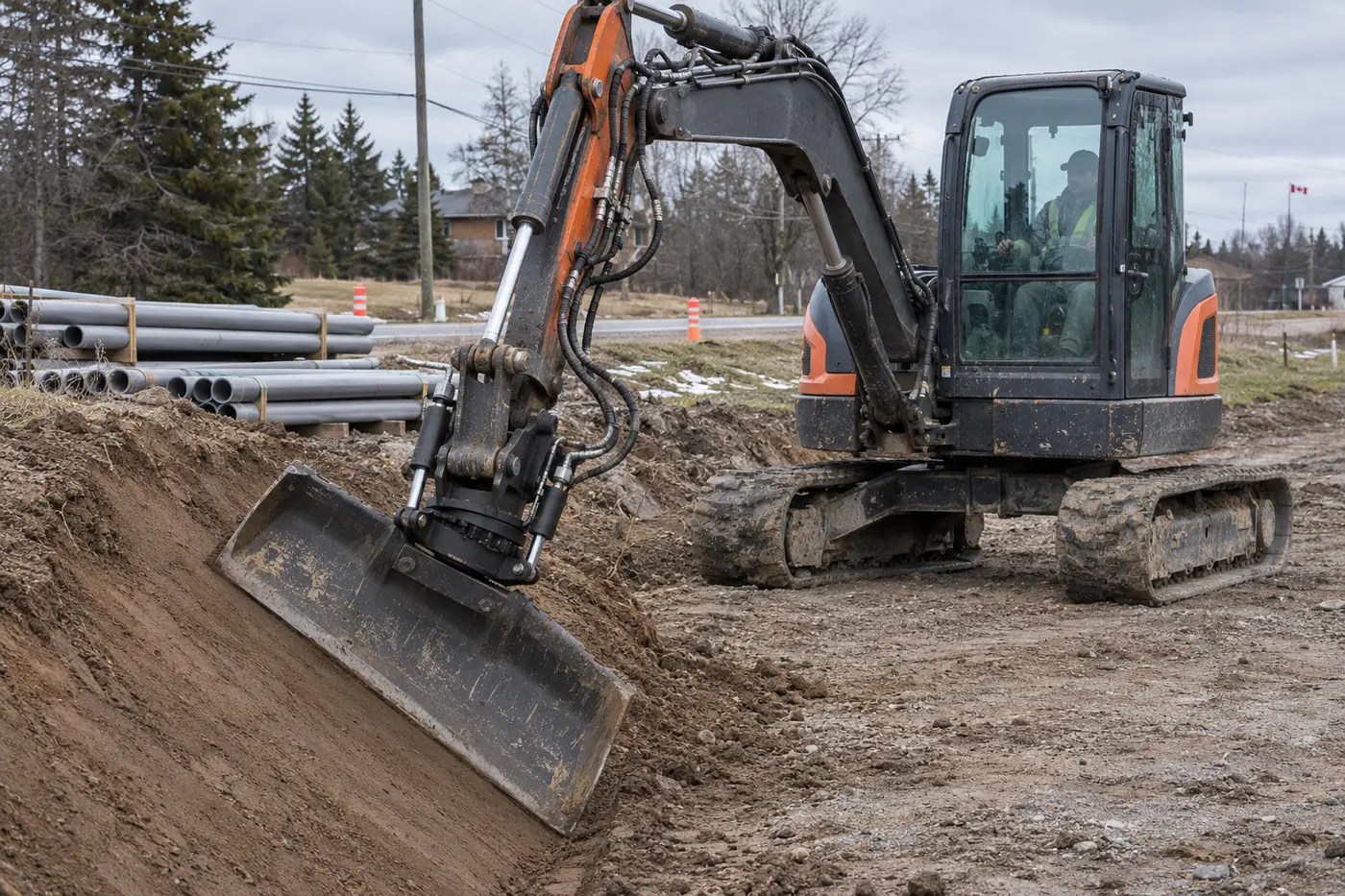
With a standard bucket, an excavator can only dig straight on to the arm's angle. If you want to dig a sloped ditch, you reposition the machine. With a tiltrotator, you tilt the bucket and rotate it to the angle you need. The machine stays put. That improves precision, saves time and reduces the number of times you move the tracks. A tiltrotator also lets one machine run several hydraulic tools with quick changes, because its coupler and hydraulic lines make switching fast.
Tiltrotator vs quick coupler
| Feature | Quick coupler | Tiltrotator |
|---|---|---|
| Tool changes | Fast, mechanical or hydraulic | Fast, with hydraulic lines connected |
| Rotation | None | 360 degrees |
| Tilt | None | Typically about 40 to 45 degrees each side |
| Powered tools | Needs separate hose hookups | Hydraulics pass through the swivel |
| Cost and complexity | Lower | Higher |
| Control | Standard excavator controls | Extra control system and switches |
See our quick coupler guide and browse quick couplers and tiltrotators.
What does a tiltrotator need?
- A compatible excavator. Tiltrotators are used on excavators and backhoes from about 1.5 to 40 tons.
- A quick coupler. It is built into the unit.
- Hydraulic supply. A rotary swivel and two or four electro-proportionally controlled hydraulic lines.
- A control system. Joystick controls let the operator run it. Several control systems exist.
That list means a tiltrotator is not a bolt-on. Your machine needs the right hydraulic circuits and a way to control them. Ask for a fit check that covers hydraulics and controls, not just the mounting pins.
Is a tiltrotator worth it?
It depends on the work. Tiltrotators pay off where you do varied, detailed tasks: finishing slopes, placing pipe, trenching around obstacles, working in tight urban sites, using multiple tools in one day. They are less useful for simple bulk digging where a plain bucket works. Think about how much time you lose repositioning the machine and swapping tools, then compare that with the cost and upkeep. The benefits listed for a tiltrotator are better positioning control and precision, simpler tool mounting and the ability to run several hydraulic tools on one machine.
Who benefits most?
- Utility and pipe crews placing pipe in a trench.
- Landscape and grading crews finishing slopes.
- Demolition and recycling operators using grapples and breakers.
- Small contractors with one excavator and a lot of different tasks.
A tiltrotator lets an excavator act as an effective tool carrier. See our mini excavator attachments buyer's guide for the full picture.
Tiltrotator vs tilt bucket vs thumb
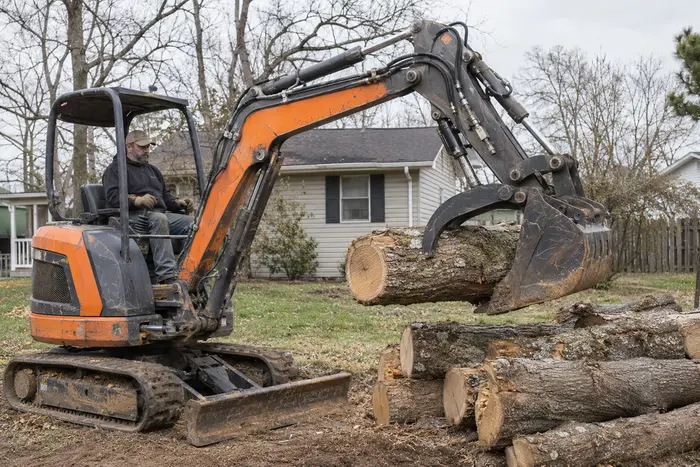
A tilt bucket tilts only, and a thumb grips material against the bucket. A tiltrotator does both of these jobs and more, but costs more and needs more systems. If your goal is to grade slopes, a tilt bucket may be enough. If you handle logs, rocks or pipe, a thumb may be enough. Our thumb guide and thumbs category cover that option.
Safety and training
A tiltrotator changes how the machine behaves. A tool can swing out to the side or be positioned in unusual angles, which changes the load on the arm and the stability of the machine. Operators need training on the control system. Follow the machine's operator manual and rated capacities, and check that the attachment's weight is accounted for in lift ratings. Many tiltrotators use safety systems to confirm tool locking. Check them every time you change a tool.
Questions to ask before buying
- Is my excavator compatible, and does it need hydraulic or electrical changes?
- Which control system works with my machine?
- Which coupler profile does it use, and do my existing tools fit?
- How does it affect lift capacity and balance?
- Who supports warranty and service?
Do not guess on these. A tiltrotator is a precise system, and small mismatches cause big problems. We can help check the match against your machine's specs.
Alternatives
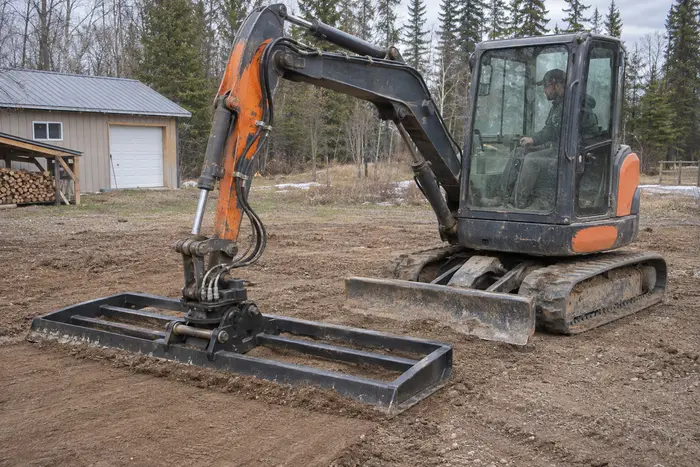
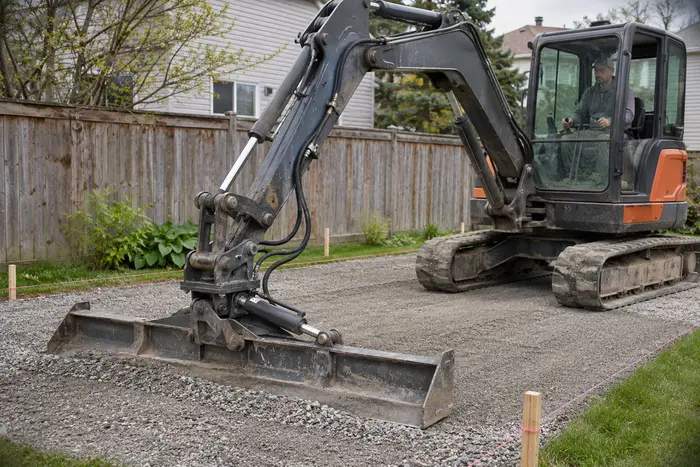
If a tiltrotator is more than you need, look at a hydraulic quick coupler, a tilt bucket or a thumb. For a compact machine, you may also want a grading beam for finish work. Each solves part of the problem for less money. See our mini excavator grading beam guide.
Example: what changes on a real job
Take a pipe trench with a sloped side wall. With a standard bucket, you dig along the arm's path, then move the tracks to trim the slope, then move again to place pipe. With a tiltrotator, you stay where you are. You tilt the bucket to match the slope, rotate to align it with the trench and place the pipe with the same tool or a hydraulic grapple. The savings show up in fewer machine moves, fewer helpers in the trench and cleaner finished surfaces. The same logic applies to landscaping: shaping a berm, setting stone or loading a truck from an awkward angle.
Operator learning curve
Using a tiltrotator takes practice. The operator controls extra functions with switches or joystick buttons, and tool positions can feel strange at first. Expect a learning period before it feels natural, and longer to use it with real skill. Operators who already handle tilt buckets and hydraulic thumbs tend to pick it up quickly. Good training reduces mistakes and protects the tool.
Upkeep
- Grease the rotation and tilt joints on the maker's schedule.
- Keep hydraulic couplers and swivel seals clean.
- Inspect hoses and electrical connections for wear at moving points.
- Check the coupler locking system before every tool change.
- Look for oil leaks around the swivel, which can signal seal wear.
Treat a tiltrotator as a precision system. Dirt in the hydraulics or a worn seal causes problems that a simple bucket pin never would.
Get the right fit the first time
Fit problems are the expensive mistakes, and they are easy to avoid. Send us your machine make, model and year and what you plan to do with it. A person checks the fit against the maker specs, and you see the delivered price before you pay. When you are ready, get a fit-checked quote.
Questions buyers ask
What is a tiltrotator?
A tiltrotator is a hydraulic attachment between an excavator's arm and its tool. It acts like a wrist, rotating the tool 360 degrees and tilting it, typically about 40 to 45 degrees each way. It also passes hydraulics to powered tools and has a built-in quick coupler.
What does a tiltrotator do?
It lets an excavator position its tool without moving the machine. You can grade slopes, place pipe and work around obstacles from one spot, and switch between hydraulic tools quickly because the coupler and hydraulic lines are built in.
What does a tiltrotator need to work?
A compatible excavator, a quick coupler, a hydraulic supply with a rotary swivel and two or four controlled hydraulic lines, and a control system that lets the operator run it with the joysticks. Specs vary by model, so confirm the details before you buy.
Is a tiltrotator worth it?
It pays off on varied, precise work like grading slopes, placing pipe and running multiple tools in a day. For simple bulk digging a bucket and quick coupler may be enough. Weigh time saved against the cost and upkeep.
What machines can use a tiltrotator?
Tiltrotators are used on excavators and backhoes in roughly the 1.5 to 40 ton range. The machine needs the right hydraulic circuits and controls, so confirm compatibility before you buy. If you are unsure, a person can check it against your machine's specs.